Good video I like the comparison
1 Like
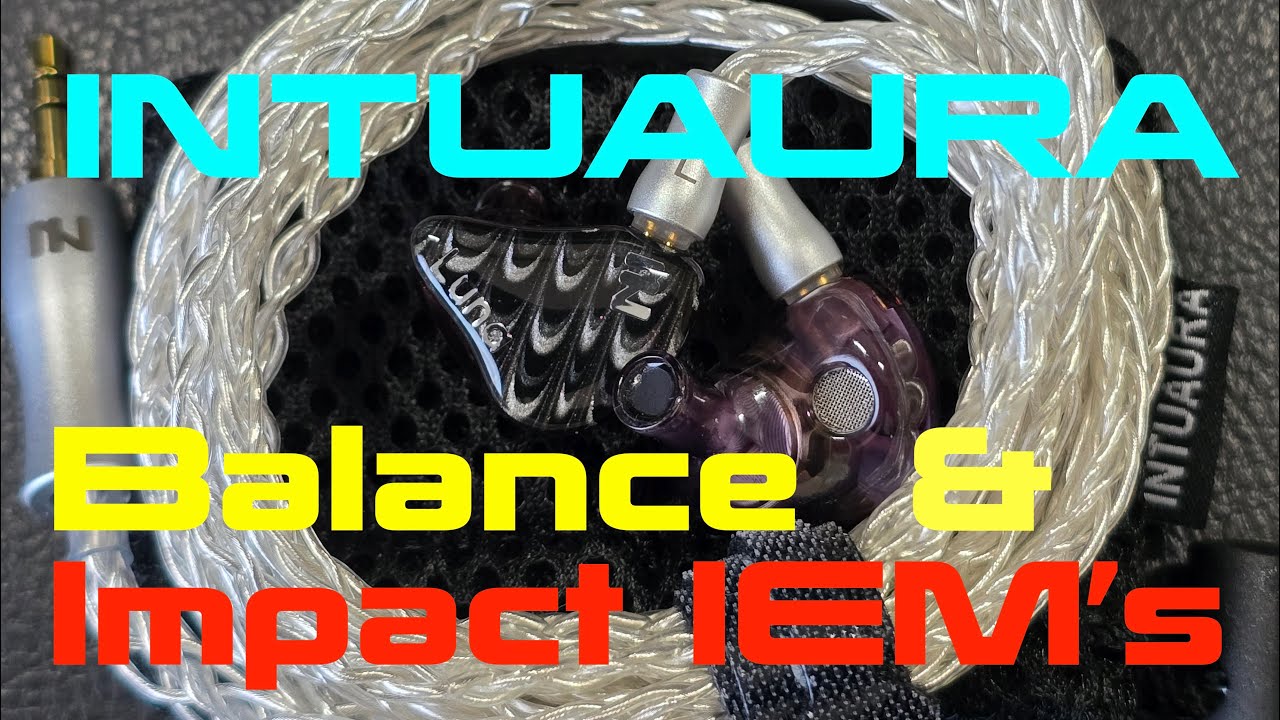
The Balance is a really nice and well tuned Intuaura Iems great job!
Canuck Audioholics Anonymous (CAA)
2 Likes
Thanks, means alot coming from you 
1 Like
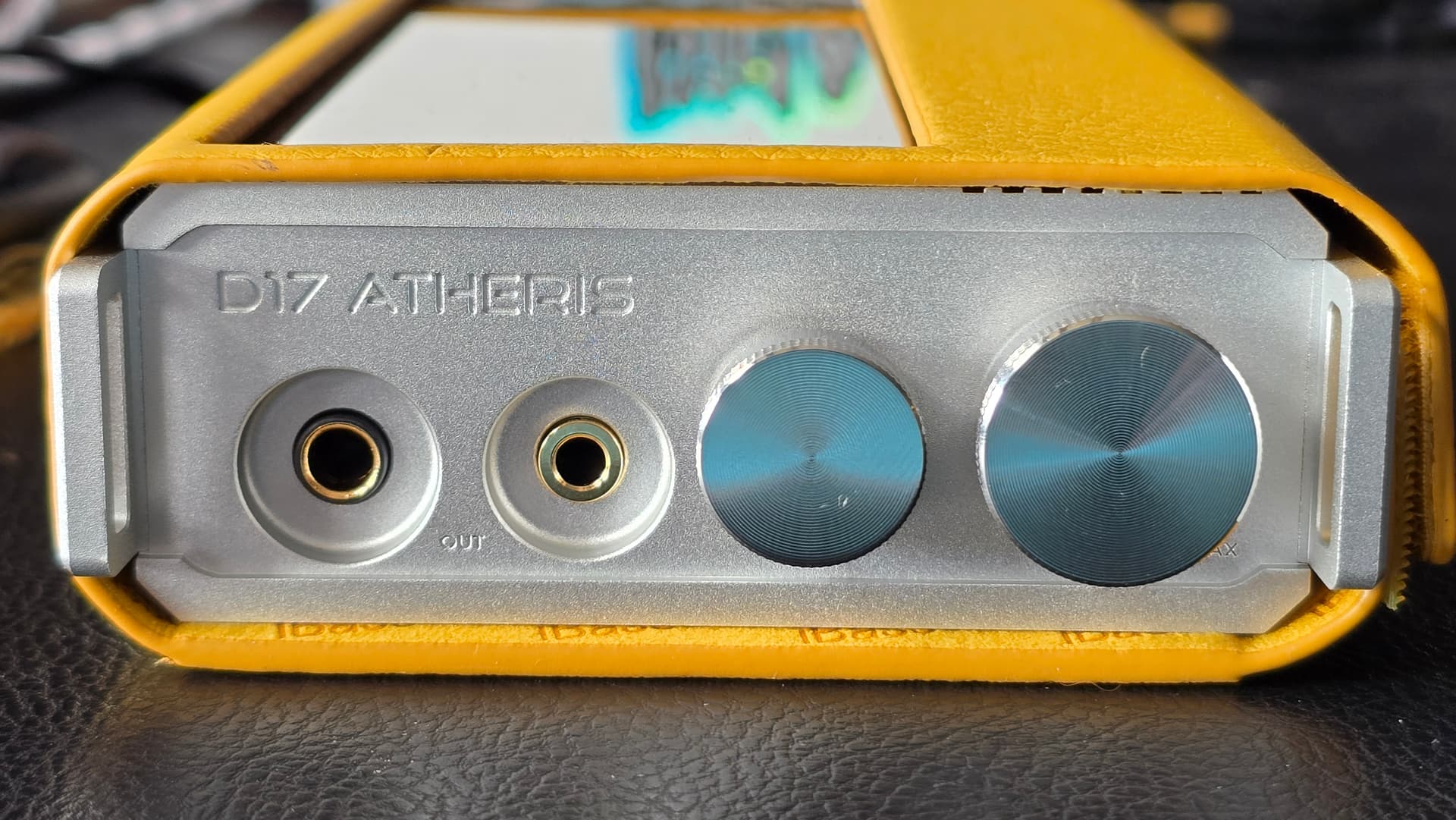
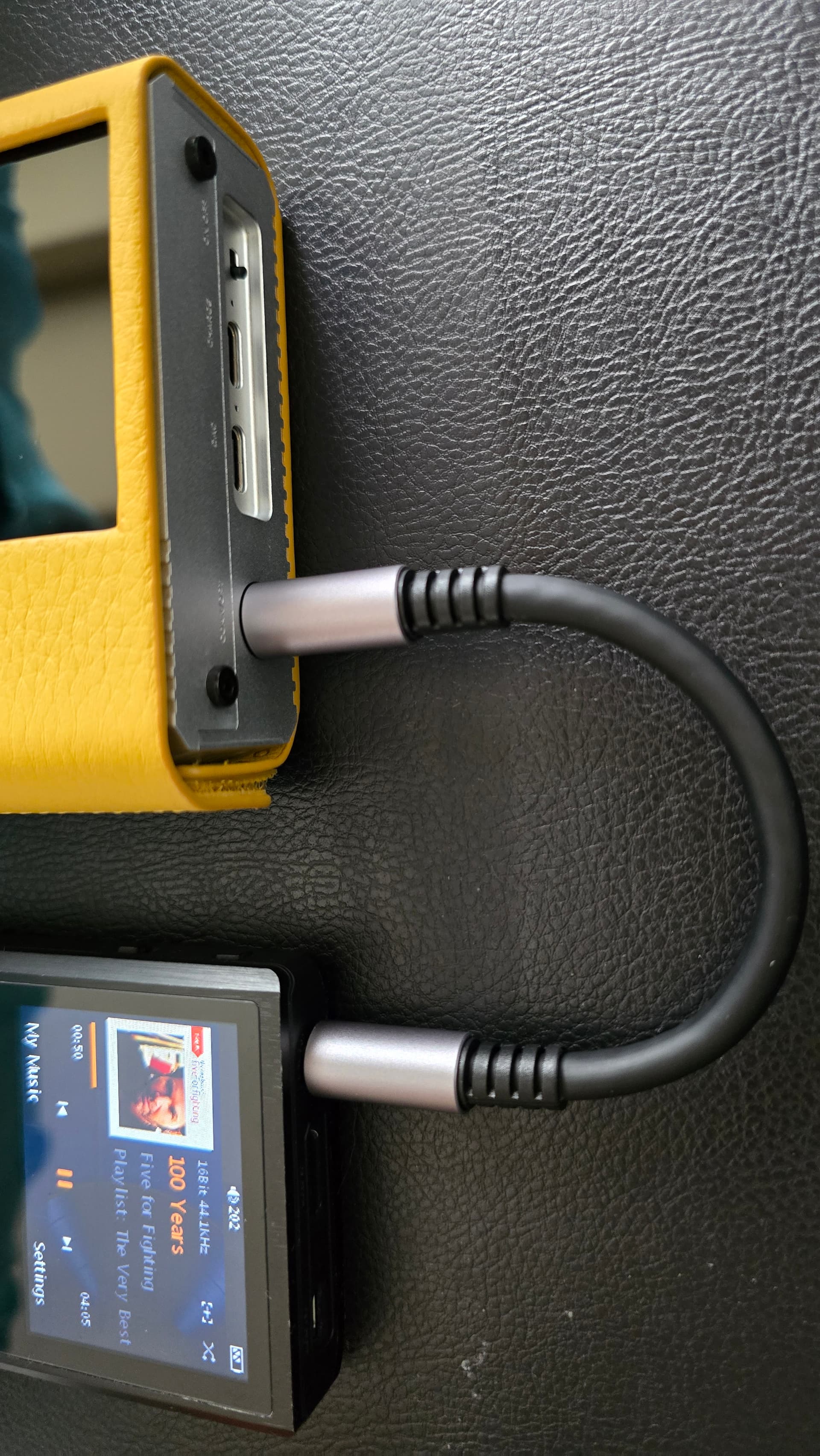
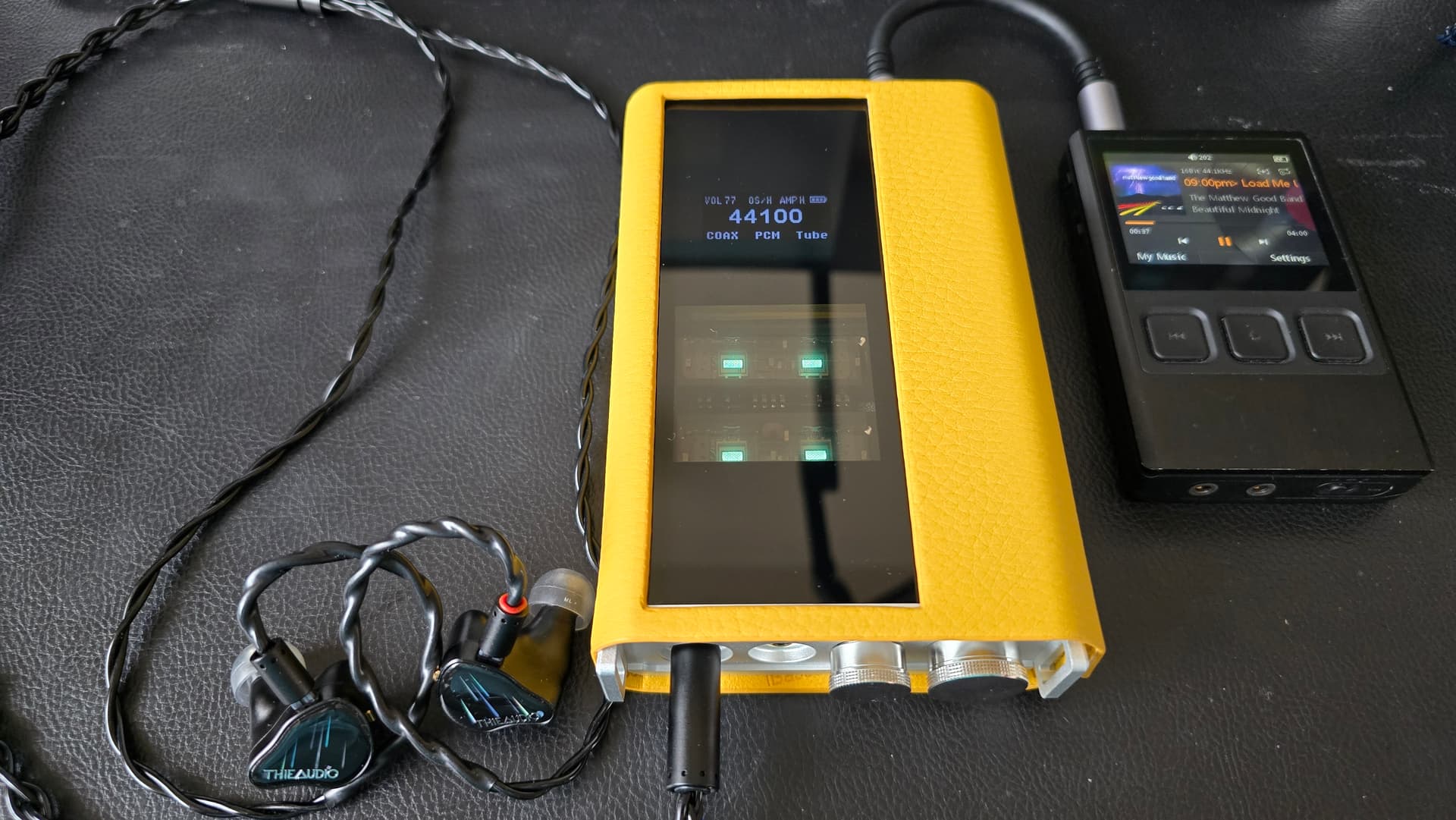
When Old School meets New School my IBasso Audio DX90 still going strong and sending coax digital output to the the D17 Atheris. 
4 Likes
I’m curious to hear what it sounds like! Also: really weird that it’s out there but only to be found on the iBasso EU page.
1 Like
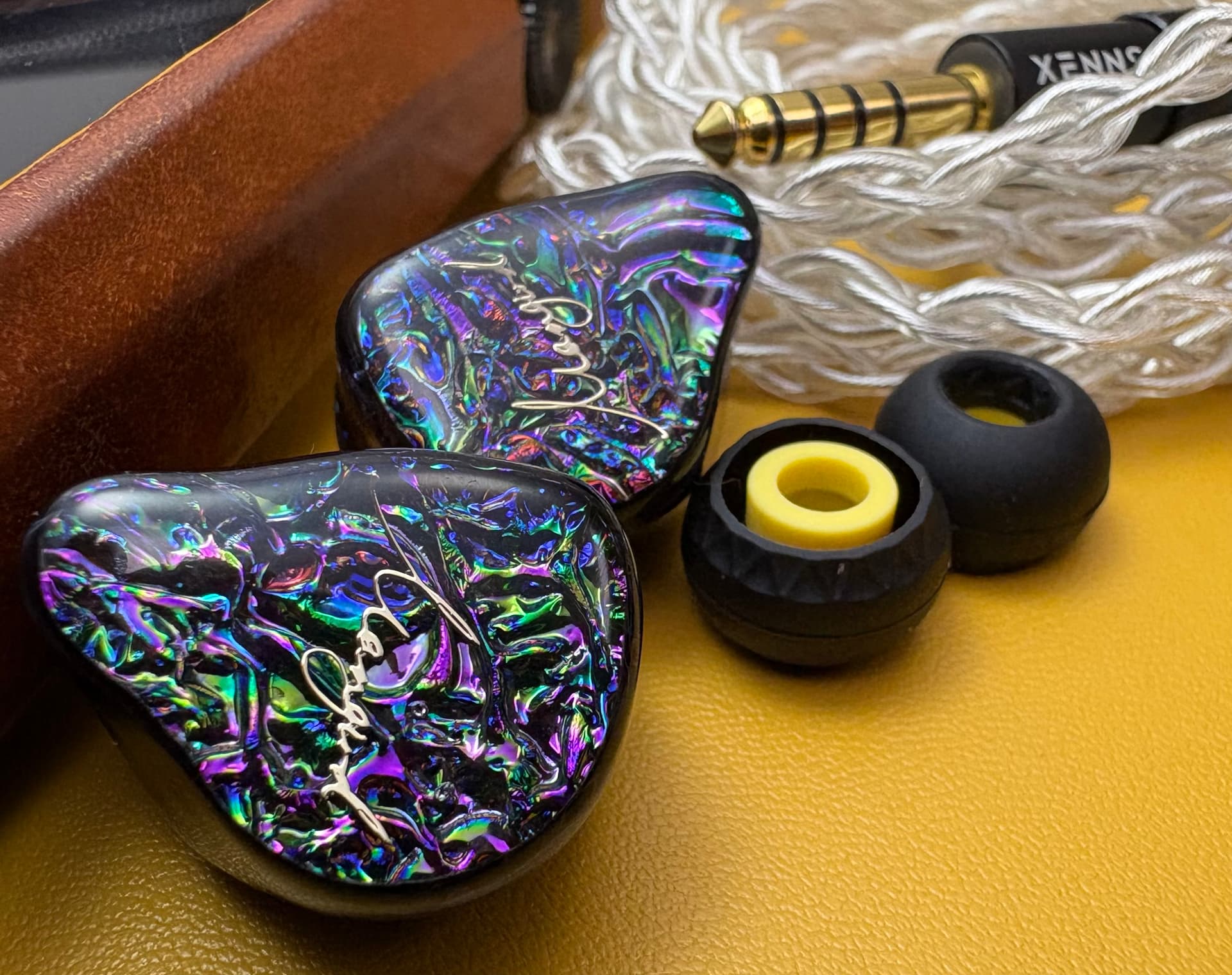
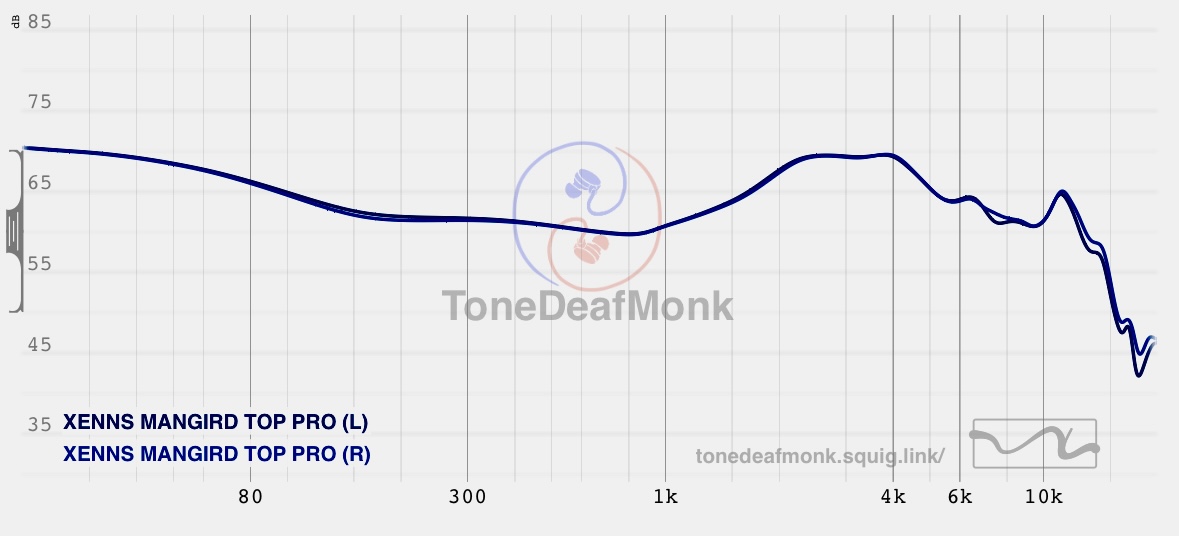
XENNS MANGRID, TOP PRO
10 Driver Hybrid IEM $499.00 usd.
- Drivers
2DD + 8BA
1 × Knowles Super Tweeter
2 × Sonion E50D BA
2 × Custom Knowles BA
1 x Dual Custom DD with NdFeB Magnets
-
4 way crossover
-
Frequency Response: 20Hz – 33kHz
-
Impedance: 16Ω
-
Sensitivity: 103dB ± 1dB
-
Cable: 0.78mm 2-Pin, 4-strand 196-core Single-Crystal Copper + Silver Hybrid, 1.2m
-
Termination: 2-in-1 (3.5mm Single-Ended & 4.4mm Balanced)
(I know, the driver count, as per Linsoul website, doesn’t add up to 10 drivers. But I found confirmation on line that Linsoul has confirmed some of the BA drivers have 2 moving iron units)
 Preamble:
Shout out to the Canuck Audioholics review group for the opportunity to experience and review the Xenns Mangrid Top Pro.
Tone Deaf Monk
Bennet Kelly
Kaye Dee
I did not receive the retail packaging, but did receive the ear pieces, the stock cable, a modular copper/silver hybrid offering, and the zippered carry case.
All appear to be of good quality.
The case is very usable, on the large size, but pocketable in a generous sized pocket.
Pros and Cons:
 Blue, Semi custom design resin shells are transparent offering a glimpse at the drivers. They are vented, and while on the large size, are reasonably compact considering the driver count.
They fit my larger ears very well, are comfortable and stay anchored for a consistent seal.
Quality and finish are commensurate with what we routinely see for 3D printed resin shells.
The stock modular, pure copper/silver hybrid cable isn’t unique in any way, but is good quality and sonically pairs well with the IEM.
3.5 and 4.4mm terminations included. Quality Sonion and Knowles branded BA drivers.
Plays nicely with, and follows the nuances of various source devices.
I have a preference for a brighter, high resolving source device, without an over extended mids presence.
My personal favourites are:
Astell and Kern SP2000T on OP amp mode.
Astell and Kern HC4 dongle paired with my iPhone.
And for a warmer source, the KAEI Design TAP 1 on tube mode, paired to ACTIVO P1 DAP as the transport.
An overall balanced sounding IEM with nicely lifted vocals and mids. Highs are rolled off but have enough energy and presence to add some sparkle and air.
Equipment:
 Xenns Mangrid, Top Pro IEM with 100+ hours.
Astell and Kern SP2000T DAP set to OP amp mode. 4.4mm out.
Stock, modular pure copper/silver hybrid cable with 4.4mm termination.
Sound Evaluation
The dual dynamic drivers provide an excellent bass presence.
Electronic sourced sub bass pulls low with a deep thick rumble. It carries throughout the head stage, but doesn’t overwhelm or smother the mids/highs.
On Symphonic and Jazz sources, that may be electrically amplified but not electronic sourced, stringed bass and other bass instruments have a natural and satisfying resonance.
Classic Rock has a satisfying old school analog tilt to the bass.
Good definition between sub/mid bass.
Mids and vocals are modestly elevated and present somewhat forward.
Good macro and micro detail in the mids.
Vocals, both male and female are natural and accurate.
No hint of harshness or sibilance.
Highs are rolled off early so the mids carry most of the load for the highs.
As such, not much for micro detail and clarity in the high end.
There is decent sparkle and air, but laid back and doesn’t stretch high into the head space.
Treble enthusiasts are likely to be left wanting, but no chance of a shrill or harsh high end here.
One of my go to tracks for staging is Eden Atwood, He’s a Carioca, from the album Waves, recorded DSD 512.
This recording offers very distinct imaging and layering, that can vary considerably IEM to IEM.
Guitar far left stage, outside the head, Drums slightly left, and behind the shoulder, Vocalist front and center slightly elevated, Bass just behind and right of vocalist, piano far right outside the head.
This is where the Top Pro stumbles a bit.
While the stage does fill the headspace nicely.
Left to right stereo imaging is quite good and outside the ears. Layering is average top to bottom.
And front to rear depth is very average at best.
The stage is more intimate and close than expansive and open.
The staging does not detract from my listening enjoyment of the Top Pro.
Exceptional staging is not a must have for me, but, when I cross paths with an IEM that offers great staging, it adds a dimension to the listening experience that I very much enjoy and appreciate.
Summary:
Any way you look at it $500.00 usd is a significant investment into an IEM.
The Xenns Mangrid, Top Pro has a lot to offer, quality resin shells, a nice cable that pairs well, an impressive driver count, branded BA drivers, and, a listening experience energetic enough to engage but never offensive.
I seldom compare IEMs in my reviews, but having just completed a listening and review session with the AFUL Dawn X…..
** Both have quality, semi custom, resin shells. The Dawn X slightly larger and thicker.
** Included accessories are similar quality for both.
** Both have impressive driver counts.
Dawn X, 14 non-descript drivers including 4 EST and a bone conduction driver.
Top Pro, 10 drivers, 8 of which are branded Sonion and Knowles BA drivers.
** Both sound very good, but, from my personal listening experience the Dawn X was less engaging and failed to capture me and draw me into the music.
** Dawn X $1300 usd
** Top Pro $500 usd.
At less than 1/2 the price of Dawn X, the Top Pro was a more enjoyable and engaging listening experience, based on my personal preferences.
Price doesn’t guarantee an IEM that is going to sound better.
Nor will my experience necessarily match yours.
But for enthusiasts that will spend this kind of hard earned cash on ear gear.
Give the Top Pro a look.
My music sources:
Qobuz, and, FLAC and DSD files stored on the SD cards of my daps.
My music genre are primarily Rock, Blues, Jazz, Symphonic, Country, Rap, R&B, Pop, Electronic.
Enjoy your music. 
3 Likes
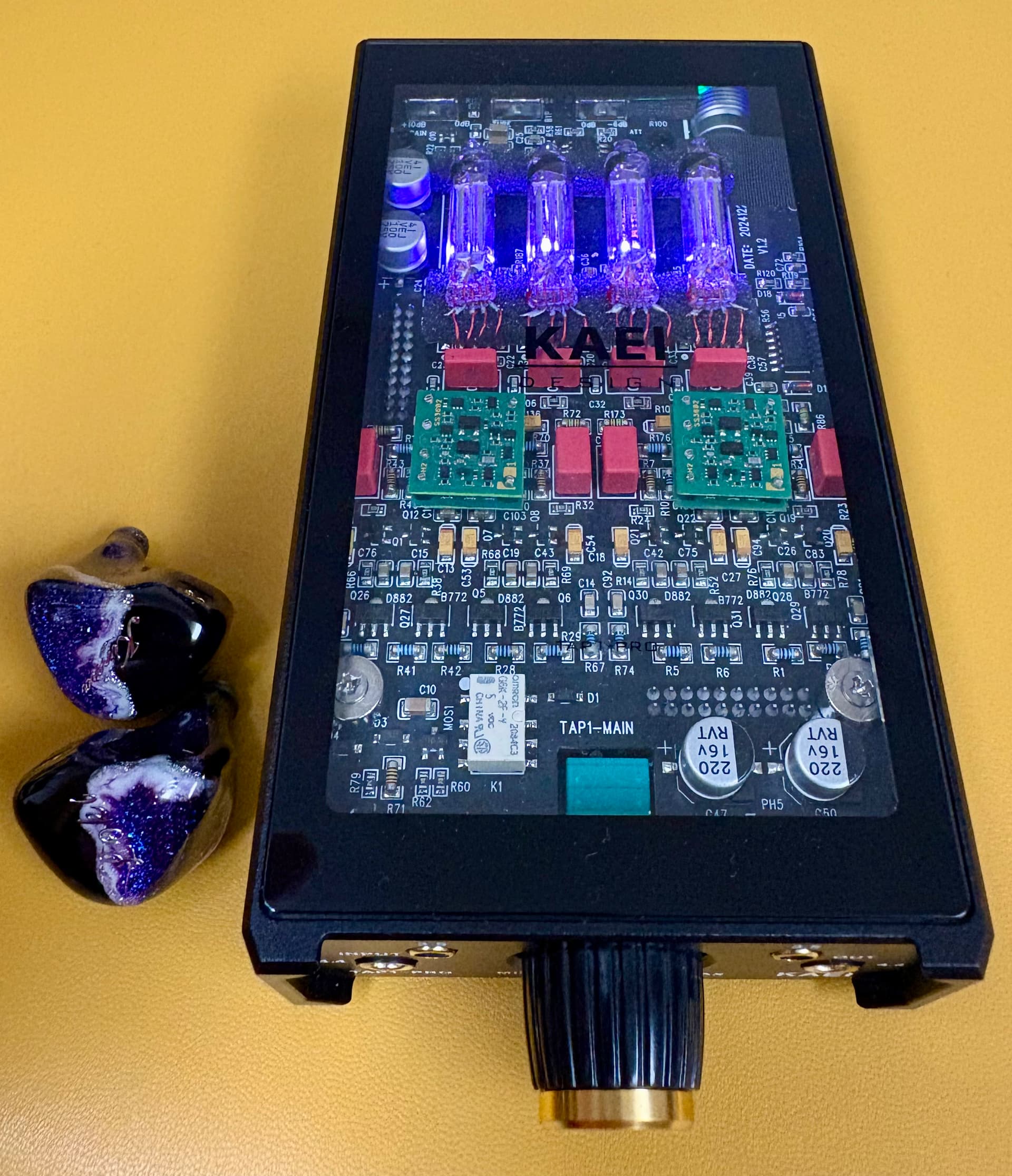
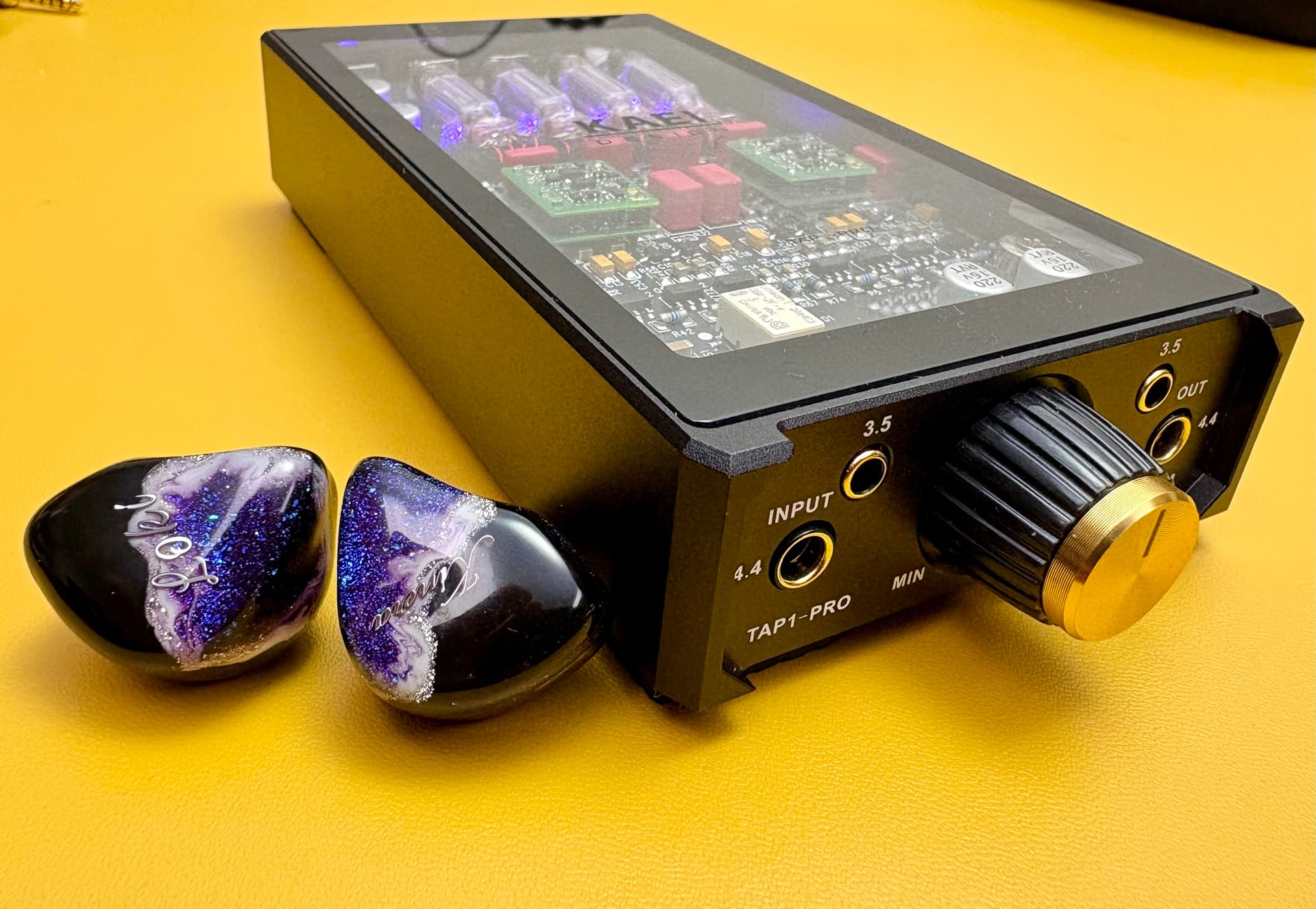
KAEI DESIGN TAP 1 PRO
$590.00 usd DAC/AMP
$135.00 usd PSU 2 power supply.
-Audio input
3.5mm/4.4mm
-Audio output
3.5mm/4.4mm
-Frequency response
15HZ-100KHZ (±1db)
-Signal-to-noise ratio
129DB (turn off the tube)
-Distortion
0.004< (1KHZ, 32Ω) (turn off the tube)
-Gain
1.65 times
-Recommended input level
>2V
-Battery life
about 10 hours in battery mode (5000mah)
-Rated power of linear power supply
7w
-Power interface
USB TYPE-C (charging)
-Recommended headphone impedance
12-600Ω
-Recommended earphone sensitivity
less than 110DB
-Product Dimension
14cm in length, 7.4cm in width and 2.9cm in height
-Maximum Output Power (L+R)
Battery Mode (Portable Mode):
Balanced:
3000mw (16Ω)
2100mw (32Ω)
1100mw (100Ω)
450mw (300Ω)
Single-Ended:
1200mw (16Ω)
700mw (32Ω)
440mw (100Ω)
200mw (300Ω)
Desktop Mode: with KAEI PSU 2 power supply.
Balanced :
4900mw (16Ω)
3200mw (32Ω)
2000mw (100Ω)
990mw (300Ω)
Single-Ended :
1980mw (16Ω)
1400mw (32Ω)
900mw (100Ω)
480mw (300Ω)


Preamble:
Up front, I am not an amp expert.
Some of what is below will be my best assumption. So if you notice something you know to be incorrect, please post a correction in the comments for the benefit of myself and others.
Shout out goes to the Canuck Audioholics review group for sharing the Tap Pro 1 for experience, review, and casual listening pleasure.
Tone Deaf Monk
Kingnubian
Krusty’olBastid
Pros and Cons:
KAEI Design will respond quickly via email to inquiries at their “contact us” email.
 There is not much detailed specification/features information on the KAEI Design website (or, I wasn’t able to find it) Linsoul website is a better option for this basic info.
Base model features dual CS43131 DAC chips capable of decoding 384Hz/32bit. And up to DSD 256.
By request at time of purchase, Tap 1 Pro can be configured with Sabre ES9039Q2M DAC chips.
Base model features dual Muses 02 OP amp chips.
Optional Sparkos SS3602 or Burson V7 OP amps are also available. Either at time of purchase, or, user swappable.
** Note: Discuss configuration options with KAEI Design to confirm compatibility and pricing.
Comes with 2 top covers. Black, or transparent. Cover is held in place with magnets, and easily removable/swappable with included suction cup.
Powerful DAP/AMP capable of powering pretty much any earphone/headphone.
200mw @ 300ohm on 3.5 single ended out.
Up to 4900mw @ 16ohm on balanced out, with external PSU1, PSU2, or PSU Pro power supply attached.
(990mw @ 300ohm)
IPhone users rejoice. Independent volume control. Say goodbye to iPhone standard 13 step volume increment limitation.
DAC AMP when connected via USB
AMP only when connected via 3.5 or 4.4mm input. Tube/OP amp switchable.
Onboard battery for “portability”.
Can be “powered” through charging port while in use.
Optional power supply unit boosts voltage and output wattage. Efficiently drive high impedance headphones.
(As per above)
No 6.3mm output for full size headphones. Adapter would be
required.
The JAN6418 Tube amp section
(4 tubes) will “ring” a bit when the unit is disturbed. Even as slight as adjusting volume. It dissipates after several seconds, but is noticeable when it occurs.
Sound Profile:
The sound profile will be altered to some degree depending on what DAC chips and OP amps installed.
IEM or headphones will add their own coloration.
Also, if connected via 3.5 or 4.4mm input for amp only operation, the individual source device used will impart the nuances of that source devices DAC and amp configuration.
This loaner unit is configured with CS43131 DACs, Sparkos SS 3602 OP amps, and the JAN6418 Tube amps.
In general:
*On OP amp mode, iPhone via USBc connection :
Very much a balanced tuning, it delivers what the recorded source provides.
Very clean, clear, and accurate. Quiet background with an open and spacious stage.
*On Tube amp mode, iPhone via USBc connection.
Tube amps add some warmth and “analog” tone, mids and highs are less elevated and softened to a noticeable degree. Stage closes in to some degree.
*Connecting via the 3.5 or 4.4mm input the internal DAC function of the TAP 1 Pro is bypassed and the sound profile will have a familiarity that you are used to hearing from that device, but, a bit warmer in my experience.
Tube amp mode impacts the sound the same as above. Less elevated and softened mids and highs, added “analog” warmth.
Summary:
I have very much enjoyed the time I have spent with the TAP 1 Pro.
It’s an excellent sounding and very capable DAC/AMP.
Some of the features that add value to me are:
The internal battery that allows for using it in areas without access to a plug in power source.
User configurability.
Tube/OP amp switchable.
Albeit I have DAPs that offer this flexibility, the TAP 1 Pro does it better.
As an iPhone user, the independent volume control.
Starting at around $480.00 usd for base AMP only, and, $590.00 usd for base DAC/AMP configuration, there are many desktop headphone AMP, DAC/AMP options available at, or below, these asking prices.
For those that seek user configurability, and, some level of “portability” that sounds amazing, the KAEI Design TAP 1 Pro is worth a look.
** Note Linsoul currently offering Base DAC Amp and PSU2 combo for $560 usd.
That’s how I read the listing.
Confirm before purchase.
My music sources:
Qobuz, and, FLAC and DSD files stored on the SD cards of my daps.
My music genre are primarily Rock, Blues, Jazz, Symphonic, Country, Rap, R&B, Pop, Electronic.
Enjoy your music.
4 Likes
I never realized how powerful it was and completely agree how clean SS mode is and your Impressions of the tube side.
Great review thanks for sharing your listening impressions.
1 Like
Preamble:
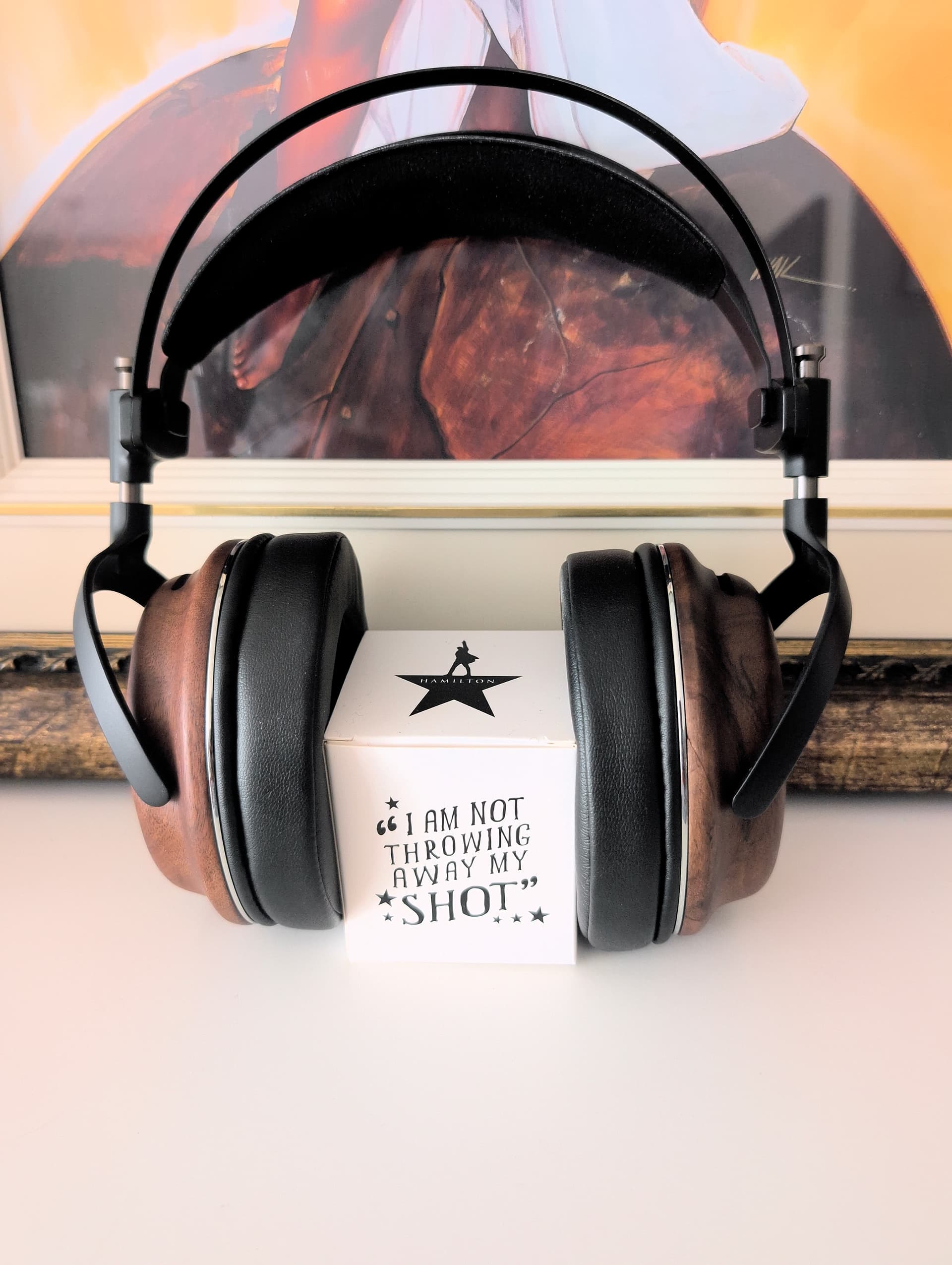
Several Kiwi Ears products have graced my ears in the past few years. Traditionally this has been their in-ear designs, but recently I had the opportunity to listen to one of their full-sized models, the Altruva. Along the same trend here, I have yet another of their full-sized offering, the Atheia.
The $279 USD Atheia is at the time of this review, their highest priced full-sized model. Kiwi Ears has employed a dual-driver hybrid setup comprising a 50mm dynamic driver paired with a 14.5mm planar driver. At first glance, the Atheia looks is a closed-back design, but on closer inspection, there is a slotted vent at the top of each walnut wood ear cup.
With an impedance of 32ohm and a sensitivity of 102db/ 1mW, the Atheia is easy to drive, which was apparent during listening on different sources. While all could drive the Atheia to acceptable loudness levels, better sources tightened up the bass and overall resolution. The source also affected the Atheia’s sonics. Warmer sources overemphasized the already boosted mid-bass and, as such, I recommend a balanced or brighter source as an ideal pairing with the Atheia.
Specs:
Drivers: Dynamic 50mm + Planar Magnetic 14.5mm
Frequency Response Range: 20Hz-40KHz
Sensitivity: 102±3dB @1KHz1KHz1KHz1KHz1KHz1KHz1KHz1KHz 1mW
Impedan@1Ke: 32@1K±@1K0% @1@1KHz0.5@[email protected]
THD: @1KHz0.5% @1KHz 1mW
Build & Fit:
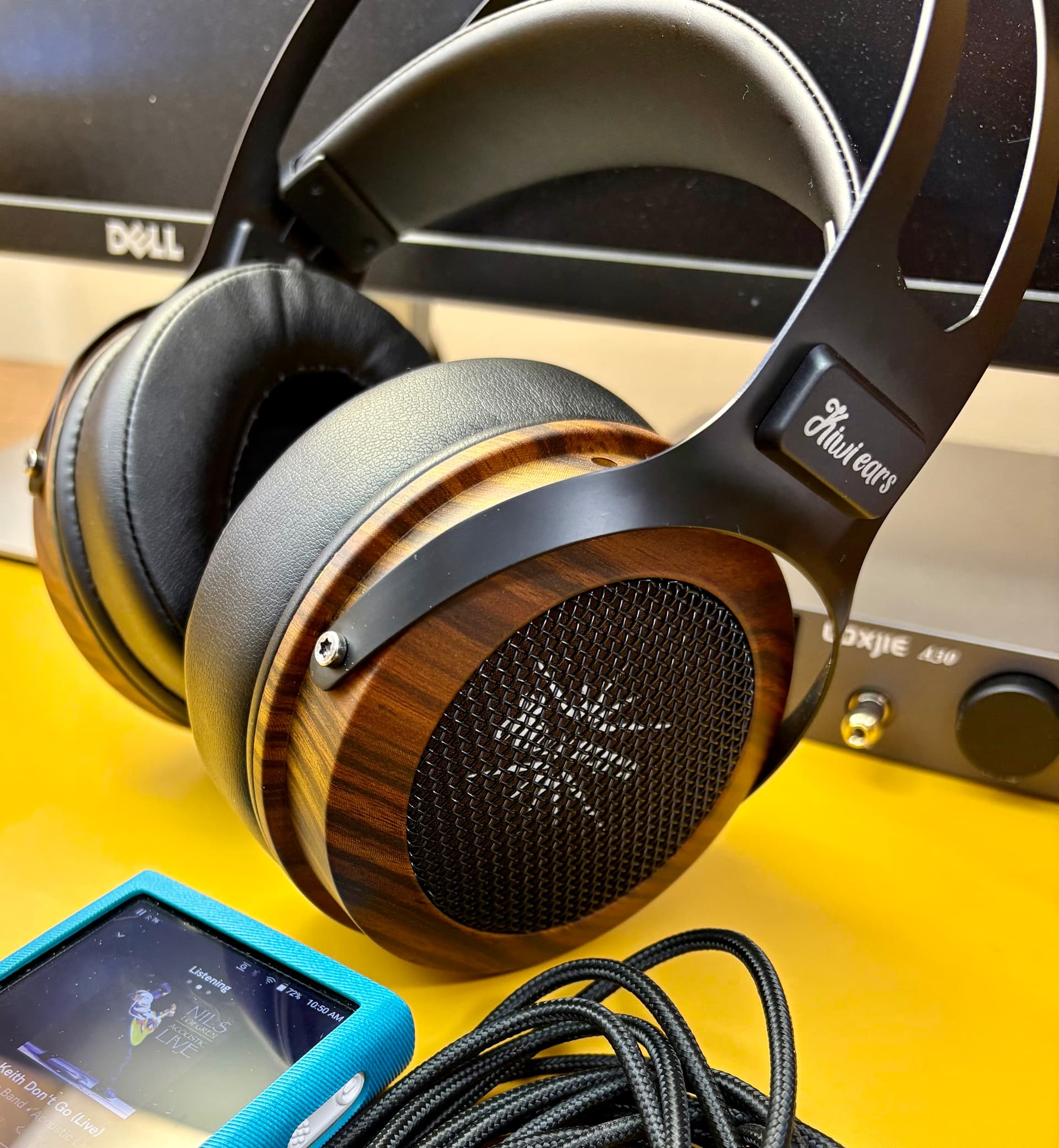
1. Quite an attractive headphone. Tasteful branding decorates the beautiful Walnut cups.
2. Build quality is very good and feels sturdy.
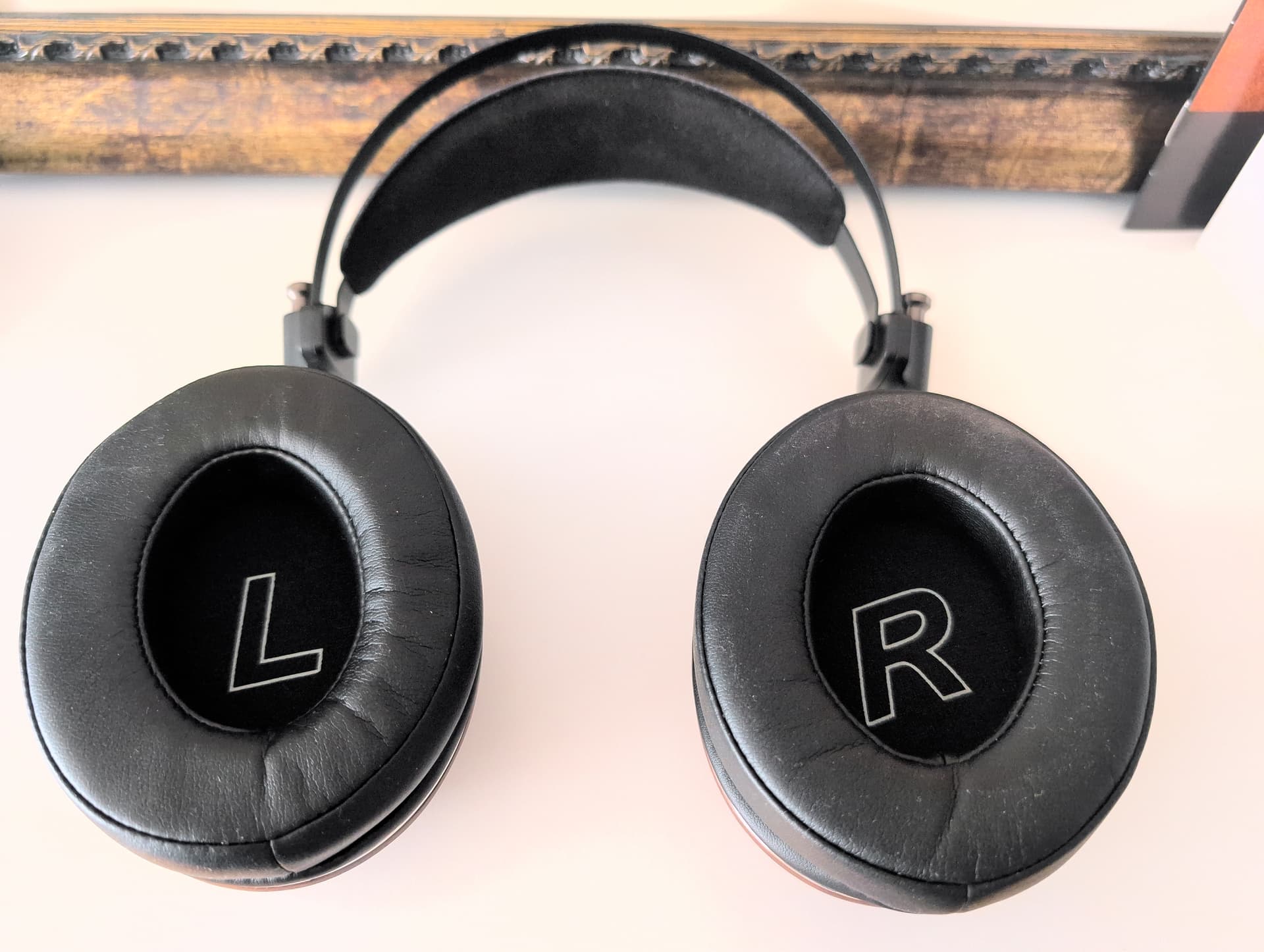
3. Comfort is good with soft pads and enough pressure to stay fit yet remain comfortable.
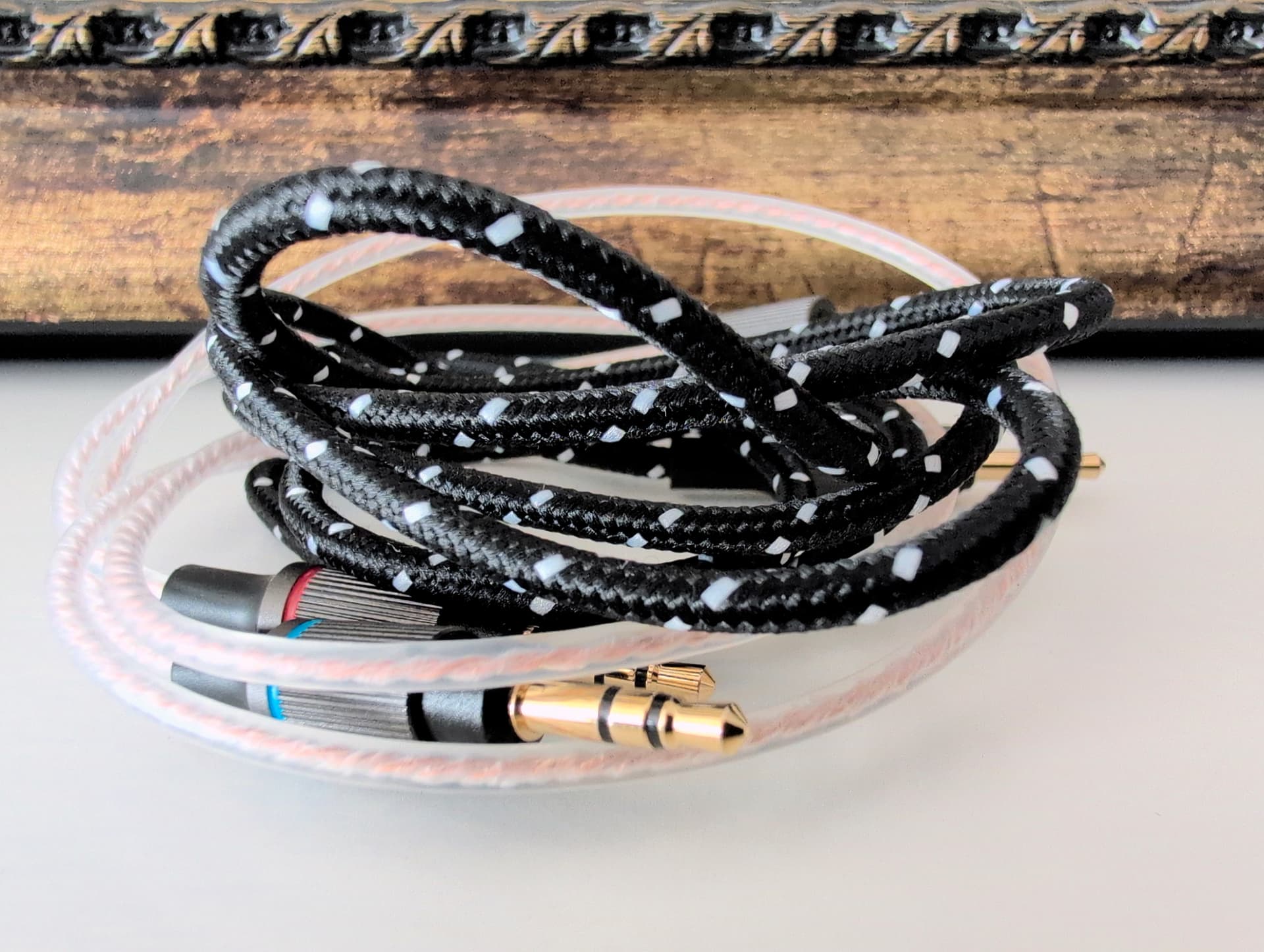
4. The supplied accessories are also of good quality. The cable is microphonic-resistant.
5. The 3.5mm cable is quite nice and of decent length and build quality.

SOUND:
Bass:
1. Mid-bass emphasis over sub-bass.
2. Deepest sub-bass is present but may not be authoritative enough for some.
3. Mid-bass gets an energetic and driven boost. Can occasionally overshadow the midrange and treble.
4. The mid-bass has great speed and snap.
5. Bass has moderate but pleasing detail.
6. The bass does not bleed into the midrange.
Midrange:
1. Lower midrange slightly recessed compared to upper. Warmth noted.
2. Detail retrieval is good.
3. The midrange presentation has pleasing energy without harshness.
4. Vocals are usually slightly forward in the mix, females more so than males.
5. Pleasing timbre and balance.
6. There is moderate pinna gain, and there is little to no harshness.
7. Note-weight and density are good.
8. Layering and separation are good.
9. Transients exhibit a sharp, rapid attack with natural decay.
10. Overall midrange clarity is pleasing, in particular for vocals.
11. Pleasing delivery with natural instruments and vocals.
Treble:
1. The treble extends moderately well with a roll-off at the very top.
2. Smooth treble presentation with nuanced highs.
3. Detail retrieval is good, while sparkle and air are just adequate.
4. The treble is tuned to be inoffensive and lively, without the common excessive brightness.
5. The treble adds spaciousness to tracks.
6. The treble presentation lends itself well to long listening sessions. Treble sensitive rejoice.
The Kiwi Ears Atheia is a headphone that requires some time spent trying out different sources to get that musical synergy. This will reward the listener with a sound that is smooth yet detailed enough to keep one’s interest even over long listening sessions.
The Atheia relayed dynamics very well with ample control and a good sense of scale. While the sub-bass did not have the force that some may crave, the mid-bass was sharp, textured and clean. The treble is nuanced yet tuned not to offend. Still, there is enough energy to more often than not counter the extra energy of the mid-bass, which can overshadow the midrange. Careful source selection can mitigate this to a great extent. The Atheia, once dialled in, becomes a headphone that is easy to listen to and lends itself to most music genres. It has a slightly darker presentation, but the details and textures are still all there.
IMAGING & SOUNDSTAGE:
1. A moderate sized soundatsge. More intimate than expansive.
2. Instrument placement is accurate.
3. The dimensions balance with good depth noted.
4. Notable instrument spacing.
5. Layering and instrument separation are pleasing.
CONCLUSION:
The Kiwi ears Atheia pleases with its impressive looks and high-quality manufacture and sound. It offers a slightly darker sound signature that, somehow, still conveys a lively and nuanced presentation.
The Atheia is easy to drive yet source-sensitive and sounded best driven by a balanced or even brighter source for the best synergy. With this balance met, the Atheia lent itself nicely to long relaxed listening sessions that were satisfying.

2 Likes
KIWI EARS ALTRUVA
Open Back, Wired Headphone
$69.99 usd.
*DRIVER UNIT
50mm Dynamic Driver
*IMPEDANCE
32 Ohm
*SENSITIVITY
98dB ± 3dB
*FREQUENCY RESPONSE
20Hz – 40kHz
*PLUG
3.5mm + 6.35mm adapter
*CABLE LENGTH
3 meter
Preamble:
Gracious and sincere thanks go out to Kiwi Ears for providing the ALTRUVA over ear headphones for review by the Canuck Audioholics review group.
Tone Deaf Monk
Kingnubian
Krusty’olBastid
I did not receive the retail packaging, but from the info on line it appears ALTRUVA arrives nicely adorned.
Inside the Box:
-Kiwi Ears Altruva x1
-Detachable 3m Audio Cable (3.5mm to Dual 3.5mm) ×1
-6.35mm (1/4 inch) Adapter ×1
-Extra Pair of Velour Earpads ×1 (Left & Right)
-Earphone Case x1
-User Manual ×1
Pros and Cons
Build quality appears to be excellent, not much plastic visible.
Spring metal yoke, and metal cans.
(this review set features a wood grain print, black also available)
The head-strap uses a spring loaded cable suspension system for “automatic” fitment adjustment. Just pull them into place.
Comfort is very good for me.
The set is light weight, clamp force is adequate for a good seal and isolation without excess pressure that would cause fatigue. Head strap is narrow, but weight is light enough I don’t really feel the head strap on my head.
The “pleather” ear cups are generously padded and large enough to fit my large”ish” ears without contact.
The included, fabric wrapped, 3 meter cable is detachable and appears to be of durable construction.
I find it a bit stiff and unwieldy, and while the 3 meter length is good for connection to headphone amps a few feet away from your easy chair, it is not ideal for use with portable gear. It drags on the floor and just generally gets in the way at times.
Cable has easily noticeable micro-phonics above the Y splitter.
Typically not noticeable while music is playing during quiet listening sessions, but worth noting.
It is also prone to picking up electrical interference. Not all the time, but on both my home stereo headphone amp setup, and my computer headphone amp setup, it was consistently evident.
(i.e. in close proximity to multiple electronic devices).
** I had no issues with DAPs, or with my iPhone and DAC Amps/Dongle combinations.
Plays nice with various source devices. Reflects the nuances of each device, so device rolling can be an integral part of dialling in personal sound preferences.
Overall a warm, fairly balanced and relaxed set. More on sound and source devices below.
Source Devices:
I’m fortunate to have several source device options at my disposal, DAPs, powered and non powered dongles, and a couple headphone amps.
I’m not going into detail on each just a few general observations.
ALTRUVA is a warmer relaxed sounding headphone and my observation is; on warmer sources the bass can be thick and boomy, carrying into the mids and highs, resulting in reduced mids detail, and, less energy in the upper end.
Not necessarily a detriment, if you like a warm relaxed listening experience a warmer source may be your preference.
Brighter more resolving sources tighten up and add punch to the bass, add some clarity to the mids, and sparkle to the treble.
ALTRUVA retains its overall warm and somewhat relaxed demeanour, but sharpens up a bit on brighter sources.
This is my preferred listening experience on this headphone.
My two favourite source devices with the ALTRUVA are the Loxjie A30 DAC Amp on my computer, typically tasked with running a pair of passive desktop speakers. And the ACTIVO P1 DAP.
The sound evaluation will be done on the ACTIVO P1.
Equipment:
Kiwi Ears ALTRUVA Open Back wired Headphones.
ACTIVO P1 DAP, 3.5mm SE out.
Stock Cable, terminated 3.5mm.
Sound:
As mentioned above, on warmer sources, bass can be loose and boomy without a lot of dynamics or texture.
On brighter more resolving sources the Bass tightens up, becomes more dynamic and textured, and mid sub bass separation is better defined.
On bass heavy tracks, specifically electronic generated, the sub bass will pull low, with a nice deep, boomy rumble.
Mid bass is punchy with good impact.
Mid over sub bass bias.
The mids are somewhat relaxed, and, focused more on macro than micro detail.
Vocals on the other hand tend to present more elevated and forward, more prominent in the mix.
Male and female vocals sound mostly accurate and natural with a touch of added warmth.
One caveat here; on more powerful source devices I did note, on occasion, that vocals, most often female, could thin out and become mildly harsh when pushed even slightly above moderate listening levels. I tend to think this may have been the dynamic driver being pushed a bit beyond its happy place.
High end is also relaxed. They present lower in the head space, along with the mids.
They are not over energetic, but are present enough to add nice sparkle and some micro detail.
Staging is quite good.
Width outside the head, decent top to bottom height, and while not truly “holographic” front to rear depth is enough to provide an overall head filling stage experience.
ALTRUVA isn’t going to offer a highly detailed, open and spacious stage where you pick up on previously unheard background vocals, instruments, or sound effects. But it does offer decent imaging and layering.
Summary:
In short:
A very good headphone, and excellent value IMO.
ALTRUVA does lack some fine detail. It can be very warm, to the point of being a bit muddy on certain source devices.
But once I got my source device preferences nailed down, my listening sessions were engaging and enjoyable. Just coast along, anticipating the next track, and no risk of fatigue, from the sound, or from lack of comfort.
Not a technical marvel, but very enjoyable.
For $69.00 usd, you get virtually all metal construction, comfortable fit, detachable cable, a carry case, and, an extra set of velour ear pads in the box.
If you’re good with a bit more relaxed and easy listening music experience.
ALTRUVA represents outstanding value for the dollar.
Worthy of consideration.
My music sources:
Qobuz, and, FLAC and DSD files stored on the SD cards of my daps.
My music genre are primarily Rock, Blues, Jazz, Symphonic, Country, Rap, R&B, Pop, Electronic.
Enjoy your music.
2 Likes

KIWI EARS ATHEIA
Dual Driver, Closed Back,
Wired Headphones.
$279.99 usd
** DRIVERS
Dynamic 50mm
Planar Magnetic 14.5mm
** FREQUENCY RESPONSE RANGE
20Hz~40KHz
** SENSITIVITY
102±3dB @1KHz 1mW
**IMPEDANCE
32Ω±10% @1K Hz
** THD
<0.5% @1KHz 1mW
Preamble:
Gracious and sincere thanks go out to Kiwi Ears for providing the ATHEIA over ear headphones for review by the Canuck Audioholics review group.
Tone Deaf Monk
Kingnubian
Krusty’olBastid
I did not receive the retail packaging, but did receive all the included items.
Everything appears to be of good quality, the case will provide good protection for storage and transport.
Inside the Box:
1x Kiwi Ears Atheia
1x Cable
1x Headphone Case
1x User Manual
Pros and Cons:
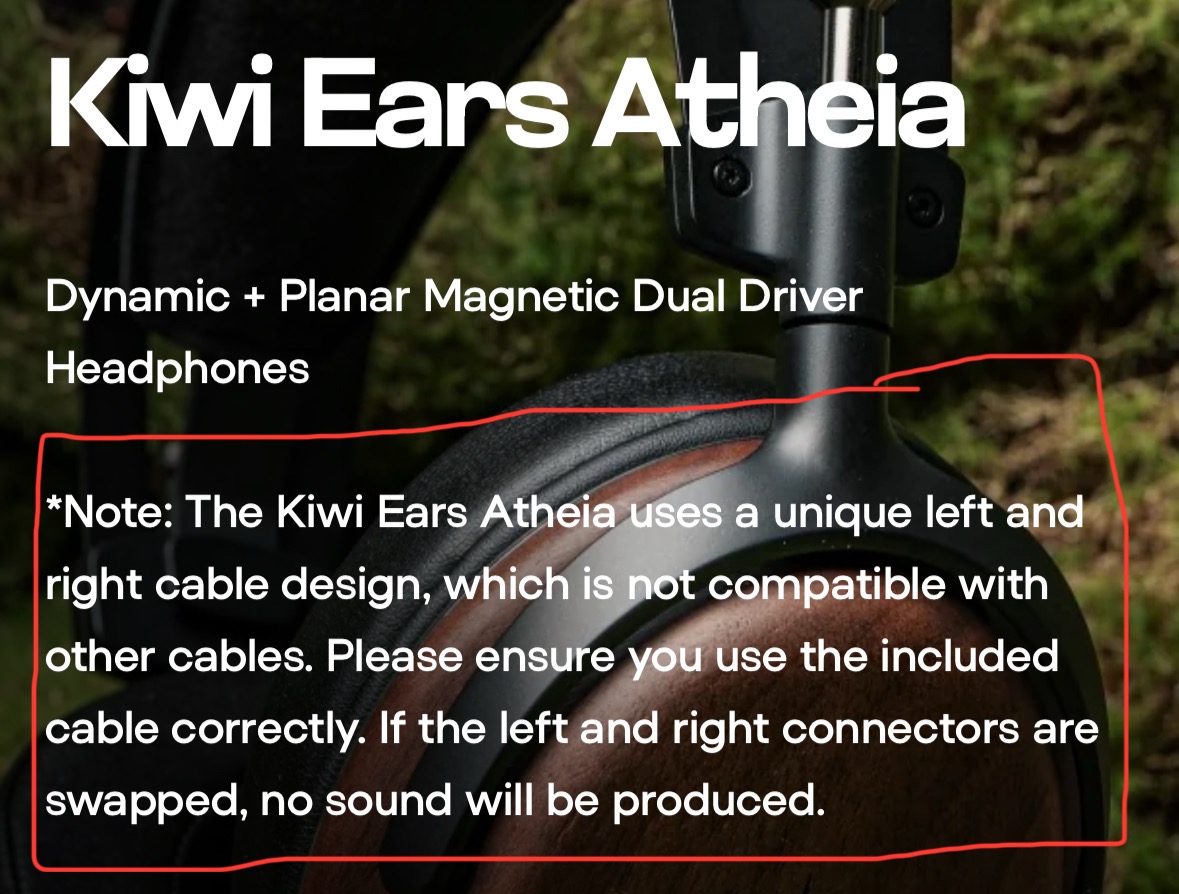
Kiwi Ears cautions that the ATHEIA has a proprietary cable design, and is not compatible with other cables.
(See Photo)
Well…. inquiring minds want to know…..
I swapped on two different cables, both worked fine.
Using the stock cable, I swapped left to right connections, still got sound.
However, I did find an oddity;
The Hiby R8ii DAP detects external Amps, or DAC/Amps when plugged into the 3.5 or 4.4mm connections, and switches automatically to Line Out mode.
Connecting the ATHEIA.
The R8ii identifies them as an external device and switches to Line Out. No sound output.
So there is something unique about the cable. If planning a cable upgrade of any sort, may be wise to consult with Kiwi Ears before laying down your hard earned cash.
Build quality and aesthetics are very nice.
The only plastic you will find is the joints between the headband and the housing arms.
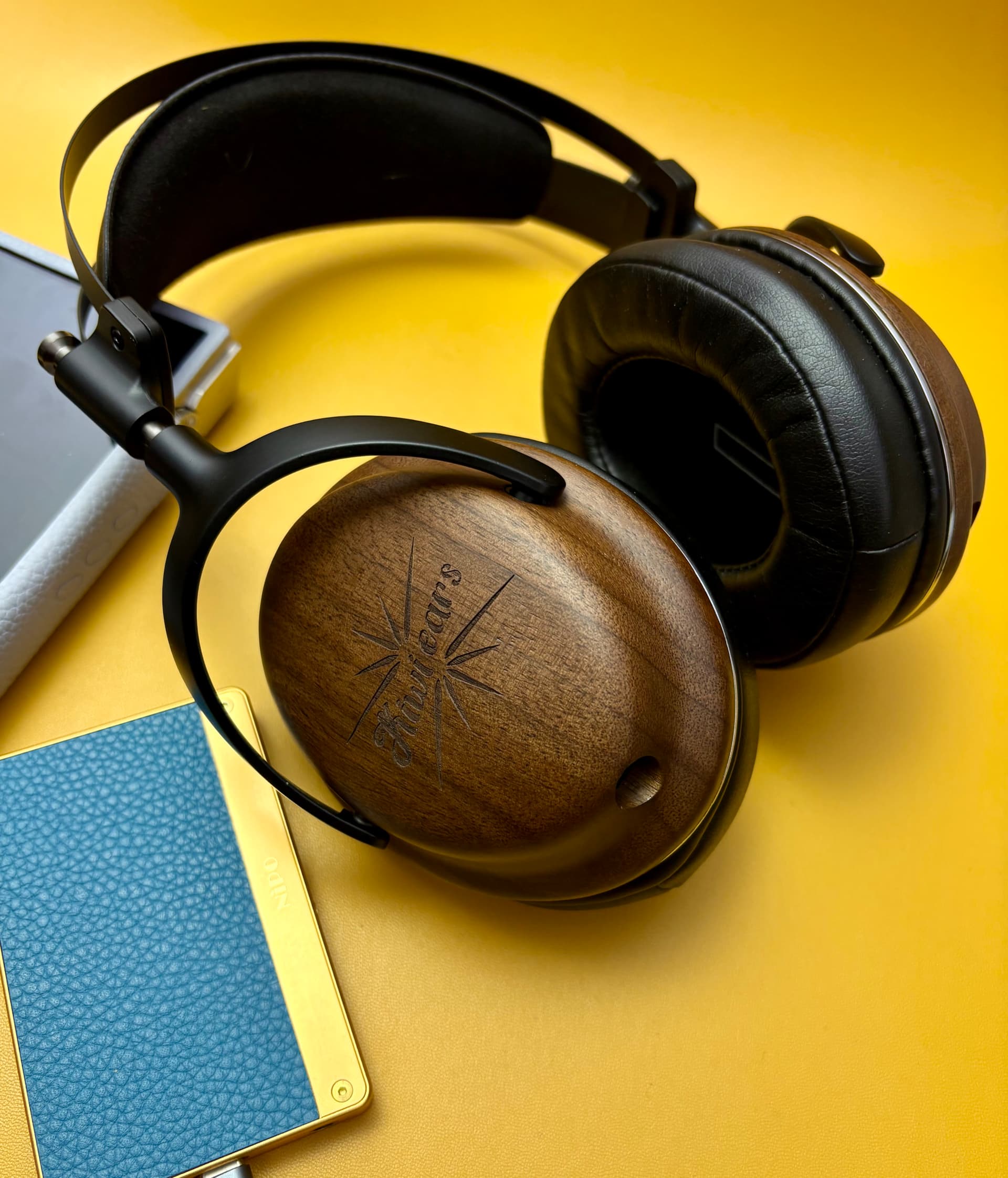
Walnut wood housings are laser etched with the Kiwi Ears logo, and add a look of class, imo.
The wood housings do add a bit of weight, but the headphones are well supported, have soft comfortable ear pads, and I found them very comfortable for lengthy listening sessions.
Easy to drive, and plays nice with various source devices. Reflects the nuances of each device, so device rolling can be an integral part of dialling in personal sound preferences.
ATHEIA does benefit when driven with more capable sources, in my experience.
The implementation of the 50mm dynamic, and 14.5mm planar magnetic is very well executed.
Coherence between the two drivers is seamless, but, when the track calls for it, nice definition between the lower and upper registers.
Source Devices:
ATHEIA has a nicely balanced sound signature, with some roll off in the treble, but, the planar driver keeps the upper end livelier than the graph would indicate.
They sound good on every source device I paired them with, reflecting the individual nuances of each source device.
Of the devices I rolled, FiiO JM21, Hiby R4, ACTIVO P1, iBasso DX340, and Nippo A100 DAC Amp on iPhone.
My two favourites were the DX340 and the Nippo 100.
The sound evaluation is done on the Nippo A100 DAC amp paired with iPhone 16, streaming Qobuz.
Equipment:
Kiwi Ears ATHEIA Closed Back wired Headphones.
Nippo A100 DAC amp on 3.5 SE out. with iPhone 16 streaming Qobuz.
Stock Cable, terminated 3.5mm.
Sound:
Bass is mids over sub, but on bass focused tracks ATHEIA steps up with thick, deep, rumbling sub bass.
Mids are mildly elevated, clean, and clear with very good macro detail retrieval. Upper mids bring some micro detail to the mix.
Vocals are lifted and forward in the mid range. Tonality has a touch of added warmth, but generally natural and accurate on both female and male vocalists.
Treble is rolled off, but the planar driver helps keep it lively. Especially on genres like symphonic/classical and jazz. Violins, flutes, trumpets etc. soar nicely.
Staging is intimate, outside the ears, but mostly inside the head, stage is open and reasonably spacious so imaging and layering is very good.
Summary:
I very much enjoyed my time spent with this headphone.
ATHEIA is comfortable for lengthy listening sessions, and it has enough of everything sonically to engage me and hold me in the drift.
On top of that build quality appears good, and, it’s a classy looking set on top of it all.
ATHEIA was priced at $349.00 usd at launch, but currently $280.00 usd.
Not sure if this a temporary, or permanent price adjustment.
But based on sound, looks, and comfort.
I’m comfortable saying it’s worthy of consideration if you’re in the market.
My music sources:
Qobuz, and, FLAC and DSD files stored on the SD cards of my daps.
My music genre are primarily Rock, Blues, Jazz, Symphonic, Country, Rap, R&B, Pop, Electronic.
Enjoy your music.
2 Likes
Mind showing a pic of the cable? (specifically the male jack that goes into the hp cups.)
1 Like
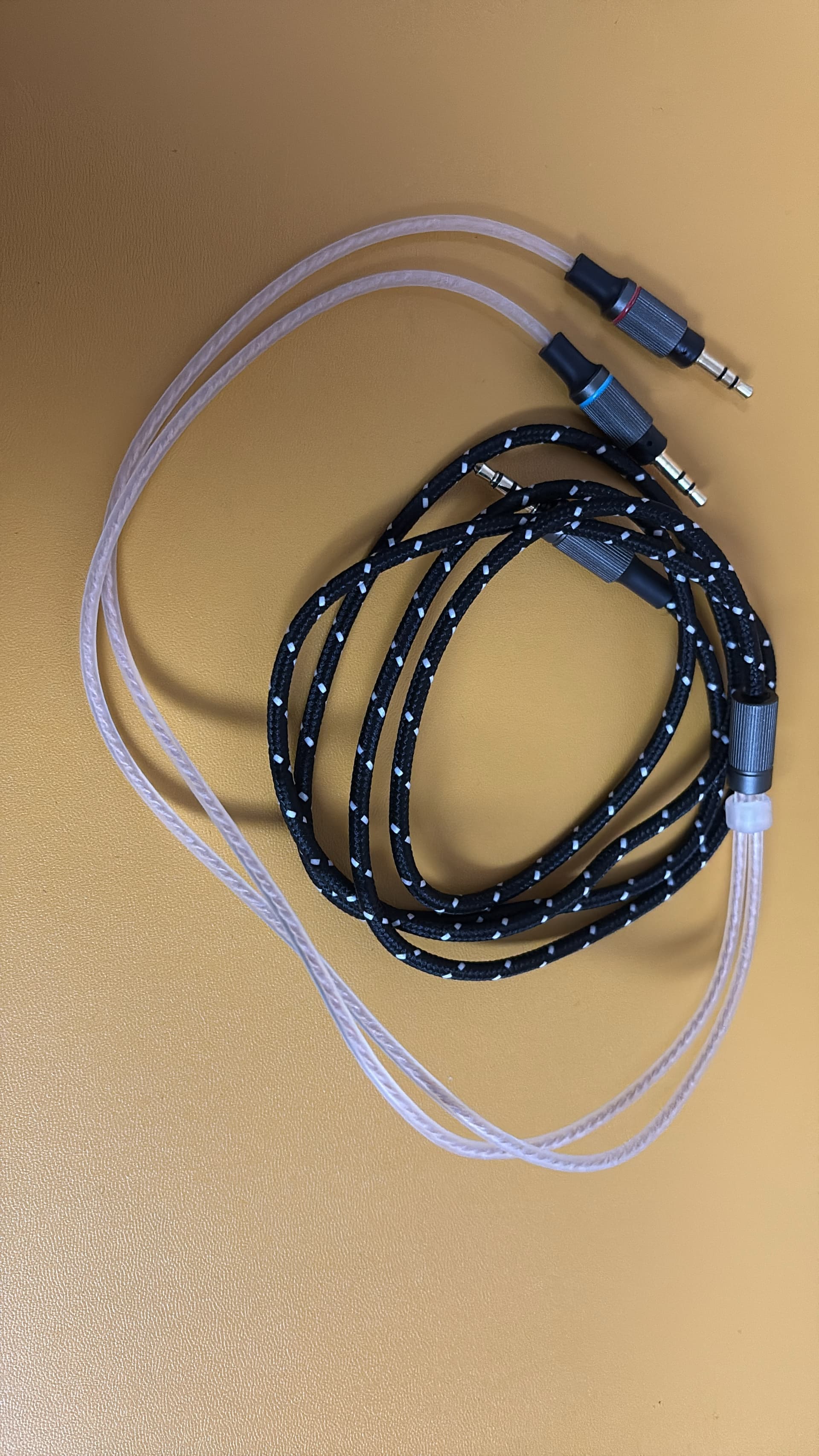

Guess you dont have a multimeter? Could confirm how they wired the cable in that case since i guess that is what that note they gave is about. A different pinout from the usual standard.

CVJ VIVIAN
Single Dynamic Driver IEM
$18-25.00 usd depending on seller
10mm dynamic driver.
22Ω impedance.
95dB sensitivity.
20Hz-20kHz frequency response.
Preamble:
Sincere appreciation and thanks to CVJ for providing the Vivian review sample to the Canuck Audioholics review group.
Tone Deaf Monk
Kingnubian
Krusty’olBastid
In the box:
*Vivian ear pieces.
*3 pair silicone ear tips.
*Silver plated copper cable terminated 3.5mm.
*Documentation.
Note: the cable is a very nice fabric wrapped offering. Well above the typical budget cable
Pros and Cons:
Ear pieces are nice quality 3D printed with a choice of Black, or waifu embossed faceplates.
Our review set has one of each faceplate design. I have a preference for the black, has a kind of classy gothic look to it, the waifu artwork is well done and should please those whose preference lie there.
I would rate the ear piece sizing on the large side of small, if that makes any sense.
Nozzle length limits insertion depth to fairly shallow in my ears.
This required I default to Sedna Xelastec ear tips to achieve a secure anchor and consistent seal.
I have tough to fit ears, so this may affect only a small number of enthusiasts.
Cable is fabric wrapped silver plated copper, with 2 pin QDC connectors, terminated 3.5mm.
No other termination options are available.
This cable quality is well above anything I’ve seen offered previously with a budget IEM. way up CVJ!
Distinct V shaped tuning.
Source Devices:
I only rolled 3 different source devices.
FiiO JM21, Nippo A100 DAC amp dongle connected to my iPhone, and ACTIVO P1.
Vivian sounded good on all three devices.
Sound:
This is not going to be an in depth sound evaluation.
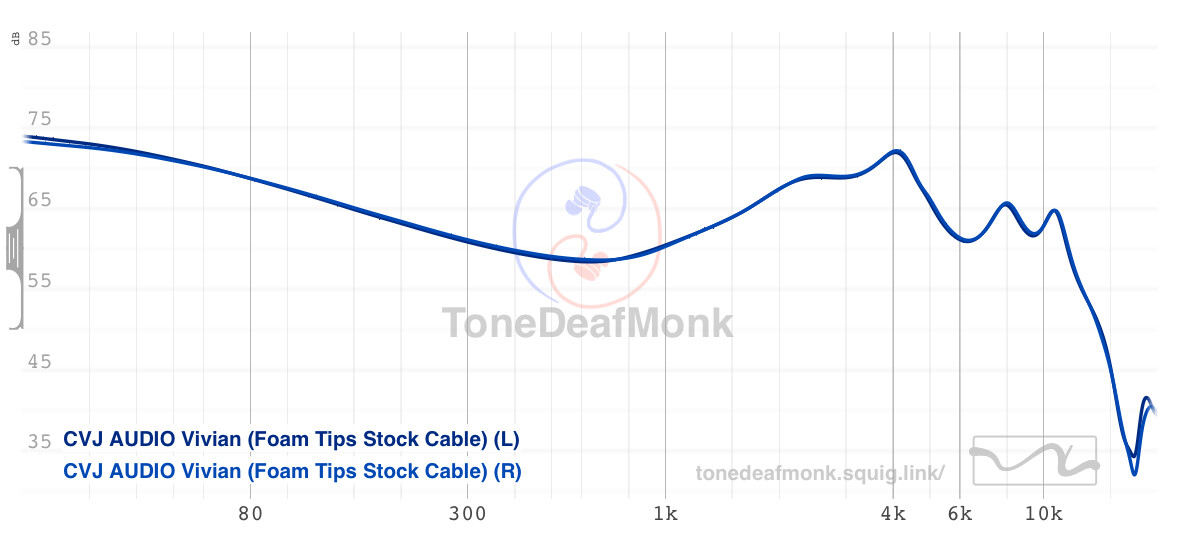
The Frequency graph pretty much tells the story.
Sub over mid bass, scooped out lower mids, a late-ish pinna rise into the upper mids with a spike around 4K that quickly rolls off.
A beautiful V.
On warmer sources (JM21 and Nippo 100) the bass has a deep rumble and decent texture. It carries into, and warms the mids without burying them.
Good macro detail, with elevated and mostly accurate vocals.
The upper mids also carry the highs.
Air and sparkle are muted slightly by the overall warmth, but they manage to push through and provide a good energy up top.
The detailed, more resolving P1 accentuates and further defines the V.
Bass tightens up, sacrifices some rumble in exchange for more punch, and gains some extra dynamics/texture.
Mids and vocals gain additional detail and clarity, but, some vocals, higher pitched female vocals in particular, can on occassion thin a bit.
The upper end gets added energy and more sparkle and air, without becoming harsh.
Personally, my preference leaned toward the more resolving ACTIVO P1, but, the warmer sources also sounded very good.
Regardless of source, I did not find Vivian fatiguing.
Staging is average. Left to right width fill the head, but stays mostly inside the head. Top to bottom height is good. Front to rear depth is, at best, average.
Imaging and layering also average.
Summary:
Vivian is a very fun and energetic V shaped listening experience.
What it lacks in technicals, it more than makes up for with fun factor.
It played back most of my library well, the definitive exceptions being symphonic/classical, and some Jazz selections.
Pricing varies vendor to vendor, with some adding shipping on top of the ask.
But a little shopping effort can net you the Vivian for about $18.00 usd.
The above average budget build quality and cable alone are worth the ask.
If you also enjoy a fun and energetic V shaped signature, it is definitely worthy.
My music sources:
Qobuz, and, FLAC and DSD files stored on the SD cards of my daps.
My music genre are primarily Rock, Blues, Jazz, Symphonic, Country, Rap, R&B, Pop, Electronic.
Enjoy your music.
1 Like
Sorry no I don’t.
1 Like
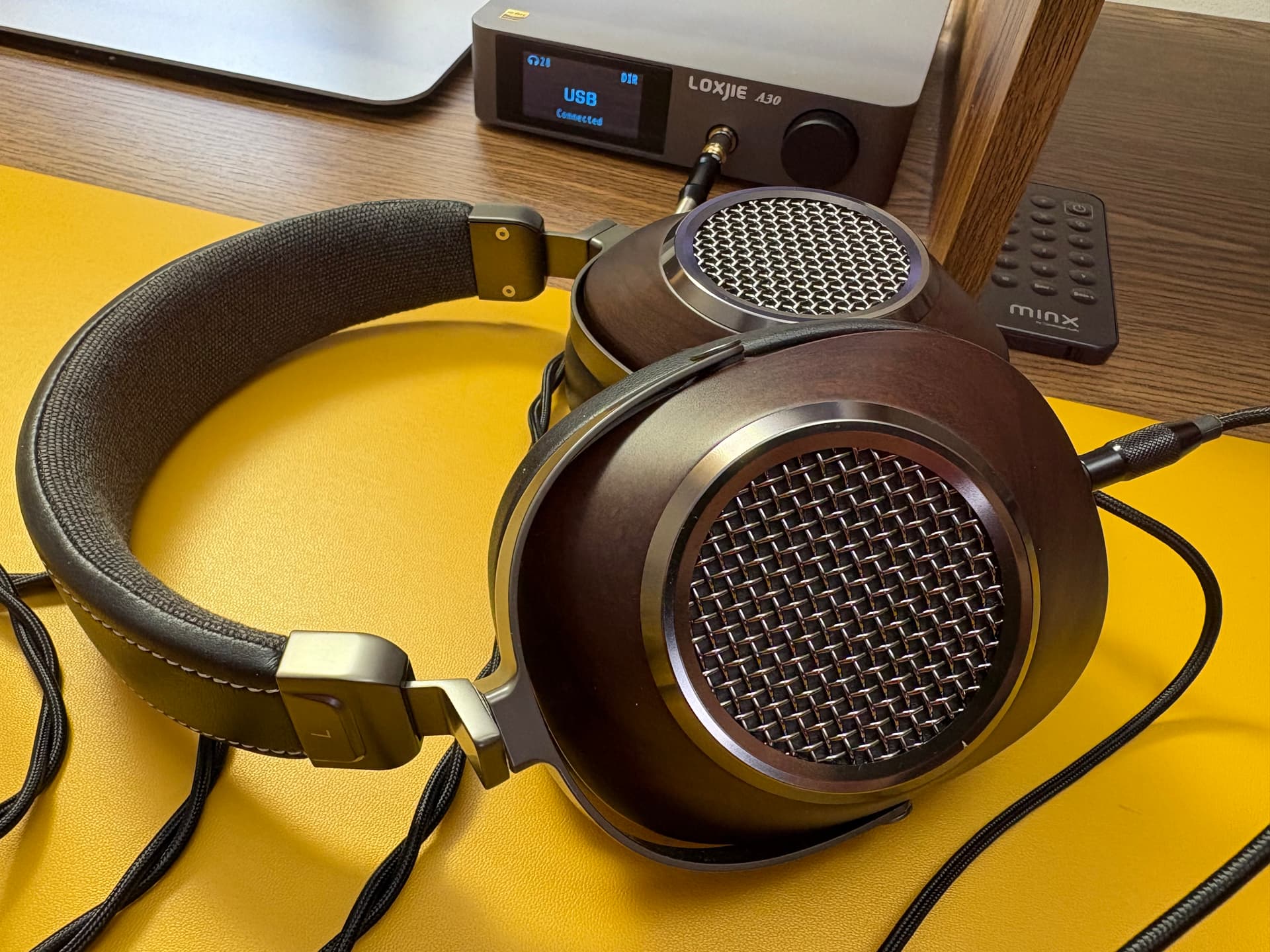
SIVGA Anser
Open Back Wood Headphone.
50mm Dynamic Driver.
$219.00 usd.
*Transducer Type : Dynamic Driver With Titanium Coated Dome.
*Transducer Size: Ø 50mm
*Impedance: 38±15%Ω
*Sensitivity: 105db±3db
*Frequency Response: 20 Hz - 20K Hz
*Connector: Ø 3.5mm
*Cable Length: 2.0M±0.2M
*Weight: 342 g
Preamble:
The Canuck Audioholics appreciate that SIVGA has generously provided the Anser headphone to enjoy, and review.
Thank you SIGVA.
Tone Deaf Monk
Kingnubian
Krusty’olBastid
In the Box:
1x Headphone ANSER
1x Cable
1x Carrying hemp bag
1x 3.5mm female to 6.35mm male adaptor
Pros and Cons:
Build Quality appears good. Visual aesthetics are very nice.
Lightweight and comfortable.
Soft leatherette ear pads with a fibre contact surface that helps reduce sweating.
Secure clamp force, but not tight
(on my head, ymmv)
Ear cups could be a touch larger. My ears touch on the inner edges of the pads. Not annoying or distracting, but noticeable.
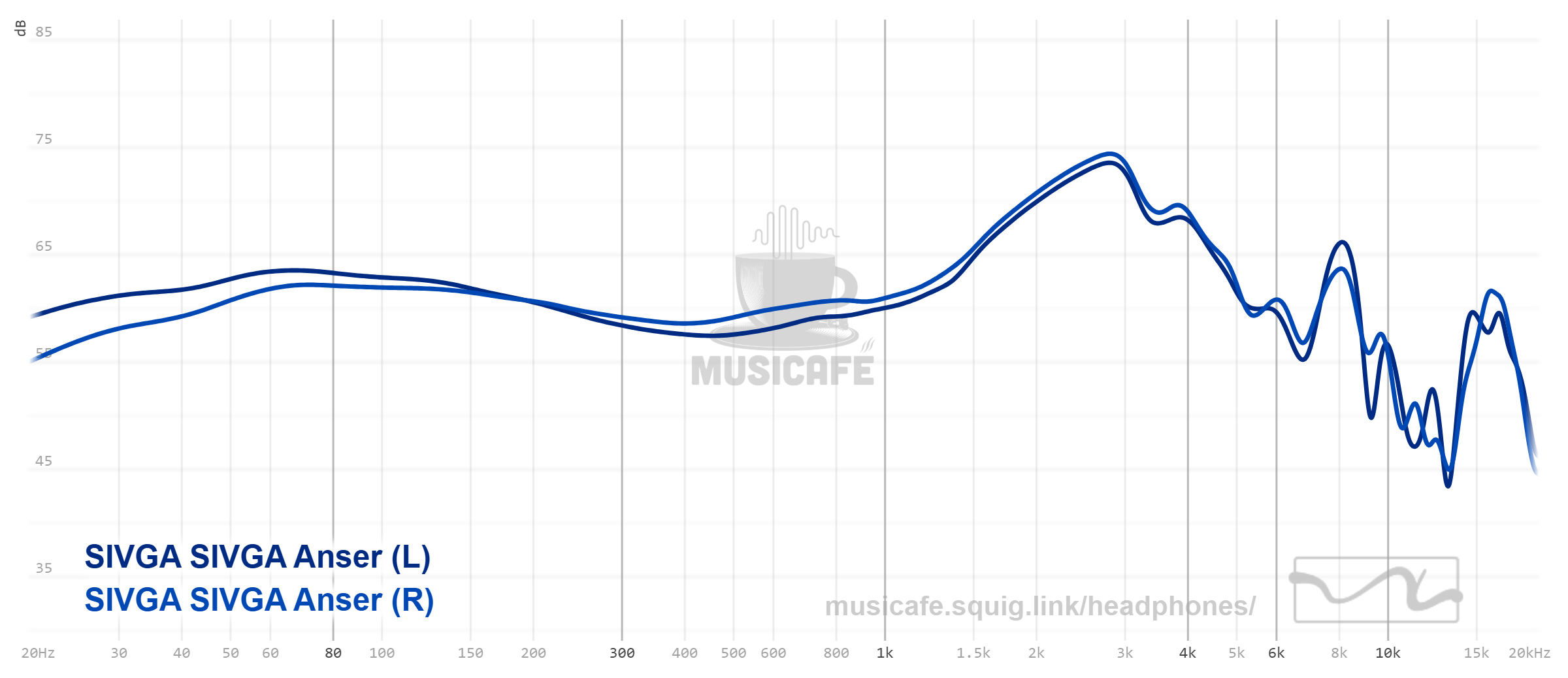
More bass presence than the Frequency graph indicates, but struggles to deliver strong sub bass.
Not ideally suited to electronic or other genres that rely on a strong sub bass presence.
Mid centric. Lower mids have good macro detail, upper mids are clear and detailed, good micro detail retrieval.
Vocals are clean and detailed. Male and female vocals are, with occasional exceptions, tight and measured with accurate tonality.
Highs are mostly carried by the upper mids. Track by track determines the amount of sparkle and air in the upper end. Typically, the treble frequencies, while present, don’t extend high in the staging.
Staging fills the head. Width outside the ears. Top to bottom height is average. Front to rear depth is also average.
Imaging and layering, fair.
Summary:
Despite the critique above I found the Anser very easy and enjoyable to listen to for lengthy sessions.
While I enjoy electronic and other sub bass heavy genres, they are not a mainstay, and Anser works well with bulk of my music library.
Source devices added their individual nuances, eg. Bright highly resolving sources like the AK HC4 dongle tightened the bass but could make the upper mids a touch “peaky” on certain tracks. (I’m a bit mids sensitive)
Warmer sources like the FiiO JM21, added warmth to the mids, but veiled some of the upper sparkle and air.
I found the Loxjie A30 desktop amp a very good “in between” pairing. The A30 features ES9023 DAC, an Infineon MA12070 Class-D AMP, and an output of 100mw @32 ohm on the headphone out.
More than enough to power to easily drive the Anser, a tighter bass but still adding warmth to the mids while maintaining air and sparkle.
All sounded, good, but, as per usual, the source device selection can determine what is your most enjoyable listening session.
At $219.00 usd the build, fit, finish, and stock cable are commensurate with the price IMO. Although a proper carrying case would be a welcome addition.
If mid over sub bass, and a mild V or U shaped tuning is something you would enjoy, have a look at SIVGA Anser.
My music sources:
Qobuz, and, FLAC and DSD files stored on the SD cards of my daps.
My music genre are primarily Rock, Blues, Jazz, Symphonic, Country, Rap, R&B, Pop, Electronic.
Enjoy your music.
2 Likes
Graphs aren’t everything, but that’s one of the uglier ones I’ve seen. Pretty limited market for that tuning, no?
1 Like
It is frightening, but graphs are not always accurately representative of the sound.
The headset has more bass than the graph indicates.
1 Like
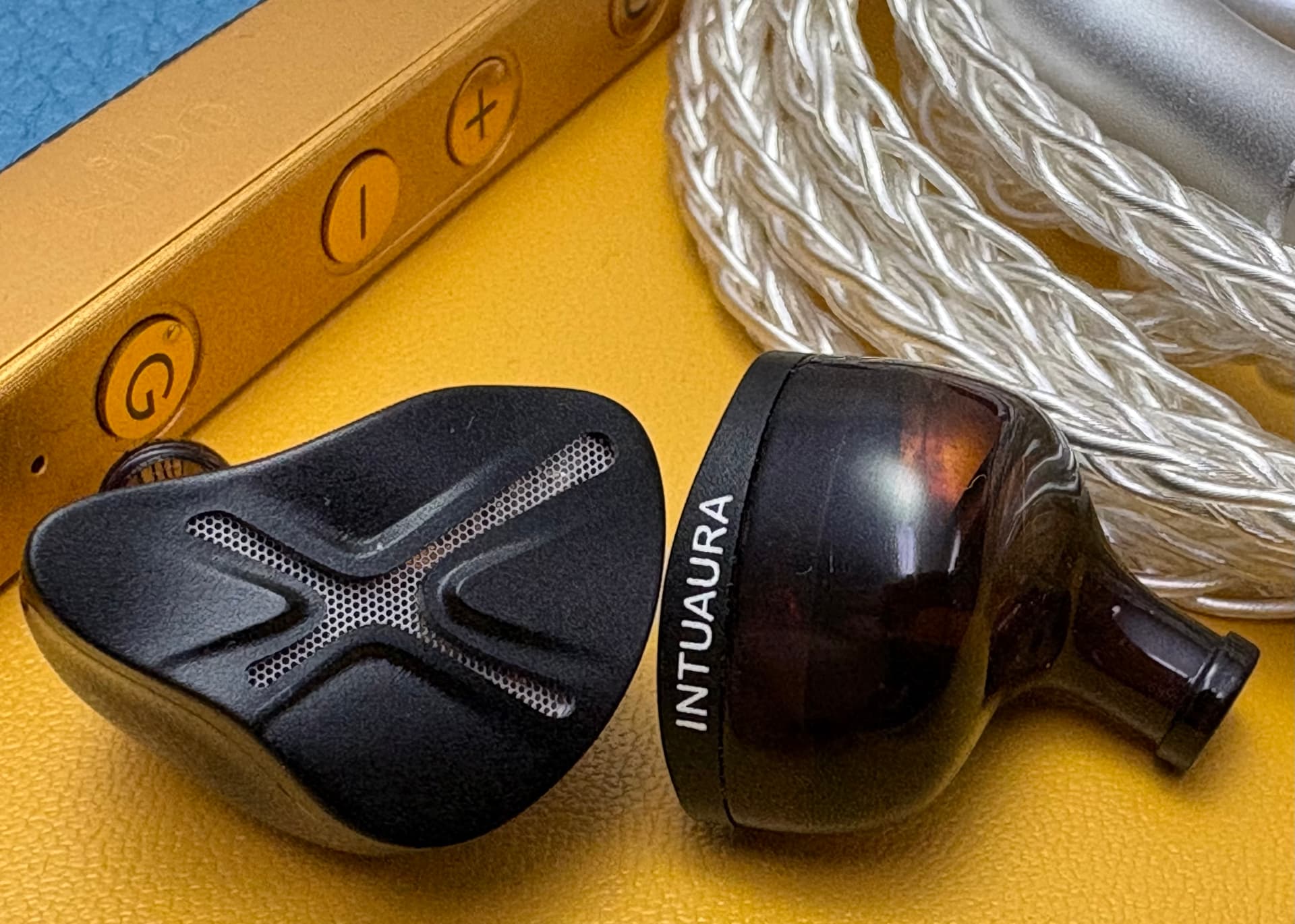
INTUAURA Impact
Single DD IEM with dual Helmholtz resonators. $78.00-$306.00 usd
Specifications:
-10 mm dynamic driver. High dampening diaphragm and gold plated dual magnets.
-H2T system. Dual Hemholtz resonators .
-Up to 32 ohm resistance.
-Sensitivity 123 db.
Preamble:
** I’m sure most enthusiasts have heard the history of this IEM, if not it is available in more detail at the listing on Intuaura Official Store on Aliexpress.
In short: This IEM was being developed in partnership, the partnership failed, and now they are selling off excess stock at deep discounts.
They state that the Impact was being developed to meet “apex acoustic standards” supporting a value over $428.00 usd. (See Foot Note)
They are currently offering Impact at 10 varying price points that the buyer can choose from, with limited IEM quantities available in each.
Obviously we will choose the least expensive option.
At time of writing, the 3 lowest cost options are sold out.
Currently $95.00 plus $11.00 usd shipping is the best price available.
$306.00 usd is the top tier.
Sincere appreciation and thanks go to Intuaura for providing the Canuck Audioholics review Group the opportunity to experience, and review, the Intuaura Impact.
Tone Deaf Monk
Kingnubian
Krusty’olBastid
I did not receive retail packaging, nor is there a detail accounting available in the listing.
-Intuaura Impact ear pieces.
-A nice cable, which by colour, appears to be silver plated copper, terminated 3.5.
Pros and Cons:
3D printed resin shells are decent, but un-inspiring. IMO.
Nozzle angle and length don’t work well for my ears.
Difficult to obtain a secure seal and anchor. I’m limited to Sedna Xelastec ear tips to keep this set anchored.
(I have challenging ears for fitment, this may, or may not, reflect the experience of a large number of enthusiasts)
Metal faceplates have a mesh backed “X” cutout that functions as the vent. I find the look and function pleasing.
Note: there is some sound leakage from, and a minimal amount of additional ambient sound intrusion, through the vent.
The stock silver plated cable is supple, has metal encased fittings, and a chin toggle that slides easily, but stays in place. Terminated 3.5mm, with no option available at purchase to select 4.4mm balanced.
Nice smooth, and balanced sound signature.
Clean, clear and open staging.
Full marks go out to Intuaura’s engineers and tuners. This is an incredibly good sounding single DD IEM.
Source Devices:
I only rolled three source devices.
ACTIVO P1 for bright and resolving, FiiO JM21 and Nippo A100 dongle on iPhone for warmer more neutral sources.
I have a definitive preference for a warmer source device paired to the Impact.
Sound evaluation will be done using the Nippo A100 paired to iPhone 16.
Equipment:
Intuaura Impact IEM, aged 100+ hours.
iPhone 16 with Nippo A100 DAC/Amp dongle. 3.5mm SE out.
Stock silver plated copper cable. Terminated 3.5mm.
Sedna Xelastec wide bore tips.
Sound:
Bass isn’t over emphasized, but, steps up and delivers what the recorded source demands.
Good definition and balance between sub and mid bass.
Sub bass pulls low with a lush rumble and decays fast enough to avoid over shadowing the head stage.
Mid bass rolls off slowly. It’s reasonably tight with good impact.
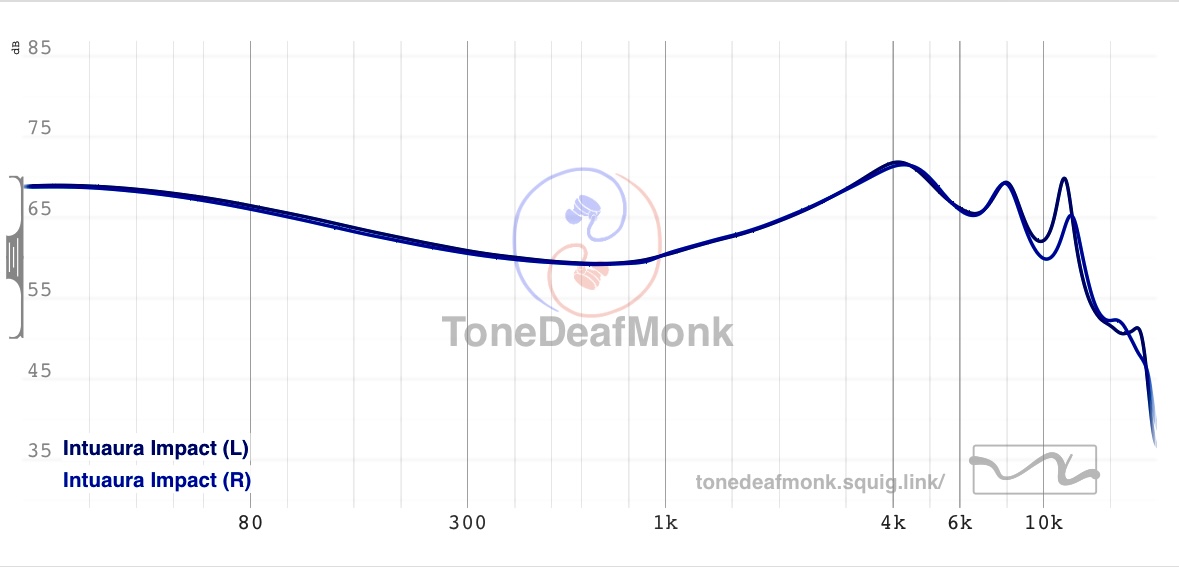
Lower mids rise steadily into the mids peaking around 4K, then rolling off going into the upper mids.
This results in a mids presentation that is clear, very detailed, and bright, without becoming over energetic or harsh.
Vocals are elevated and also clear and distinct.
On occasional tracks I find the mids and vocals can “lean out” a bit. But this is the exception, not the rule. They are typically accurate and natural sounding.
As is typical with many tunings these days the treble is rolled off leaving the upper mids to carry the bulk of the top end. There is a peak around 8k that adds a nice splash of air and sparkle.
The stage is open and spacious with a quiet background that allows for very good individuality and separation between instruments.
Imaging and layering is very good.
Width left to right is nicely outside the ears. Top to bottom height is also very good, thanks to bass that can pull, and that touch of sparkle and air in the top end.
Front to rear depth is also good, not sure I would go so far as to say “holographic” but I get a good sense of a well rounded head space.
Summary:
Audio enthusiasts are a diverse group and one size will never fit all.
The intruaural Impact won’t be for everyone, but it ticks a lot of boxes for me and I find it very enjoyable, engaging, and easy to listen to for lengthy sessions.
An overall smooth and balanced sound signature, with the dexterity to allow individual detail and expression when the recorded source calls.
At the current ask of around $100 usd the Impact is a diamond in the rough. An unassuming shell with an incredibly adept single dynamic driver that could easily be mistaken for a hybrid.
For those that would enjoy this tuning, the Impact is, IMHO, worthy of consideration at the current ask.
My music sources:
Qobuz, and, FLAC and DSD files stored on the SD cards of my daps.
My music genre are primarily Rock, Blues, Jazz, Symphonic, Country, Rap, R&B, Pop, Electronic.
Enjoy your music.
Foot note:
Copy and paste: I take no credit for the summary below.
The company Apex Acoustics has developed a method for acoustic design that organizes calculations around specific design issues, such as the impact of noise from mechanical ventilation systems and the acoustic performance of facades.
Apex acoustics design principles involve optimizing sound quality through control of reflection, absorption, and transmission. Key principles include setting clear goals like desired sound clarity and minimizing unwanted noise, and using the ABC’s of acoustics(absorb, block, cover) to treat surfaces. Specific applications involve controlling reverberation, echo, and background noise through careful selection of materials and architectural features to achieve desired speech intelligibility and a balanced frequency response.
3 Likes