I’ve been thinking about something lately: with so many IEMs featuring hybrid and multi-driver configurations these days, do single dynamic driver IEMs still have a place in the market?
It’s easy to get caught up in driver counts and different driver technologies. We see combinations of DD, BA, planar and other technologies, each promising something different.
But I don’t think adding more drivers automatically means better sound.
A well-designed single dynamic driver can still offer a very enjoyable listening experience. The diaphragm, acoustic chamber, material selection and tuning all play important roles. Getting these elements to work together is arguably more important than simply increasing the number of drivers.
This is also part of what inspired our approach to RENASCENCE, a wired single dynamic driver IEM featuring a 10.2mm, 60-layer titanium alloy diaphragm.
Rather than focusing on driver count, we wanted to explore what could be achieved through diaphragm design, housing construction and careful tuning.
I’m curious about how other enthusiasts here see this:
Do you still enjoy single DD IEMs, or have you moved towards hybrid configurations?
What matters more to you: driver technology, tuning, or the overall implementation?
Have you heard a single DD that genuinely impressed you?
I’m sharing this from the perspective of someone involved with Sam&Johnny Audio, and would genuinely enjoy hearing different opinions from the community.
Haha, the Thor sounds like one of those sets where the sound makes you forget about the looks And it’s funny how some of the first IEMs we owned are still the ones we feel nostalgic about.
I don’t have a very big collection of IEMs. All but one are multi-driver sets. I recently decided to give the Letshuoer Astralis a try, and I absolutely love it. I find I am reaching for this one more than almost any other set in my modest collection these days. Mike at @shortbus Audio makes one hell of a set that I would love to own but just can’t swing it at the moment. So yeah, after much hesitation, I have come to appreciate the virtues of a single driver set very much.
That’s interesting! Sometimes a single DD just gets everything right. It’s not about how many drivers are inside, but how much you enjoy listening to it.
It is very difficult to answer honestly. Reason being, we don’t have enough information on earcanal behaviour (especially after the point where directionality stops varying).
Where it doesn’t matter at all - On all audiophile BS like Detail, Resolution, Soundstage, Imaging where it all depends on how you assemble/design rather than driver or the assembly process reacting to your HrTF and Preference at the same time.
Where it does matter- Eliminating the variation of HrTF / length mode resonance / occlusion effect.
Where we don’t know if it matters or not- On achieving a target response that has been decided previously for any reason, be that Upmixing/Downmixing or getting predictable transfer function with EQ. Which means we don’t know if the Driver will react similarly to the stimulus, where large planars might have an edge. But ultimately not known to the user due to the lack of measurement fixtures.
Yeah, I can see the overlap! It’s definitely a topic that comes up a lot in the IEM community. I think it’s worth discussing from different angles, though. Driver count might catch people’s attention, but tuning and implementation are what really matter in the end.
I think one advantage of a single DD that gets overlooked is simply having fewer variables to deal with during the design process.
With a hybrid setup, you’re not just choosing drivers. You’re also dealing with crossover behavior, acoustic alignment and how those drivers interact around the crossover regions. None of that is automatically bad, but it does introduce more opportunities for things to go wrong.
What I’d actually like to see more often is measurements showing how consistently an IEM performs with different insertion depths and ear tips. A great frequency response on one measurement rig doesn’t necessarily tell us how stable that response will be in someone’s ears.
To me, that’s a more interesting comparison than driver count alone. If a well-tuned single DD delivers consistent results and sounds good to the listener, I’m not sure what adding another three or four drivers is supposed to prove.
It is overlooked because to achieve a target FR insitu, designing a DD is much harder than designing a multi-driver IEM. It is completely opposite for Headphones.
I think, we are currently at a point where we don’t have to think that hard about crossover-points in IEM. In speakers - it is a big problem due to Non-Minimum Phase behaviours but in IEMs, it’s completely doable by even tiniest of the makers that are producing IEMs.
I am sitting on the fence with this one topic as of now, because we don’t have enough research on the ear-canal behaviour of IEMs publicly but I can confidently say, given a target budget to the research department that is making the IEM, a multi–driver IEM has better chance of getting the target response insitu , than dynamic drivers.
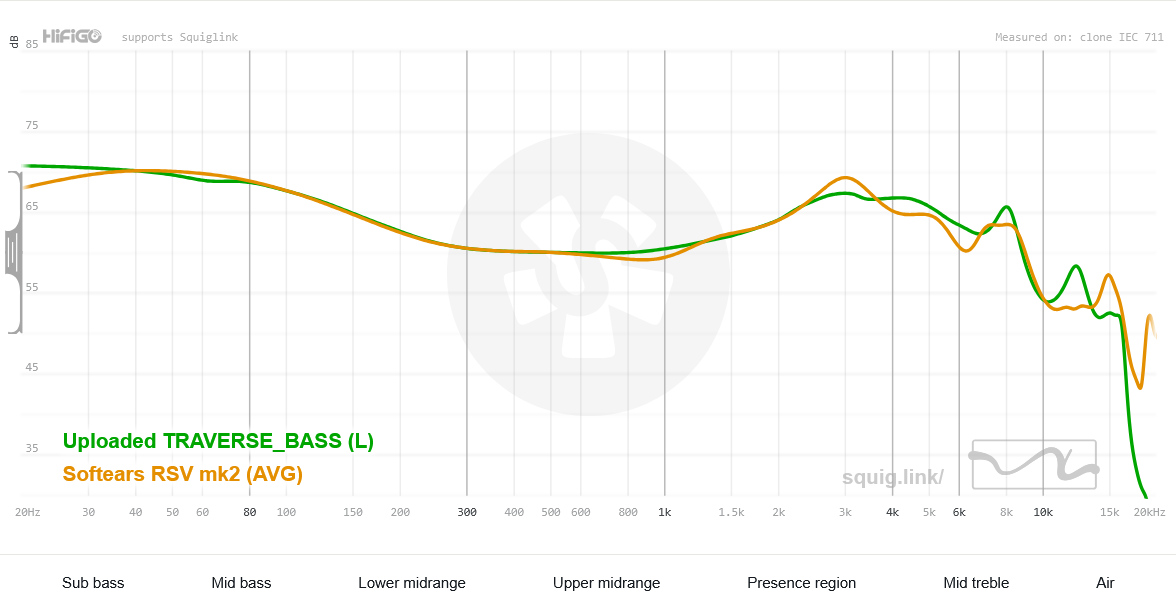
Approaching this from a ‘what can a 1DD set really do’ The answer is: with a lot of hemholtz acoustic chambers, and extremely tight tolerances something like this can be achieved. I actually do think it could be harder to tune a DD than a multidriver set but that is coming from a place of taking 3 years to get it right. If i was an expert at multi driver IEMs I could speak with more authority but as it is, if you really want a 1DD set to compete you gotta do some major R and D.
That’s a really good point. Fewer drivers definitely means fewer variables to manage, and getting multiple drivers to work well together isn’t always easy.
I also agree that consistency across different fits and ear tips deserves more attention. A great frequency response graph doesn’t mean much if the actual listening experience changes dramatically from person to person.
At the end of the day, good tuning and implementation matter more than driver count.
Three years of tuning a single DD? That’s some serious dedication!
I think that’s what makes single DD designs so interesting. Fewer drivers doesn’t necessarily mean an easier tuning process. Getting everything right through acoustic design alone can be a real challenge.
Really interesting comparison, by the way. Did you find the acoustic chamber design or damping harder to get right?
It’s FAR harder to do acoustic chambers because the higher Q-factor the chamber controls, the more precise it has to be. So while a damper can push a tight peak down easily, an acoustic chamber has to be literally perfect to do the same thing.
 And it’s funny how some of the first IEMs we owned are still the ones we feel nostalgic about.
 Still want to get yours at some point.