DUNU Subsurge: letting the rhythm lead
The Subsurge puts deep bass and upper-range energy at the centre of the performance. I enjoy the rumble beneath a groove and the bite that keeps voices and percussion lively. Drums and lower voices have less fullness than that rumble might suggest.
A sparse electronic arrangement can sound exciting; music built around warm voices and rounded instruments exposes a less comfortable side of the balance.
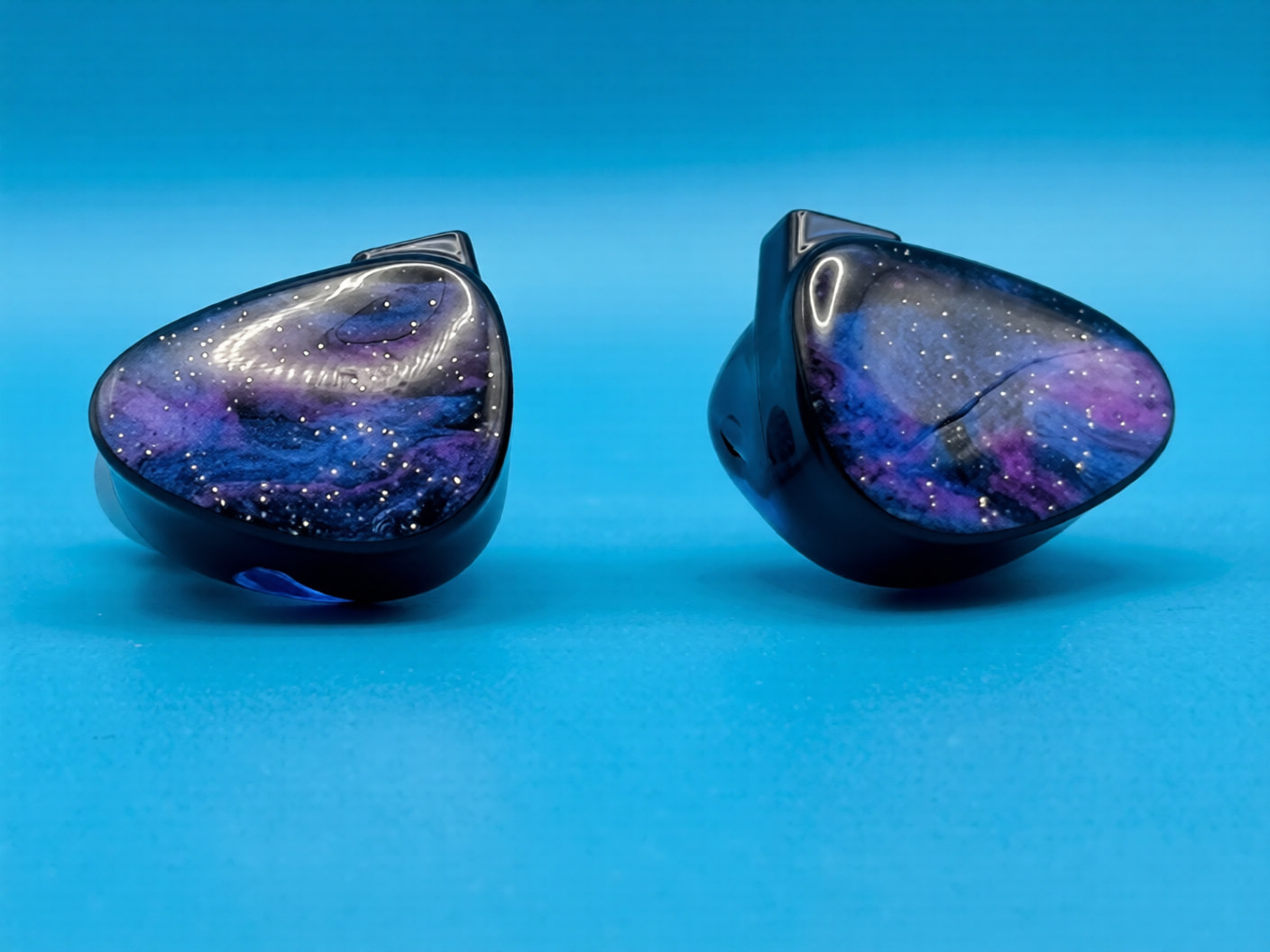
Version: 3.5 mm analogue
Price: US$59.99 at HiFiGo on 30 October 2026; regional checkout prices may differ
Rating: 4.1/5
Design: 10 mm LCP bass driver and 8 mm titanium-coated mid/high driver; nominal impedance 48 Ω
Disclosure
HiFiGo provided the Subsurge free of charge and has no editorial approval over the text.
Build, comfort and accessories
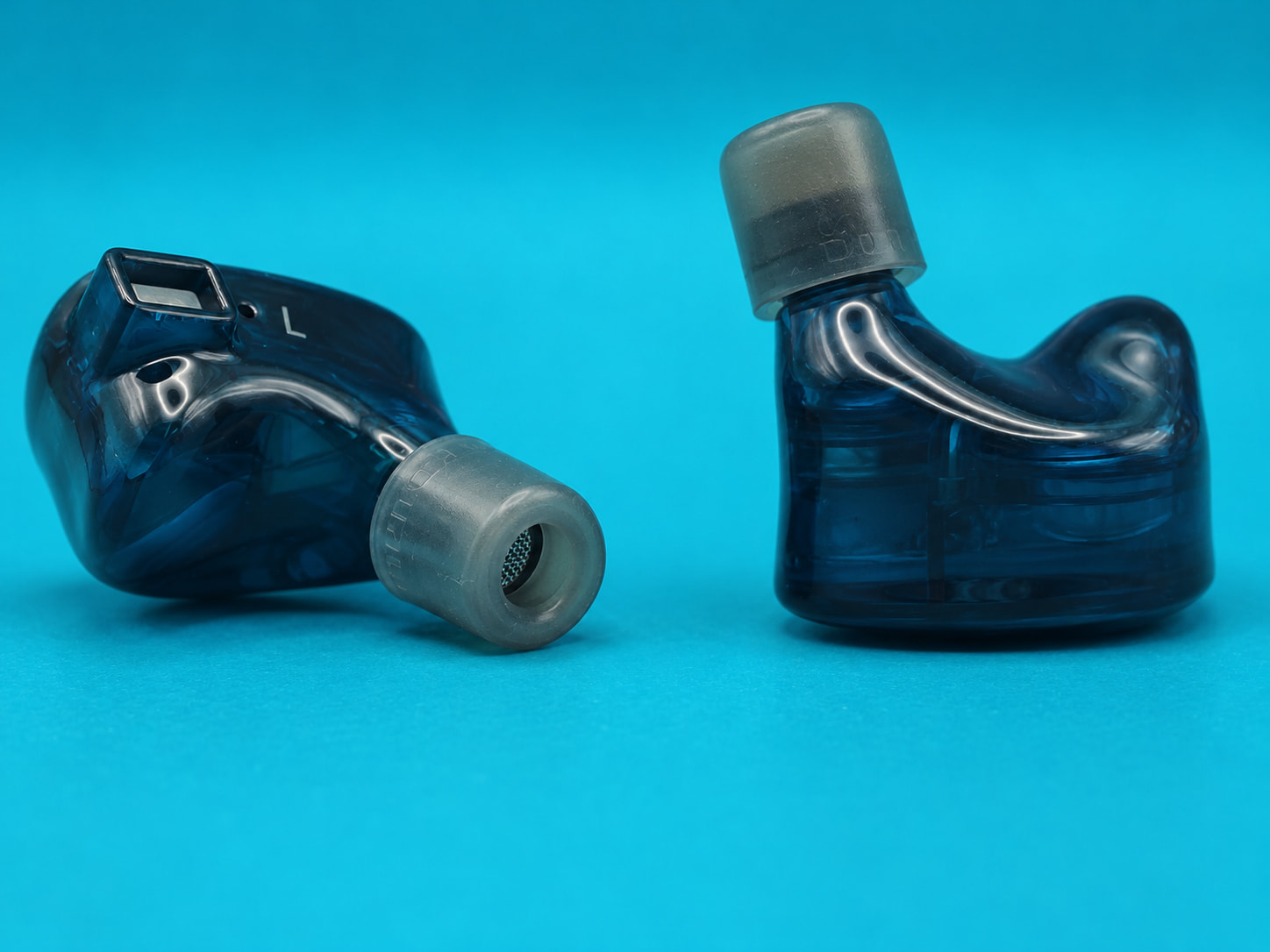
I like the deep-blue starfield finish. The blue and violet pattern gives the shells visual depth, and the resin construction looks neatly finished. For me, the light, rounded shells are comfortable and sit securely. DUNU lists approximately 6 g per earpiece.
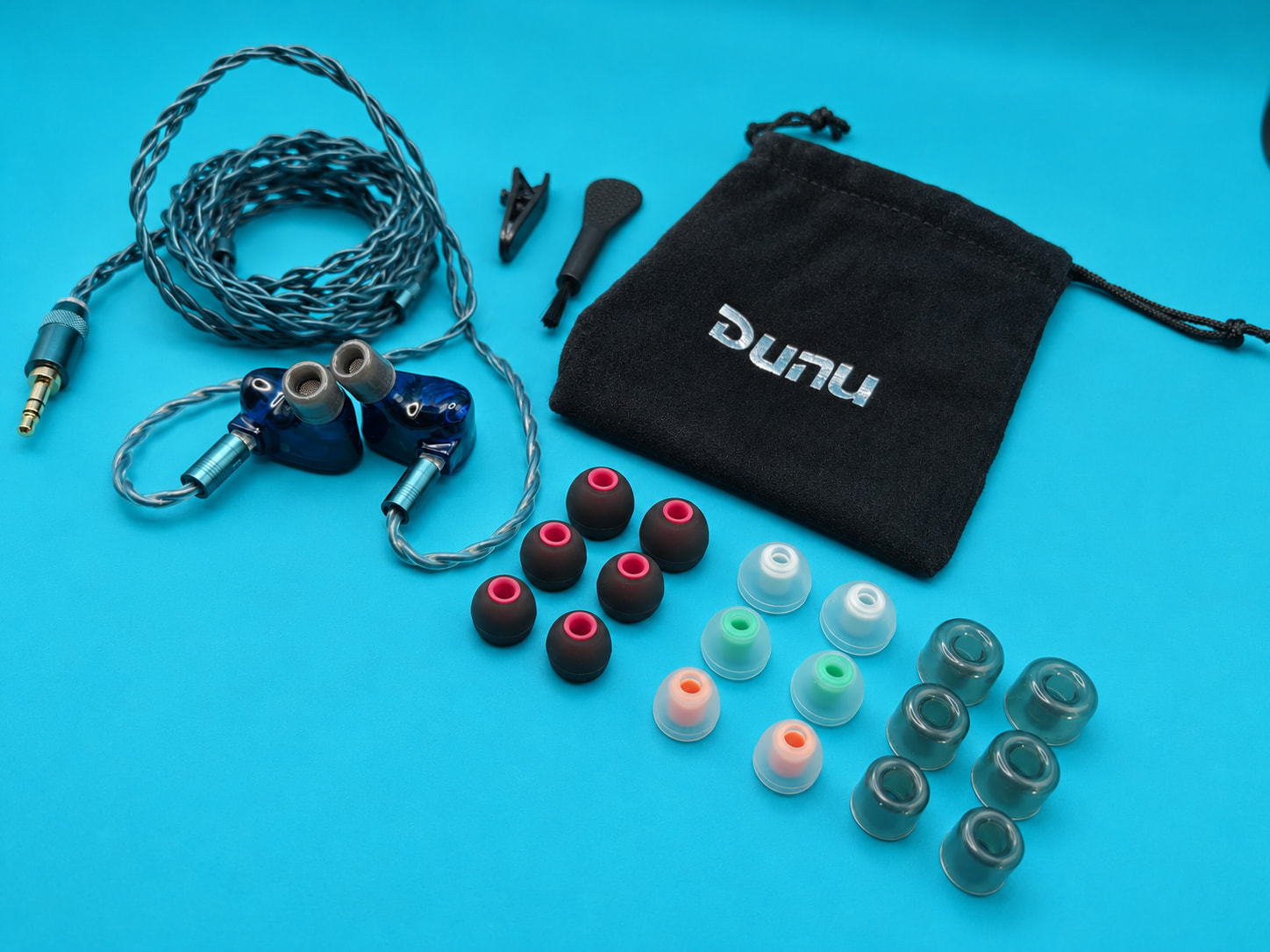
The box contains the IEMs and cable, ten pairs of tips in three styles, a cloth drawstring pouch, a cleaning brush and a shirt clip. This is a strong accessory package for US$60. The range of tip sizes and shapes is particularly welcome, and the brush and clip make this a useful everyday kit.
The cloth pouch is useful for storage and basic scratch protection. It offers little protection against crushing, so I would prefer a small rigid case for carrying the set in a bag.
The four-strand copper cable is a highlight for me: soft and easy to handle, with blue hardware that matches the shells. The detachable 0.78 mm two-pin connection is practical. The fixed 3.5 mm plug is the cable’s main compromise: choosing a 4.4 mm output means replacing an otherwise good cable. I would prefer interchangeable plugs here. DUNU lists a separate USB-C version with a microphone; this review concerns the 3.5 mm analogue model.
Deep bass, leaner body and bright edges
The low end reaches down with substantial rumble. Sustained electronic bass can give a track an imposing foundation, but the midbass is less filled in. A kick can have a firm attack and deep weight, yet I miss some of the roundness behind the hit. I enjoy the physical low notes more consistently than the fullness of the rhythm section.
That lighter body continues into guitars and lower voices. Guitar notes sound sharply outlined, but I miss the warmth that gives a chord or a lower vocal phrase more substance.
Vocals are clear and can feel quite forward. Higher or forceful singing has an emphatic edge, while lower voices carry less chest tone than I want. Words are easy to catch; the singer’s body and finer grain are less convincing. The lively presentation can become insistent when a recording already pushes voices or guitars hard.
There is plenty of sparkle and an airy impression around brighter instruments. Cymbal accents stand out, although the shimmer can feel wispy and uneven. I separate that apparent openness from the ability to keep a complicated arrangement organised: extra brightness does not make the quieter parts easier to follow separately.
Spatially, the Subsurge keeps the main elements in recognisable positions within a fairly compact frame. What becomes restricted first is the space between overlapping parts. A strong lead and a steady beat remain easy enough to follow; dense backing layers sound more collective. That makes the DUNU involving with direct, rhythm-led production, while intricate arrangements reveal its limited separation.
Twelve musical references
1. Drake: Nonstop
Test focus: bass pressure and the space around the vocal.
The low notes give this sparse production a substantial floor and preserve its heavy movement. Drake’s words stay exposed above the rumble, although his lower vocal tone is leaner than the bass weight suggests. The arrangement gives that contrast room to work.
2. Kendrick Lamar: DNA.
Test focus: impact and contrast as the production intensifies.
The low-frequency accents have convincing weight, and Kendrick’s emphatic delivery cuts through with plenty of bite. As the backing becomes denser, the individual accents behind him lose some independence. The Subsurge preserves the aggression more successfully than the fine contrasts inside the busiest passages.
3. OutKast: B.O.B.
Test focus: continuity of fast vocal and instrumental lines.
I can keep hold of the rap and the driving beat, so the pace remains exciting. Following a particular background part is harder once several layers compete. The problem is the overlap between their edges; the track retains its momentum even as its internal organisation becomes less distinct.
4. Lana Del Rey: West Coast
Test focus: vocal body and the pull of the bass-led groove.
The bass gives the slower movement an attractive, heavy sway. Lana’s voice has a clear, slightly cool edge, but I miss some of the lower warmth that gives her delivery its intimacy. The rhythm pulls me in; the vocal is less enveloping.
5. Led Zeppelin: When the Levee Breaks
Test focus: drum body and the reverberant space around the kit.
The low end gives the pattern scale, but I find the kick’s rounded body less complete than its deeper weight. The snare attack stands out clearly. The room sound is audible, although the performance feels compact for such an imposing recording.
6. Led Zeppelin: Dazed and Confused
Test focus: bass phrasing and the guitar’s changing texture.
The sustained bass notes keep their brooding weight, and I can follow the shape of the phrase. Guitar attacks have a pronounced edge, while the lower resonance of the instrument sounds lighter. I want more substance between those attacks to make its changing texture fully convincing.
7. Vivaldi: The Four Seasons: Winter I. Allegro non molto
Anne-Sophie Mutter / Herbert von Karajan
Test focus: bowing articulation and the soloist’s relationship with the ensemble.
The violin’s sharper gestures stand out immediately, and the solo line is easy to follow. I find less warmth in the lower strings, leaving the ensemble lighter underneath that bowing energy. During fuller phrases, the clearly outlined main line is surrounded by less distinct inner parts.
8. Vivaldi: The Four Seasons: Summer III. Presto
Anne-Sophie Mutter / Herbert von Karajan
Test focus: rapid string figures under orchestral pressure.
The upper string figures keep their urgency, with enough bite to make the movement exciting. During the fuller passages, several lines become harder to follow separately. I hear the collective rush of the ensemble clearly; the distribution of that effort between individual parts is less convincing.
9. Depeche Mode: Enjoy the Silence
Test focus: bass pulse, vocal placement and synthesiser layering.
The firm bass pulse suits the track, giving the electronic arrangement a satisfying physical centre. Dave Gahan sits clearly above the pulse, though I would like more weight in the lower part of his voice. The synthesiser layers sit fairly close together, but the central groove stays coherent and carries the song well.
10. Michael Jackson: Billie Jean
Test focus: the relationship between bass line, kick and higher percussion.
The bass line and kick remain distinct, with most of the weight concentrated in the deeper notes. The higher percussion gives them a crisp rhythmic counterpoint. I enjoy the contrast: the main pattern stays coherent and the groove feels lively.
11. Santana: Soul Sacrifice (Woodstock)
Test focus: percussion interplay and the guitar’s place in the performance.
The percussion’s attacks come through strongly, and the guitar’s brighter phrases remain easy to catch. I enjoy the exchange of energy between them. During the busiest playing, individual percussion textures merge more than I want, and the surrounding live atmosphere feels contained despite the strong rhythmic force.
12. Joe Cocker: With a Little Help from My Friends (Woodstock)
Test focus: vocal grain and the build of the backing voices.
Cocker’s rough vocal grain is easy to recognise, and the emphatic passages have a forceful edge. I want more chest tone underneath that rasp. As the accompaniment and backing voices build, their individual boundaries become less distinct, so the crescendo communicates energy more convincingly than layered vocal texture.
Three useful reference points
My 7Hz Legato carries more warmth through drums and lower voices. The Subsurge concentrates its effect in deep bass and brighter vocal edges. I would choose between them by how much contrast I want around the bass. Owning one already makes a second bass-focused purchase a question of character, not an automatic upgrade.
With the White nozzle, my JUZEAR Nimbus gives me more body through voices and instruments. I prefer its fuller middle when the singer is my main reason for choosing a track. The Subsurge draws attention to deep bass and the brighter edge of a voice. Nimbus also offers useful nozzle choices and, on my version, a modular 3.5/4.4 mm cable. Both reach limits with dense music; the DUNU does not remove the main reason to spend more for better separation.
That is where my AFUL Performer 5+2 earns its place. It keeps overlapping instrumental lines more distinct, allowing the recording to build without turning as much of the accompaniment into a group. The Subsurge gives me a more bass-dominant presentation. For an AFUL owner, that is a possible change of mood, while the AFUL remains the more convincing choice for following a complex performance.
My verdict
At US$59.99, the Subsurge makes sense to me as an affordable IEM for strong subbass and a lively upper range. The comfortable shells, good stock cable and ten pairs of tips strengthen its value, but the tonal balance remains the deciding factor.
I would choose it for grooves with a deep low-end foundation, accepting leaner drum and vocal body and an upper range that can become insistent. For warm voices, rounded acoustic instruments or relaxed treble, I would favour a fuller, gentler balance.
Final rating: 4.1/5
SteveListens | Personal Audio Review | Germany