Magnesium or Scandium alloys are also a strong possibility but neither is probably cheaper than most Titanium grades…
3 Likes
What kinda resin we talking about?
Hard to say.
3 Likes
Hey guys, here´s my review of Binary EP321 in case someone is interested 
https://www.head-fi.org/showcase/binary-ep321-mems.28763/review/42475/
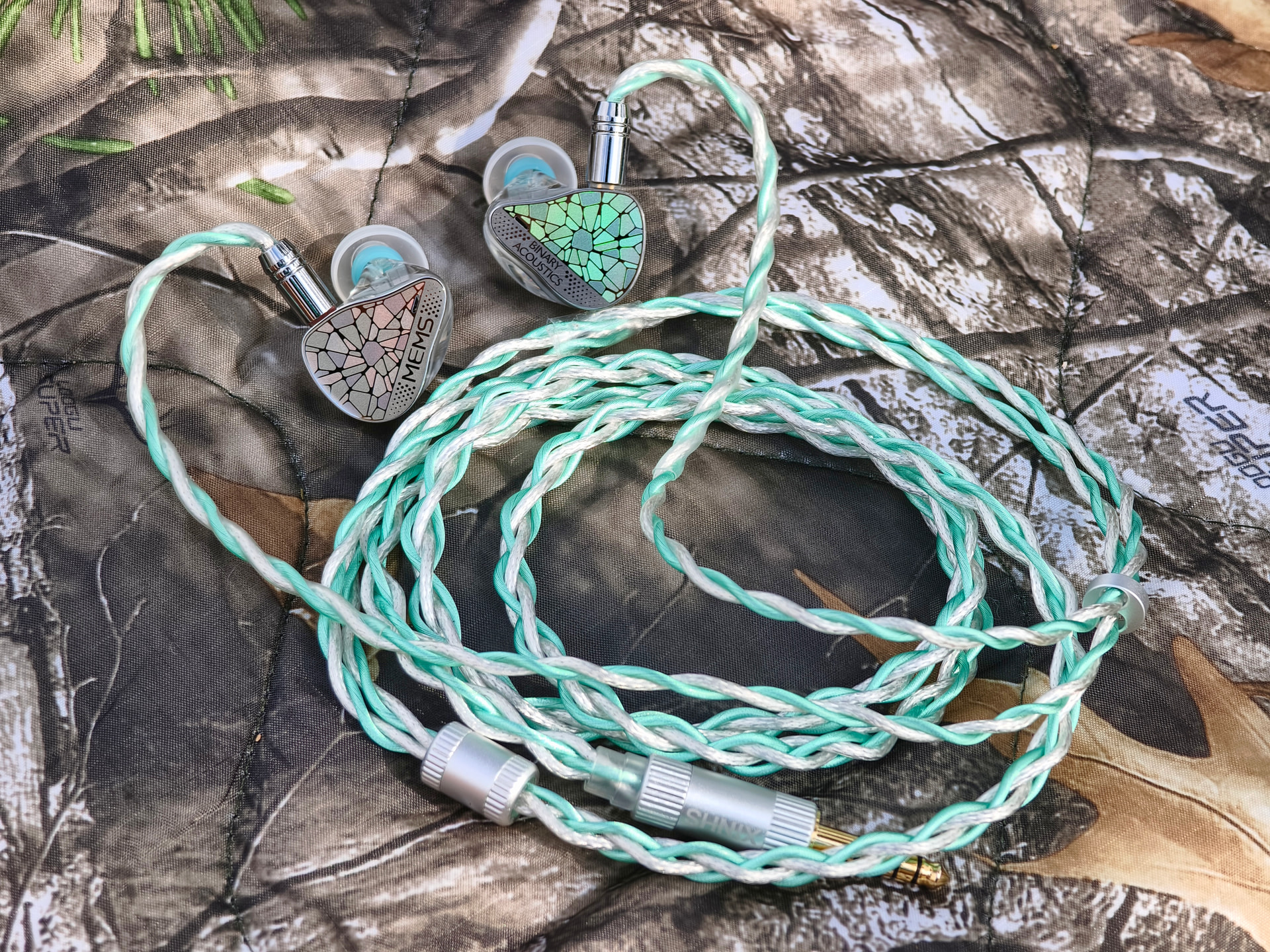
15 Likes
Another round of Data Collection
please vote 
3.5mm vs 4.4mm
- 3.5mm Gang
- 4.4mm Supremacy
- Switch cos I have devices with 3.5mm
0
voters
Hypothetically, if you are getting a TOTL iem…
- i want my options, 3.5mm, usb C
- 4.4mm is enough
- 4.4, 2.5, mini-XLR, XLR
0
voters
Thanks for voting!
2 Likes
I voted 4.4, 2.5, mini-XLR, XLR but I would rather set fire to a 2.5mm cable than use it.
1 Like
you could just cut the plug and solder a 4.4mm jack you know 
nah i’ll just buy both and burn the 2.5 for good measure to make sure it doesn’t accidentally wind up being owned by someone
3 Likes
3.5 on high sensitivity sets, 4.4 on the harder to drive gear with less noise floor problems 
4 Likes
3.5mm Jack is perfectly fine for me.
2 Likes
If a Dac or Dac Amp offers a balanced out then that’s what the internal architecture was mostly designed for, the SE is a tag on/option.
However there’s nothing wrong with SE at all especially in regards to most IEM’s, I use 4.4MM with my IEM’s and Buds because most of my sources offer it 
5 Likes
3.5 is fine for me, but I also have a 4.4 adapter.
I don’t need the extra power of 4.4 since all my IEMs are driven by desktop gear.
2 Likes
3.5mm all day long
Whenever I think 4.4mm makes a difference, after some volume adjusting etc, I realize that for me it actually isn’t.
So being able to plug it into a laptop, gaming handheld, basic mp3 player, DAP, some phones… is really convenient, considering it comes with a default incovenience of a cable that gets tangled and takes up space.
Not a single IEM I have heard genuinely required a different connection to have enough power, provided it has enough juice in the first place regardless of connectors. I understand headphones are a different kettle of fish but I don’t listen to headphones.
I have some nice cables I’d like to use, but they’re 4.4mm, and I have no joy in restricting what I can use my IEMs on.
5 Likes
I love the logic here, and I prefer 4.4mm for the inversion of the ubiquity; all of my gear now has 4.4mm but half of it has 3.5mm and the other half has 1/4” / 6.35mm instead so 4.4mm has become my “one and done”. I’m there with you on power though, outside of one set of flatheads I have with 500ohm resistance, nothing I own maxes out on 3.5mm SE.
3 Likes
Yup 3.5mm is all you need usually. But wont shame you for liking 4.4mm…however if you like 2.5mm 
3 Likes
I never understood the appeal of 2.5. FAR too thin and prone to breakage.
Serious question: I know 4.4 provides more power. What is the advantage of 2.5, if any?
3 Likes
Yeah 2.5mm is wayyyy too fragile. I assume that when 2.5mm was popular, 4.4mm may not have been a thing? Otherwise I have no clue why it was more popular…
2.5 is also balanced like 4.4mm so you also get more power (if it aint fake balanced like what Topping does).
Perhaps the weight is the only advantage it has over 4.4mm as it is much lighter than it.
3 Likes
Ah, thanks! Didn’t know 2.5 was balanced. Never looked into that termination very deeply because the tiny size and fragile nature of the plug turned me off immediately.
I would think you’re just BEGGING for a snapped termination with long-term use of 2.5 and portable gear, even if careful.
3 Likes
The evolution kinda went XLR → 2.5mm/3.5mm TRRS → 4.4mm TRRS. IEMs weren’t a big enough market segment for a consumer form of a balanced connection, not to mention that virtually no IEM needed the power benefit of balanced and 3.5mm TRS was just a universal connection. Then, once the market picked up and there was stratification between market segments (high-end consumer vs professional vs cheap buds and the like) then 2.5mm and 3.5mm TRRS appeared on DAPs and other sources. 3.5mm TRRS for balanced instead of a mic format (like CTIA & OTMP) really only existed for a handful of things, some older Cowon and Oppo stuff. It didn’t survive because the obvious chance to plug TRRS in a TRS jack or the reverse meant non-functionality at best and frying components at worst. No amount of labels or warnings would keep people from doing it, so it never proliferated. 2.5mm TRRS then became the default standard until adoption of 4.4mm thanks to Pentaconn and Sony pushing it, which is where we are at today.
That’s the history as I loosely understand it from the last ~12 years in the hobby, as a layman.
Edited for the 3.5mm TRRS
7 Likes
Thank you for the history about these different plugs. I never purchased any 2.5mm balanced cables even though I have a couple of DAPs which support it. The 2.5mm size appeared to be simply too flimsy to me, especially since a 3.5mm to 6.3mm adapter ripped off the tip of a 3.5mm cable. The adapter came with a pair of Sivga headphones which I purchased. Sivga replaced my damaged cables after I provided photos.
3 Likes