JUZEAR Nimbus — a lot of IEM for around $55
JUZEAR Nimbus provided by HiFiGo for review • White nozzle • SpinFit W1 • 4.4 mm • Nimbus rating: 4.4/5
The Nimbus surprised me.
Not because it does something completely new, and not because it suddenly makes more expensive IEMs pointless.
It doesn’t.
What surprised me is how little feels obviously compromised for around $55.
The tuning is easy to live with, the bass has proper weight, voices sound natural, imaging is convincing and the whole package feels much more complete than I expected at this price.
There are limits.
Dense music can make the Nimbus work harder, and the stage is not especially large.
But for me those limits make sense at this price.

Review at a glance
Product: JUZEAR POISE Series Nimbus
Category: Single dynamic-driver IEM
Price at review: $54.99 / around $55
Review unit: Provided free of charge by HiFiGo
Version tested: 3.5 mm + 4.4 mm modular-cable version
Reference nozzle: White
Reference tips: SpinFit W1
Main sources: FiiO M21; Moondrop Dawn Pro 2 + smartphone
Playback: Poweramp; local lossless files for critical listening
Connection: 4.4 mm balanced
EQ: None for the core review
Rating: 4.4 / 5
Would I buy it at this price? Yes
Disclosure
The JUZEAR Nimbus was provided to me free of charge by HiFiGo for this review.
There was no payment, no requirement for a positive review and no editorial approval.
All listening impressions, comparisons, rating and conclusions are my own.
Reviewer perspective
The AFUL Performer 5+2 was my first published long-form audio review. With the Nimbus I want to keep the same basic method: the same reference tracks, the same disclosure standard and the same attempt to explain what I actually hear in normal language.
The price changes my expectations, not the need to be specific.
At around $55, I do not expect the Nimbus to match the technical performance of an IEM that costs several times more.
I do expect it to make sense as a complete product, and I want to be able to explain where the limits actually are.
That is also why value matters so much here.
Cheap and good value are not the same thing.
Why this product interested me
The Nimbus is positioned as an entry point into wired hi-fi.
That makes it interesting to me for two reasons.
First, this is exactly the kind of price range where somebody coming from AirPods, TWS or normal Bluetooth headphones might try a first wired IEM without turning the whole thing into an expensive project.
Second, this is also the price range where accessory lists can sometimes look more impressive than the earphone itself.
So the question I kept coming back to was simple:
If I ignore the box for a moment, is the Nimbus itself good enough to make sense for around $55?
For me, yes.
The accessories make the package stronger, but they are not the reason I like the Nimbus.
What it is
The Nimbus is a single-dynamic-driver IEM built around JUZEAR’s self-developed 10 mm MACCD driver.
MACCD stands for Multilayer Amorphous Carbon Composite Diaphragm. The driver uses an N52 neodymium magnetic circuit, and the shells are made from zinc alloy with glass-finish faceplates.
The Nimbus also comes with three interchangeable tuning nozzles — White, Red and Black — and is sold in two connectivity versions.
My review sample is the version with both 3.5 mm and 4.4 mm terminations for the modular cable.
Specifications
Driver: 10 mm MACCD dynamic driver
Magnet system: N52 neodymium
Impedance: 32 Ω
Sensitivity: 108 dB
Connector: 0.78 mm 2-pin
Shell: Zinc-alloy construction with CNC detailing and glass-finish faceplate
Weight: 9.2 g per earpiece
Tuning: White / Red / Black interchangeable nozzles
Cable: Four-strand silver-plated single-crystal copper
Version tested: 3.5 mm + 4.4 mm modular termination
Included tips: Nine pairs
Specification note: product facts were checked against the product information supplied for review and the current HiFiGo Nimbus listing. They are kept separate from my listening impressions.
Packaging and complete box contents
The package is one of the first places where the Nimbus makes its price difficult to guess.
It is not luxury packaging, and it does not need to be.
What matters more to me is that the useful parts are there.

In the box
- JUZEAR Nimbus left and right earpieces
- Stock 0.78 mm 2-pin modular cable
- 3.5 mm plug
- 4.4 mm balanced plug
- White tuning nozzles
- Red tuning nozzles
- Black tuning nozzles
- Nine pairs of ear tips
- PU leather carrying pouch
I have no problem with the pouch at this price.
It feels properly made and does its job.
The more important point is that the accessory package does not feel like compensation for a weak IEM.
I would still consider the Nimbus good value with less in the box.
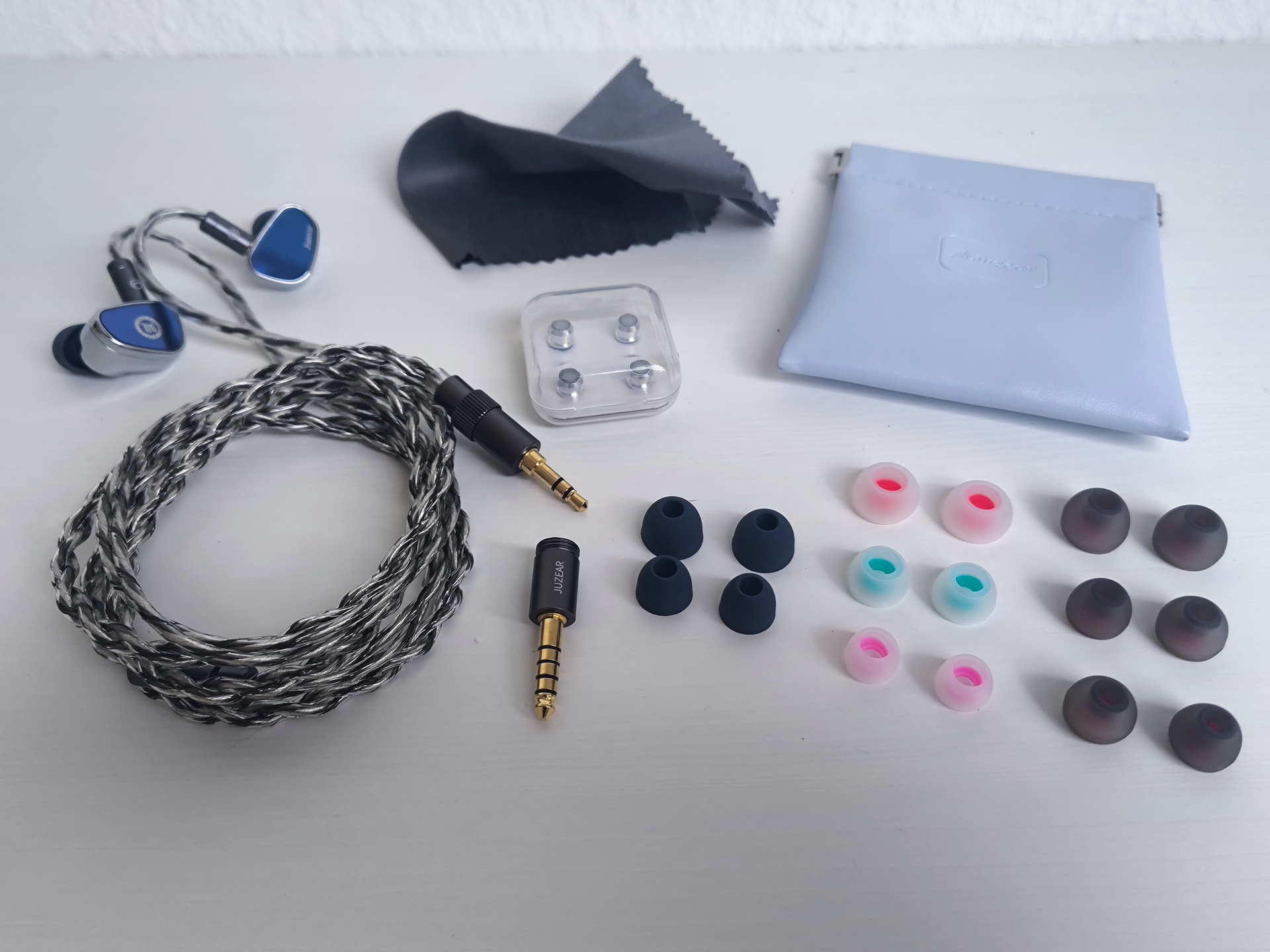
Build, cable and ergonomics
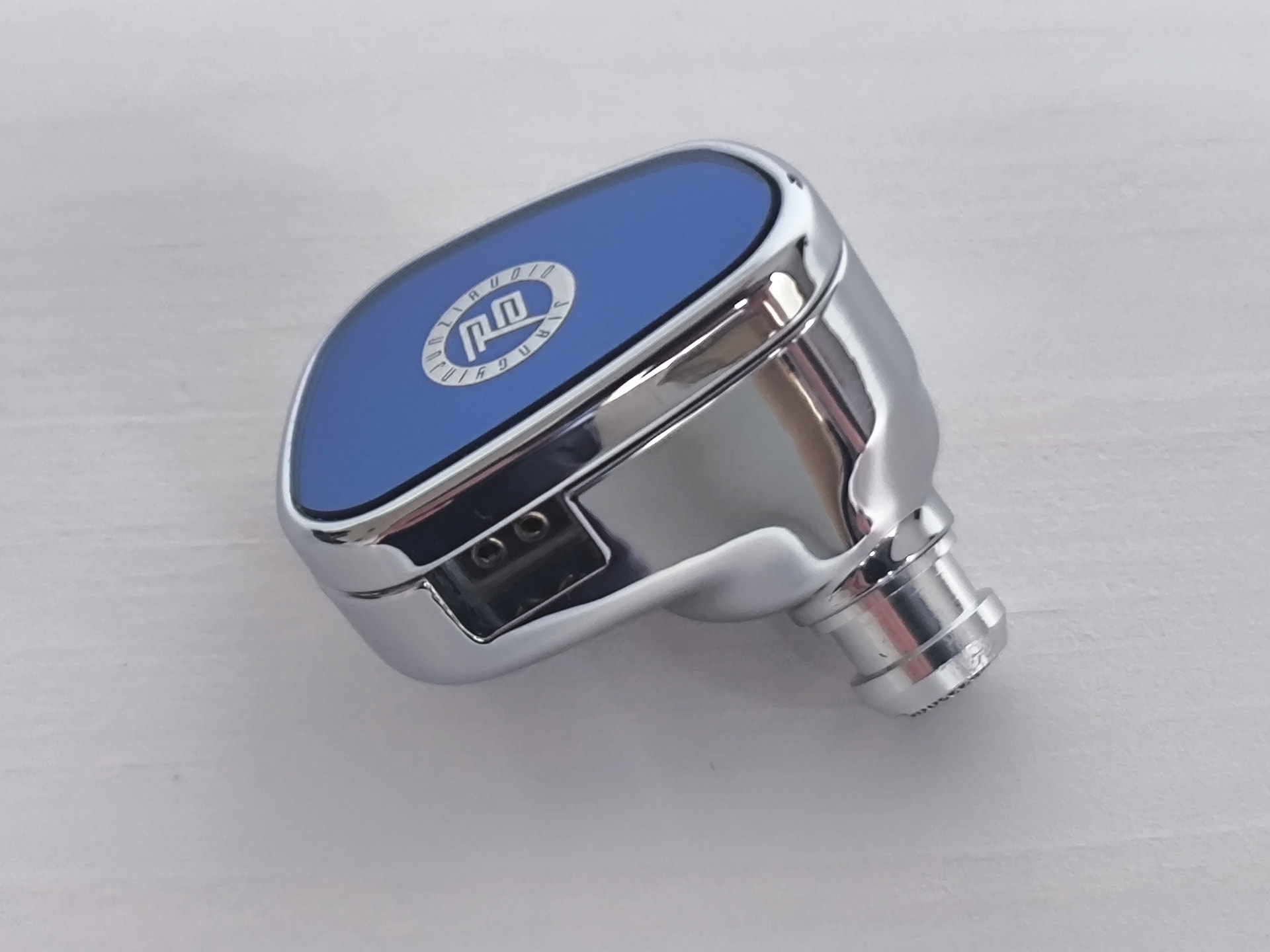
The shells feel solid and nicely finished.
The polished surfaces and glass faceplates look better in person than I expected at this price, although they collect fingerprints very easily.
I noticed that especially while taking photographs.
The stock cable is one of the strongest practical parts of the package.
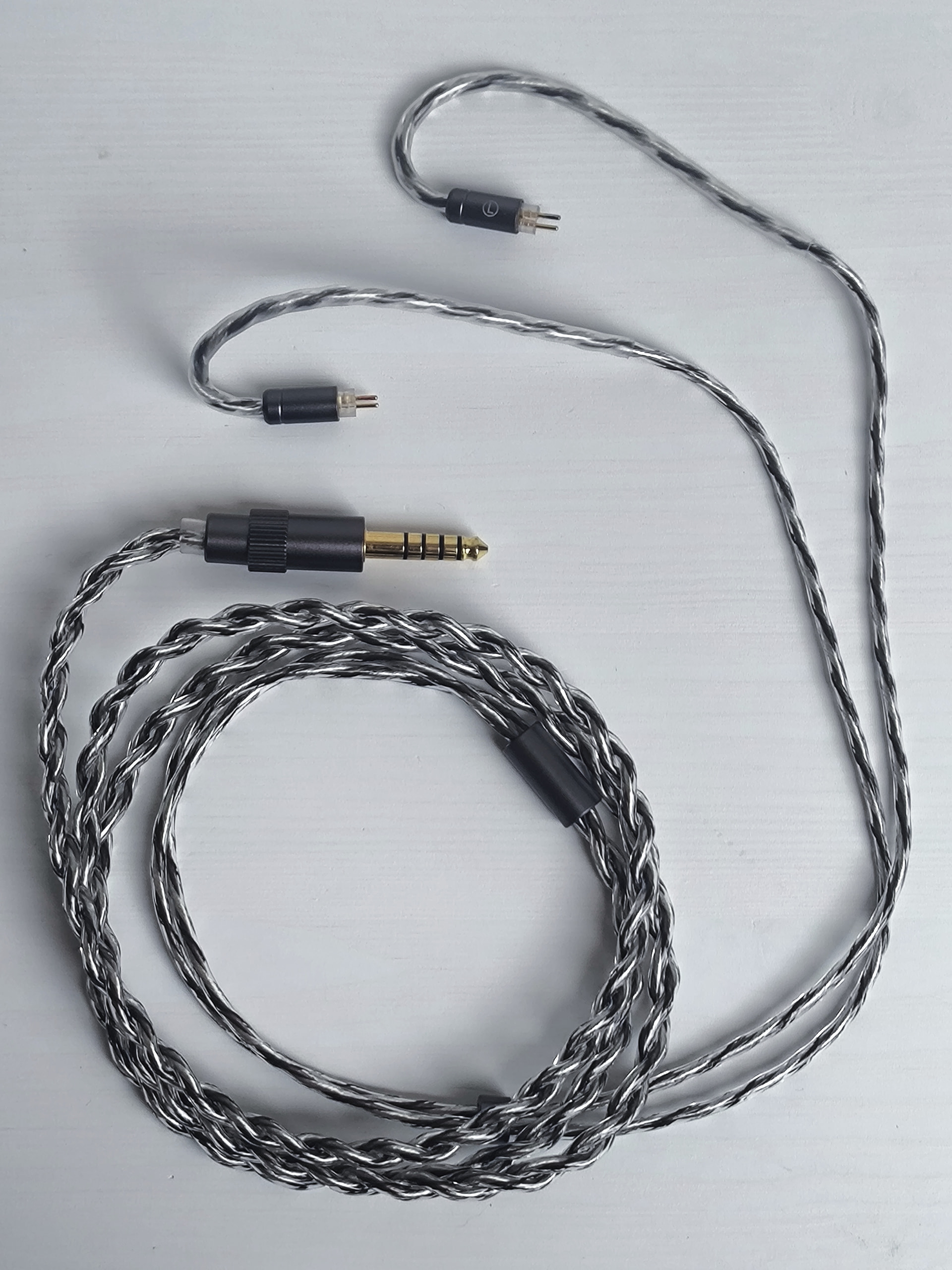
Being able to switch between 3.5 mm and 4.4 mm without changing the whole cable is genuinely useful.
I would happily keep using it.
There is a slight memory effect in the cable, but not enough to bother me in normal use.
Fit is very good for me.
With SpinFit W1 tips, I can wear the Nimbus for long sessions without pressure points or anything about the shell shape becoming annoying.
The stock tips also work very well for me.
They give me a proper seal and I do not hear anything that would make me say the Nimbus needs aftermarket tips.
I use the SpinFit W1 because I prefer them, not because the stock tips are bad.
That matters.
The three nozzles
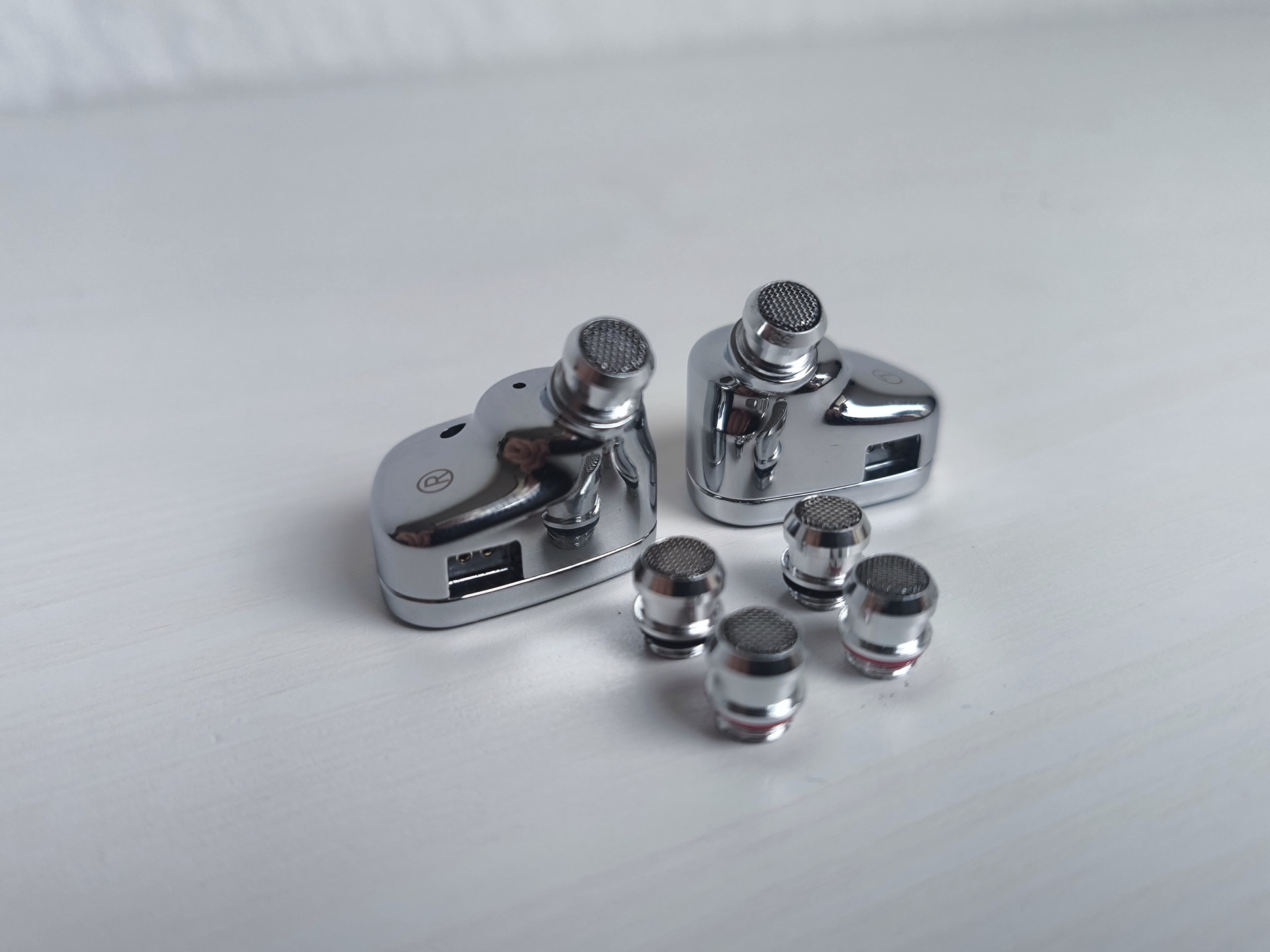
The nozzle system is not just decoration.
I can hear the differences.
Black relaxes the upper range and makes the Nimbus feel warmer and calmer.
Red gives me more energy higher up and makes the presentation brighter and more forward there.
White sits between them.
That is the one I prefer.
For me, White keeps the slight warmth that I like without taking away the treble energy that gives the Nimbus some life.
I also like that all three nozzles make sense.
Black is not just a pointless extra, and Red is not either.
I can understand somebody preferring one of them.
White is simply the one that works best for me.
All core sound comments below therefore refer to the White nozzle.
Listening setup
Primary DAP: FiiO M21
Phone chain: Moondrop Dawn Pro 2 connected to smartphone
Playback: Poweramp
Critical files: Local lossless audio
Cable: Stock modular cable, 4.4 mm
Tips: SpinFit W1
Nozzle: White
EQ: None for the core review
Volume: Moderate listening level
I also compared the Nimbus directly with the KZ ZS10 Pro 2, KEFINE Klean SV and AFUL Performer 5+2 from my own collection.
I compared the FiiO M21 and Dawn Pro 2 at closely matched listening levels.
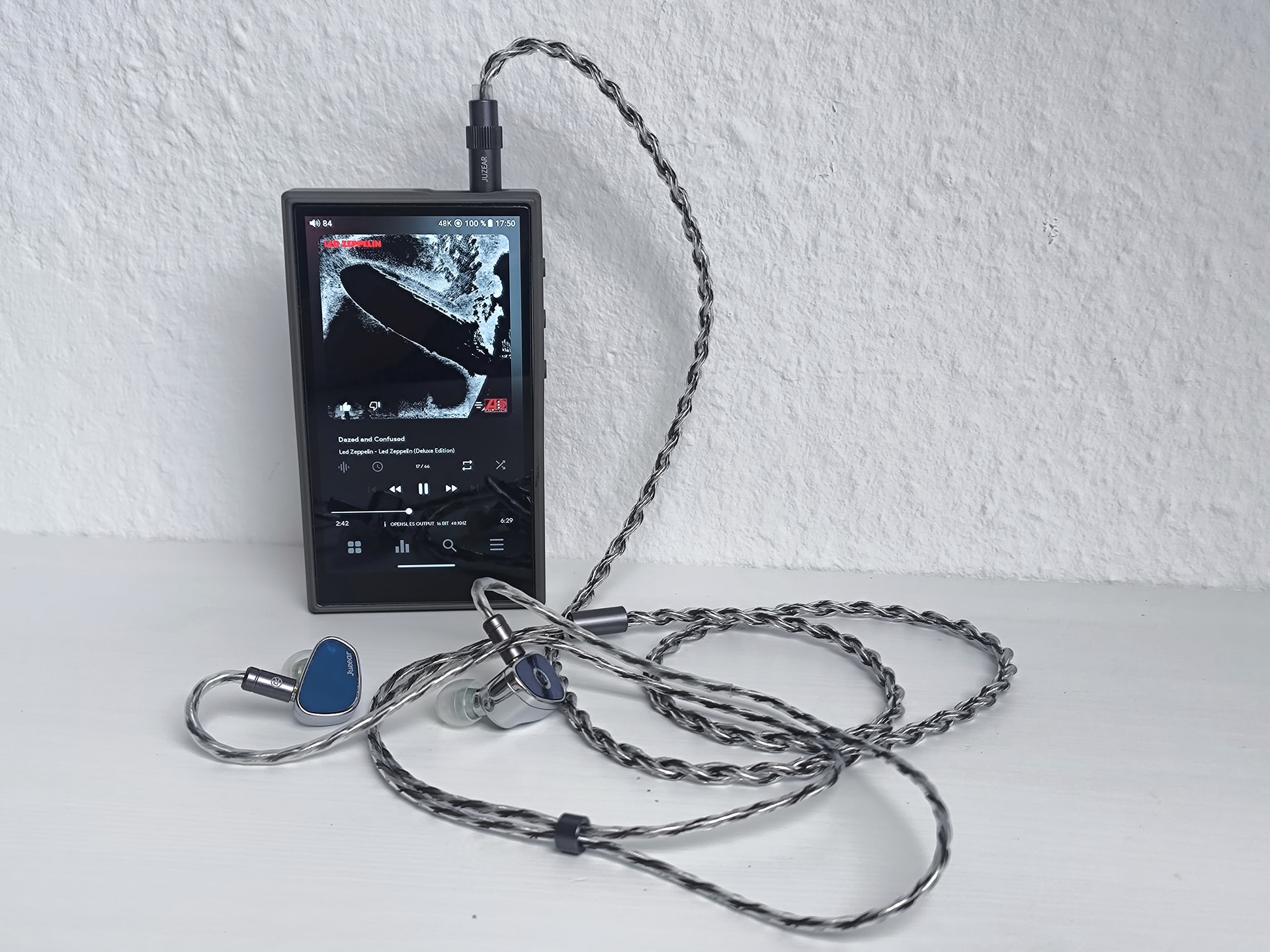
Sound
Overall balance
I hear the Nimbus as slightly warm.
Not dark, not thick and not so bass-heavy that everything else moves into the background.
The warmth comes more from the amount of body and weight than from the Nimbus sounding dark.
The bass has proper weight, male and female voices both sound natural, and there is enough energy in the treble to stop the presentation becoming too relaxed.
That balance works very well for me.
Bass
The bass is one of the first things that made me take the Nimbus seriously.
It has body.
To my ears, the weight does not come from sub-bass alone.
It is a mixture of sub-bass and mid-bass working together.
There is enough depth to give low notes proper foundation, while the punch higher up makes kicks and drums feel physical.
That makes the bass feel fleshy and authoritative without turning the Nimbus into a basshead IEM.
Kicks have weight.
Drums do not sound thin.
Modern music gets enough foundation for me.
The bass is not especially dry, though.
Some hits have a slightly thuddy character, and bass notes stay around a little longer instead of stopping immediately.
I actually like that here.
It adds some of the body that makes the Nimbus sound the way it does.
The downside is that the bass can take up a little more room when the music gets busy.
That becomes more obvious with dense tracks.
I would still not call the bass loose.
The initial hit can be quick enough, especially with drums, while the body of the note stays around a little longer afterwards.
That is the better way to describe what I hear.
Midrange
The mids are easy for me to like.
Male voices have enough body and do not sound hollow.
Female voices are clear without being pushed unnaturally forward.
That is actually one of the things I appreciate most about the Nimbus.
I do not feel as if one type of voice works and the other does not.
Voices just sound natural to me.
The slight warmth helps, but it does not cover them.
And even with the amount of bass body, the mids do not sound buried.
Treble
There is some sharpness in the treble.
I like it.
That distinction matters.
The Nimbus is not completely smoothed over at the top.
Snares can really crack, percussion has bite and smaller details are easy to notice.
I can also hear that some of the impression of detail comes from this treble energy.
For me, that is not a criticism.
It works.
I just would not confuse that with the resolving ability of a much more expensive IEM.
A small sound can be easy to notice and the IEM can still start to struggle when too many things happen at once.
That is what I hear with the Nimbus.
Most importantly, I do not get sibilance from it.
I also find it completely suitable for long listening sessions.
Stage and imaging
The stage is not huge.
That is one of the clearer limitations of the Nimbus.
Width is moderate, although there is enough depth that the presentation does not feel completely flat.
Imaging is better than the size of the stage might suggest.
Positions are easy to follow.
I can normally hear where a voice or instrument sits, not just left, centre or right but also in between.
There is enough depth that everything does not feel stuck on exactly the same line either.
So the impressive part for me is not how large the Nimbus sounds.
It is how well it uses the space it has.
Separation, layering and detail
This is where I start hearing the price more clearly.
With normal arrangements, separation is good.
When the music becomes denser, the first thing I notice is not that sounds disappear.
The space between them becomes smaller.
Things move closer together.
Then, if the track gets busy enough, some layers start to overlap slightly.
The Nimbus does not suddenly fall apart.
But I can hear it starting to work harder.
The easiest way for me to describe it is that the Nimbus starts to sweat.
The slightly longer bass decay probably plays a part here too.
The same body that I like with simpler music takes up some extra room once a lot is happening at the same time.
That does not mean the Nimbus suddenly loses all detail.
I can still hear the smaller sounds.
It just becomes harder for the Nimbus to keep everything separated around them.
That is where I hear the technical limit.
I do not think that is a serious problem here.
But it is there.
Dynamics and transients
The Nimbus has good attack.
Snares are probably the easiest example.
They have a proper crack instead of sounding soft or rounded off.
Drums in general have enough immediacy to keep music moving.
This is also why I would not simply call the Nimbus slow.
The first hit can be quick.
The bass just stays around a little longer afterwards.
That combination gives the Nimbus both energy and body.
EQ and source behaviour
The core review is based on the stock tuning with the White nozzle.
I did not need EQ to make the Nimbus work for me.
I also do not think it needs an expensive source.
At closely matched listening levels, I did not hear a meaningful difference between the FiiO M21 and Dawn Pro 2 with the Nimbus.
The M21 offers much more power and is a nicer all-in-one device, but I did not hear a meaningful sonic improvement from that extra power with this IEM.
The Dawn Pro 2 already gives me what I need from the Nimbus.
That is useful at this price.
My fixed 12-track reference playlist
These are the same twelve tracks I use across my IEM, DAC and DAP reviews.
They are not an audiophile demo playlist built for show.
They come from music I actually listen to.
Keeping the songs fixed also makes later comparisons more useful.
Drake — Nonstop
Scorpion
Test focus: sub-bass rumble, 808 control, kick/vocal separation
The Nimbus gives the 808 enough weight for the track to feel grounded.
What I hear is not just deep sub-bass.
There is also enough mid-bass body to make the low end feel physical.
The bass stays around a little instead of stopping immediately, which adds to that sense of weight.
Drake’s voice still stays clear above it.
This is a good example of the Nimbus sounding full without turning into a basshead set.
Kendrick Lamar — DNA.
DAMN.
Test focus: attack, dynamics, separation in dense modern production
The Nimbus suits the aggressive nature of this track.
Drums hit quickly and the vocal stays easy to follow.
When the production becomes busier, I can hear things starting to move closer together.
It does not become a mess.
It just sounds busier.
OutKast — B.O.B.
Stankonia
Test focus: speed, transients, layering and congestion resistance
This is one of the clearest tracks for hearing the technical ceiling.
There is a lot happening very quickly.
The Nimbus keeps up reasonably well, but once the arrangement becomes really crowded, the space between individual parts gets smaller.
Eventually some of them start to blend slightly.
This is one of the tracks where I hear that limit most clearly.
For around $55, I can live with that.
Lana Del Rey — West Coast
Ultraviolence
Test focus: female vocals, atmosphere, bass-to-mid transition
Lana’s voice works very well for me on the Nimbus.
There is enough warmth around it without making the vocal thick.
The bass contributes to the atmosphere of the track but does not cover the voice.
This is a good example of why I find the overall tuning so easy to live with.
Led Zeppelin — When the Levee Breaks
Led Zeppelin IV
Test focus: drum body, decay, room size and dynamics
The drums have enough body to sound convincing.
The slightly longer decay works well here and gives them more weight.
The Nimbus also gives me enough sense of depth to hear some of the space around them, although it does not turn the recording into something huge.
The stage limitation is obvious here, but the impact itself is good.
Led Zeppelin — Dazed and Confused
Led Zeppelin
Test focus: guitar texture, layering and stage depth
The slightly warm balance works well with the darker character of this recording.
Guitars have enough texture and the stage has usable depth.
As the track becomes more layered, the Nimbus eventually loses a little separation.
Things start to sit closer together, but not enough to stop me following what is happening.
Vivaldi / Mutter / Karajan — Winter I. Allegro non molto
The Four Seasons
Test focus: string attack, treble behaviour, orchestral separation
The violin has bite.
That is exactly what I want here.
The Nimbus can sound slightly sharp in the upper range, but it never becomes sibilant to me and I do not find the strings unpleasant.
The extra energy makes the performance feel alive rather than softened.
Vivaldi / Mutter / Karajan — Summer III. Presto
The Four Seasons
Test focus: transient stress test, speed and complex layering
This is where the Nimbus has to work hardest.
The attacks are fast enough.
The problem is keeping everything apart once the orchestra becomes very dense.
The different sections start to sit closer together and individual parts become a little less distinct.
This is one of the clearest places where the AFUL Performer 5+2 shows what spending more can buy.
The AFUL simply keeps more space between things when everything happens at once.
Depeche Mode — Enjoy the Silence
Violator
Test focus: synth layering, centre imaging, treble cleanliness
The vocal stays firmly placed and the electronic layers are easy to locate inside the available stage.
The stage itself is not especially wide, but the imaging inside it is convincing.
The upper energy also keeps the synth textures from sounding dull.
Michael Jackson — Billie Jean
Thriller
Test focus: bass timing, kick, percussion and tonal balance
This track makes the Nimbus’s attack easy to hear.
The bass line has enough body without dragging, while the kick and percussion have good snap.
The low end is not ultra-dry, but it does not need to be.
The track still feels rhythmic and controlled.
Santana — Soul Sacrifice
Santana
Test focus: live percussion, guitar texture, venue space and dynamics
There is a lot of percussion competing for space here.
The Nimbus keeps the energy of the performance very well.
As everything gets going, though, some of that percussion starts to share the same space.
I can still follow it, but there is less air between the individual parts.
I still enjoy it.
I just hear the price ceiling more clearly here.
Joe Cocker — With a Little Help from My Friends
With a Little Help from My Friends
Test focus: raspy male vocal texture, upper mids and dense rock
Cocker’s voice has the body and roughness I expect.
The Nimbus does not thin him out and does not make the rasp turn into sibilance.
As the arrangement builds, things become a little less separated, but the voice remains easy to follow.
Comparisons from my own collection
KZ ZS10 Pro 2
I like the ZS10 Pro 2 a lot, so this is not a comparison where I want to dismiss it just because something new arrived.
For me, though, the Nimbus sits slightly above it overall.
The Nimbus feels a little more complete and balanced for longer listening.
The difference is not enormous.
That is important.
KEFINE Klean SV
The Klean SV is another useful comparison because it already shows how much inexpensive IEMs can do now.
Again, I place the Nimbus slightly above it overall.
The difference is not that the Klean suddenly sounds bad.
I simply prefer the Nimbus combination of bass weight, natural vocals, attack and everyday usability.
AFUL Performer 5+2
This is where the price difference becomes obvious.
The Performer 5+2 gives me clearly more.
Separation, layering, refinement and the ability to stay organised through demanding music are all on another level.
That is exactly how it should be.
The Nimbus costs a fraction of the price.
What impresses me is not that it beats the AFUL.
It does not.
What impresses me is how enjoyable and complete the Nimbus already feels before spending several times more money.
When arrangements become dense, the P5+2 stays more relaxed and keeps more space between individual elements.
The Nimbus starts to overlap.
That is one of the clearest things the extra money buys.
What I would change
The first thing I would improve is separation when the music becomes very dense.
That is the part of the Nimbus where I most clearly hear the price.
A slightly larger stage would also be welcome.
I would not change the basic tuning very much.
I also would not take away the bass body just to make it sound faster.
That body is part of what I like about the Nimbus.
With the White nozzle, the slight warmth, bass weight and treble energy are already very close to what I want from an everyday IEM.
For someone coming from AirPods or mainstream Bluetooth
The Nimbus makes a lot of sense as a first wired IEM because the entry cost stays low and the rest of the setup can stay simple.
You give up the obvious TWS conveniences.
No ANC.
No wireless freedom.
No built-in microphone in this 3.5 / 4.4 mm version.
And yes, you now have a cable to deal with.
In return, you get a very direct little listening setup with proper bass body, natural voices and convincing imaging.
You also do not need to buy an expensive source to make the experiment worthwhile.
A phone plus a capable USB dongle is enough.
A dedicated DAP can come later if you actually want one.
Who this is for
I would look at the Nimbus if you want an affordable daily IEM that is slightly warm rather than sterile, has real bass body, natural vocals and enough treble energy to stay lively.
It also makes sense if you value a complete package.
The modular 3.5 / 4.4 mm cable, three tuning nozzles and generous tip selection reduce the chance that the first thing you want to do is buy more accessories.
And the stock tips are already good enough that I do not think you need to replace them.
I would look elsewhere if your priority is a much larger stage or effortless separation through the busiest arrangements.
Those are exactly the areas where I hear the biggest difference to the AFUL Performer 5+2.
Strengths and trade-offs
Strengths
- Slightly warm tuning that works very well for everyday listening
- Bass with good body and useful authority
- Natural male and female vocals
- Energetic treble without sibilance for me
- Strong attack, especially on drums and snares
- Good imaging despite the moderate stage size
- Comfortable for long sessions
- Three useful nozzle options; White is my favourite
- Useful modular 3.5 / 4.4 mm cable
- Strong build and accessory package for the price
- Stock tips work well
- Does not need an expensive source
- Excellent value around $55
Trade-offs
- Stage is not especially large
- Dense music exposes the limits of separation and layering
- Bass has a slightly thuddy character and longer decay rather than being very tight
- Some of the perceived detail comes from treble energy rather than exceptional resolution
- Slight treble sharpness will not suit everybody
- Cable has a little memory
- Polished shells collect fingerprints very easily
Value and verdict
This is the part of the Nimbus that impressed me most.
Not because it is cheap.
Cheap alone is not interesting.
What matters is what you actually get for the money.
The Nimbus sounds good enough that I would still consider it strong value if JUZEAR had included fewer accessories.
Then you add the modular cable, both plug options, three useful tuning nozzles, nine pairs of tips, the pouch and the overall build quality.
That makes an already good-value IEM into a very complete package.
There are cheaper IEMs that are good.
There are much more expensive IEMs that are clearly better.
The Nimbus sits in a useful place between those two facts.
For me, it sits slightly above the KZ ZS10 Pro 2 and KEFINE Klean SV overall.
The AFUL Performer 5+2 gives me clearly more when it comes to technical performance and overall refinement.
But that is not really the point here.
At around $55, the Nimbus gets surprisingly little wrong.
The bass has enough weight.
Voices sound natural.
Snares hit properly.
Imaging is good.
And the slight warmth makes it easy for me to use for hours.
When music becomes very dense, the limitations become clear.
The Nimbus does not lose the individual sounds completely.
What it loses first is the space between them.
That is where the AFUL stays calmer and keeps things better separated.
The AFUL also costs several times as much.
I do not think the Nimbus is secretly a high-end IEM.
I think it is a very good $55 IEM.
And that is enough.
4.4 / 5
Would I buy it for around $55 with my own money? Yes.
SteveListens | Personal Audio Review | Germany