Light … and Shade: The JUZEAR Light Shuttle
 (out of 5)
PROS
-
Superb bass quality AND quantity
-
Excellent vocal clarity
-
Excellent imaging
-
Comfortable treble
-
Good but not huge soundstage
-
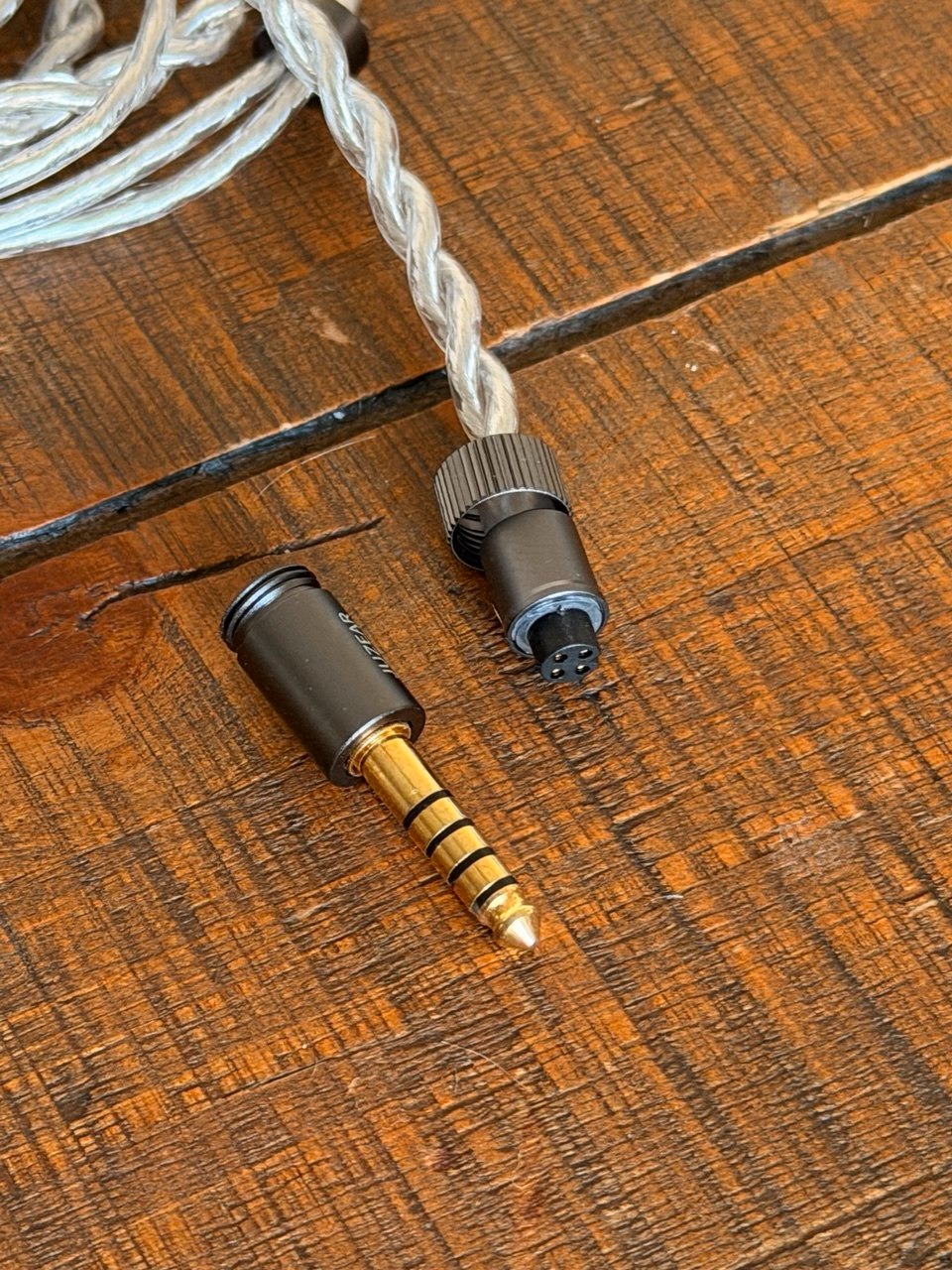
Plus cable with 3.5mm and 4.4mm modular terminations
-
Nice case
CONS
- Can get uncomfortable with extended listening due to shell size
TL;DR
The JUZEAR Light Shuttle is a delight. The product page for the Light Shuttle says “Vocal-Focused Tribrid IEMs.” I have no argument with “vocal-focused,” as my listening revealed excellent vocal fidelity, but this set delivers superb bass as well. In fact, the Light Shuttle is one of the most balanced IEMs I’ve heard in a while. It’s very good.
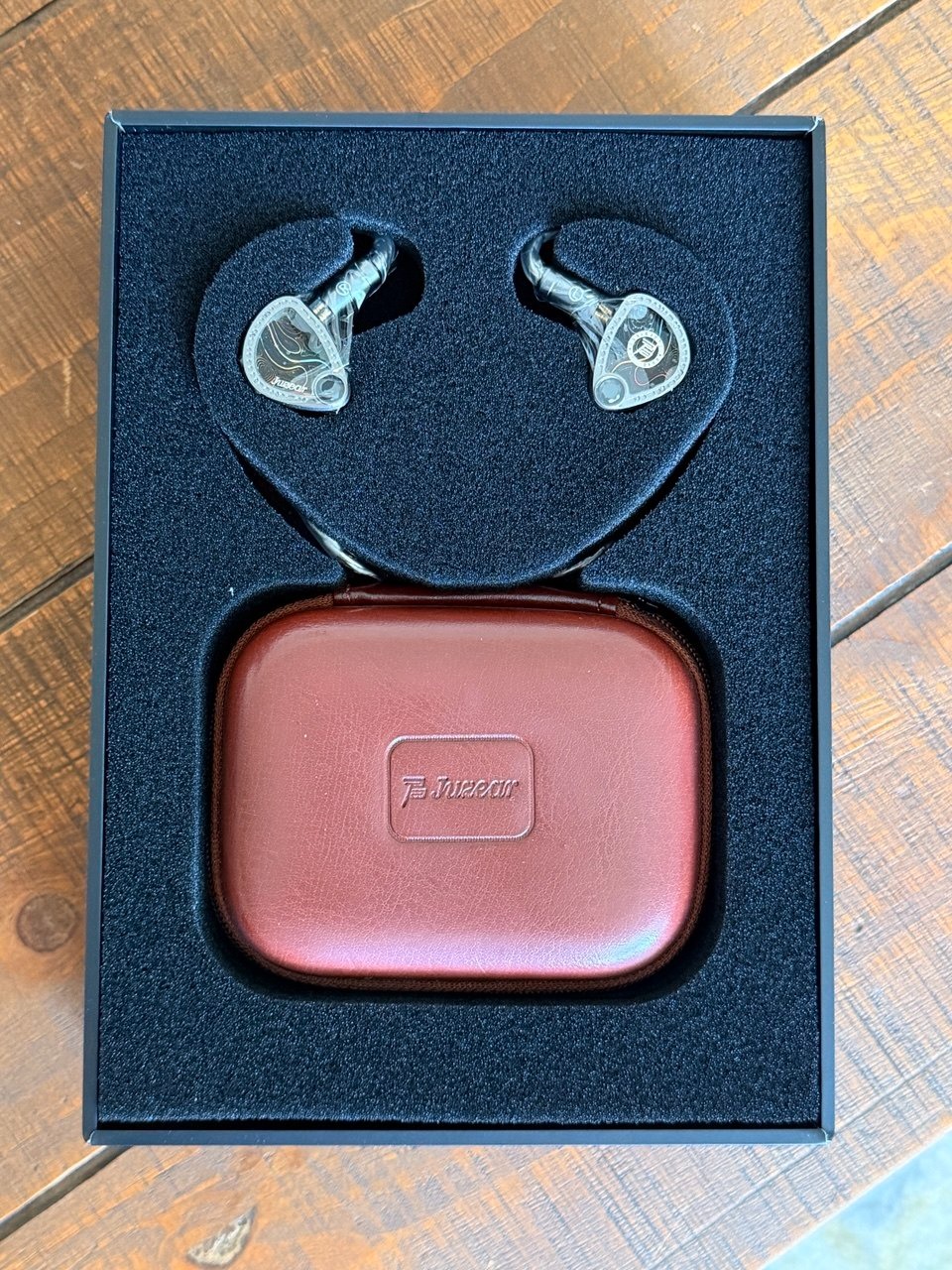
Introduction
JUZEAR brings us the Light Shuttle (officially: UNVEIL Series Light Shuttle Vocal-Focused Tribrid), which retails for about US$189. It’s built with a dynamic driver, four BAs, and two micro planar drivers per side. Designed to emphasize vocals, I found them to be great at more than that.
I’ve spent the last few weeks with the Light Shuttle … the first week was devoted to passively (mostly) reaching the 100 hours of burn-in that JUZEAR recommends.
By the gracious arrangement of HiFiGo, I received the Light Shuttle for review purposes, and I thank them for their assistance. It goes without saying that I am not affiliated with HiFiGo and of course was not asked for any copy checking before publishing. Photos are my own. ALL opinions shared in this review are my subjective thoughts.
As a point of reference, most often I am using the IMR Acoustics Enigma (mentioned above), which has an 11.5mm bespoke CNT A.D.L.C dynamic driver with neodymium motors, a bespoke 8mm A.M.T driver, and a monolithic piezo MEMS driver.
NOTE: While I don’t necessarily emphasize the idea of “…for the price,” my reviews inherently account for price (and performance). In other words, a 5-star IEM in the $200 range may not be subjectively better than a 4-star IEM in the $500 range … but “for the price,” it’s doing very well indeed.
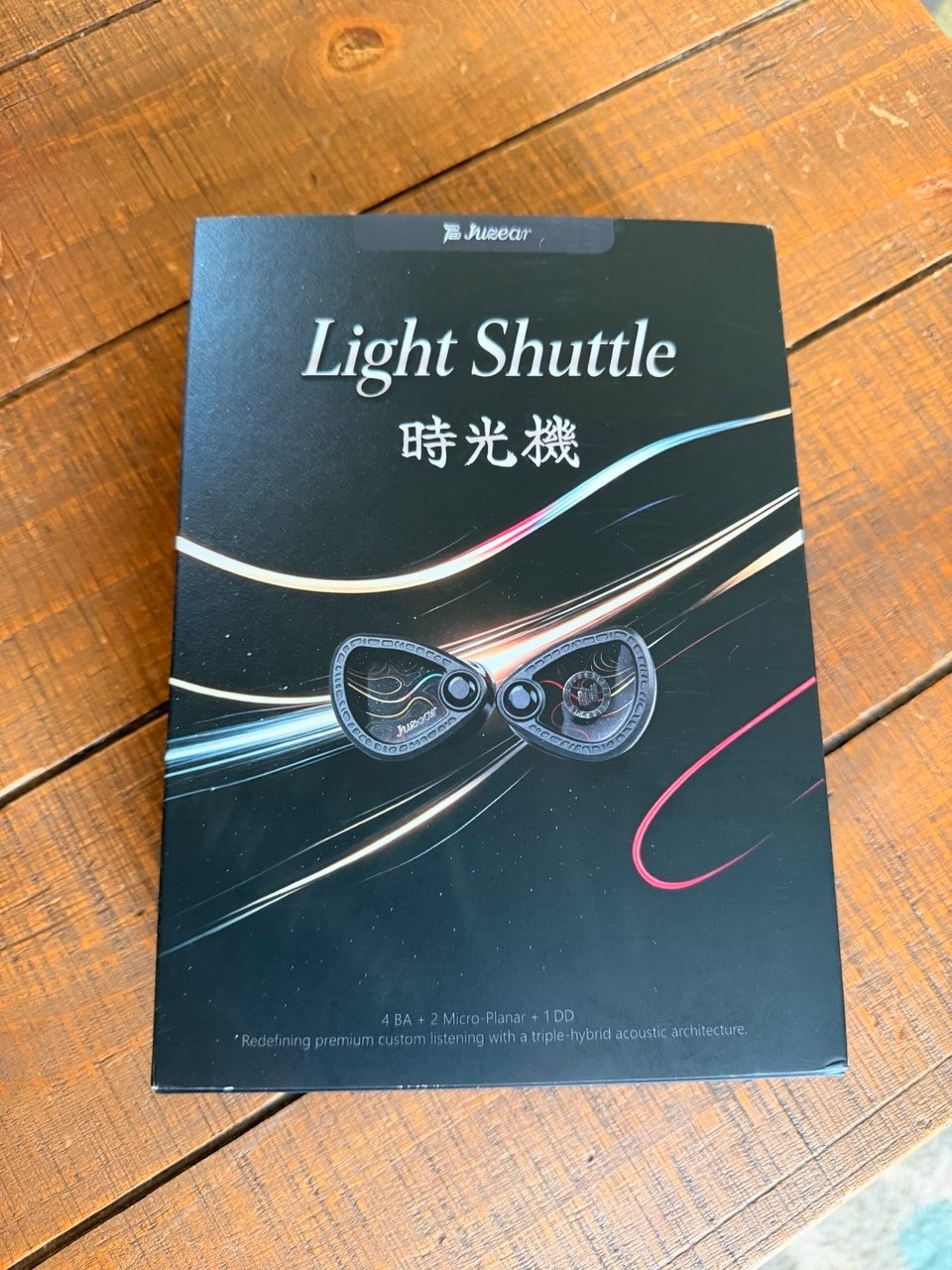
Drivers
- 10mm MACCD self-developed dynamic driver
- 4 Balanced Armatures
- 2 Micro Planar drivers
Quoting JUZEAR: “In order to deliver a truly comprehensive sonic excellence with the Light Shuttle, Juzear has equipped the set with a sophisticated 7-driver hybrid setup. The pair features a complex combination of three types of drivers, housing 1DD, 4BA, and 2 Micro Planar drivers on each side. … Using advanced crossover design, Juzear has achieved a cohesive sound with the Light Shuttle.”
Regarding the crossover: To manage this robust multi-driver array smoothly, the Light Shuttle utilizes a highly engineered physical four-way crossover.”
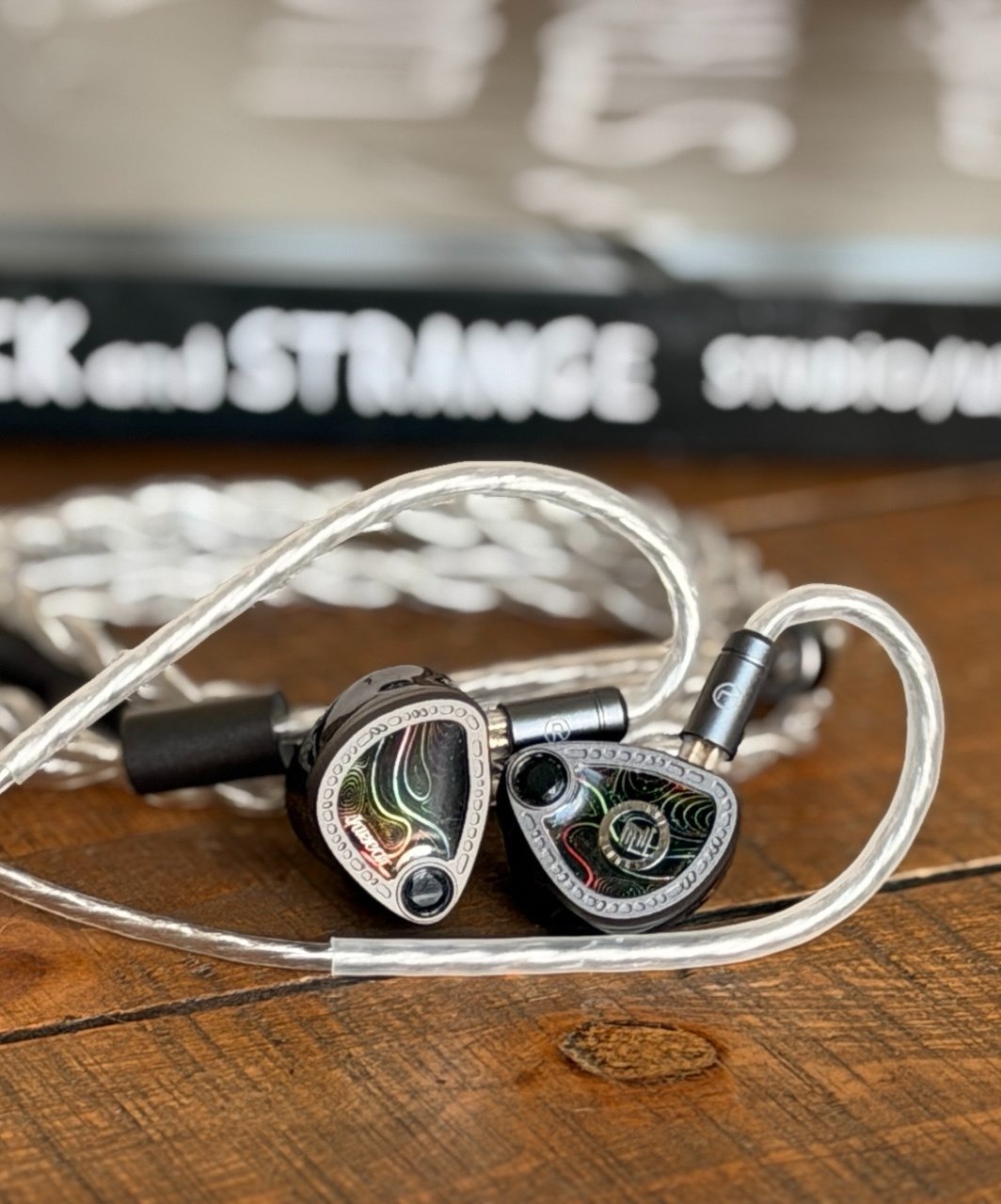
Shell
Resin with aluminium faceplates (which are rather striking)
JUZEAR: “The Light Shuttle is as much a visual statement as it is an auditory one. The faceplates are carved from solid aluminium alloy using precise five-axis CNC machining, capturing the aesthetic of flowing light and speed. JUZEAR then applies a layered iridescent art process, resulting in a mesmerizing finish where the colours and highlights dynamically shift depending on the ambient light and viewing angle. This metal faceplate seamlessly pairs with a high-precision DLP 3D-printed resin shell, creating a comfortable, weather-resistant build that weighs just 6.4g per earpiece.”
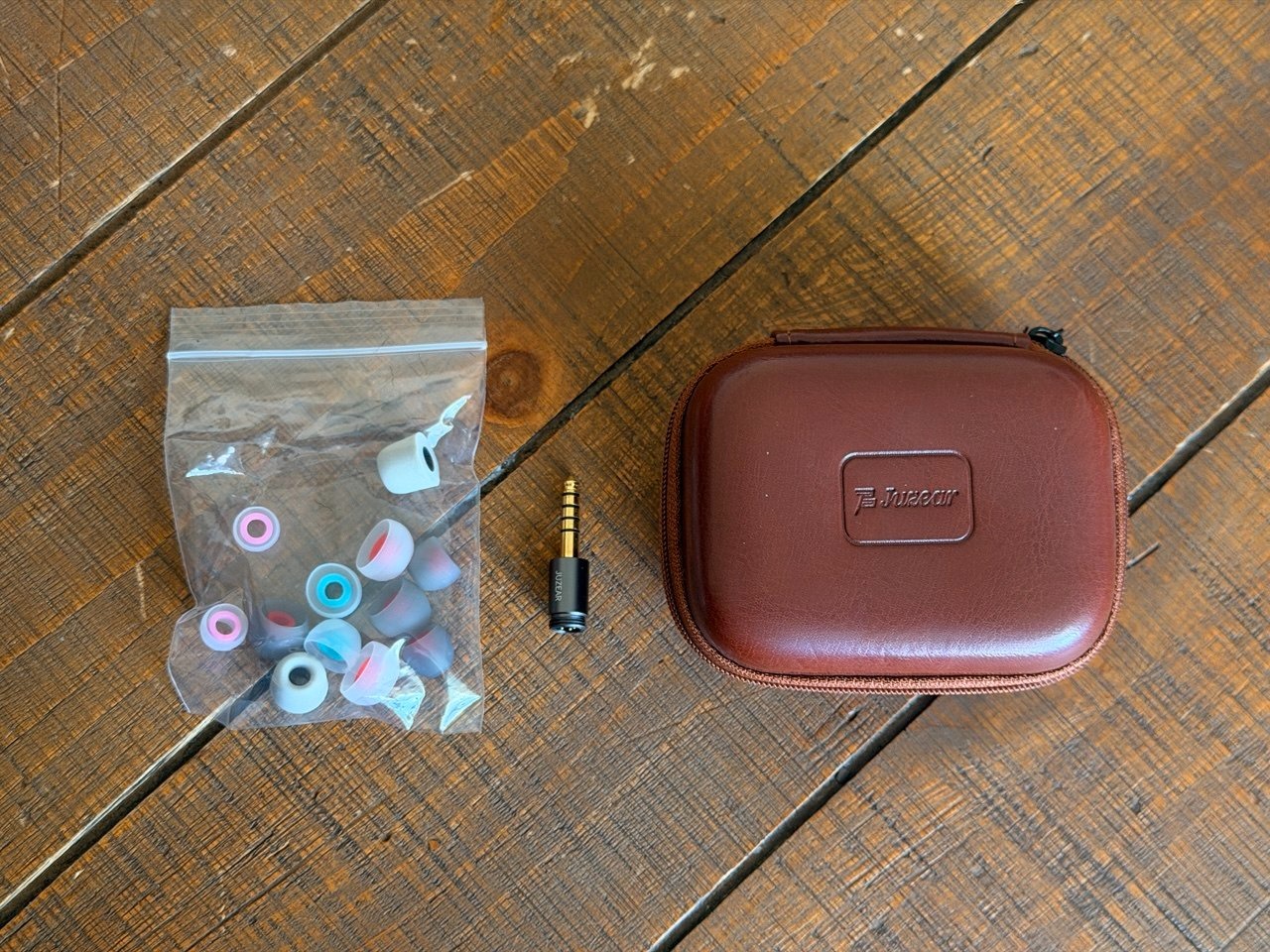
Presentation
About what you’d expect from this price range. Unboxing was fine, but nothing dramatic or “special.”
You get:
-
6N OCC silver-plated copper cable. This is the third JUZEAR set I have reviewed in recent months and this cable is either the same as or very close to what you get with the Nimbus and Nebula.
-
7 sets of ear tips (3 balanced silicone, 3 wide bore silicone, and 1 memory foam)
-
A nice leather carrying case, perhaps a little smaller than typical
-
Cleaning cloth
-
User booklet
-
Certificate
Comfort and Fit
The shells are on the bigger side, but I didn’t struggle too much with comfort … although I don’t know that I’d want to have them in for more than an hour at a time.
Important: I found that after initially inserting the Light Shuttle units into the ear canal, a little additional twisting and fine adjusting help not just with comfort but with hearing all of the bass.
My right ear has an abnormally large opening (apparently) and I always have to use my own tips, at least 14mm. I typically use the Divinus Velvet wide bore.
Overall Sound
Wonderfully balanced. Solid bass that doesn’t get in the way of the vocals, and treble that is tasteful and controlled. I had some sibilance here and there, but after double checking, that seemed to be more because of faults in the recording. The Light Shuttle has a rich, welcoming sound that is quite addicting. For me, the bass is the star of the show (I don’t consider myself a basshead, but I think bassheads would be quite pleased).
Evaluation Tracks
Most tracks were local hi-res files (96/24 or better) on my Cayin N7.
Pink Floyd, “Shine On, You Crazy Diamond, Pts 1-5,” Wish You Were Here 50th Anniversary edition. Listening for: Spaciousness/instrumental separation. I won’t use the cliche of “feels like being right in the studio” … but it’s very close to that level. Mr. Gilmour’s iconic guitar leads are as crisp and clear as ever, while Mr. Wright’s Hammond organ is as groovy as can be. Mr. Parry’s sax has great timbre. Vocals full of emotion. Soundstage is roomy and every little piece is in the right place. A
Porcupine Tree, “Harridan,” Closure/Continuation. Listening for: Bass quality, quantity, and texture. This track kicks off with some rollicking bass, and there are some huge, stadium-size riffs later in the track. This a BIG track with no lack of drama. The Light Shuttle delivered some very good bottom-end rumble without losing control. Impressive! A
Genesis, “Entangled,” Trick of the Tail. Listening for: Male vocal accuracy. It’s fascinating to me that after Peter Gabriel’s departure, the remaining guys searched for a singer … it was almost by accident that Phil Collins got the job. And he does a fine job on this track. The Light Shuttle gives Phil the correct tone and timbre, not to mention clarity. And the extended outro with acoustic guitar and moody keyboards was delicious. A+
I should mention I had a fair amount of sibilance (such as the “seen” on “meant to be seen and not heard”) but I checked the track with some other gear and it’s inherent in the recording.
Annie Lennox, “Why,” Diva (streamed via Apple Music). Listening for: Female vocal accuracy. This album has great personal meaning for me, which I won’t get into. Suffice it to say I am very familiar with this one, and Ms. Lennox’s crystalline vocals are reproduced here with a pleading authenticity that is a delight. The tone is on the mark! A
Led Zeppelin, “Since I’ve Been Loving You,” Led Zeppelin III 2014 Remaster. Listening for: Electric guitar attack and decay. Mr. Page’s blues opus features a blistering guitar solo and plenty of moody licks. With the Light Shuttle, the guitar tone feels absolutely correct — lively and sharp. And the squeaky spring on Bonzo’s bass drum pedal is alive and well (and the general drum sound is rich and full). A+
The Rolling Stones, “Wild Horses,” Sticky Fingers (streamed via Apple Music). Listening for: Acoustic guitar tonal accuracy and decay. Mr Taylor’s and Mr Richard’s acoustic strumming and picking is clean and controlled. But I could do with a bit more sparkle. Also, the bottom end does seem to bloat a bit here and get in the way; more a fault of the recording than the gear. A-
Coldplay, “Clocks,” A Rush of Blood to the Head (streamed via Apple Music). Listening for: Piano clarity and realism. Beautiful tone and sustain. Nothing shrill or dull. A
The Beatles, “Eleanor Rigby, Take 2 (strings only)” Revolver super deluxe edition. Listening for: Fidelity of strings. I have Mark Lewisohn’s The Complete Beatles Recording Sessions book, which reports a double string quarter was used on 28 April, 1966 — meaning four violins, two violas, and two cellos. The cellos are predominantly in the right channel and the tone is rich and full. The smaller instruments likewise come through with appropriate tonal weight and brightness. Stunningly beautiful and clean. Sir Paul would be pleased … chuffed, even. A+
Rush, “YYZ,” Moving Pictures 40th anniversary edition, vinyl. Listening for: Percussion attack, texture and decay (so, drums and cymbals). Some gear just doesn’t work great with vinyl. The Light Shuttle cooperated just fine. The Professor’s relentless pounding was as brilliant and familiar as ever. There was a regular pulsing cymbal lower right, main drum center, and the panning effect at the end was just right. I often use this track for testing because, when the gear is right, it’s one of the most “3D” experiences I have with music, with Geddy’s bass dancing around in front of everything else (or something like that). A+
And, after YYZ, as I was typing this, the record continued and I enjoyed “Limelight” for good measure. Exceptional!
(For reference, vinyl set up is Fluance RT85 > Schiit Magni 2 > Schiit Lokius > Schiit Vali 2.)
Peter Gabriel, “Red Rain,” So 25th anniversary edition, vinyl. Listening for: Overall production coherence. We start with Stewart Copeland’s crisp hi hat intro followed by dramatic bass and piano chords that propel us into the moody opening track of Mr. Gabriel’s huge album from 1986. There’s plenty going on here. Obviously Pete’s evocative lyrics are core to this track, and with the Light Shuttle, they gloriously occupy the stereo high ground, if you will. Bass, drums, piano, and portentous synths swirl around the listener. Each has their space, each taking us along a grim journey as red rain is pouring down all over us. And at the end, when it’s just Pete and a little bit of synth, you take a deep breath because you survived the red rain. A+
BONUS
Hans Zimmer, “Ripples in the Sand,” Dune Part One OST; “Stay,” Interstellar OST. Listening for: Electronic air/extension/sparkle. I started to wonder if the upper end was a bit flat. After checking these tracks, I can say no. There is plenty of good treble going on.
Listening Summary
The Light Shuttle gets remarkably little wrong and does almost everything right. When an IEM delivers superior bass AND exceptional vocals, it’s a keeper.
Comparisons
Comparing the performance of the Light Shuttle with two other hybrid units, the quad driver Sivga Lyrebird and my tribrid IMR Acoustics Enigma using one track: “Here Comes The Sun,” from the Abbey Road 50th anniversary Blu-Ray.
Verdict: These kinds of tests are always a challenge (i.e., listen to one, remember what you heard, then listen to another and try to compare). I will try to do exactly that. For this test, I used the Light Shuttle’s stock cable for each.
Enigma: Incredible all around experience. Most natural, I suppose.
Lyrebird: Great soundstage, but somehow feels more intimate. Excellent vocals, full of character.
Light Shuttle: Ringo’s drums clean and crisp. Guitars bright and joyful. George’s (and the others’) vocals full of life. Spacious, plenty of clarity, and a solid bottom end.
Damn, this is hard. I would be quite happy listening to any of these (only) for the rest of the year. If you want something a bit lighter (in the ear and tonally), Lyrebird. If you want more bass and a bit more note heft, Light Shuttle is your choice. If you want the all-rounder, with a more natural, effortless sound, Enigma. But the Enigma is by far the most expensive, so I think the Light Shuttle is doing quite well.
Conclusion
Before I got my Light Shuttle, I had seen a few posts in audio-focused Facebook groups. Not reviews, just … “got my hands on this one today.” I’m glad I got my hands on the Light Shuttle. It’s a superb set with many excellent attributes and few shortcomings. I can unreservedly recommend it.