SIVGA Lyrebird — musical, spacious and much more technical than I expected
Free review sample • €167 / £149 / $149 • stock tips • 4.4 mm balanced • rating: 4.6/5
The first thing that surprised me about the SIVGA Lyrebird was not how it sounded. I had not heard it yet; I had only opened the box.
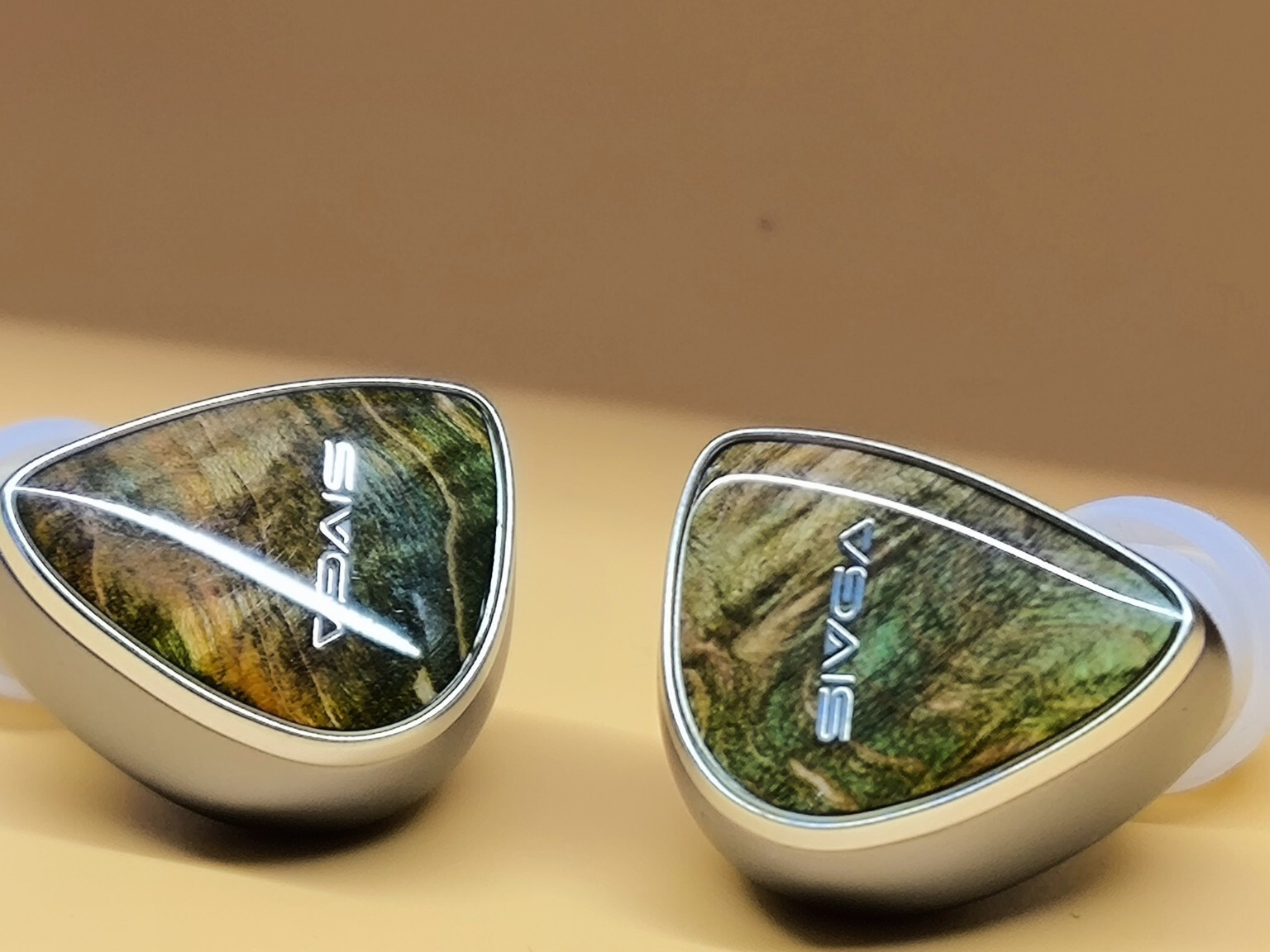
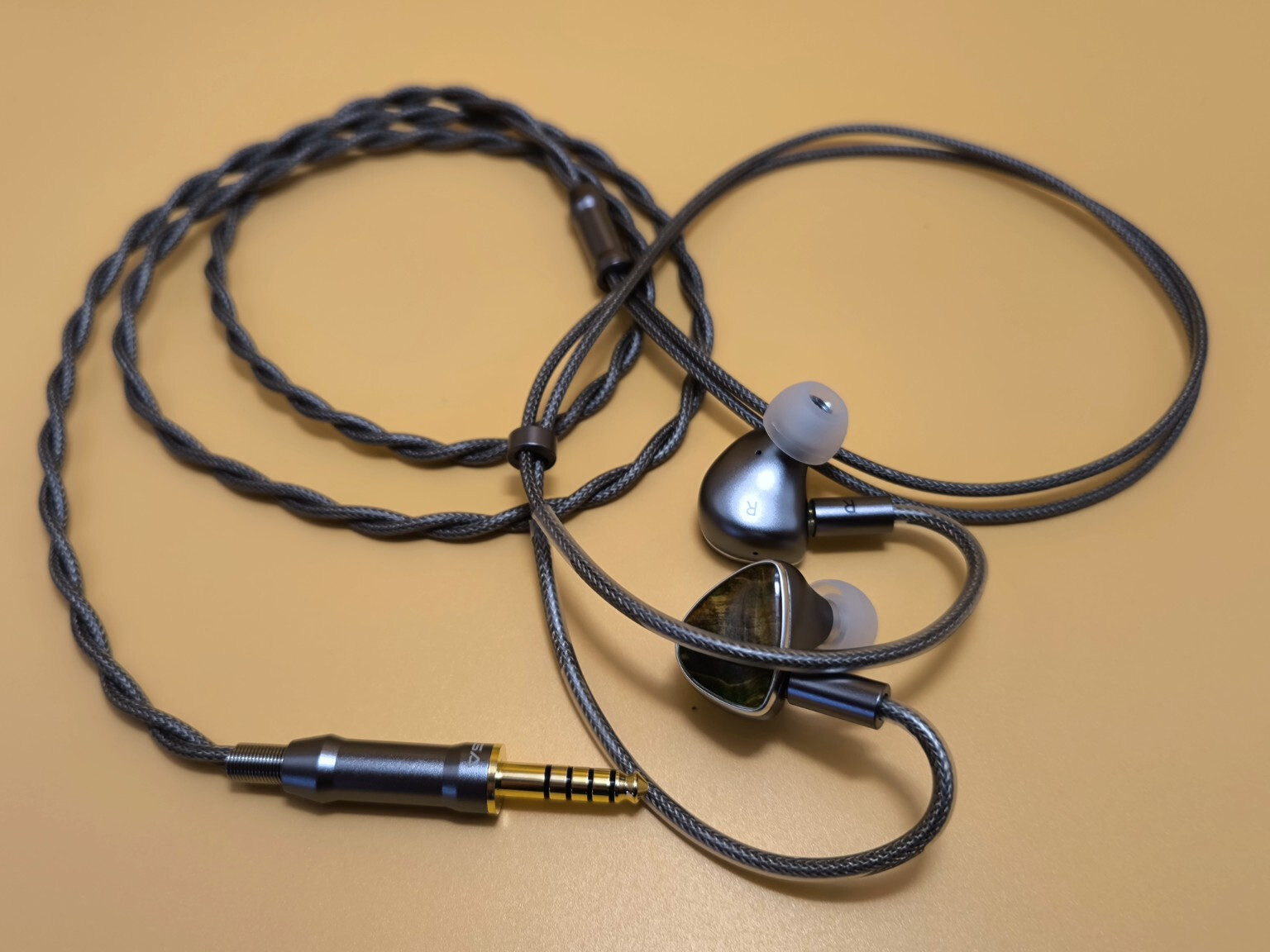
The earpieces immediately looked far more special than I expected at this price. The stabilised wood faceplates work beautifully with the small aluminium shells, and the leather case was one of the first accessories I picked up and thought: this actually feels properly high quality. The stock cable continued that impression. None of those things tell me whether an IEM sounds good, of course, but they made the Lyrebird unusually easy to remember before the actual listening had even started.
Once I did start listening, my first note was simply musical. With more time that became easier to define. The Lyrebird sounds clear and energetic, with a surprisingly large sense of space and very strong separation for the price, but it does not turn that technical ability into a dry or clinical presentation. There is atmosphere to it, and it is simply enjoyable to listen to. That balance between musical character and technical performance became the thread running through the rest of my time with it.
Review at a glance
Product: SIVGA Lyrebird
Category: Quad-driver hybrid IEM
Review unit: Provided free of charge
Sample source: Jackrabbit Media
Price quoted for review: €167 / £149 / $149
Received: 29 September 2026
Main sources: FiiO M21; Moondrop Dawn Pro 2 + smartphone
Cable: Stock 4.4 mm balanced
Reference tips: Stock silicone tips
Additional tip check: SpinFit W1
Playback: Poweramp
Critical listening: Local lossless files
EQ: None for the core evaluation
Rating: 4.6 / 5
Disclosure
The SIVGA Lyrebird was provided to me free of charge for review through Jackrabbit Media. There was no payment, no requirement for a positive review and no editorial approval.
Why the Lyrebird interested me
The physical presentation had already set expectations fairly high, but the specification sheet raised a different question. SIVGA combines four different driver technologies in each side: a dynamic driver, balanced armature, micro-planar and piezoelectric driver.
That sounds ambitious at €167, but a complicated driver layout is not automatically an advantage. It can just as easily create problems with coherence, timbre or transitions between frequency ranges. So after the initial attraction of the wood shells and the case, the more interesting question became whether all of that engineering actually behaved like one IEM.
For me, it does.
That is also where the Lyrebird started to become more interesting than I initially expected. It is not just an attractive product with an unusual driver configuration. Its technical performance is a real part of the appeal.
What it is
The Lyrebird uses a 10 mm dynamic driver together with a balanced-armature driver, micro-planar driver and 9.2 mm piezoelectric ceramic driver. The housings combine CNC-machined aluminium with stabilised wood faceplates, so the grain differs from pair to pair.
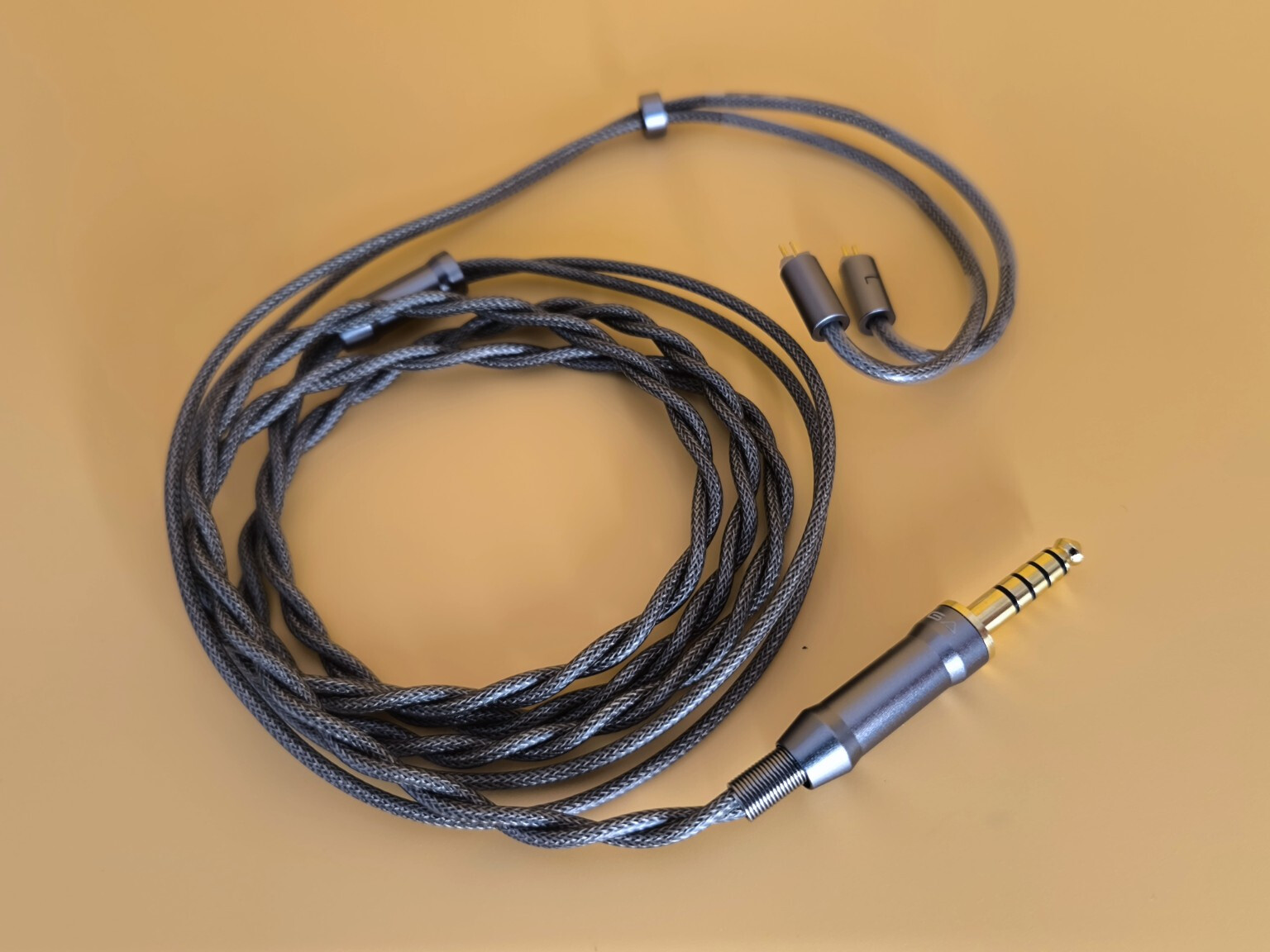
Published specifications list 14 Ω impedance at 1 kHz, 108 dB sensitivity and a 20 Hz to 20 kHz frequency response. Connection to the shells is via 0.78 mm 2-pin, while the supplied cable terminates in a fixed 4.4 mm balanced plug.
The driver configuration is unusual enough to attract attention, but the thing I care about more is that I do not hear four separate technologies competing with each other. The Lyrebird sounds coherent.
Packaging, build and accessories
The Lyrebird is one of those products where the presentation actually supports the price rather than trying to distract from the product itself.
The shells are an absolute beauty to me. The stabilised wood gives them some individuality, while the aluminium body keeps the overall design compact and clean rather than ornamental. They also feel properly solid in the hand.
The leather case deserves more credit than cases normally receive in an IEM review. It feels genuinely high quality and suits the rest of the package instead of looking like an afterthought. I would actually continue using it.
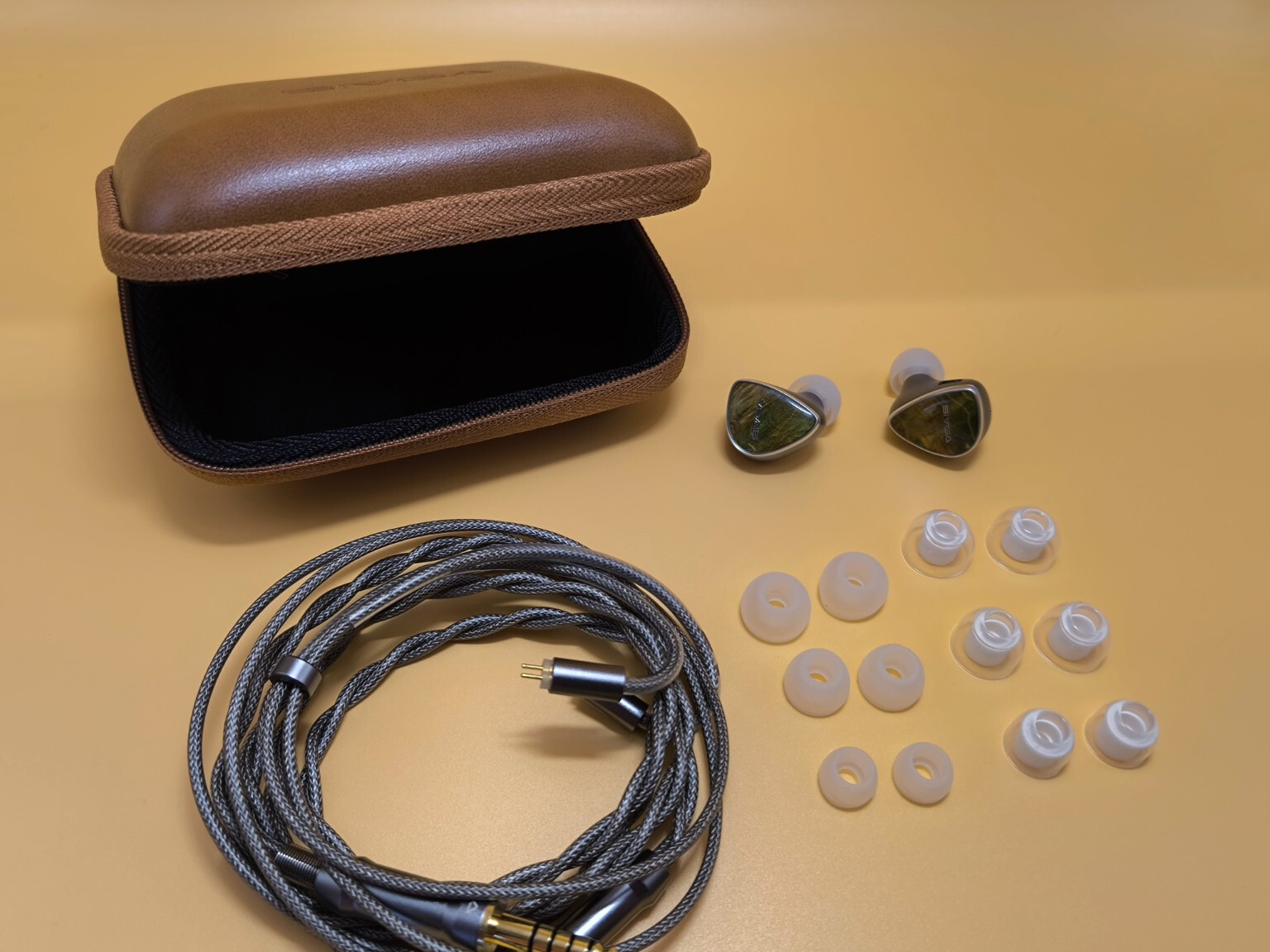
The stock cable is another strong part of the package. It feels unusually substantial for this price range and gives me no quality-related reason to replace it. My criticism is simply the fixed termination. I use 4.4 mm anyway, so it works perfectly for my own setup, but a modular 3.5/4.4 mm plug would make much more sense for an IEM that could otherwise work with a wide range of sources.
Fit, isolation and tips
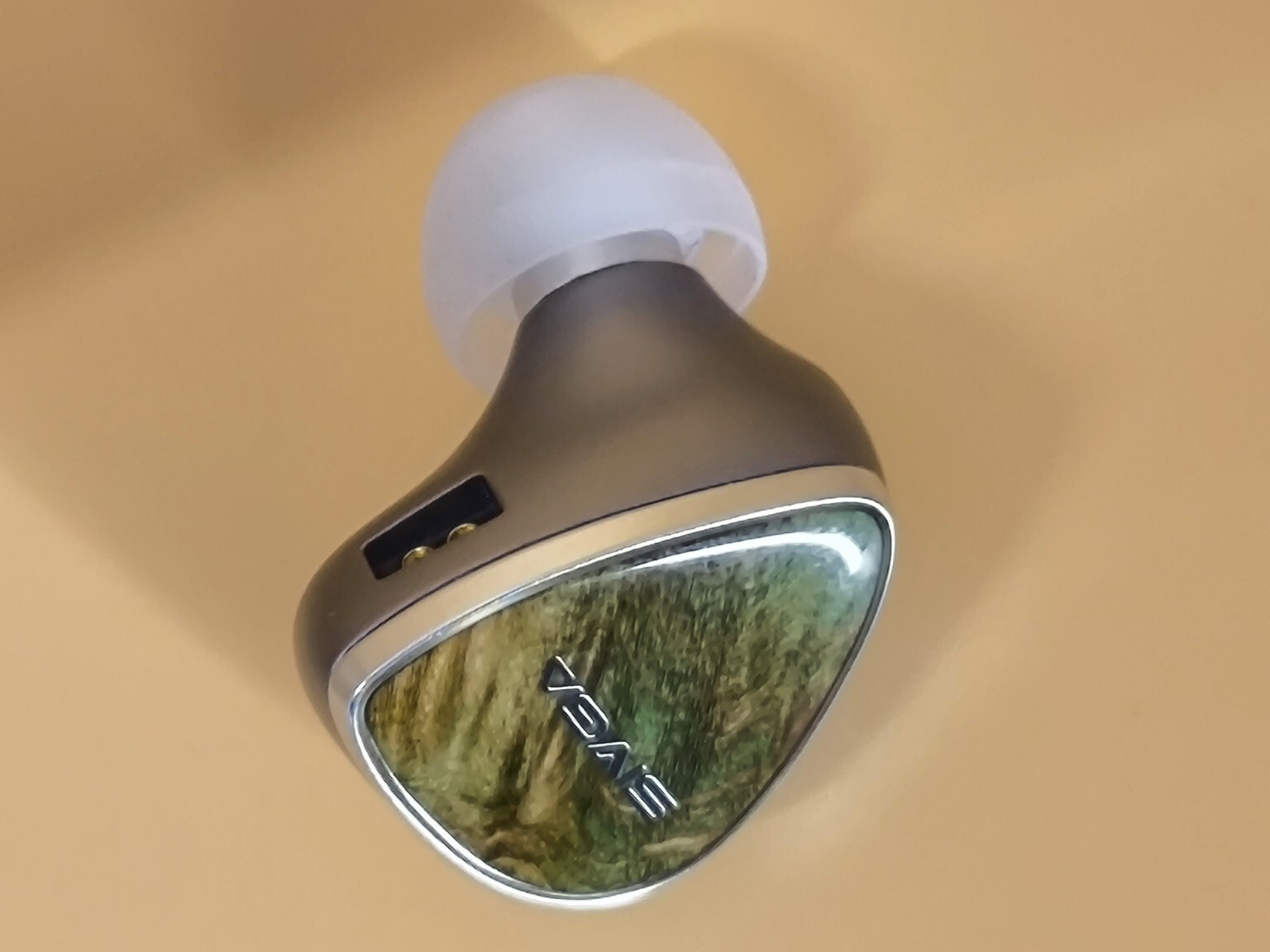
The shells are relatively small considering what SIVGA has fitted inside them, and the Lyrebird worked immediately with my ears. I did not need to experiment with the angle or spend several days figuring out the fit. After around two hours I barely noticed I was wearing it.
Isolation is also pretty good for me, making the Lyrebird practical beyond quiet listening at home.
Most of this review is based on the supplied silicone tips. I also tried SpinFit W1 because I know them well from several other IEMs. They change some of the usual things that tips change through insertion depth, seal and bore shape, but I do not hear them turning the Lyrebird into a fundamentally different IEM.
That is worth mentioning because tip choice has produced quite different reactions to the Lyrebird elsewhere. My experience is less dramatic: tip rolling can fine-tune the presentation, but the stock tips already show me what the Lyrebird is about.
Listening setup and source behaviour
Most of my listening was done with the FiiO M21, with the Moondrop Dawn Pro 2 connected to a smartphone as my second chain. Playback was through Poweramp using local lossless files for critical listening, and I evaluated the Lyrebird without EQ.
The source can shift the presentation slightly. In particular, a brighter chain can make the already energetic upper-mid and treble region a little more obvious. I hear that effect, but it does not fundamentally change my view of the IEM. The Lyrebird remains clear, energetic and musical on both of my main sources.
Sound
Overall balance
Putting a simple tonal label on the Lyrebird is not particularly helpful to me. I do not hear it as obviously dark, nor do I experience it as a straightforward bright IEM. The word that fits better is clear.
There is considerable energy through the mids and upper mids, but the bass underneath has enough weight to stop the presentation becoming thin. Treble gives the sound openness and air without making everything feel treble-led. The result is vivid and very clean, but there is still enough body and atmosphere for it to remain enjoyable rather than analytical for the sake of being analytical.
That is what I meant when my first note was “musical”. It was not a way of saying that the Lyrebird lacks technical ability. In fact, the interesting part is almost the opposite: it combines a musical character with much stronger technical performance than I expected at this price.
Bass
The Lyrebird is not a sub-bass specialist, but I would definitely not call it bass-light.
Its strength is the mid-bass. There is good punch, the attack feels quick and defined, and bass lines stay clean rather than spreading into the midrange. The decay is controlled enough that low-frequency information does not linger unnecessarily when the arrangement becomes busy.
Deep sub-bass is present, but it is not the part of the tuning that dominates the experience. If I wanted an IEM primarily for physical low-frequency rumble, I would look elsewhere. For normal listening, however, the Lyrebird has enough bass authority that I never feel something essential is missing.
Texture is also good. Bass notes remain individually readable, which fits the generally clean and organised character of the IEM.
Midrange and vocals
The midrange became one of my favourite parts of the Lyrebird.
Voices are clear and present without sounding artificially detached from the music. Female vocals benefit from the openness in the upper mids, but I also find male voices very convincing. Some impressions of the Lyrebird describe deeper male voices as a little short on chestiness; that is not something I would turn into a major criticism from my own listening.
I hear enough body for male vocals to work well, while the clarity makes texture easy to follow. Rough voices remain rough, cleaner voices remain clean, and the Lyrebird generally avoids making everything sound as if it has the same vocal character.
The qualification is further up. The upper mids are energetic, and with demanding recordings that energy can occasionally become slightly hard. I would not describe the Lyrebird as generally harsh, because that is not what I hear across normal listening. It is more an edge that appears when the recording itself already puts a lot of pressure on that region.
Treble
Treble is lively, open and airy, which is an important part of the Lyrebird’s spatial presentation. Cymbals and small percussion details are easy to pick out, and there is enough extension to prevent the sound becoming closed in.
For my ears, there is no problematic sibilance.
That does not mean the treble is relaxed. The Lyrebird is quite explicit, and bright recordings or brighter sources can make that more obvious. What I hear, though, is a distinction between energy and actual sibilance. The former is clearly present; the latter has not been a problem for me.
This also contributes to the strong perception of detail. The Lyrebird presents information very clearly, which means small sounds are easy to notice. I would not automatically translate that into exceptional absolute micro-resolution, because clarity and upper-range energy are doing part of the work.
Stage, imaging and depth
The Lyrebird sounds large to me, but width alone is not what makes the spatial presentation interesting. The more important quality is depth.
I can hear meaningful front-to-back placement rather than just a line of sounds stretching from left to right. Voices and instruments occupy recognisable positions, the centre remains stable and different layers can be placed behind or in front of each other.
Imaging is similarly convincing. Directional information is easy to follow, and the Lyrebird does not need exaggerated separation between left and right to create that impression.
For a relatively small IEM at this price, its spatial presentation is one of the things that surprised me most.
Separation, layering and detail
Separation is one of the Lyrebird’s major strengths.
When arrangements become busy, individual parts remain unusually easy to follow. There is enough space around voices, instruments and percussion that the music stays organised instead of collapsing into one dense layer. Combined with the stage depth, that also gives the Lyrebird convincing layering.
This is an area where it clearly moves beyond the cheaper IEMs I compare it with later.
Detail retrieval needs a little more careful wording. The Lyrebird makes details very obvious, but some of that impression comes from how cleanly and energetically they are presented. That is different from saying it has the absolute resolving ability of a much more expensive IEM.
The AFUL Performer 5+2 makes that distinction especially clear. The Lyrebird lets me hear a lot; the AFUL goes further in the fine texture and purity of that information.
Dynamics and transients
The Lyrebird sounds fast and crisp. Percussion has a precise leading edge, rhythm changes are easy to follow and the overall presentation feels lively rather than restrained.
At the same time, it does not strike me as brutal. The Lyrebird has energy and good dynamic contrast, but it is not trying to turn every transient into maximum physical impact.
“Fast, precise and lively” describes it better for me than “aggressive”.
Driver coherence
This may be one of the most important technical achievements of the Lyrebird.
With a dynamic driver, BA, micro-planar and piezoelectric driver sharing one shell, there are plenty of opportunities for different parts of the spectrum to sound disconnected. I do not hear obvious transitions where one driver suddenly takes over with a completely different texture or speed.
Instead, the presentation feels unified enough that I stop thinking about the driver configuration once the music starts. Considering how complicated the design looks on paper, that is a substantial compliment.
The Songbird Test
The name Lyrebird made me want to give vocals a little more attention than usual, but I did not want to force the entire review around the theme. The idea only became useful after I had already noticed how well the IEM handles voices.
Alongside my normal twelve-track playlist, I therefore added three vocal-focused songs from my own music library. They test three very different kinds of voice rather than three supposedly perfect audiophile recordings.
Lana Del Rey — Shades of Cool
Test focus: female vocal texture, air, upper mids and atmosphere
The Lyrebird works very well with the space around Lana Del Rey’s voice. Her vocal remains clearly outlined, but the surrounding reverberation and atmosphere are not flattened around it. The open upper range lets the recording breathe, which suits the track particularly well.
It also exposes the Lyrebird’s balance between clarity and upper-mid energy. The more intense parts bring that energy forward, but I still do not hear her voice becoming unpleasantly sibilant. For me, it remains expressive rather than sharp.
AnnenMayKantereit — Barfuß am Klavier
Test focus: male vocal body, rasp, chest resonance and texture
Henning May’s voice is almost the opposite test. It is naturally rough, deep and full of texture, so an IEM can either smooth too much of that character away or exaggerate the rasp until it sounds abrasive.
The Lyrebird keeps the roughness easy to hear without turning it into artificial grain. More importantly, the voice still has enough body for me. This is one of the tracks that reinforces why I do not personally see male vocals as a weakness of the Lyrebird.
I understand the German lyrics, but for this test the voice itself also provides more than enough information about texture and body.
Phil Collins — Against All Odds (Take a Look at Me Now)
Test focus: vocal articulation, increasing intensity and dynamics
This gives me a cleaner male voice and a performance that gradually becomes more intense. The Lyrebird follows that increase well because its dynamics are lively and the vocal remains easy to locate as the arrangement grows around it.
At the peaks, the energetic upper mids are more obvious, but the voice remains controlled for me. The result supports the same impression I get elsewhere: vocals are not just clearly reproduced; they are one of the things that give the Lyrebird its character.
My fixed 12-track reference playlist
These are the same twelve tracks I use across my IEM reviews. They come from music I actually listen to rather than from a changing collection of demonstration tracks, which makes them more useful to me when I compare products across different price ranges.
Drake — Nonstop
Test focus: sub-bass rumble, 808 control and kick/vocal separation
The Lyrebird shows its bass priorities very clearly here. There is enough low-end foundation to keep the track physical, but the deepest 808 rumble is not exaggerated. Much of the perceived weight comes from the punchier mid-bass region.
What I like is the cleanliness. Drake’s voice remains easy to follow over the bass, and the low end does not spread upward into it. This is a good example of why “not a sub-bass monster” and “bass-light” are two very different descriptions.
Kendrick Lamar — DNA.
Test focus: attack, dynamic contrast and dense-production separation
The fast changes in intensity fit the Lyrebird well. Attacks are crisp, the vocal stays clearly defined and the presentation reacts quickly when the production shifts from relatively sparse to much denser sections.
The harder passages also expose some of the upper-mid energy. I can hear a little firmness there, but the Lyrebird maintains enough organisation that the track never becomes confused.
OutKast — B.O.B.
Test focus: speed, transients, layering and congestion resistance
B.O.B. is deliberately hectic, and this is where separation and speed matter much more to me than simply having a wide stage. The Lyrebird keeps individual rhythmic events impressively distinct as the arrangement gets busier.
It is one of the tracks that most clearly demonstrates why I rate the technical performance so highly for the price. There is a lot happening, yet the Lyrebird continues to give the individual parts room rather than merging them into one wall of sound.
Lana Del Rey — West Coast
Test focus: female vocals, atmosphere and bass-to-mid transition
The Lyrebird’s combination of clarity and atmosphere works particularly well here. Lana’s voice stays clearly outlined, while the bass gives the production enough body without covering the lower midrange.
The stage depth also helps the track retain its layered, hazy character. This is one of those recordings where the word “musical” makes more sense to me than a long list of tonal adjectives.
Led Zeppelin — When the Levee Breaks
Test focus: drum body, decay, room size and dynamics
The drums need weight, but they also need the surrounding room to make sense. The Lyrebird gives them convincing mid-bass body while keeping the decay controlled enough that the rest of the recording stays readable.
Its depth is useful here because the kit does not feel pasted onto a flat background. I would not mistake it for the scale of an open-back headphone, but within an IEM presentation the sense of space is convincing.
Led Zeppelin — Dazed and Confused
Test focus: guitar texture, psychedelic layering and stage depth
As the recording becomes more layered and psychedelic, the Lyrebird’s front-to-back organisation becomes more important than raw width. Guitar textures remain easy to distinguish, and different elements occupy recognisable positions instead of stacking into the same plane.
This track reinforces my impression that the Lyrebird is not just spacious in a superficial left-right sense. There is meaningful depth behind the stage.
Vivaldi — The Four Seasons: Winter I
Test focus: string attack, treble behaviour and orchestral separation
Fast violin attacks make upper-range problems obvious very quickly. The Lyrebird gives the strings proper bite and speed, which keeps the performance lively instead of softening it into something safer than the recording.
This is also one of the easier places to hear the slight upper-mid hardness I mentioned earlier. The energy is definitely there, but for my ears it still stops short of becoming sibilant or generally unpleasant.
Vivaldi — The Four Seasons: Summer III, Presto
Test focus: transient stress, speed and complex layering
This is probably the hardest track in my normal playlist for an IEM to keep organised. The Lyrebird handles the speed surprisingly well, with fast attacks and strong separation allowing the different orchestral lines to remain readable as the performance accelerates.
It is also one of the places where its price-to-performance becomes especially obvious. The Lyrebird is not doing what I would normally expect from a simple mid-priced “fun” IEM; technically, it is already reaching into more expensive territory.
Depeche Mode — Enjoy the Silence
Test focus: synth layering, centre imaging and treble cleanliness
The vocal remains firmly centred while the synth layers spread around it, and the Lyrebird makes the electronic textures easy to locate without losing the atmosphere of the track.
The open upper range helps the presentation breathe. Despite the amount of treble information, I do not hear the vocal becoming sibilant.
Michael Jackson — Billie Jean
Test focus: bass timing, kick, percussion and tonal balance
Billie Jean is more useful to me for timing than sheer bass quantity. The Lyrebird keeps the bass line tight and easy to follow, while the kick has enough punch to give the groove proper physical shape.
Percussion remains crisp and separated around the vocal. Nothing about the presentation feels slow, but it also does not exaggerate the rhythm just to sound impressive.
Santana — Soul Sacrifice
Test focus: live percussion, guitar texture, venue space and dynamics
The amount of percussion in this recording can quickly expose weak separation. The Lyrebird keeps individual events surprisingly distinct while preserving the energy of the performance.
Its imaging and depth also help give the live recording a believable sense of space. The result feels organised without becoming sterile, which is a good summary of the Lyrebird more generally.
Joe Cocker — With a Little Help from My Friends
Test focus: rough male vocal texture, upper mids and live-rock density
Cocker’s vocal is a useful companion to Henning May because both voices have natural roughness, but the surrounding arrangements are very different. The Lyrebird keeps the rasp clearly audible while giving the voice enough body that it does not turn thin.
As the track becomes denser, separation remains one of the obvious strengths. The upper-mid energy is audible, but I still do not get the sort of sibilance that would make me avoid the track.
Comparisons from my own collection
KZ ZS10 Pro 2
I like the ZS10 Pro 2 a lot, so it remains a useful budget reference rather than something I want to dismiss simply because the Lyrebird costs more.
For me, though, the Lyrebird is clearly better overall. The largest difference is the way it organises a recording: separation is cleaner, front-to-back layering is more convincing, the stage has more depth and the different parts of the spectrum feel better integrated.
The KZ can still sound lively and detailed, which is exactly why the comparison is useful. The Lyrebird simply sounds more mature when the music gives it more to organise.
KEFINE Klean SV
The result against the Klean SV is similarly clear for me.
The Klean remains an important lower-price checkpoint because good inexpensive IEMs make it necessary to explain what spending more actually buys. With the Lyrebird, I hear that extra money most clearly in the spatial presentation, separation and layering.
Dense arrangements have more room, positions are easier to follow and the overall image feels more developed. The Klean does not become a bad IEM as a result; the Lyrebird is simply a real technical step above it.
AFUL Performer 5+2
The Performer 5+2 comparison is much more interesting because I do not hear the Lyrebird as a cheaper version of the same idea.
The AFUL remains the purer technical performer. Absolute resolution is higher, fine textures are rendered more cleanly, very dense arrangements remain calmer and the layering feels more natural. There is another level of refinement in the way information is organised. To my ears, the P5+2 also has a smoother, slightly brighter and more precise presentation.
The Lyrebird has a different personality. It feels more obviously musical and characterful to me, with more of that immediate sense of atmosphere and fun that I noticed from the beginning.
What surprised me is how little technical ability it has to give up to achieve that. Separation, imaging, stage and general organisation already get remarkably close to the AFUL. It is only when I concentrate on absolute resolution, finer texture, density control and the last degree of refinement that the gap becomes more obvious.
That makes this comparison much more interesting to me than declaring a winner. The Performer 5+2 still shows what spending more can buy, but the Lyrebird is already knocking on that level while sounding like a genuinely different IEM.
What I would change
The easiest practical improvement would be a modular cable termination. The stock cable itself is good enough that I want to keep it, so forcing it to remain 4.4 mm feels unnecessarily restrictive for people who also use conventional 3.5 mm sources.
Sonically, I would take a little hardness out of the upper mids without changing their basic energy. That energy contributes to the clarity, vocal presence and lively character I like, so smoothing it too much would risk losing part of what makes the Lyrebird interesting.
A little more very-low sub-bass extension could also be welcome for listeners who want stronger physical rumble. I would not add much more bass overall, though, because the existing mid-bass balance already works very well for me.
Who is it for?
The Lyrebird makes the most sense to me for someone who wants technical ability without giving up musical character.
Vocals are a genuine strength, both male and female. Separation, imaging and front-to-back layering are unusually strong for the price, and the large stage gives those qualities enough room to work. The mid-bass is punchy and clean, dynamics are lively and the presentation remains coherent despite the unusual mix of driver technologies.
The physical product is also part of the value. The shells are beautiful, the leather case feels genuinely premium, the stock cable is unusually good and the compact housings are extremely comfortable for my ears.
Listeners who primarily want heavy sub-bass or a deliberately soft, relaxed upper-mid presentation may prefer something else. The fixed 4.4 mm termination is also worth checking before buying.
Strengths and trade-offs
The strongest part of the Lyrebird is how much of the package works together. It looks and feels more expensive than I expected, fits me exceptionally well and backs that up with strong separation, spatial depth, imaging, vocal clarity, fast transients and unusually good coherence for a four-technology hybrid. The mid-bass has enough authority to keep music lively, and the technical presentation remains musical rather than turning into a sterile demonstration of detail.
The trade-offs are comparatively specific. Sub-bass is good rather than exceptional, demanding recordings can expose some upper-mid hardness, and listeners using only 3.5 mm sources will have to work around the fixed 4.4 mm plug. The Lyrebird also makes detail very easy to hear, but I would distinguish that clear presentation from the finer absolute resolution and texture available from something like the Performer 5+2.
Value and verdict
The Lyrebird first caught my attention before I had heard a single note. The wood faceplates, compact aluminium shells, leather case and stock cable gave me an immediate impression of quality that I did not expect at this price.
What matters more is that the sound eventually justified that first impression.
For €167, I am getting an IEM that is clearly above my KZ ZS10 Pro 2 and KEFINE Klean SV overall, not because they suddenly become irrelevant, but because the Lyrebird makes a convincing technical step in separation, stage, layering and overall organisation. At the other end, the AFUL Performer 5+2 still gives me more absolute resolution, cleaner texture, better density control and another level of refinement, yet the Lyrebird gets surprisingly close in several technical areas while offering a more characterful and musical presentation of its own.
That is really the point for me. The Lyrebird does not need to pretend to be a cheaper Performer 5+2, and it does not need the complicated driver configuration or beautiful wood shells to carry an otherwise average product. It has its own character, and the technical foundation underneath it is strong enough to make that character convincing.
My first listening note was “musical”. After working through the bass, vocals, stage, separation, dynamics, fifteen reference tracks and comparisons, I would still use that word. I just understand much better now what is behind it: the Lyrebird is clear, energetic and technically organised, but it still leaves enough atmosphere and personality in the music to make me want to keep listening.
For the price, that combination is what impresses me most.
Rating: 4.6 / 5
SteveListens | Personal Audio Review | Germany