AFUL Performer 5+2 — long-term owner review from a new reviewer
Self-purchased • almost one year • ~100 hours • 4.5/5
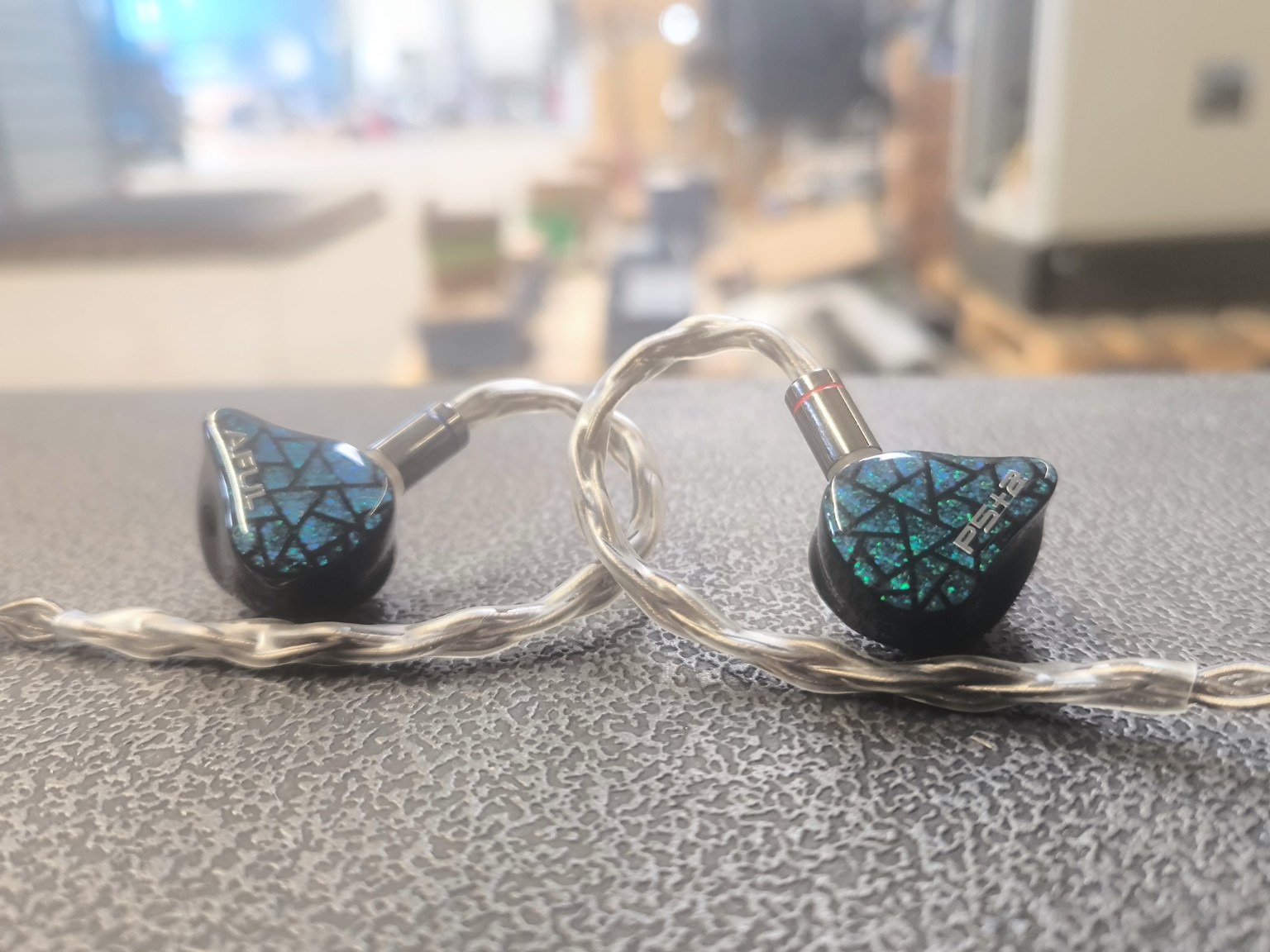
[AFUL Performer 5+2 — both faceplates]
I am new to publishing reviews, so I wanted the first one to be a product I actually know. I bought the Performer 5+2 for €239 in September 2025 and have around 100 hours on it. That feels like a better starting point than trying to sound authoritative after a short loan.
Disclosure: self-purchased. No sample, affiliate relationship or editorial approval.
My chain is FiiO M21 or Moondrop Dawn Pro 2 from a phone, with Poweramp and local lossless files for critical listening, stock 4.4 mm cable and SpinFit W1. The 5+2 is easy enough to use from the dongle; a DAP is not mandatory.
Build, fit and accessories
The shells are manageable for a seven-driver design and fit me very well with SpinFit W1. I can wear them for long sessions without pressure points.
The included 8-braid 144-core SPC cable is genuinely good and has stayed on the IEM for the entire time I have owned it. Mine ends in fixed 4.4 mm balanced. I would prefer a modular 3.5/4.4 mm plug, but I have no complaint about the cable quality itself.
The package is practical rather than luxurious: round case, stock cable and three silicone tip families in S/M/L, nine pairs in total. No foam tips, cleaning tool or modular plug system.
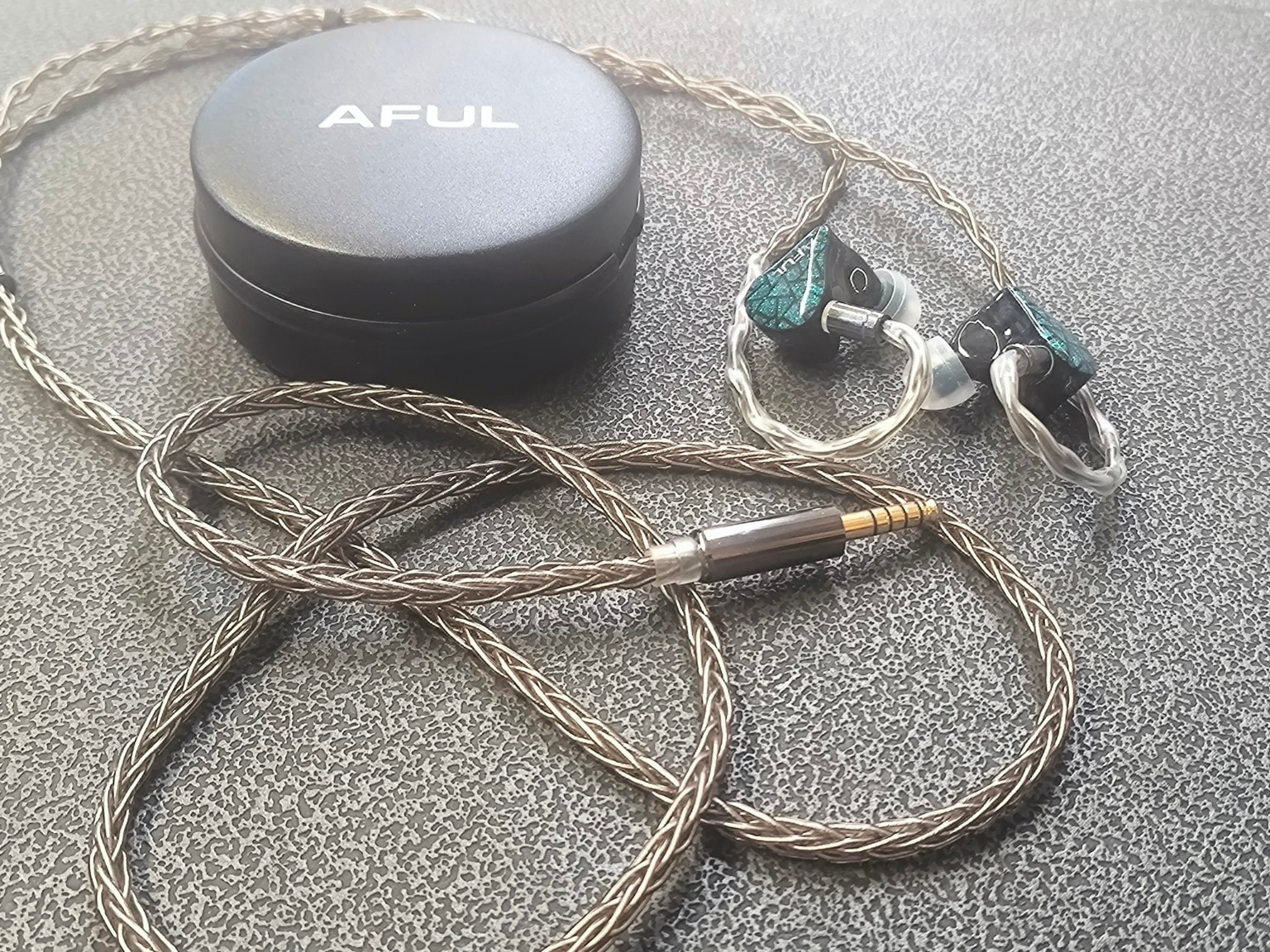
[Case, stock cable and earpieces]
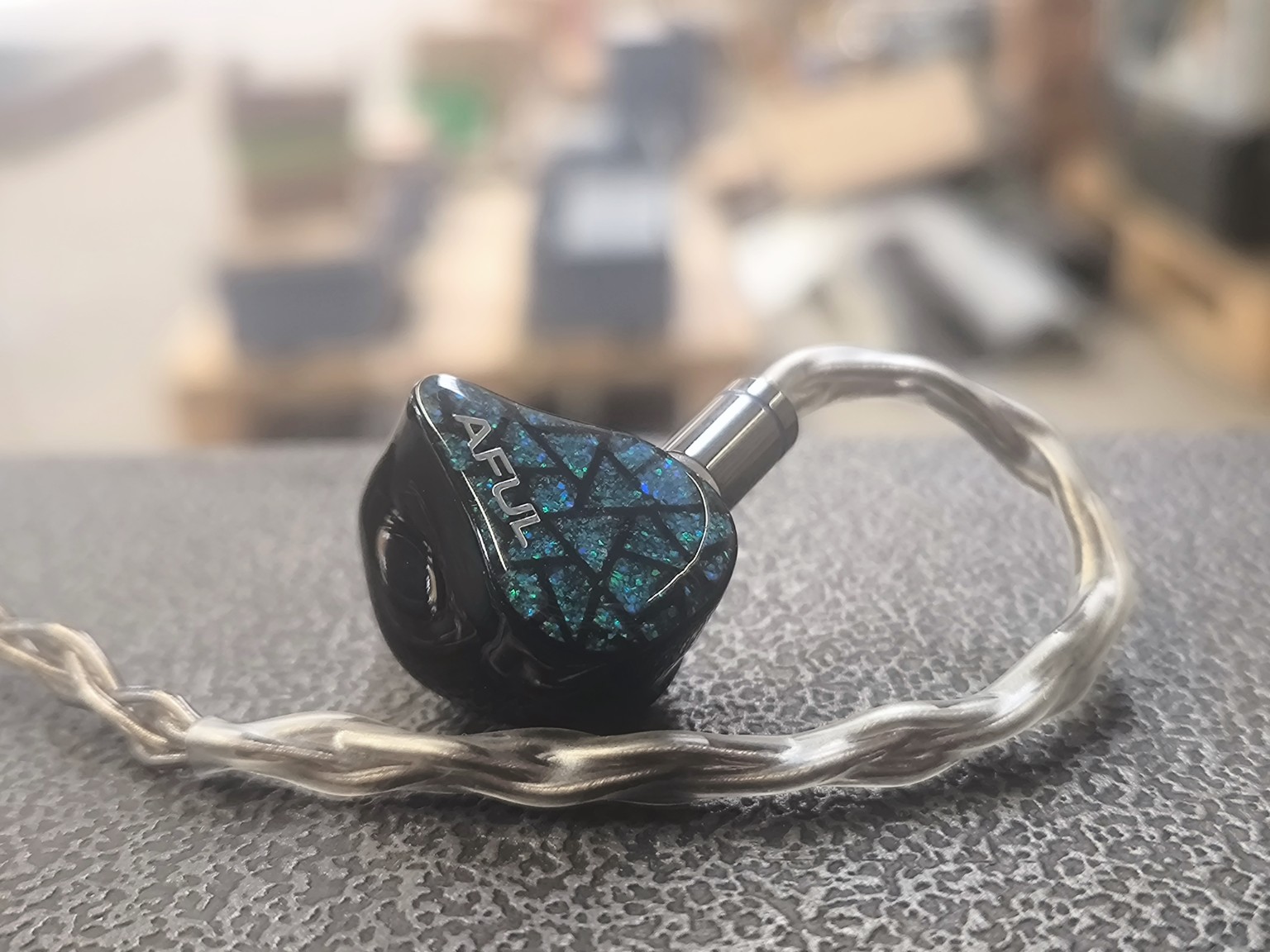
[AFUL faceplate close-up]
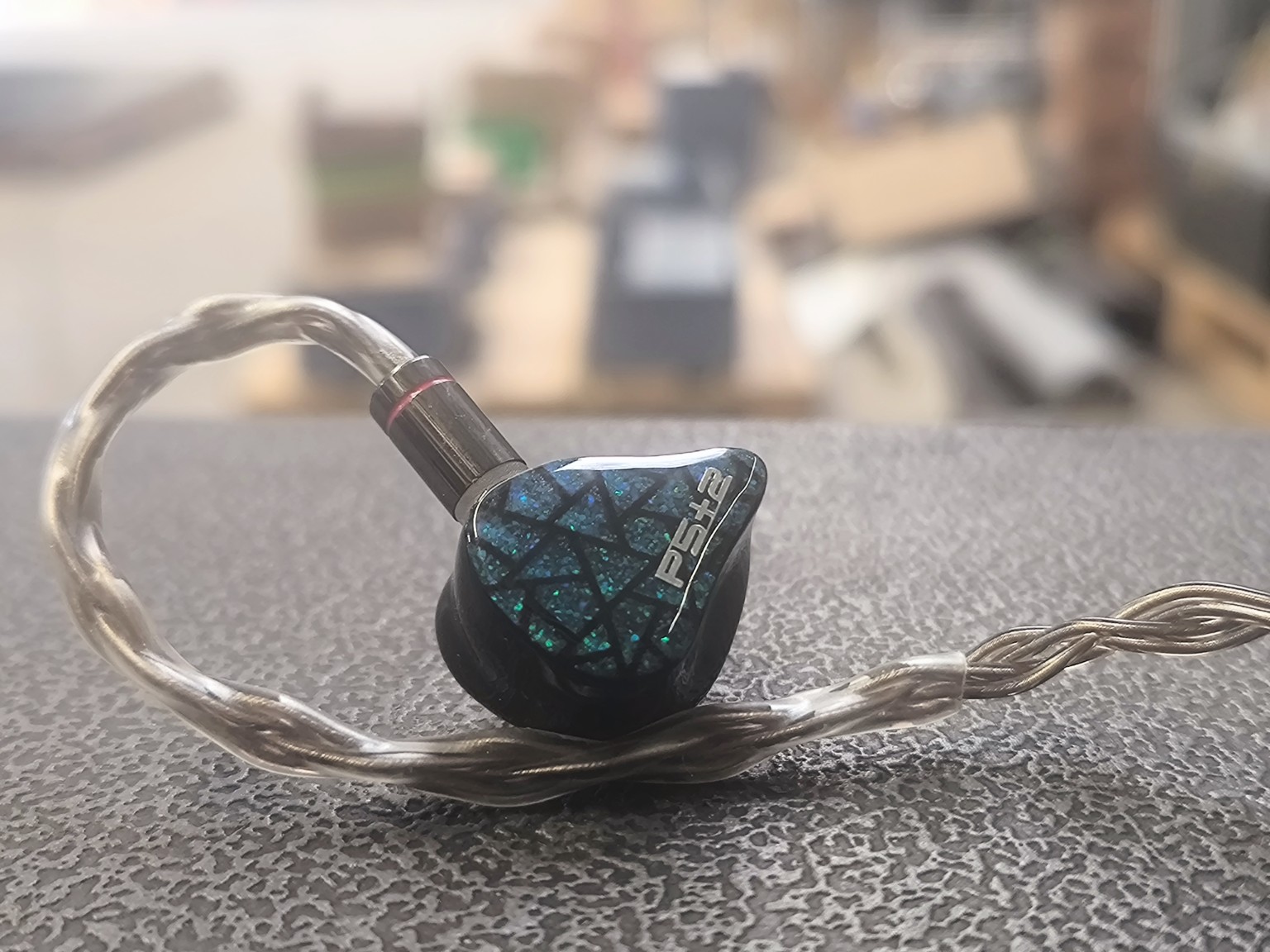
[P5+2 faceplate close-up]
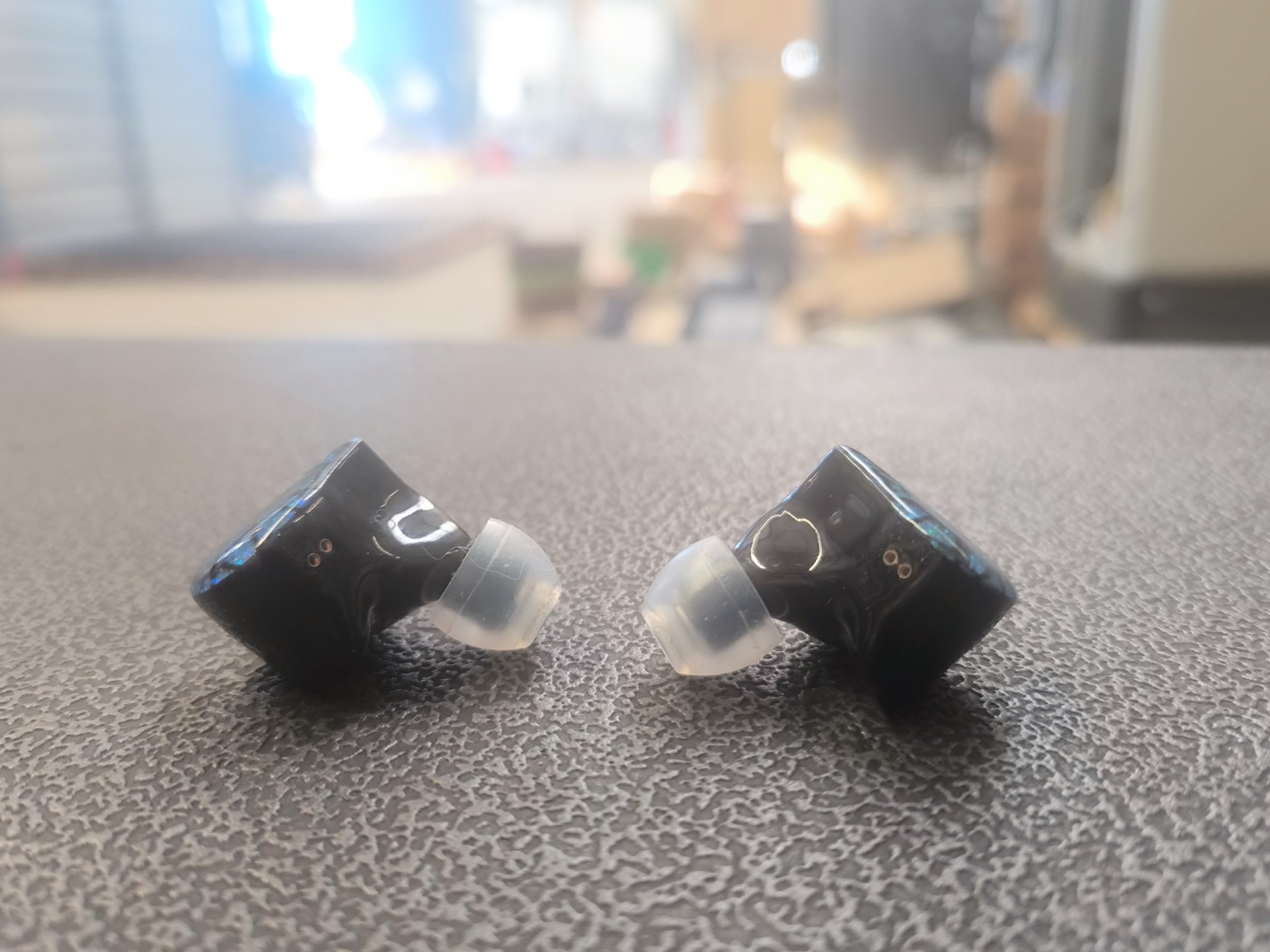
[Inner shell shape and SpinFit W1 tips]
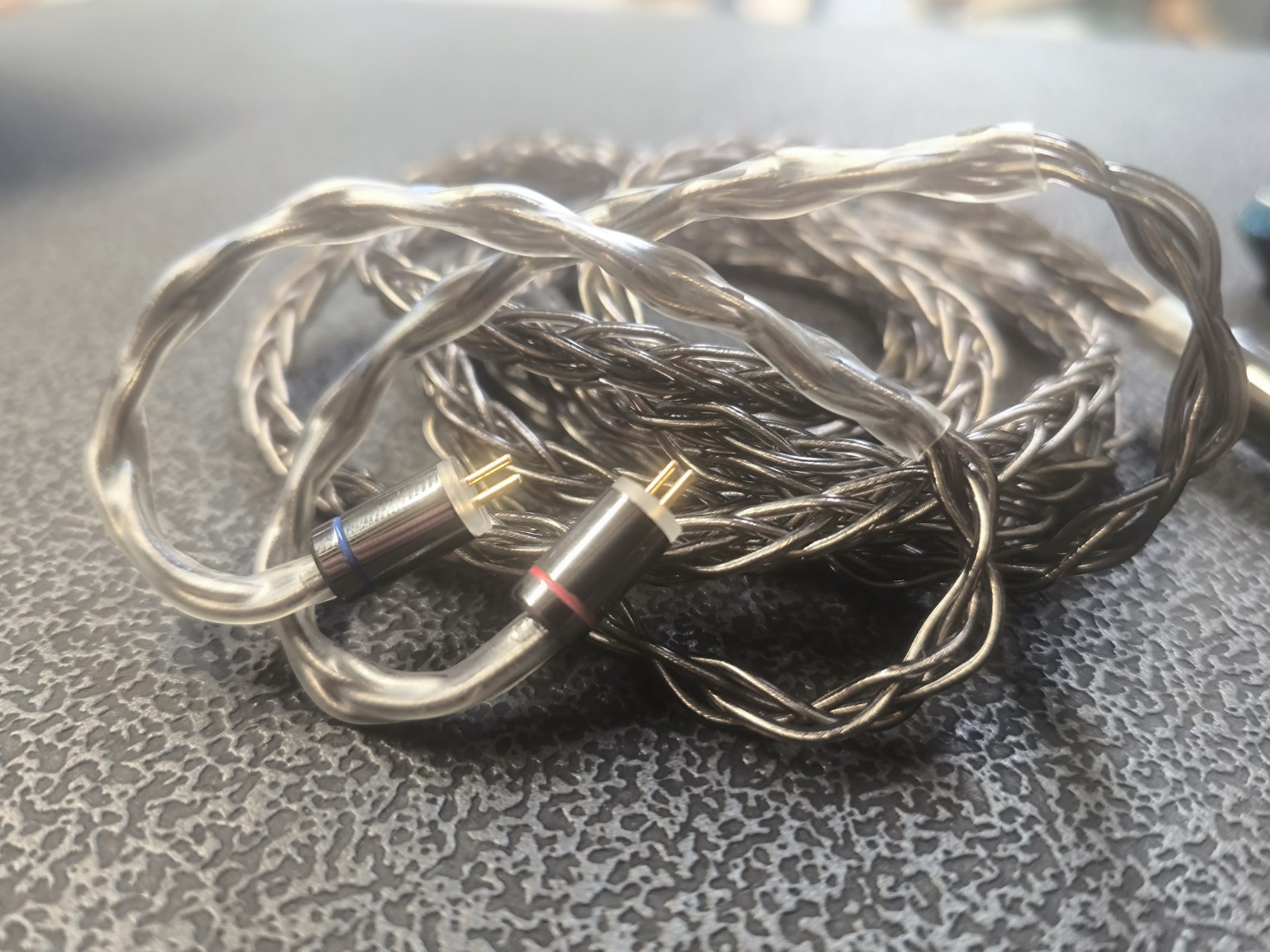
[Stock cable and 0.78 mm 2-pin connectors]
Sound
Overall balance
I hear the tuning as warm-neutral with proper sub-bass reach, clean mids and an open top end. It is not a basshead set and it is not a deliberately dark one. The appeal is how easily it moves across very different genres.
Bass
Sub-bass reaches deep and has real rumble. Mid-bass stays clean and does not push much into the mids. My taste wants a little more physical weight for hip-hop and electronic music, but I would not change the overall balance.
Mids
The mids lean more toward clarity than lushness. Male vocals and guitars still have enough body, and female vocals remain clear without being pushed excessively forward.
Treble
The top end is open and extended. I do not find it generally sibilant at my normal level, but bright recordings remain bright. I prefer that to smoothing everything over.
Stage / imaging / separation
The stage is not gigantic. Imaging, separation and layering are the more interesting technical strengths for me. Dense arrangements stay organised and small details remain easy to follow without turning every session into analysis.
Dynamics / transients
Fast material suits the 5+2. OutKast’s B.O.B. and Vivaldi’s Summer III: Presto are useful stress tests, and the AFUL stays composed as more layers arrive.
EQ / source behaviour
The core review is stock tuning. I sometimes use AutoEQ, usually only for a small lift down low. I do not think the IEM needs EQ to make sense, and I do not think it needs an expensive DAP either. A capable phone dongle is already enough.
Fixed 12-track reference set
I use the same twelve songs for future IEM, DAC and DAP reviews. They are taken from music I actually listen to, not from a demo playlist.
Drake — Nonstop • Scorpion
Test focus: sub-bass rumble, 808 control, kick/vocal separation
This is the clearest example of my one tuning wish. The recurring 808 reaches low and has proper rumble, but the AFUL keeps it under control. I like it, but this is also the track where I most often think: give me just a little more weight.
Kendrick Lamar — DNA. • DAMN.
Test focus: attack, dynamic contrast, separation in dense modern production
The mix changes density and intensity quickly. The AFUL keeps its shape through those shifts, and the vocal stays clear without the bass turning vague.
OutKast — B.O.B. • Stankonia
Test focus: speed, transients, layering and congestion resistance
This track is fast and crowded on purpose. The 5+2 keeps up. It sounds busy because B.O.B. is busy, not because the IEM turns everything into one layer.
Lana Del Rey — West Coast • Ultraviolence
Test focus: female vocals, atmosphere, bass-to-mid transition
The bass carries the atmosphere without swallowing Lana’s voice. Her vocal stays clearly outlined, and the extra air up top helps the production breathe without making it feel thin.
Led Zeppelin — When the Levee Breaks • Led Zeppelin IV
Test focus: drum body, decay, room size and dynamics
Bonham’s drums need size, decay and room around them, not just impact. The 5+2 gives them convincing weight and leaves enough space around the kit to hear the recording breathe.
Led Zeppelin — Dazed and Confused • Led Zeppelin
Test focus: guitar texture, psychedelic layering, stage depth
The darker layers are a good test of separation and guitar texture. The AFUL stays clear through the middle without simply making the track brighter.
Vivaldi / Mutter / Karajan — Winter I. Allegro non molto • The Four Seasons
Test focus: string attack, treble behaviour, orchestral separation
Fast violin attacks can become unpleasant very quickly if an IEM gets the upper range wrong. Here they have enough bite and air to sound alive while staying comfortable for me at normal volume.
Vivaldi / Mutter / Karajan — Summer III. Presto • The Four Seasons
Test focus: transient stress test, speed and complex layering
This is my stress test. As the orchestra accelerates and more layers arrive, the 5+2 stays impressively easy to follow.
Depeche Mode — Enjoy the Silence • Violator
Test focus: synth layering, centre imaging, treble cleanliness
The synth layers stay distinct and the vocal remains firmly centred. There is enough air to keep the electronic textures open without making them brittle.
Michael Jackson — Billie Jean • Thriller
Test focus: bass timing, kick, percussion and tonal balance
That bass line needs timing and grip more than sheer quantity. The AFUL keeps the groove tight, and the percussion sits cleanly around the vocal.
Santana — Soul Sacrifice • Santana
Test focus: live percussion, guitar texture, venue space and dynamics
This recording can turn into a wall of percussion and guitar. The 5+2 keeps enough space between the parts that I can follow the performance, not just the energy of it.
Joe Cocker — With a Little Help from My Friends • With a Little Help from My Friends
Test focus: raspy male vocal texture, upper mids, live-rock density
Cocker’s rough vocal is a useful check for upper-mid aggression. The 5+2 keeps the rasp and intensity intact without needing extra brightness to sound detailed.
Comparisons
7Hz Legato: My bass reference. Much more bass quantity and a stronger subwoofer effect. The 5+2 is the one I choose when I want the whole recording to stay in better proportion.
KEFINE Klean SV: My lower-price checkpoint. The AFUL becomes more convincing as arrangements get dense, especially in separation and layering.
KZ ZS10 Pro 2: A useful budget hybrid reference. It can sound lively and detailed, but the 5+2 is the more coherent long-session listen for me and stays better organised when several things happen at once.
XENNS Mangird Tea Pro: My most important step-up comparison. The Tea Pro gives me a richer, more immersive presentation, while the AFUL stays cleaner and lighter on its feet. I do not see that as a simple winner/loser comparison.
AKG K702: Not a direct competitor. I use it as an open-back spatial reference. It gives a broader, airier frame; the AFUL gives much more isolation and low-end weight.
Coming from mainstream TWS?
If somebody comes from AirPods or another good TWS set, the interesting gain is not “more of everything.” It is cleaner separation, easier-to-hear bass texture and small details, and better order in dense music. The cost is obvious: a cable, no ANC and no built-in mic. I think that trade should be stated plainly.
Verdict
4.5/5. I would buy it again. My main complaint is still simple: I want a little more bass. The things that keep it in my rotation are balance, separation, comfort and the unusually good stock cable.
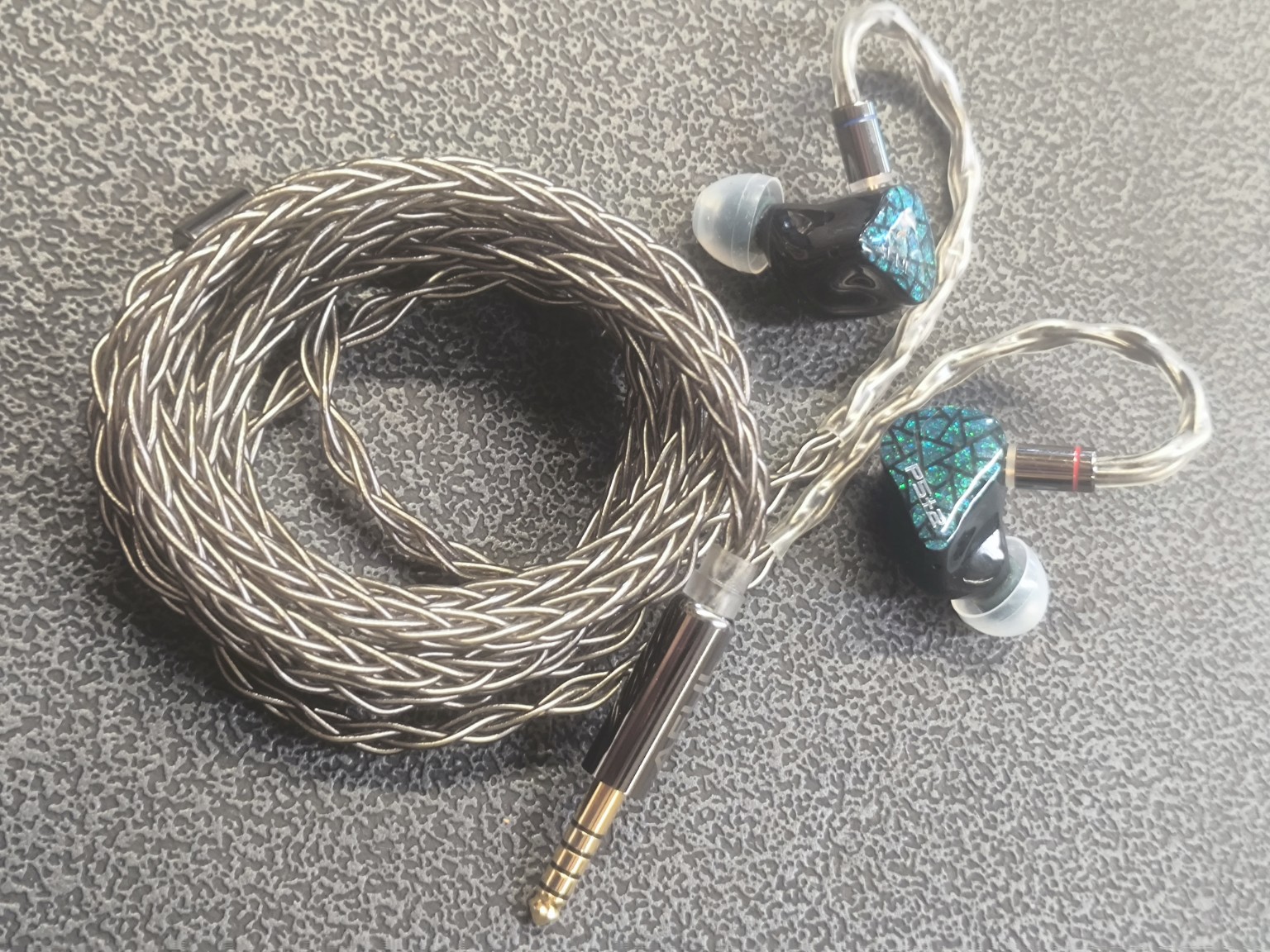
[AFUL Performer 5+2 with stock cable]
SteveListens | Germany

 .
