DUNU PRS 6
DUNU’s 1st attempt on MEMS driver setup.
✧ ════ • REVIEW & COMPARISON• ════ ✧
「SOUND-SIGNATURE」
It goes for a neutral-sound signature with a slight upper mid-range and lower treble biased. It focuses more on vocal lines with a rather supportive bass presence and treble brilliance. It is a more specialist or genre specific than an all-rounder performer.
↓
「BASS /LOW-END」
► The bassline sits in between neutral and flat lines. The sub-bass were given a minor elevation but above that, there is not much boosting going on. The bass sounds fast and nimble, keeping it clean and neutral with sufficient warmth presence to retain its naturalness with its bass notes. It will never overwhelm its mid-range or treble presence unless on a heavily driven bass track.
► The sub-bass though is lifted is not all that powerful. But it does leave an impression having greater dominance across the lows. The sub-bass extends deep enough to give the bass-drop a believable contrast with its ups and downs. Due to its intimate staging combined with adequate sustain level and pressure, it allows for the subline to have a mild atmospheric feel, granted that you get the right seal and fit on it. Sure, the rumbling, droning or booming effect may not sound the most evocative, but it gives those effect enough depth to keep them relavent. If there is that any is slacking here is perhaps, the sub-bass texture. At times, when it tries to emanate the subtle air movement or low frequency vibration, it sounds a little smeary or blurry in definition. This effect is significantly worsened on a warmer, slower pairings which is worth noting.
► As mentioned, the mid/upper presence get lighter in density. It is not as rich nor as full as the low bass. But the attack amplitude didn’t feel like it gets reduced. It felt faster and snappier which it allows bass percussive instruments to have a decent physical impact.
► Kick-drums may have softer-edge to it. But most of the time, It feels like it’s got enough substance and solidity to pack a decent punch.
► Drum-strike sounds surprisingly more impactful thanks to its faster, snappier attacks. The way it slams and bounces back feels elastic. It doesn’t end with a static “thud” as you can still sense the drum membrane reflexes right after taking the hit. However, as the strike land further in the upper bass section, this effect gets softened.
► Bass line guitar sounds quite normal. It didn’t sound monotonous. There is enough sustained tone with a clear rhythmic flow with its hums and drones.
► Bass drops have decent contrast while ghetto bass replay isn’t the bounciest but it’s not outright flat with its dispersion. Distortion paddle elements can be still traced but it a little lose in definition.
► As far as my setup and assessment goes, it behaves well. I didn’t face any detrimental mud or bloat feel.
“All and all, bass performance doesn’t seem to be its main priority. While the quality is just average, its quantity may be lacking to some people. It is not tuned to run EDM, Hip-hop and rap music at its best, but if you must, it is not all that bad. Certainly not as bad as some people claimed it to be. At least from my experience.”
↓
「MID-RANGE /VOCAL」
► After spending some time cycling through my playlist, is it clear that the foundation of its tuning resolves around the mid-range and vocal line. Vocal and instruments that reside within this region will take the centre stage, demanding your attention. The soundstage feels more personal and close-up, as if the singer is performing right in front of you rather than across a huge concert hall. The vocal image is quite wide, giving a good sense of clarity within mix. However, the delineation between lead vocals and background instruments is not the clearest.
► Tonally, it is quite a pleasant one. Due to its darker highs, the mid-range often come across sounding smooth with adequate warm and natural colouration. Despite not having the strongest low-end presence, the linear lower mid-range does provide a consistent fundamental density and body across the range. It managed to avoid overly thinness, leanness and unwanted dryness.
► To the contrary, it is not the most analytical in its class. It doesn’t enhance your music experience like a more resolving set would do. Having said that, those subtle details on vocal texturing or delicate instrumental movement can still be heard but it renders them in a more natural manner. It sounds less forceful in this regard. Meaning, the overall complexion doesn’t sound low-res. Just not the most analytical.
► MALE/LOW-PITCHED: Male vocalist offers a likeable performance on the stage. Bass and baritone range may not sound the richest or fullest, but they didn’t sound exactly hollow or flat. There is enough vocal weight, sustain and extension to capture listeners attention.
► FEMALE/HIGH-PITCHED: Their performance is more confidence inspiring. They sound more direct with better articulation. Their voices are less affected by the thinning-effect, allowing them to have an appropriate weight and a corporeal sense of vocals. The delicate rasp or throaty layers is softened but never absent. Their vocal-dynamic isn’t the widest I’ve heard but it is well-judged. They still try play it "safe” without sounding too restrained. There is no added embellishment to the way the vocals sing. It keeps simple while sounding correct. It can handle shouty or screamy vocal quite well.
► As for the downside, it is not a set that you can listen to it loudly. At higher volume, the upper mid-range biased can accentuate a hint of subtle sheen on high pitch and hi keys. Other than that, there is a minor micro-grain texture on vocal transient on certain tracks (which could be due the recording). As for the rest, it is quite a smooth and easy to listen.
► Guitar or pluck instruments go for a warmer playback. The initial attack still has enough bite with a natural sustain and reverb.
► Violin and cellos have good clarity but they’re more gentle with their expressions.
► Piano keys tend to have a softer tap. The higher keys will sound more distinct in comparison to lower keys.
" Overall, the vocal performance will sound more impressive than its instrumental counterpart. It makes it a more suitable player for vocal content music than instrumental/ OST or BGM focused tracks."
↓
「TREBLE / HIGHS」
► Depending on pairings, it can perceive as neutral or neutral-dark. Most of the brilliance comes from the lower part of the treble. Post that, there is a noticeably rolled off as the air extension is heavily trimmed down.
► Majority of the time, the treble responds fairly smooth. There is no aggressive peaks or metallic timbre or accentuated sibilance at normal listening volume.
► In terms of treble definition, it is not the best in class. I’ve heard a more resolving set at this price-point. Still, thanks to its dark background nature, the essential high elements can still be heard when paying closer attention. The high notes may not have the crispiest or the sharpest attack, but it didn’t occur to me sounding blunted or overly smoothed over. Besides that, there is sufficient note-weight and decay with its treble component to keep things sounds more natural than weightless.
► Hi-hats has a fair level of clarity. Even when it “chicks” constantly at a variable rate, it doesn’t sound fuzzy. It is well pitched without causing treble fatigue.
► Cymbals crashes have a softer leading-edge to the notes. The continuous clanging effect does have a smoother metallic ring to it. The overtones sound inoffensive that flows nicely as it washes away.
► The “pops” and “cracks” on snare drums sounded clear. It provides a tangible slam when the snare hits.
► Electric guitars have good, reserved energy. It showcased good prominence when going through rock and metal genre. However, when the overdrive guitar solos kicks-in, it has the tendencies to develop slight sheen as it progresses higher in the note-range. It gets more apparent at higher volume.
► Glockenspiels have a solid ding overall. Though, the harmonic overtones is more subdued.
► When it comes to synthesizers or electronic elements. It is highly dependent on where the zing, ring, buzz or ding falls in the upper registry. If lands at the lower spectrum, it will provide a sufficient bite and note-weight. But as soon as it plays on the upper shelf, the attack becomes softened and lightened.
► At lower volume, the treble will not likely trigger any treble sensitive spot. Only at mid-high volume, the lower treble peaks will start cause a slow burn fatigue. It can be used for a light monitoring purpose. You could still detect those recorded imperfections, but it in a way without running your musical enjoyment.
“In short, the treble performance does not try to fully utilize its MEMS driver potential. Due to its tuning philosophy, it tries to play it safe, keeping the highs fairly detailed without overbearing brightness.”
↓
✧ ════ • TECHNICAL PERFORMANCE & OTHERS ASPECT • ════ ✧
The STAGE has average dimension. It’s got good horizontal width with believable headroom (around your eyes level). In terms of depth, it sounds more limited as it more in your head experience. It creates an immersive and intimate sound field as if you’re in the music.
The left to right IMAGING between two channel seems solid. The projection of sound and placement have believable accuracy with good sense of vividness to the image.
INSTRUMENT SEPARATION is just average for multi-driver setup. Though, the vocals and instruments stay in their own bubble of sound. The separated elements seem to sit closer to each other (due to limited front to back layering). As a result, on a more challenging tracks, the mid-range will have to compete for spaces when multi-layers of bass and treble instruments play at the same time.
DETAIL-RETRIEVAL? For the price, it is just decent at best. To put into perspective, it resolving power is slightly inferior to DN242 or DN142, let alone the DK3001BD. While the macro-detail stays clear, its micro-detail will have a softer focus in that comparison. It is not completely void of nuances; it is just less emphasized. If that make sense.
In return, the PRS6 will offers a more pleasant TONE & TIMBRE versus its more analytical siblings. Which can be a good thing if you prefer a more laid-back and softer presentation. Regardless, I still find it relatively natural despite having a softer attack-edge to some of its part.
DYNAMICALLY is it well-sorted. The loud and soft elements have decent contrast to keep its musical elements going. It is not too laid-back, or it is too energetic when it comes to emotional expression.
DRIVERS? The dynamic-driver and balanced armature driver used in the PRS6 offers a decent sound fidelity. It does its job well. However, I do wish, DUNU could squeeze a little bit more out of the MEMS driver to improve its treble definition. Regardless, the crossovers between driver sound quite cohesive with minimal timbre contrast.
SYNERGY? When it comes to ear-tips it prefers a wider-bore ear-tips that fit deeper. By doing, it will sound more open while smoothen the upper mid-range bump. Without a good seal, the bass can sound severely lacking. As for the source, it is best to pair with a neutral or more technical DAC/AMP. With warmer source, the detail handling and instrument separation will perform less than ideal. Feeding it with too much power, the sub-bass can sound a little smeary and have the potential to accentuate those lower treble peaks. The PRS6 is one of those earphones that doesn’t require a lot of power to drive but at the same time is quite picky on pairings. Synergy is key here.
↓
✧ ════ •BUILD/ PACKAGING/COMFORT• ════ ✧
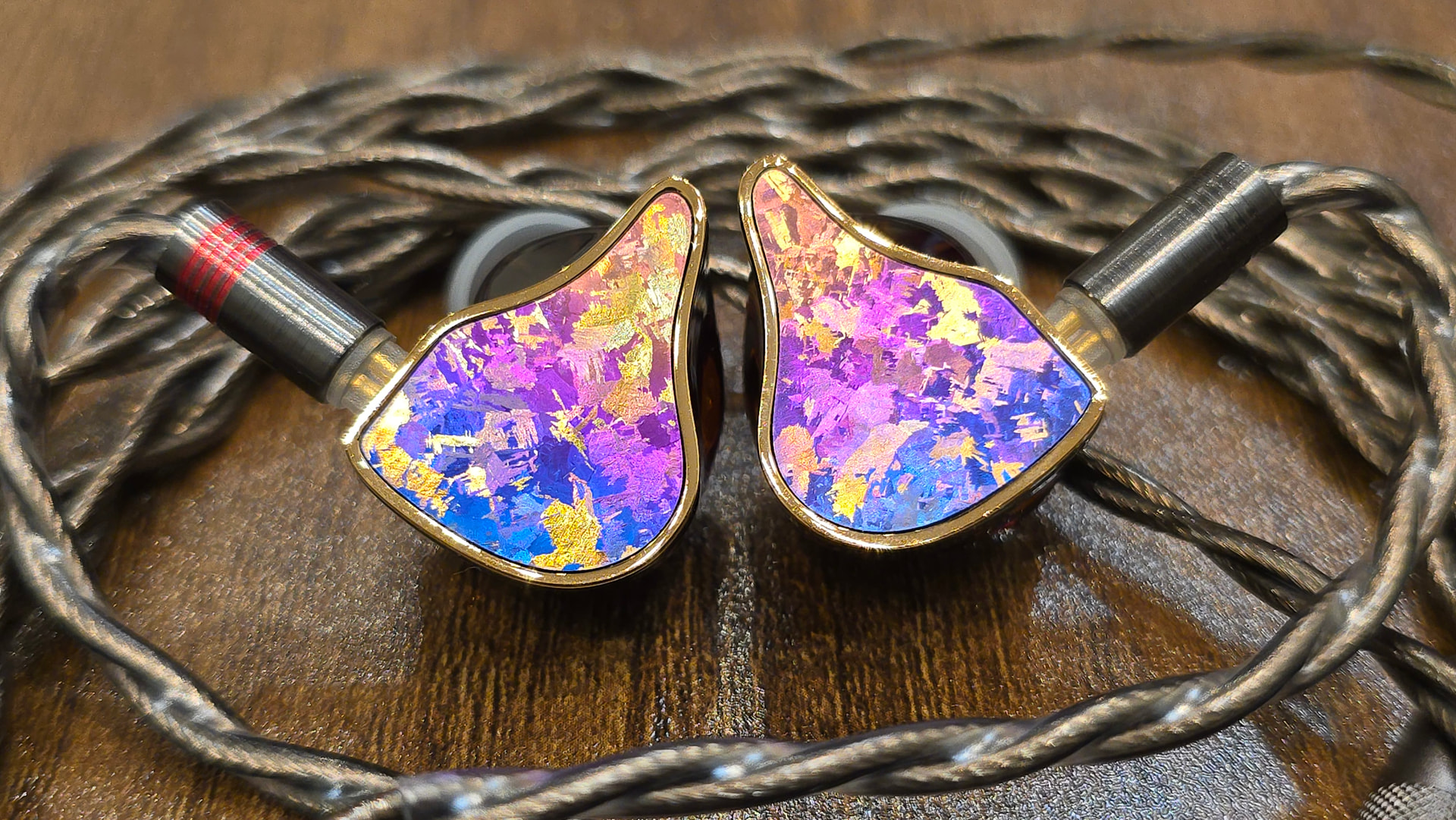
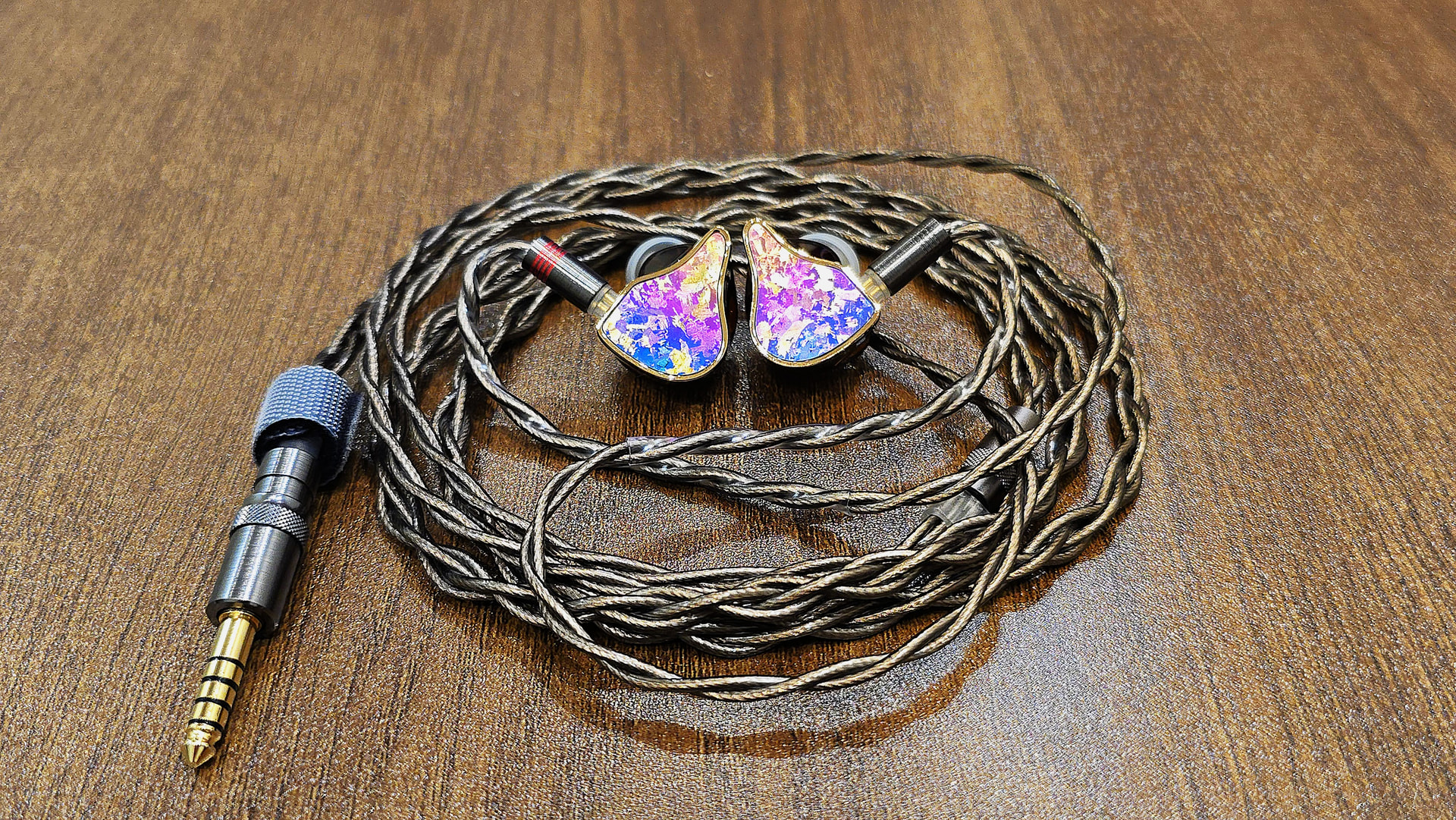
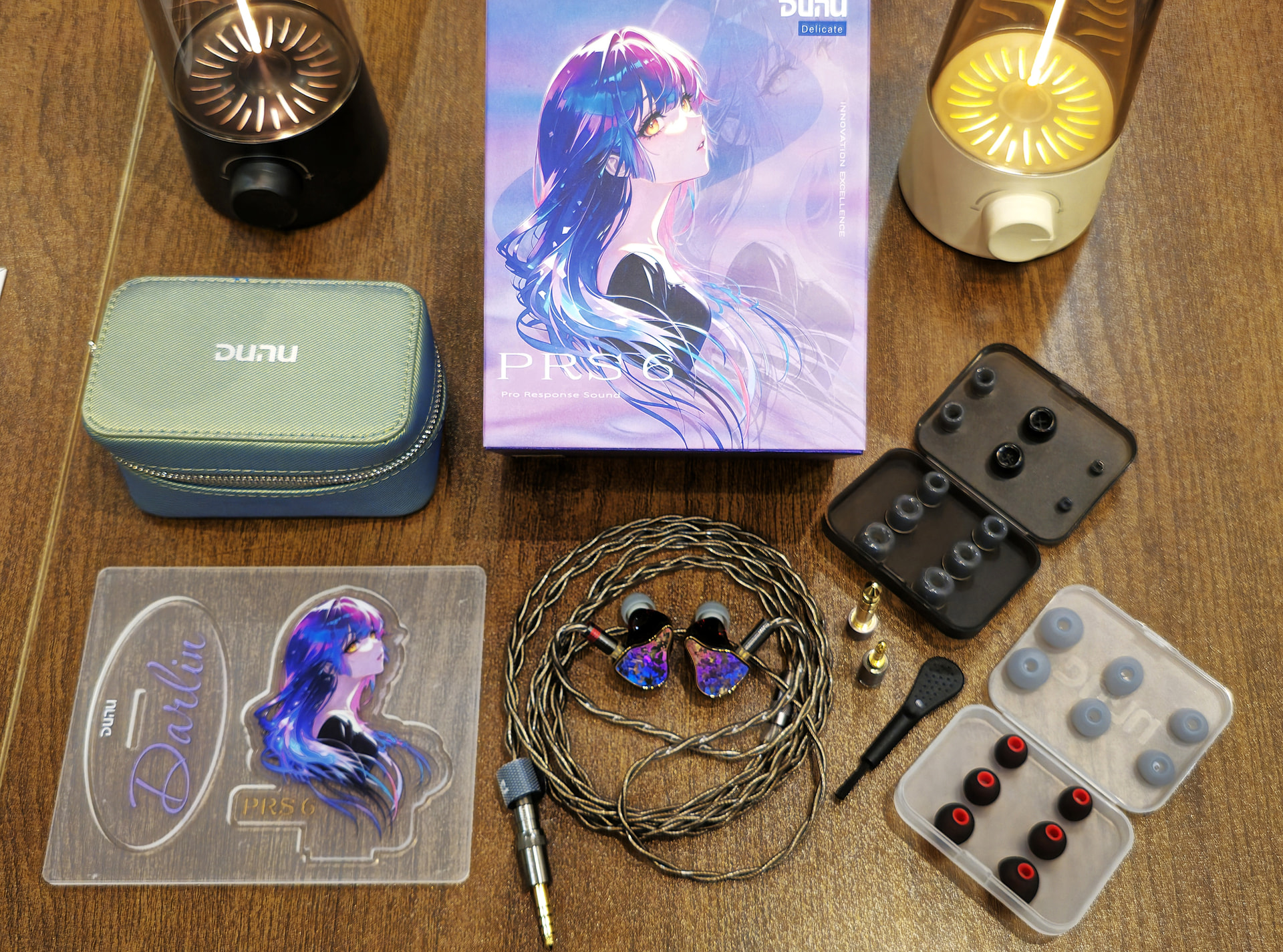
It has the DUNU classic packaging and unboxing experience. Except, this time round they have added a pretty waifu acrylic-stand inside the box. The ice-crystal titanium faceplate is without a doubt the most gorgeous looking faceplate coming from DUNU. It is then combined with a dark cherry theme, semi-custom-like resin shell. It is just a piece of art to behold. It is the prettiest design que coming from DUNU. Despite being packed by 6 drivers totalled, the shell construction is just a medium-sized shell that should fit majority of people without causing discomfort. However, if you have a deep ear canal, it is best advice to use a longer stem ear-tip for optimum seal and fitment. For my case, I used the Azla Sednaearfit Light (MS) to get the best fit and sonic performance out of it.
Inside the box, there is a rather large carrying case with a white microfibre-like linings. It is spacious enough to store the earpiece, cable and ear-tips altogether. Speaking of cable, the stock cable uses the exact same model coming from the more expensive DN242 and DN142 which has a swappable termination plug (3.5/4.4/ with 6.35 adapter). DUNU is very generous to provide four different types of ear-tips; “S&S (S,M,ML,L)”:, “Balanced (S,M,L)”, “Atmosphere-Enhancing (S,M,L)” and a single memory-foam ear-tips. There is also a useful cleaning brush to clean the nozzle. They have pretty much provided us with everything you’ll ever need.
↓
HEAD-2-HEAD
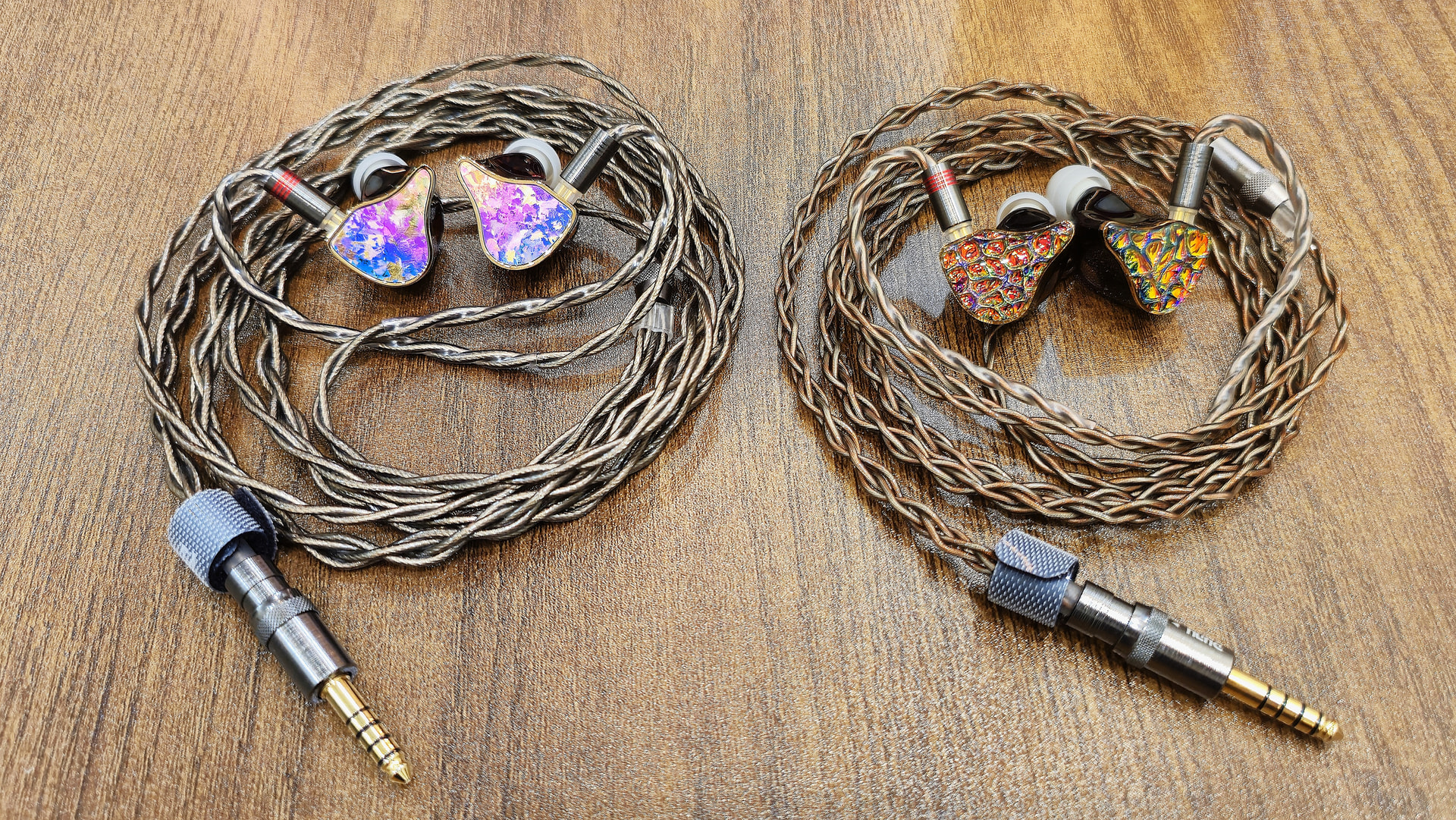
DUNU PRS6 vs DUNU PRS5
Both runs on 4.4MM BAL stock cable and Azla Sednaearfit Light (MS)
↓
< BASS >
▲ Right of the bat, the bass boost on the PRS5 sounds significantly stronger. The bassline is warmer, thicker, denser and slower in nature.
▲ On the PRS5, the sub-bass seems to have a longer sustain level. It lingers a little longer before it fades. It allows those rumbling, booming and tremor effect to sounds more atmospheric. However, the PRS6 seems to offer a deeper extension. The attack amplitude revs higher, giving subline elements a more rhythmic feel. As a result, bass-drop will have better contrast with its ups and downs.
▲ As we transition onto the mid/upper-bass section, such demeanour is carried over here as well. The PRS5 will offers a thicker, fuller bass note while the PRS6 will have a snappier bass attack.
▲ Kick-drums will pack a bigger, slower punch on the PRS5. While the PRS6 hits deeper and sharper. The same true can said with its drum-strike. Bass line guitar on the PRS6 sounds higher-pitched, with the PRS5, it sounds mellower, more enveloping and better with its sustained-tone.
▲ Surprisingly, the PRS6 offers bouncier ghetto bass replay. And most of the time, it sounds tighter and better controlled.
▲ In short, the PRS5 is more about having a warmer, slower, atmospheric bassline. The PRS6 will not have same level of warmth and density but the attack definition just offers a little bit more attack dimension overall.
↓
< MIDS >
▲ The PRS6 is the more mid-centric set of the two. The vocals and instrument have better clarity and transparency overall. It sounds less coloured and truer to life.
▲ Male vocals on the PRS5 performs more consistently with its note-weight. Thanks to its warmer and fuller lower spectrum. Having said that, the PRS6 allows male vocalist to sound more dynamic. The natural rise and fall to the voice make its more emotionally connected. And in terms of vocal weight and density, it is not that lacking either.
▲ Female vocal is tonally sweeter on the PRS5. The vocal sustains a little bit longer allowing it to bloom. However, the PRS6 is better at capturing the delicate breathiness or airiness to the voice. At higher pitched the vocal sounds tad clearer and slightly more engaging to listen.
▲ Guitar plucks have more tangible bite with the PRS6. the twang just sounds clearer to my ears. On the PRS5, it focuses more the warmth and reverb of it.
▲ Piano plays sounds more realistic on the PRS6, every tap carries a more distinct physical hit. On the PRS5, it does come across sounding softer.
▲ Again, the violin and cello sound a tad sharper and more expressive with the PRS6.
▲ Overall, the PRS6 easily win this. It sounds more focus, more dynamic and in many areas sounds truer to life. The PRS5 does sounds thicker and warmer which make its a more coloured sound and easy to listen.
↓
< TREBLE >
▲ The PRS5 treble is noticeably darker. The upper registry has a warmer and smoother tone to it. This is where you felt the absence of the MEMS driver. The PRS6 has slightly brighter and sharper upper treble definition.
▲ Hi-Hats on the PRS6 does sounds more prominent and slightly higher-pitched in comparison. Oddly enough, the PRS5 “chicks” more pleasantly. The attack though is softer, sounds less peaky and decays more naturally.
▲ I get the same impressions with cymbal plays as well. The PRS6 will have a more distinct initial attack. Whereas the PRS5 sounds more pleasing with heftier note-weight and decays more gracefully.
▲ Drum-snare on the PRS6 sounds snappier and faster with its “pops” and “cracks”. The PRS5 just sounds thicker, slower and less spikey.
▲ On rock & metal genres, the E-guitar on the PRS5 does sounds more melodious. It sounds abit more progressive and better with its sustained pull.
▲ The mallet strike on the glockenspiel sounds sturdier and tighter on the PRS6. The PRS5 will have softer hits but it reverberates longer when it “ding”.
▲ Electronics (zing,ring,ding,buzz etc.), those elements will have a crunchier bite on the PRS6 which gives its PRS6 an upper hand when it comes to modern genres that rely on synthesizers.
▲ The PRS5 will be better for loud volume listener or treble sensitive folks. Meanwhile, the PRS6 is better for monitoring purpose.
▲ The PRS6 is for those who chase high-end clarity and precise decay. The PRS5 is for those who likes a smoother, more laid-back and organic presentation.
↓
< TECHNICALITIES & OTHER ASPECTS>
-
The STAGE on the PRS5 has better dimensions. It is slightly wider, noticeably taller too. The front-to-back layering offers more depth. The PRS6 sounds abit more 2D-ish in comparison.
-
The IMAGING on the PRS5 is more accurate. The vocal and instrumental placement are more correctly placed within the sound-field. However, the PRS6 can project a sharper image.
-
INSTRUMENTAL SEPARATION? The gap between vocals and instruments on the PRS5 is more spacious thanks to its stage dimensions. On the PRS6, everything seems to sit closer to each other despite having a clearer cut between bubble of sound.
-
In terms of MICRO-DETAIL, the PRS6 takes it. But MACRO-wise, the PRS5 handles them abit better overall.
-
DYNAMICALLY, the PRS6 is the more aggressive set when it comes to its attack. The loud and soft elements will have a better contrast. The subtle tone-shift or the tonal variation will be much better depicted with the PRS6. Whereas the PRS5 will take a more balance approach.
-
TONE & TIMBRE is a toss between the two. Tuning wise, the PRS5 does sounds abit more organic. It has better balance between attack, decay and sustain. Meanwhile, the PRS6 does sounds less coloured and tend to focus more on transient attack.
-
BUILD AND PACKAGING? Accessories wise, they’re nigh identical (Casing & Eartips). The PRS5 is thicker in size, but surprisingly more comfortable to wear. It will fit deeper ear-canal better. However, the PRS6 faceplate is just simply gorgeous. The faceplate on the PRS5 looks rather cancerous to me. Both will have a swappable plug termination (3.5/4.4MM). However, the stock cable on the PRS5 is thinner and more prone to memory. It doesn’t feel as premium as the PRS6.
-
PRICE? The PRS5 is set to be cheaper than PRS6 for less than $200 (No official announcement as of now). Depending on your tuning preference, your price value preposition can shift easily between the two. But from a physical standpoint, that gorgeous looking aesthetic including a more premium stock cable (like DN242/142), I honestly don’t mind paying the extra 50-60 bucks for the PRS6.
↓
" The PRS6 is what I’d picked If I were to prioritized vocal authenticity and treble clarity. And that beautiful faceplate could be one of the reason why you want to grab it over the other. The PRS5 would be a better choice for all walks of genres. It sounds warmer yet still engaging and well-balanced. And yes, it is cheaper too. Though aesthetically, it may not be for everybody XD."
↓
→ CONCLUSION ←
The PRS6 is quite an interesting product from DUNU. For a start, it is priced lower than the DN242 & DN142. Sonically, it is not as technical, but it does sound smoother, warmer and easier to listen than both. In terms of build and packaging; it is better when it comes to shell construction. The provided accessories are nigh identical to DN series. The dilemma is this, most DUNU fans I’ve known, and meet are expecting the PRS6 to outperform the DN242 with the use of MEMS driver. Due the fact that competition is tough these days. Most brand is trying to chase price: performance value, especially in this $2xx – $3xx price category. I really appreciate what DUNU have done with the aesthetics. They really nailed the looks and the built of it. And the additional waifu touch is very much welcome. I do hope they will continue to do so. However, from a sonic performance, it is just average among its peers. It will not punch above it weight like some of the top contender. The technical performance is not the most competitive. With a tuning profile that is less versatile and more genre specific.
If I were to stick with DUNU brand, I would pay the extra and get the DN242 instead. It sounds technically more potent and the tuning style seems to fit a wider broad of genres. Having said that, I’d recommend the PRS6 over DN242 if you’re looking for a warmer, smoother, vocal focused sound signature. Through that lens, the existence of the PRS6 does makes more sense. At the end of the day, it is more about your preference rather than the price itself. The PRS6 is by no means a bad product like many reviewers claimed it to be. As I abide my time shuffling through my playlist, I learnt that the PRS6 have its own strengths that makes it an enjoyable listen. The more you listen to it, the more it gets under your skin. If you ever get the chance to demo it, be sure to do tip-rolling to get the best fit and sonic performance out of it. As it stands, synergy factor plays an important role in order to get the best experience.
↓
DUNU PRS 6
PRICE : PERFORMANCE [$249] : ★★★★ (8.0/10)
BUILD & PACKAGING [BASED ON PRICE]: ★★★★★ (10/10)
COMFORT : ★★★★ (8.0/10)
PERSONAL ENJOYMENT (BIASED) : ★★★⯪ (7.0/10)
OVERALL : ★★★★ ( 8.25/10)
1-2 ★ - Appalling! please avoid this
3-4 ★★ Subpar offering, there are better options out there!
5-6 ★★★ Decent with some caveats! Not a bad pick! (CONSIDER)
7-8 ★★★★ Not perfect but solid choice! This should be in your shortlist. A nice addition to your collection. (SHORTLIST) (RECOMMENDED)
9-10 ★★★★★ One the best in class! You should go right ahead & buy one! A must have! (BLIND WORTHY)
↓
Pros:
**- Punchy bassline with neutral presence.
- Vocal-centric, natural yet engaging mid-range.
- Adequate extension with satisfactory high-end clarity.
- Decent technical performance.
- Gorgeous ice-crystal titanium faceplate.
- DUNU premium packaging and accessories (plus waifu acrylic-stand)**
↓
Cons :
**- Lacking low-end quantity to run bass oriented tracks.
- 2D-ish staging.
- Need to do abit of tip-roll to get the best seal and fit.
- Genre specific.
- Doesn’t scale well with volume**.
↓
Driver Configuration: 1DD + 4BA + 1 MEMS
MSRP: $249.00
↓
DISCLAIMER
~ This unit is sent by DUNU for a review.
~ Assessment took after 5-7 days of running process.
~ Running on stock 4.4MM BAL & Azla Sednaearfit Light (MS).
↓