Great, thanks  @Ohmboy has been doing a great job but the more help the better.
Hifigo seems pretty brazen with these kind of tactics. Definitely not a good look.
Great, thanks @Ohmboy has been doing a great job but the more help the better.
Hifigo seems pretty brazen with these kind of tactics. Definitely not a good look.
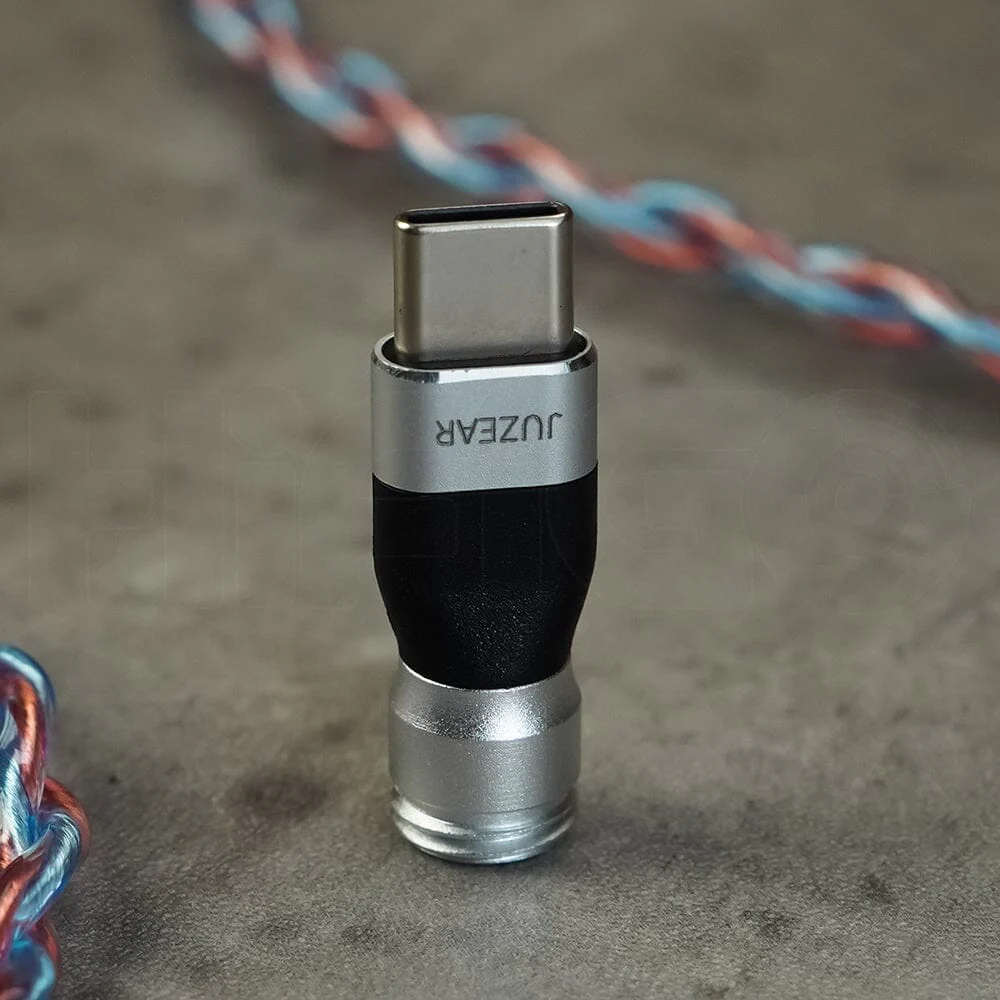
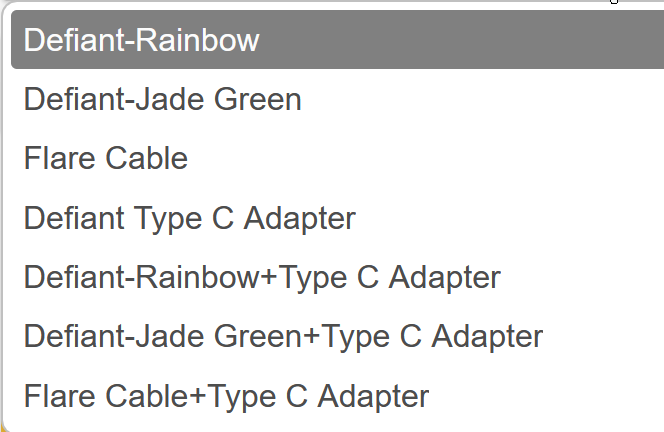
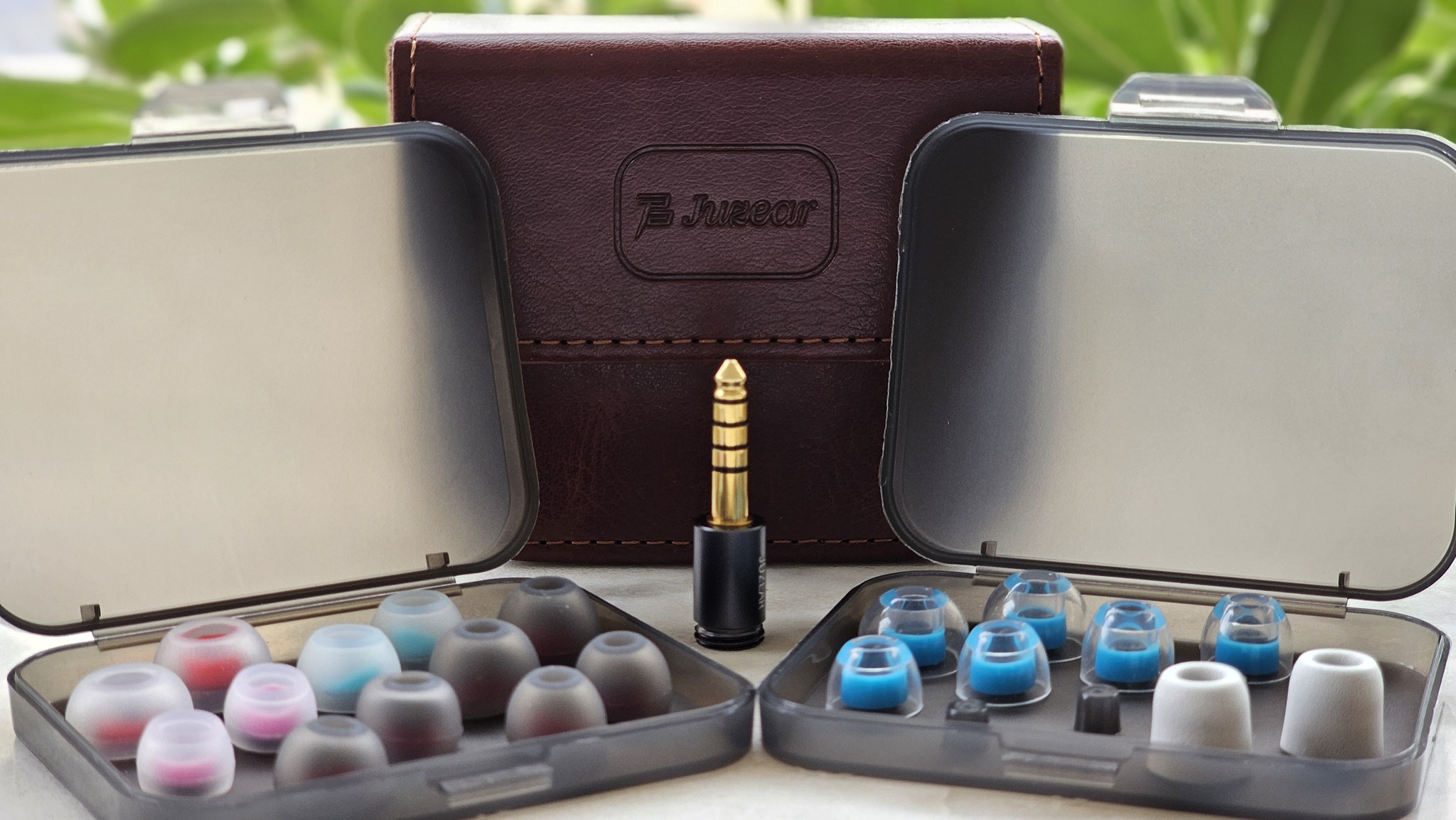
NEW : $10 addon USB-C Adapter for Defiant / Flare Cable now available.
BUY IT HERE : :
SELECT FROM THE PULLDOWN : :
|||||||||||||||||||||||||||||||||||||||||||||||||||||||||||||||||||||||||||||||||||||||||||||||||||||||||||||||||||||||
|||||||||||||||||||||||||||||||||||||||||||||||||||||||||||||||||||||||||||||||||||||||||||||||||||||||||||||||||||||||
|||||||||||||||||||||||||||||||||||||||||||||||||||||||||||||||||||||||||||||||||||||||||||||||||||||||||||||||||||||||
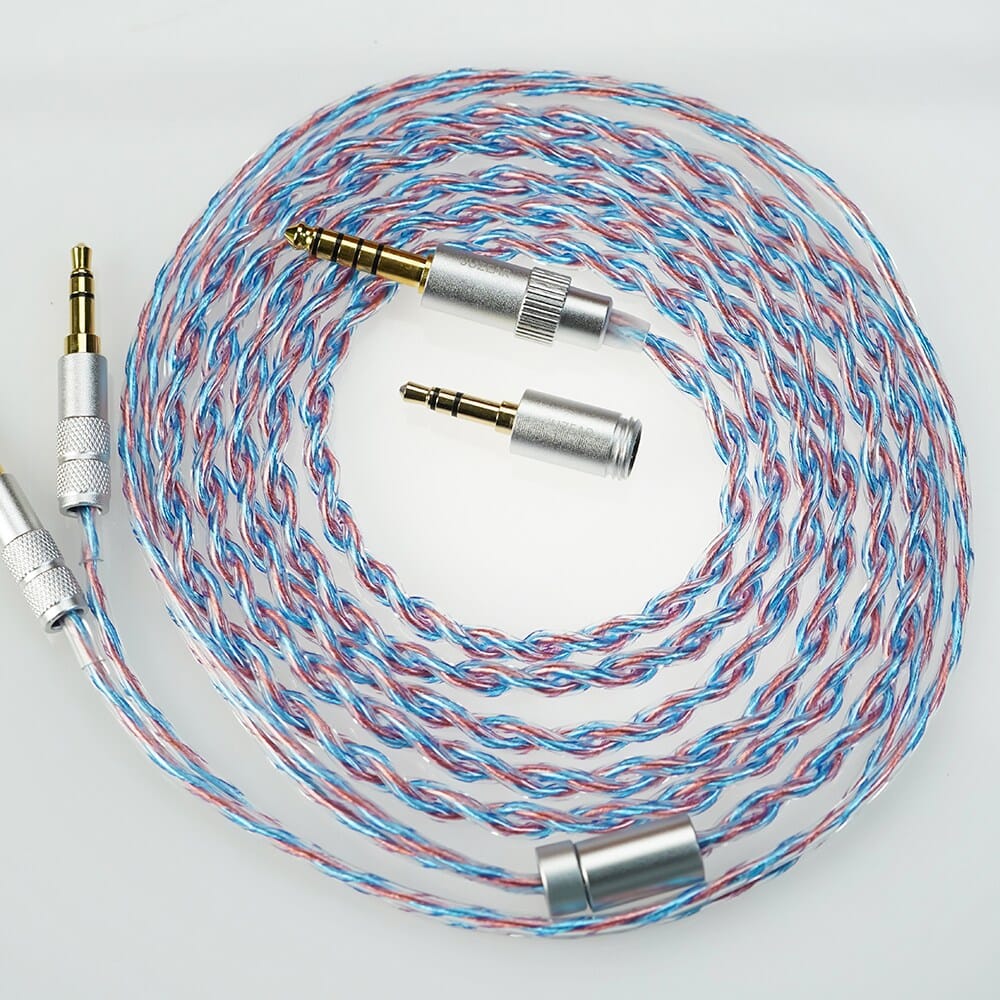
Flare 3.5mm Dual Entry HEADPHONE CABLE now also available!
Compatible with, but not yet sold with, new USB-C Adapter!
Verified to work with most easy to drive headphones (Eris, Meze, New Fostex)

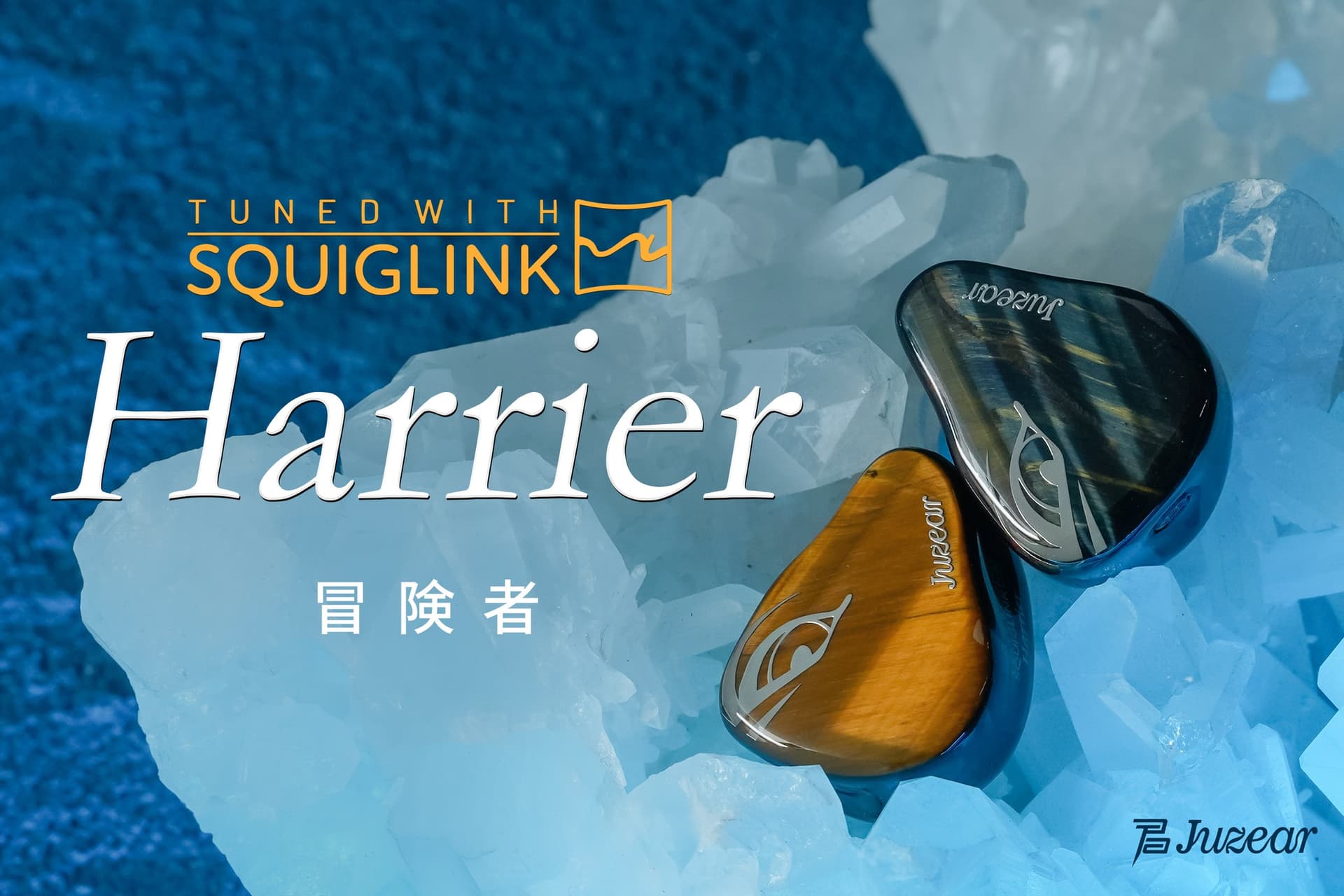
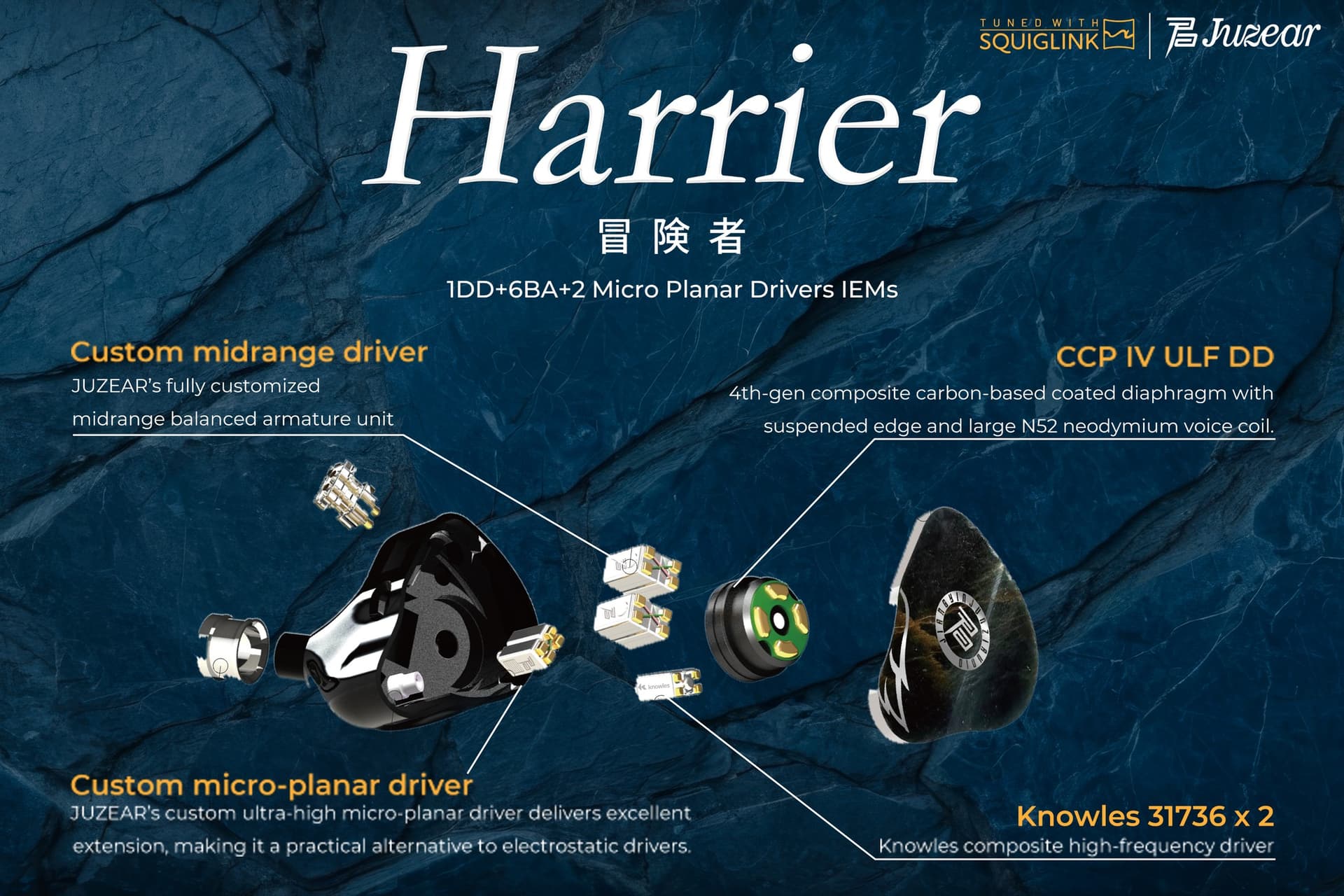
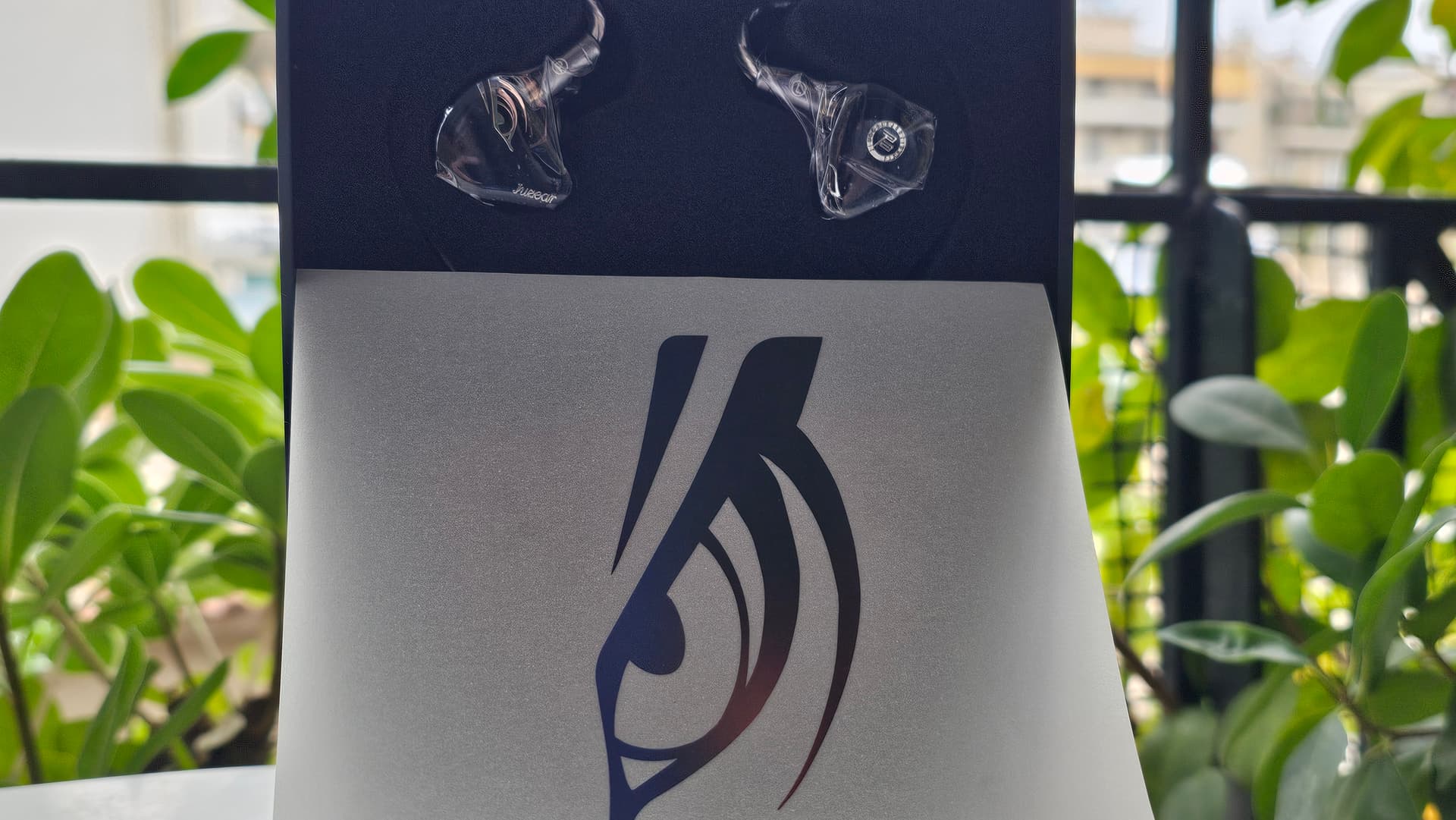
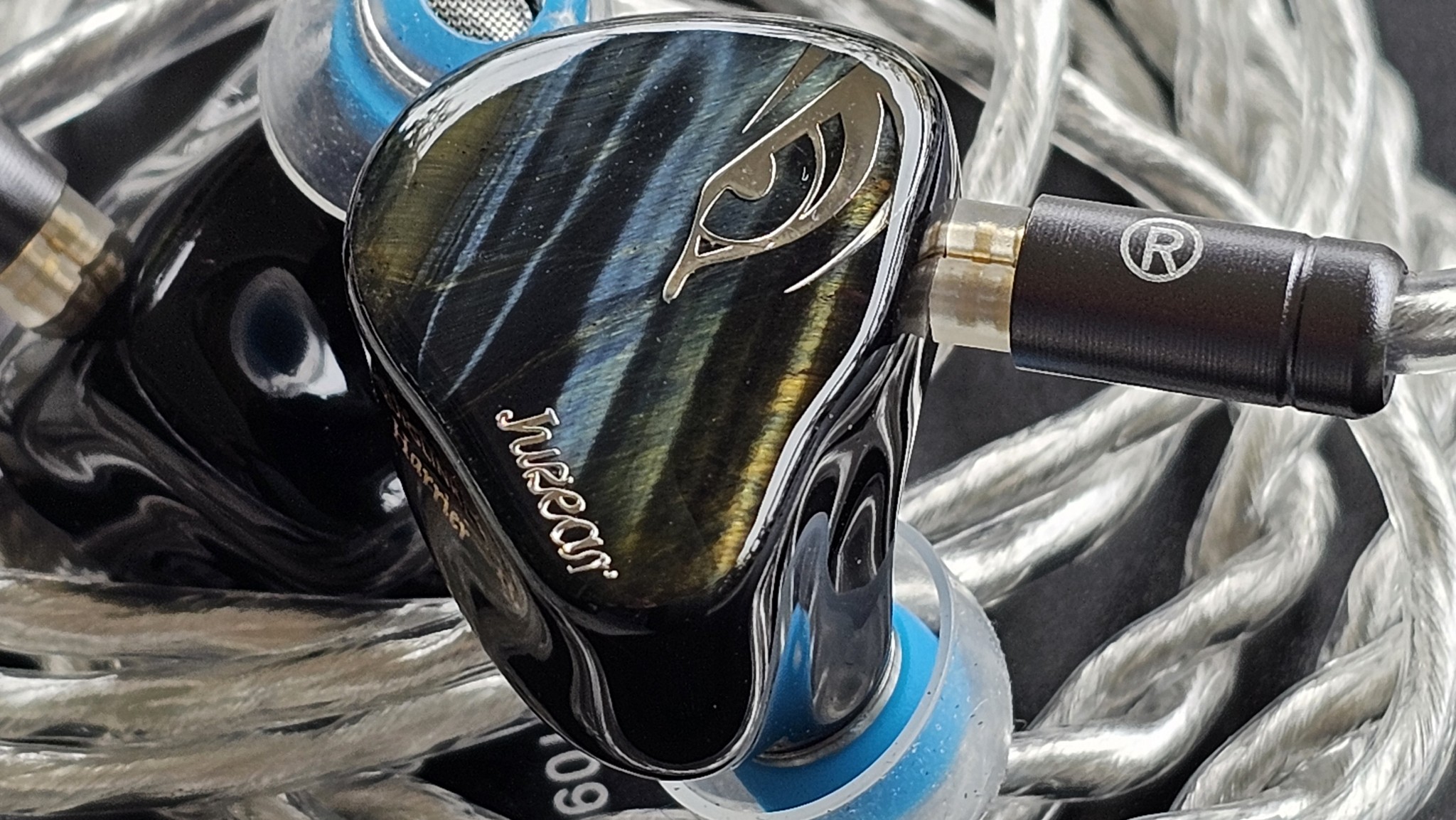
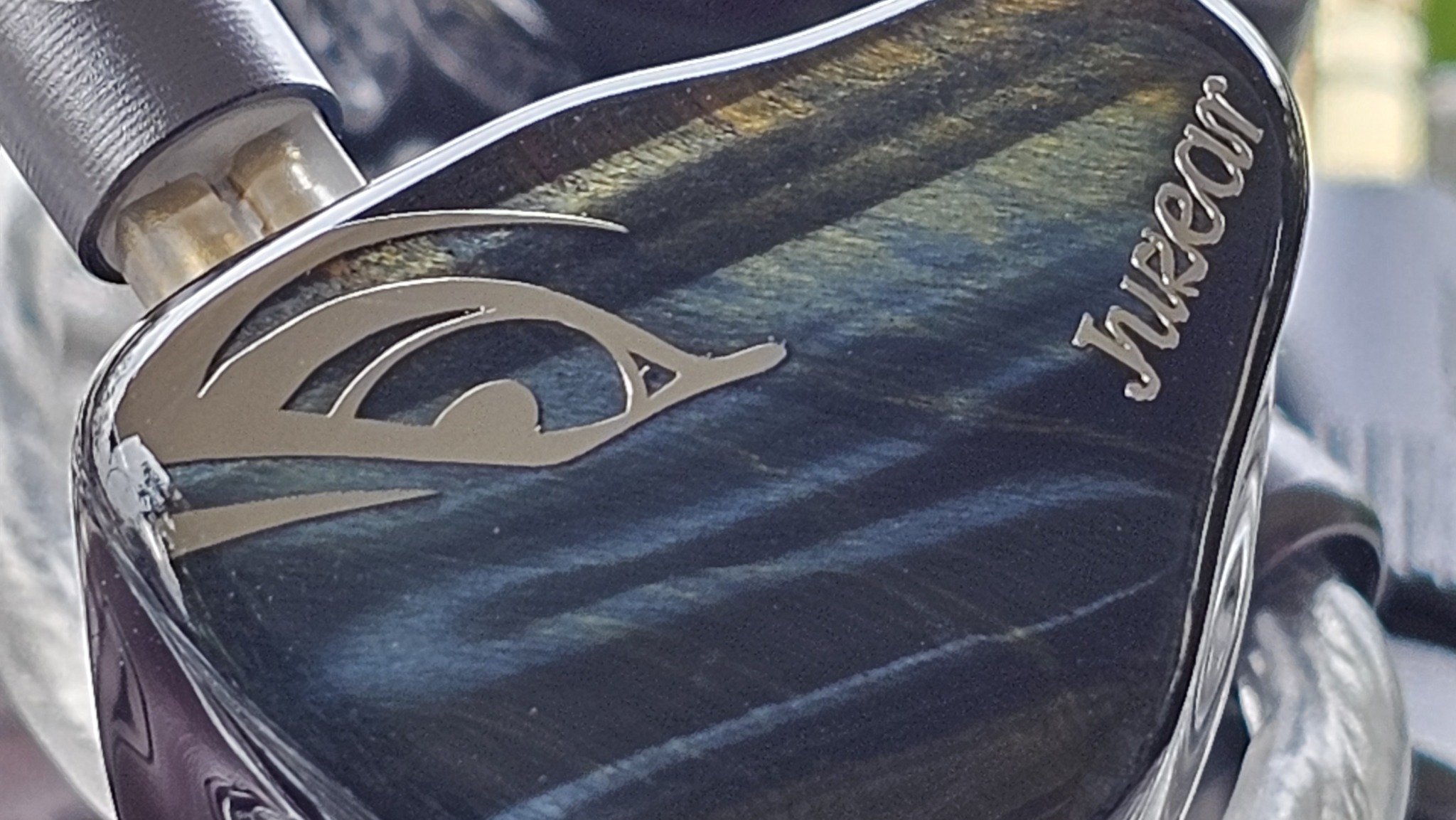
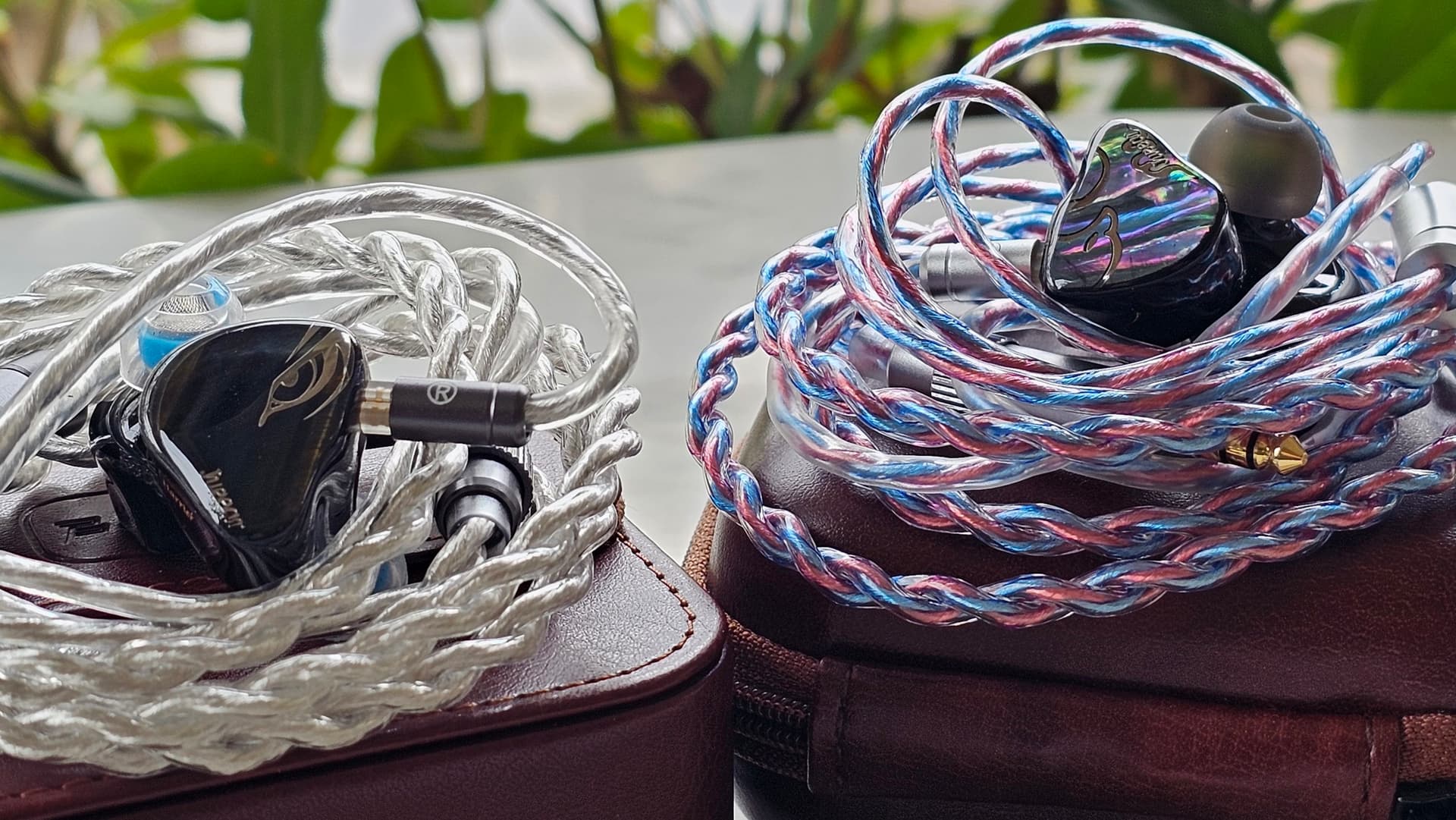
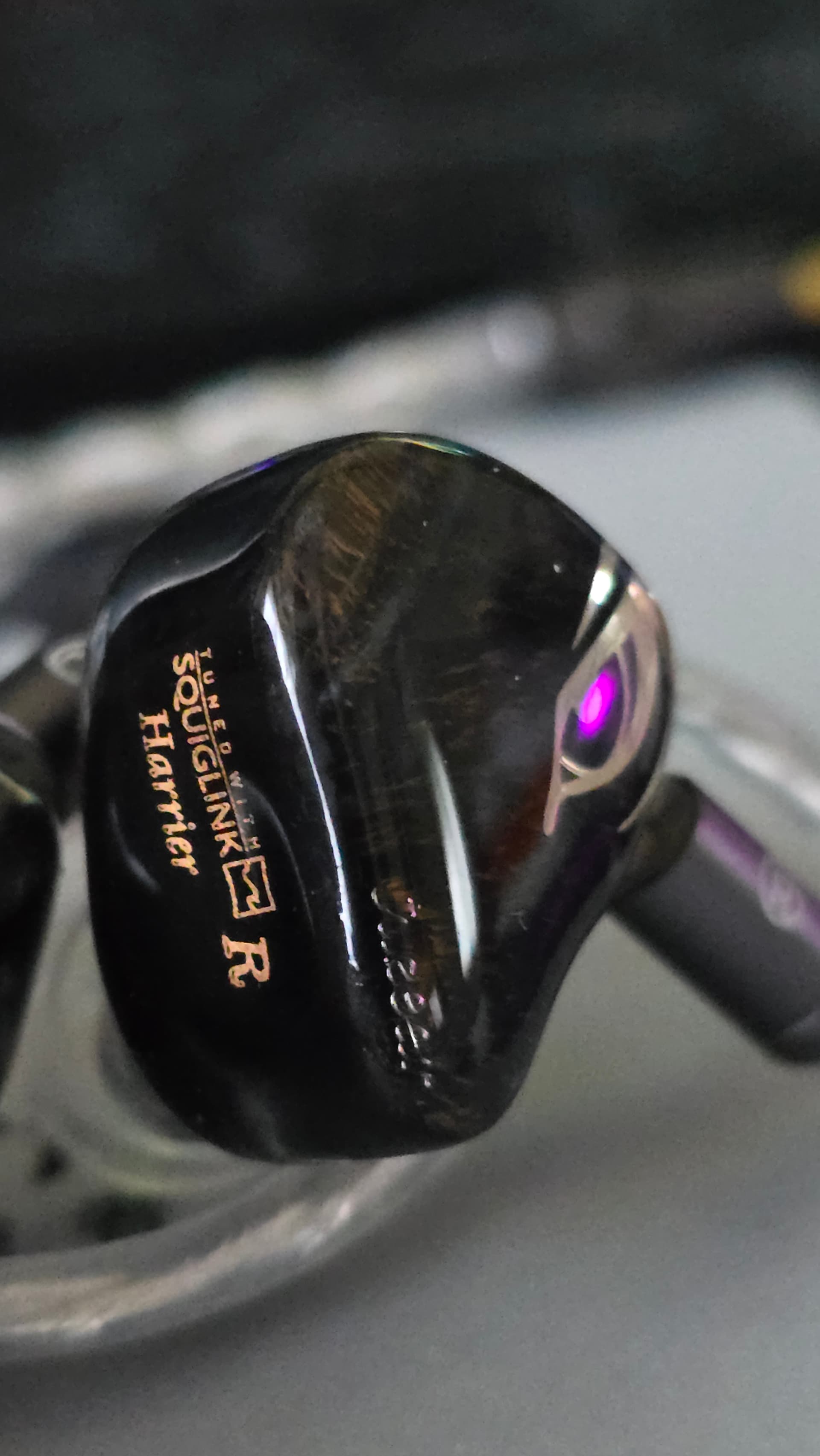
Meet the Juzear Harrier — the world’s first IEM “Tuned with Squiglink”! 
We’re super excited to bring the Harrier, crafted with the unique Squiglink tuning process. It combines Squiglink data with the expert touch of Mark (Super Review) to deliver a sound that’s both precise and musical.
Whether you’re chasing crisp clarity, juicy detail, or a perfectly balanced vibe, the Harrier won’t let you down 
Looks awesome. When are we going to hear more about it?
I think you’re going to be excited about what’s coming!We iterated on the Harrier’s tuning using Squiglink measurements and listening feedback to ensure smooth highs while maintaining the popular bass-boosted profile:)
Thanks to the amazing Mark 
……Hi everyone ……….just received Juzear Harrier my self  ….and for the time of speaking this set is under thorough burn in process of the drivers as i usually do with each and every set i get to test/try
  ……..cannot hide my excitement for this one having allready reviewed the latest collaboration of Juzears with Zeos the all mighty hybrid JUZEAR DEFIANT !!!
my review of Juzear Harrier will be posted here as well over the next days !!!… so hold your breath guys  ……..i have some serious positive feeling for this one
  …..meanwhile check out the latest review on Juzear Harrier coming right over the following video : JUZEAR HARRIER REVIEW ….. SEE YA ALL SOON…
  HeadFier “alexandros a”
https://www.youtube.com/watch?v=JsDxpJTAup8
WITHOUT DOUBT AMONG THE 5 TOP SETS I PERSONALLY AUDITIONED DURING THIS YEAR …
so…here comes my detailed review on Juzear Harrier…
(full review over HeadFi :https://www.head-fi.org/…/juzear-harrier.28744/reviews…)
JUZEAR HARRIER
Wings of Precision, Heart of Emotion…
Pros: Exquisite layering and holographic staging — the Harrier crafts an immersive space that wraps around the listener rather than merely presenting music in front of them.
Outstanding tonal cohesion — despite its complex tribrid architecture (1DD + 6BA + 2 Micro-Planar), the transitions between driver types are smooth and organic, never disjointed.
Remarkably refined bass texture..
Natural, analog-tinged timbre — a presentation that avoids sterility, infusing every note with warmth and human texture.
Refined treble performance — sparkling yet soft, detailed without sibilance, with planars offering near-electrostatic finesse.
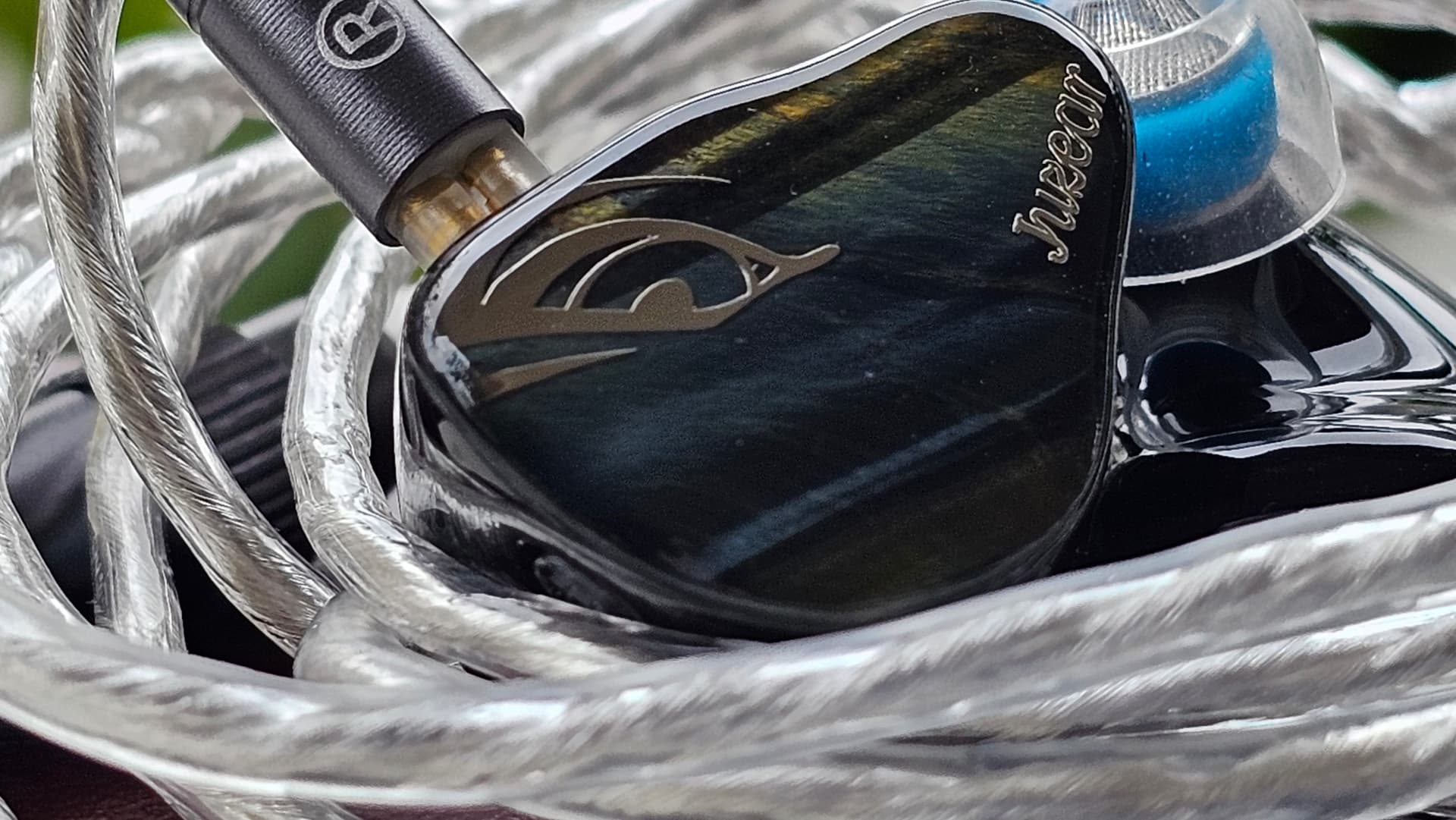
Comfortable ergonomic fit and elegant craftsmanship — premium materials and design echo the sense of balance found in its tuning.
Scales beautifully with power — responds gracefully to balanced outputs and tube amplification, gaining depth and stage width.
Emotionally engaging tuning — a rare union of resolution and intimacy that makes long sessions not just listenable but immersive…
Simply put it : just one of the best tribirds 2025 has to offer outhere!
Cons: Price sits near strong competition — the market at $300–400 is crowded with capable tribrids.
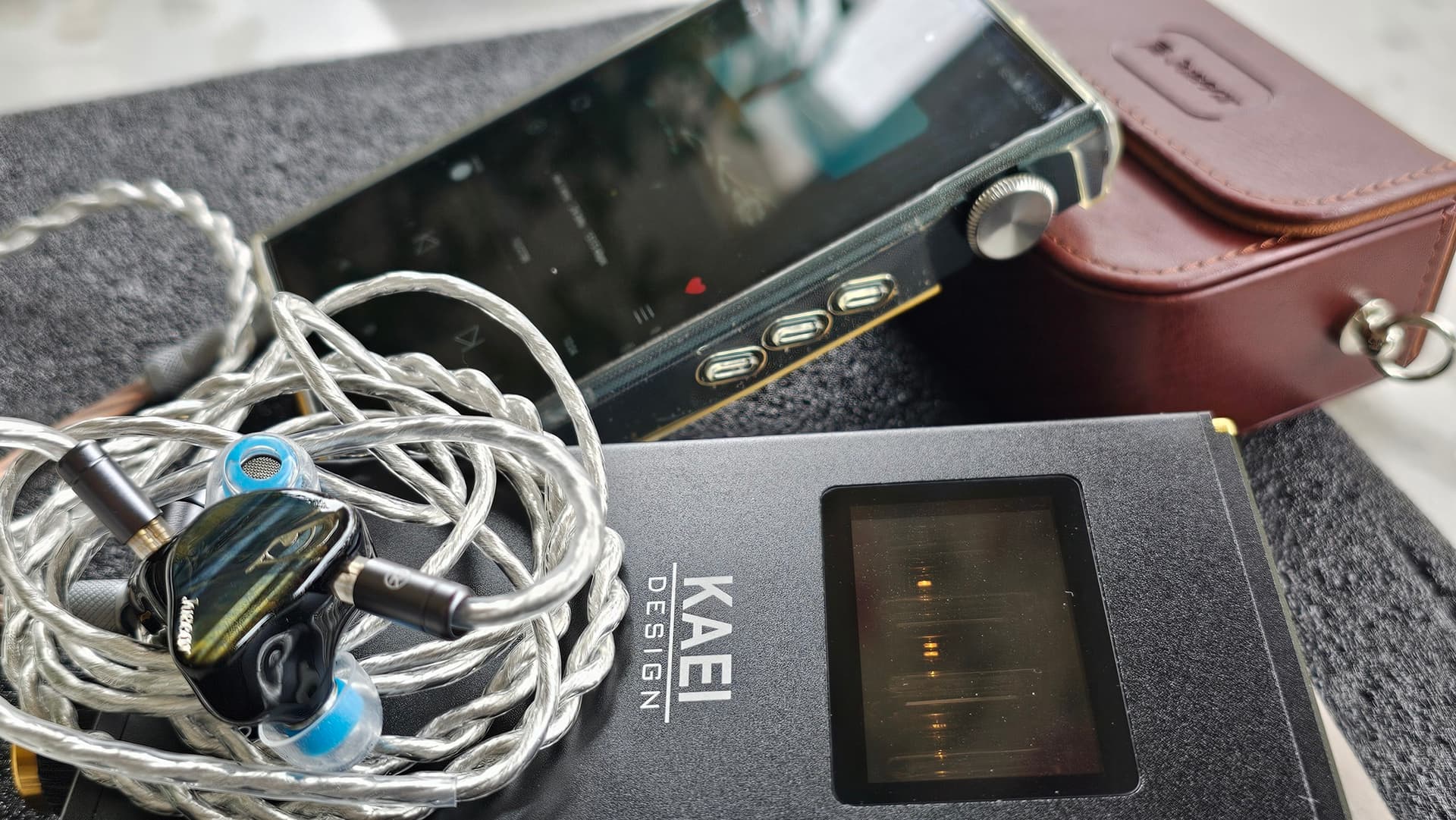
Gear used for the purpose of this review : iBASSO DX 180 / DX 170 / Shanling M3X / HIBY R5 Gen II and some balanced terminated amps such as Oriolus BA300s & KAEI TAP 1 .
Just for the record Juzear Harrier has allready completed a full & continuous burn in circle of 120 hrs …in order for this review to be conducted and for me getting to the core of this sound signature…
Gear used for the purpose of this review : iBASSO DX 180 / DX 170 / Shanling M3X / HIBY R5 Gen II and some balanced terminated amps such as Oriolus BA300s & KAEI TAP 1 .
GRAPH ANALYSIS / TECHNICAL DATA / SOUND PERFORMANCE OVERVIEW
The Juzear Harrier unfolds like a carefully composed symphony of engineering and intuition — a tribrid design where science meets sentiment. Its internal architecture reads like a manifesto of precision: a 4th-generation composite carbon-coated dynamic driver handling the lows, a six-balanced-armature array sculpting the midrange and lower treble with discipline, and two micro-planar units taking command of the upper air region with speed and translucence. But beyond the impressive driver count, it is the cohesion — the musical grammar connecting all nine voices — that transforms data into soul.
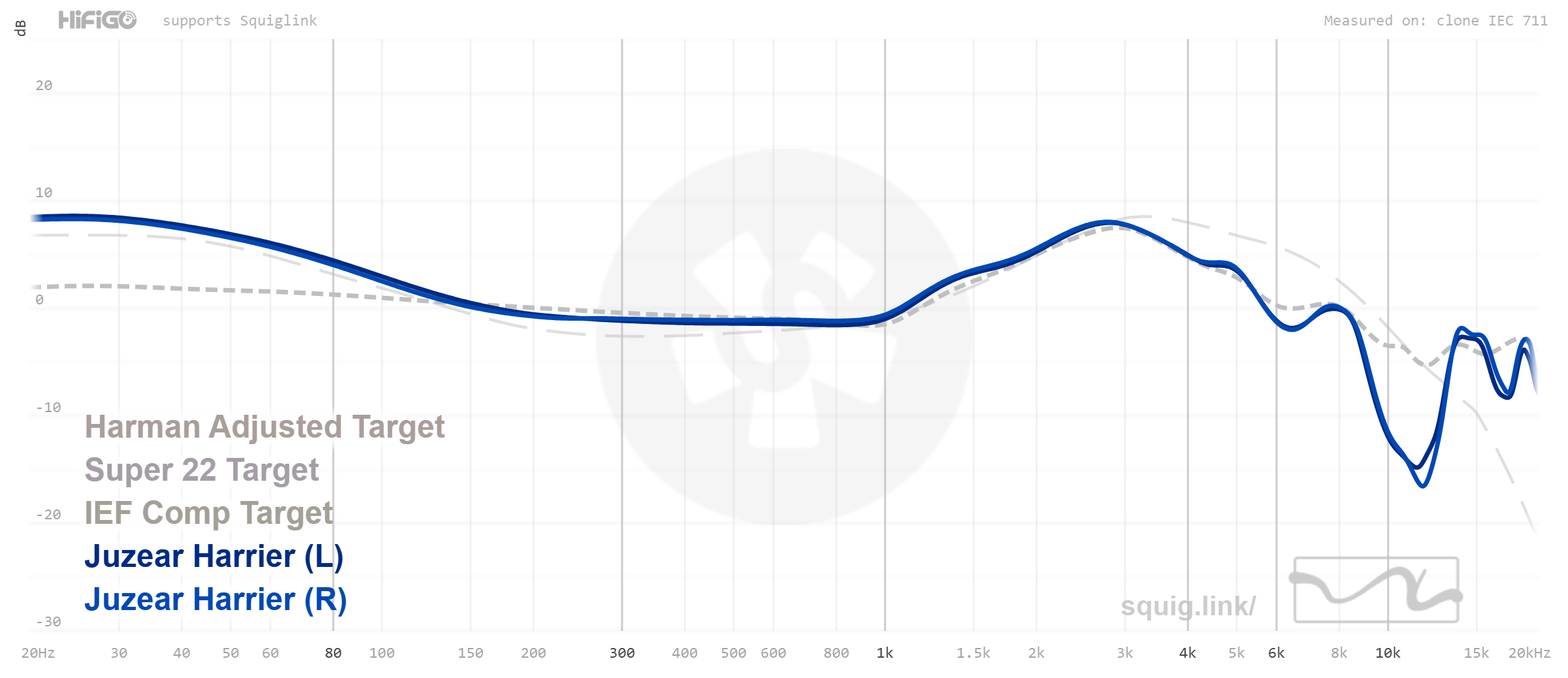
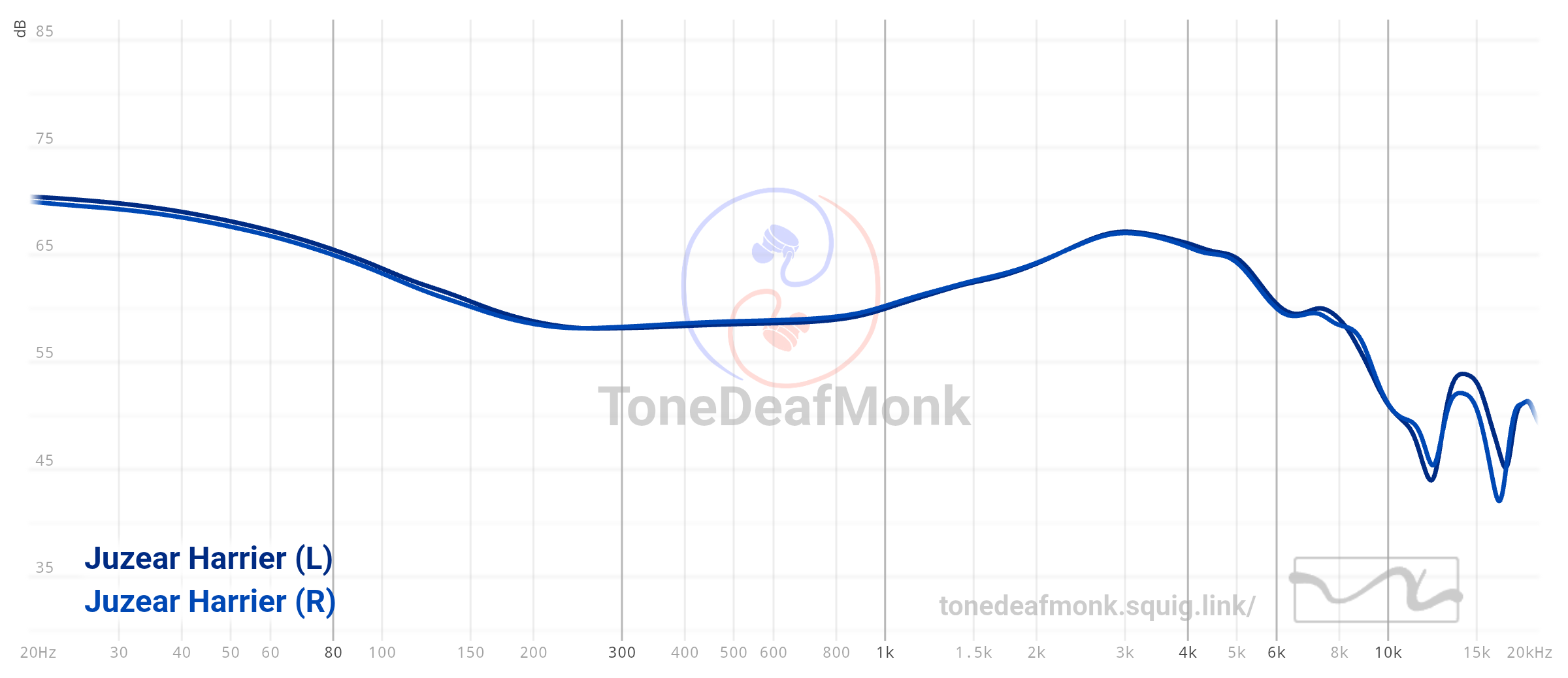
Looking at the frequency response measured on Squiglink, the story of the Harrier’s tuning reveals itself like a landscape drawn with calm confidence rather than flair. There is an evident sub-bass lift beginning around the 100 Hz mark, curving downward in an elegant arc that reaches its full expression near 20 Hz — roughly +8 dBs of emphasis against the midrange plateau. This particular contour gives the Harrier’s low end both depth and authority without overwhelming the rest of the spectrum. It is not the theatrical rumble of a basshead tuning, but rather a foundation — a slow, resonant heartbeat that underpins the soundstage. You hear it more as energy than as volume, like the quiet weight of air before a summer storm.
From 200 Hz to 1 kHz, Harrier remains disciplined and linear, preserving midrange neutrality. This part of the graph forms the bridge between the rich, textured bass and the clear, open mids, ensuring instruments retain their natural tone. Male vocals carry body and presence, while female vocals hover delicately forward but never exaggerated. The 1 kHz to 3 kHz rise — smooth and moderate — gives life and immediacy to voices and stringed instruments, imbuing them with the emotional vibrance that distinguishes good tunings from great ones.
The treble, visible from 4 kHz onward, follows a distinctly mature trajectory. There’s a gentle upper mid peak around 3.5–4 kHz, which adds presence and clarity without shout, followed by a controlled dip near 6–7 kHz to tame potential glare — an intelligent move that grants the Harrier a fatigue-free long-listening profile. Then comes a delicate resurgence around 10–12 kHz, courtesy of the twin micro-planar drivers, injecting sparkle, micro-detail, and that whisper of “air” which separates high-end tunings from mid-tier pretenders. It’s an atmospheric shimmer rather than a metallic shine — a treble that breathes rather than cuts.
As a matter of fact… this tuning philosophy yields remarkable benefits in both soundstage and imaging. The Harrier translates the graph’s measured balance into an expansive yet precise sonic field — wide but not diffuse, tall but not hollow. Instruments occupy well-defined pockets of space, and the interplay of its driver types ensures every layer finds its rightful home: the carbon dynamic gives the stage depth, the BA array paints the central image, and the planars stretch the horizon. Listening to complex material — like Darpsyx’s “KLPCAT” or the layered micro-sampling of Ambidextrous’ “Part VI” — reveals how the Harrier handles transient interplay and phase alignment with near-effortless grace. There’s no sense of disjointedness, no abrupt handoffs between driver types — only an organic fluidity that allows the listener to drift naturally between frequencies.
In technical data terms, the impedance and sensitivity make the Harrier accessible to most modern sources, but it scales beautifully with higher-quality amplification. Tube and Class-A solid-state pairings reveal a lush liquidity in its tonality, while clean balanced outputs underline its microdetail retrieval. It’s an IEM that rewards careful pairing, not because it needs it, but because it deserves it.
In summary, the Juzear Harrier’s frequency response graph is not merely a visual of numbers and lines; it’s a mirror of its soul. A tuning that walks the fine line between emotion and engineering, between air and gravity. Each curve tells the story of restraint and intent — the work of a brand that has matured beyond experimentation and stepped into the realm of purposeful artistry. What the graph whispers, the Harrier sings: balance, depth, and the quiet authority of confidence.
Technically, the configuration of Harrier is nothing short of architectural genius. The phase coherence between driver types feels seamless — a notoriously difficult feat in tribrids. The Harrier avoids that disjointed sense of “three voices speaking at once.” Instead, it presents a unified timbral field, as if each driver knows exactly when to yield and when to shine.
In essence, the Juzear Harrier is a technical marvel that sings with human warmth. Its graph reveals not an analytical scalpel but a painter’s brush — measured, deliberate, guided by emotion. You can see its philosophy etched into every curve of that response: a careful dance between physics and feeling, designed to make you not just hear your music, but see it unfold before you.
It’s a sound signature that doesn’t flatter or falsify — it interprets. It paints in air, layer by layer, frequency by frequency, until the final note fades not into silence, but into stillness.
…shall we break this down segment by segment…?
BASS
The bass of the Juzear Harrier is not a blunt weapon; it’s a sculptor’s hand. It moves with the confidence of something that knows both its power and its purpose. At its core lies the beating heart of the entire design — a 4th-generation composite carbon-based coated dynamic driver, engineered for speed, control, and purity.
This driver is a marvel of modern acoustic material science — its carbon composite diaphragm offering both rigidity and ultra-low mass. The result is bass that feels alive: deep when the music calls for it, yet never indulgent. It doesn’t roar; it resonates.
From the first bars of any track built around rhythm — be it the subterranean hum of a synth line or the woody thrum of a stand-up bass — the Harrier’s low frequencies unfurl with precision. The sub-bass extends gracefully down to the lowest registers providing a distinct +8dbs sub bass boost over the FR, presenting texture and contour rather than mere weight. It rumbles like distant thunder over calm seas — powerful but measured.
The mid-bass then rises naturally to support the groove, delivering body without bloat. Every kick drum lands with articulate impact, every tom note decays cleanly into air. What’s most striking is the absence of smear — that sense of quick recovery, where each note is born and extinguished before the next one arrives. This gives rhythm sections an almost breathing quality, a sense of tempo that feels human and organic.
Unlike many hybrids that chase cinematic warmth, the Harrier’s carbon-based driver prioritizes clarity and agility. It’s not bass for the sake of spectacle — it’s bass as foundation, as architecture. You can follow basslines effortlessly even in dense mixes, because they exist not as fog, but as structure.
The Harrier’s low end feels like the heartbeat of a living organism: firm, fast, and resonant, always aware of the space it occupies. It’s bass that propels the music forward rather than dragging it down — a true mark of thoughtful, modern tuning.
MIDRANGE
The midrange of the Harrier is its soul — that part of the tuning where emotion is distilled into tone. Driven by its dedicated six balanced armature drivers, this region unfolds like silk pulled slowly from a spool: smooth, layered, full of light and shadow.
There’s a faint dip around the lower mids that gives the Harrier its remarkable sense of openness. Male vocals and lower strings sit slightly behind the front line, yet never sound hollow. They’re presented cleanly, surrounded by air — a subtle aesthetic choice that trades thickness for transparency…At this case neutrality means naturalness…
From 1 kHz upward, the Harrier begins its quiet ascent into radiance. The upper mids bloom with breathtaking presence — female vocals shimmer just forward of the stage, guitars chime with articulate bite, and piano notes dance with crystalline separation. Yet even at their brightest, there’s no sibilance, no glassy residue. The planar drivers’ speed ensures that harmonics rise and fade in microseconds, leaving no trace of harshness behind.
It’s here that Juzear’s tuning philosophy becomes apparent: this is not the midrange of clinical monitors, nor the syrupy lushness of a romantic signature. It’s the sound of realism refined — of every voice and instrument carrying its natural timbre, stripped of artifice but clothed in intimacy.
TREBLE
If there’s a single word that defines the Harrier’s treble, it’s elevation. This is where the dual micro-planar drivers perform their most extraordinary act: converting air into luminous sound. The treble extension feels limitless — stretching easily past 15 kHz — yet what’s most impressive is how smoothly it does so.
There’s no etched sharpness, no icy glare. Instead, the high frequencies have a glass-like clarity — transparent, reflective, but not brittle. Cymbals flicker with the realism of brushed metal; chimes and strings sparkle with a whisper rather than a hiss. The Harrier’s treble is like sunlight filtered through a cathedral window — radiant but soft, revealing every contour of the space it illuminates.
Micro-details emerge effortlessly: the breath between vocal phrases, the faint shimmer of reverb tails decaying into infinity. The sound feels illuminated from within, as though the planar drivers were painting light into the mix rather than simply reproducing it.
What’s remarkable is that, even with this level of detail, the treble never separates itself from the rest of the spectrum. It’s integrated — connected — part of a single harmonic body. You can move from bass to treble without feeling any frequency wall or artificial partition.
The Harrier’s high end isn’t just about resolution — it’s about grace. It’s about how sound leaves the earth and enters the ether.
SOUNDSTAGE / IMAGING / TECHNICALITIES
To listen to the Juzear Harrier is to experience a kind of sonic architecture — a cathedral built of frequencies and decay. It is not just wide; it is proportioned. The soundstage doesn’t merely expand outward, it breathes, shaping itself to the music’s intent.
Horizontally, the Harrier offers a panoramic spread — left and right channels unfolding like wings, each movement precise yet fluid. There’s no artificial exaggeration here; instead, it’s the kind of natural spaciousness that comes from speed, coherence, and perfect phase alignment. Instruments occupy their rightful coordinates, locked in position yet suspended in air.
Depth, however, is where the Harrier truly reveals its artistry. The layering is exquisite — front-to-back separation that gives the illusion of a three-dimensional room. You don’t just hear instruments; you perceive distance, height, and breath. Background synths hover behind the vocal line like mist behind a mountain; percussion echoes with tangible space, fading not into blackness but into the soft glow of reverb.
Imaging is pinpoint accurate — surgical, yet never sterile. When a snare crack lands slightly left of center, you can trace not only its origin but its movement through the acoustic field. The Harrier achieves this through impeccable driver integration; the dynamic, BA, and planar units speak as one organism, never stepping on each other’s transients. It’s the sonic equivalent of a perfectly synchronized flight formation — individual wings moving in flawless coordination.
Technically, the Harrier is a marvel of resolution and control. Micro-details shimmer effortlessly, yet the overall presentation remains musical and organic. Transients rise and decay with breathtaking speed, revealing textures that lesser sets blur into homogeneity. The planar drivers, in particular, deserve credit for this — their lightning-fast response gives treble energy the kind of definition normally reserved for high-end studio monitors.
And yet, for all this precision, Harrier remains emotional. It never crosses into the cold sterility that can plague highly technical sets. Its soundstage is not a clinical grid — it’s a living landscape. You feel inside the mix, not standing outside of it.
In short, the Juzear Harrier delivers one of the most coherent spatial experiences I’ve encountered in a tribrid design within its price range. It paints a space both expansive and intimate, where every note finds its place and every silence its echo.
It doesn’t just reproduce sound.
It builds it — with geometry, grace, and soul…
GENRE PAIRING
The Juzear Harrier is one of those rare monitors that refuses to be confined to a single genre. It is as if its nine drivers — the carbon-based dynamic, six armatures, and twin micro-planars — conspire not merely to reproduce music, but to translate intent. From the very first notes, it becomes evident that the Harrier’s true strength lies in its adaptability; it does not bend music toward its own character but rather lets each composition bloom in its natural hue. Whether it’s the slowly unfurling ambient drifts of “Alcyone” by Falling You, the cinematic pulse of “Part VI” by Ambidextrous, or the rhythmic entanglement of “KLPCAT (Remix–Remaster)” by Darpsyx, the Harrier moves fluidly across these soundscapes, always finding a balance between analysis and atmosphere.
In ambient and cinematic music, it paints with air rather than color, expanding the room around the listener until reverb becomes physical. Within downtempo and IDM, it shows remarkable rhythmic discipline — basslines glide with textured ease, and percussion arrives with both precision and warmth. Those who live in the intersection between experimental electronica, trip-hop, and psybient will find that the Harrier handles density without congestion, layering sounds with an almost painterly sense of depth. Its planar drivers open the higher harmonics like sunlight through glass, allowing shimmering pads and delicate overtones to exist without edge.
Genres such as jazz, chillwave, and electro-acoustic fusion reveal a different side altogether — here, the Harrier’s midrange tonality takes center stage. Vocals and instruments feel intimate yet uncolored, positioned with natural distance, neither forward nor recessed. A track like “Hot Cat Club (Captive Portal Remix)” by 4T Thieves exemplifies this: every brush of rhythm and electronic flicker carries its own weight and tone, without sacrificing cohesion. The result is not the sterile separation of a studio tool, but the graceful unity of a performance heard from the perfect seat.
Even in darker territories — trip-hop soundscapes and cinematic electronica such as “In the Machine” by Monastry — the Harrier’s balance of texture and control prevents harshness, preserving the atmosphere of the mix while ensuring every resonant metallic echo and sub-bass throb retains its place. It thrives where many others falter: in complex productions where power, layering, and air must coexist.
It would be premature to dissect each of these tracks here — that exploration belongs to a different (next to come) segment of this review, where I will examine them individually and in depth. For now, what matters is understanding that the Juzear Harrier excels across a remarkable spectrum of genres: ambient, downtempo, IDM, modern electronica, experimental, industrial, and beyond. It adapts not through neutrality alone but through musical empathy — a rare and precious trait that allows the listener to traverse genres without ever leaving the essence of the music behind.
And that is the Harrier’s true magic: it doesn’t just play music. It becomes part of the silence that surrounds it.
WORTHY OF IT’S ASKING PRICE ???
With a launch tag of $329, the Juzear Harrier enters the most crowded battlefield in personal audio: the mid-tier tribrid arena. This is where competition sharpens its teeth — sets such as ZiiGaat Horizon, Kiwi Ears Septet, ThieAudio Legacy 9, or AFUL Performer (5+2) circle restlessly, each promising reference tuning or visceral fun for roughly the same sum.
Yet the Harrier does not come to mimic; it comes to refine.
Its sound speaks of design maturity — nine drivers working in seamless dialogue, producing a sonic experience that feels several price steps above its sticker. The Harrier’s coherence alone could justify the cost: transitions between the carbon-based dynamic driver, the balanced armatures, and the dual micro-planars occur with a liquidity rarely heard under $500. Add to this its build artistry — a polished resin form that looks sculpted rather than molded — and you begin to see where the value hides: in execution, not excess.
Still, Juzear’s strategy only makes sense when viewed beside its younger sibling, the Defiant. At $99, the Defiant remains one of 2025’s most remarkable entry-level monitors — lively, emotional, and staggeringly complete for its bracket. It’s the gateway into the brand’s tuning philosophy: musical warmth wrapped in technical poise. The Harrier builds directly upon that DNA, turning exuberance into sophistication. Where the Defiant moves the body, the Harrier moves the air.
Ultimately, value here isn’t measured by numbers on a tag but by the hours of genuine connection a monitor can create. The Defiant wins hearts through immediacy and affordability; the Harrier wins them through depth and grace. Together they form Juzear’s statement for 2025: that excellence need not live in the flagship stratosphere, and that true artistry can bloom even in the middle ground — provided it’s tuned with soul !
CLOSING NOTES…
Every so often, an earphone appears that doesn’t just perform — it connects. It speaks less to your analytical mind and more to that quiet corner of your soul where music lives before words. The Juzear Harrier is such a creation: a tribrid that doesn’t try to shout its brilliance, but instead breathes it.
When I first encountered Juzear last summer through the Defiant, I was caught off guard by how effortlessly that modestly priced set embodied musicality. For an entry-level IEM, the Defiant was a revelation — a genuine all-rounder that proved refinement and soul were not the exclusive domain of high-end flagships. It left a mark on me, both as a reviewer and as a listener, reminding me that sincerity in tuning often outshines technical showmanship.
The Harrier, arriving months later, feels like the spiritual continuation of that journey — a maturing of the same design language, now expanded, deepened, and rendered more complete. Its 4th-generation composite carbon dynamic driver grounds the sound with organic realism, while the six balanced armatures and dual micro-planars weave a tapestry of air, texture, and light. The result is not merely a step up from the Defiant — it’s the moment when potential finds its full voice.
During these past days of listening, the Harrier revealed itself to be not just another tribrid, but a cohesive statement of intent from Juzear. It blends technical precision with emotional weight, neutrality with warmth, and spaciousness with intimacy. Whether through the cinematic resonance of ambient pieces or the pulse of modern electronica, it remains composed and immersive — never clinical, never bland.
And then there’s the matter of value. At $329, the Harrier lands in a fiercely competitive mid-tier field, facing peers from ZiiGaat, Kiwi Ears, and ThieAudio. Yet, even within that crowded space, it manages to feel personal — handcrafted in both sound and spirit. It’s the kind of IEM that doesn’t seek to replace your collection but to anchor it; a monitor you return to when you want to remember why you listen in the first place.
My sincere gratitude goes to Juzear Audio for their continued trust and artistic persistence — and to HiFiGo for facilitating this exploration. From the accessible brilliance of the Defiant to the refined mastery of the Harrier, the brand’s evolution feels both deliberate and deeply musical !!!
In the end, the Harrier stands not just as a product, but as a testament — proof that thoughtful design and emotional engagement can coexist harmoniously. A true all-rounder, elegant yet grounded, offering the listener a bridge between introspection and precision.
The Harrier doesn’t scream for attention — it earns it, one breathtaking note at a time! For the asking price?..my absolute and full recommendation…
Tonight’s Listen Juzear Harrier it’s tuning is spot on for me and has some crazy good stage.
Love the micro planar implementation.
Thanks HiFiGo and Canuck Audioholics Anonymous (C
AA)
indeed this stage is crazy good for me as well…towards all the possible axis…

The new Light Shuttle is pretty great. I’m a big fan. It’s end game for most people.
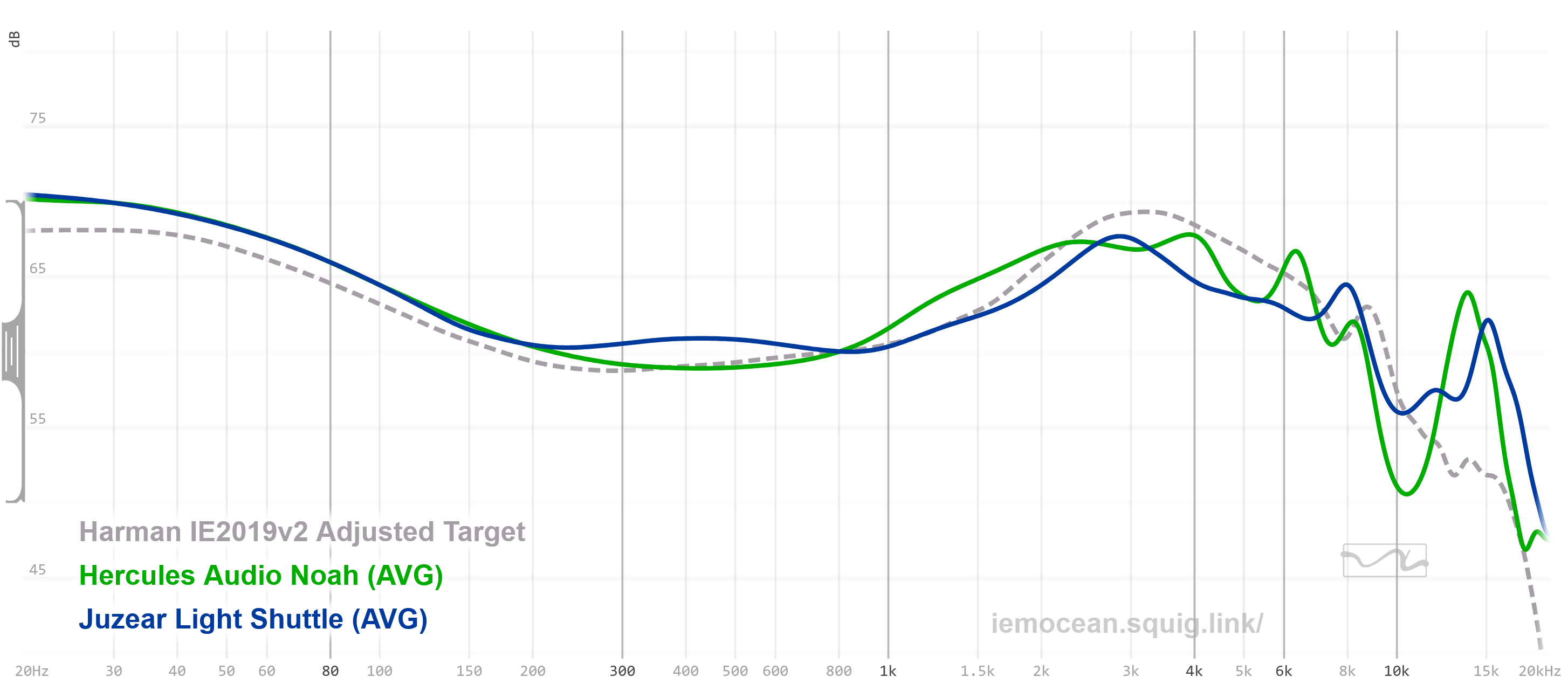
Light Shuttle is nice overall. Sadly, they turned out to be excessively bass-heavy for me. So when i lower the volume to avoid fatigue, they become too boring with such ear gain and highs. Would be a banger if they had the same tuning but with -3/-4 dB Low Shelf from 100 Hz.
The Light Shuttle’s tuning appears to be very similar to the Dunu 142.
I fully agree to you. Some reviewers like me dared too say that Light Shuttle’s bass is too boomy/pillowy. However I fully understand that everybody has different taste and preference so there’s a audience for people who like bass with slower decay.
In my mind such quantity of bass needs to be carefully balanced with the rest of FR so it doesn’t sound too soft. There’s better example of rather bassy IEM - Hercules Audio Noah. Bass there is huge but 1 - 6 kHz forwardness in comparison to Light Shuttle provides higher contrast and more lively presentation. And I don’t need to crank the volume up so often to hear everything in track but to be destroyed by bass. In other words i just prefer V often than L