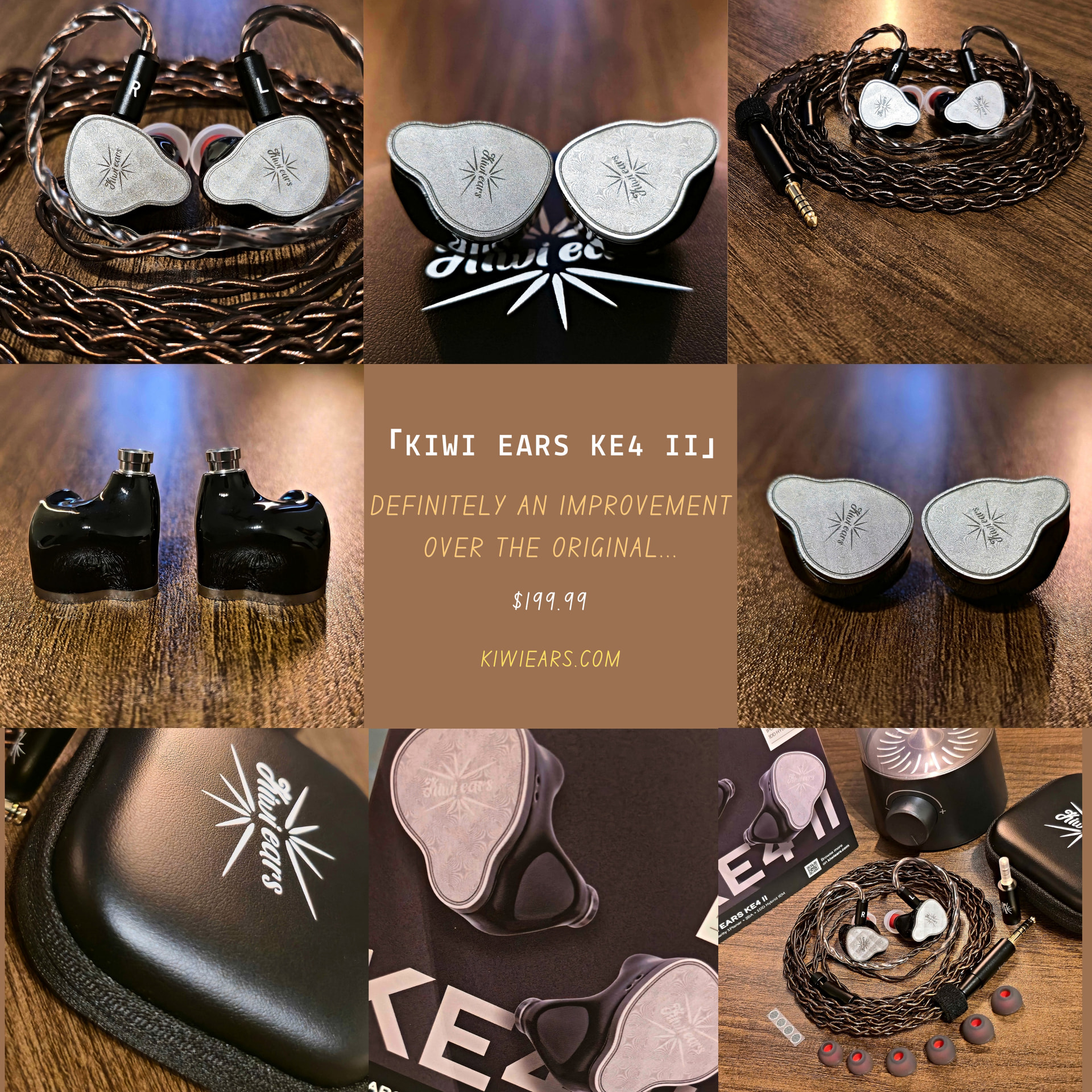
「 KIWI EARS KE4 II 」
●
Definitely an improvement over the original…
●
✧ ════ •REVIEW• ════ ✧
「SOUND-SIGNATURE」
Tuning wise, it still follows the original KE4. It is still JM-1 tuning with abit of tweaks. It’s got a sub-bass-oriented bassline. It is tuned to be mid-range focus that sounds dense and intimate. The treble fall somewhere along the lines of a neutral that is neither too dark or too bright. It’s got good dynamic-range to not sound boring. It is quite an all-rounder performer.
↓
「BASS /LOW-END」
► The bass presence is stronger than expected. The bass moves at a fast rate but it is not lightning quick with its decay. It still allows the bass notes to have a momentary sustain that decays neatly. The bass only shows its authority on heavier bass tracks. Outside of that, it behaves as good an accompaniment should. It sounds clear, well-controlled, well-defined with good dynamics.
► The sub-bass has quite a bold presence. The subline showcased to have deep extension, but it is not the lowest I’ve heard. The strong sustain gives listeners that immediate atmospheric presence without muddying the upper registry. You could gradually feel the subterranean tremor and the vibrating rumble building-up from the lowest point. When the beats drop, there is a good rhythmic flow to it. Even though this is not true “bass-head” set, such traits evokes a good sense of engagement when I just want to jive with my favourite rap, hip-hope or EDM tracks. It does it without feeling the needs to change gears.
► The mid/upper-bass does have a noticeable cut-off upon entering lower mid-range. It becomes thinner and lighter in presence. And bit faster too. However, I’m glad that the attack definition isn’t dampened here. There is still a reasonable of dynamics behind them to allow percussive bass hits to sound impactful.
► Kick-drum packs a good punch. Whilst on the woolly side, it hits big. It sounds immediate while leaving a satisfying tactile boom.
► Drum-strike though sounds less prominent, still slams with good depth. The “thud” sensation is well-bodied with good impact. When the stick rebound, it feels elastic as the drumhead reflexes.
► Bass line guitar on the other hand, focuses more on the natural sustained tone than the rhythmic contrast of the humming and droning.
► The ghetto bass may lack abit of that springy quality. When it comes to bass distortion paddle, the clarity is better than expected.
► Bass control is excellent. There is not a whiff of bloat feel or bleeding effect.
" To me, the bass performance is indeed a step-up from its predecessor. It just sounds tauter, sharper and more cohesive. In many ways it sounds more natural too."
↓
「MID-RANGE /VOCAL」
► The way it renders the mid-range is what captures my attention the most. It is immersive, clear and musical to listen. It often put you into a mood where you just want to listen to the music instead of analysing it.
► The vocals especially will sound more to the forefront, about 2 inches from the point of your nose. The accompanied instrumental bits sound just as intimate but not on the same plane. There is still enough distance in between to perceive the stage’s front to back layering. Most of the time, the vocals will govern most of the stage width which makes it a vocal centric set.
► The tonal balance allows it to have good sense of detail without distracting. It strikes a good balance of sharp definition and smooth texture that is easy to appreciate. The surface layers of vocal complexion or the delicate instrumental movement can be heard without straining your ears.
► The consistency of vocal weight and instrument heft is one the things that I like about it. There is enough brightness to highlight the nuances. And there is also ample of warmth for a solid foundation. There is hardly any hollowness or thinness to the overall timbre.
► MALE/LOW-PITCHED : Listening male vocal on this gives me joy. Be it bass, baritone or tenor, the voice gives no signs of lacking in fullness or richness. The feel of recessions is not here. That is not the only reason I enjoyed it. The strength of it lies to the way it handles vocal dynamics. To my experience, it is easy to capture the vocal emotions when the singer soars high in the range, but it is not easy to emulate the tonal variation with the deep, low voices. And it somehow managed to do that. The vocal sustains and extension is nigh excellent, allowing the vocal to bloom before it is released. With all that combined, male vocal tracks are just melodious to listen. You’ll feel emotionally connected that makes me you want to sing along. At least that’s how I feel. Nitpicks? Perhaps, with higher pitched vocals, they don’t carry the same power as the lower registry do.
► FEMALE/HIGH-PITCHED : Sadly, I can’t say the same with female vocal as this is where is sounds a little compromised. With lower female voice type (contralto), it sounds brilliant. It sounds husky, dense, with good sense of energy. The sense of airy and breathiness complexion to the voice is not all that missing. But beyond that, I do not seem to get the same dynamic feel as I did with the lower part of the range. Not only that. While the upper mid-range vocal sounds forward, they sound leaner in terms of body. They don’t sound as full nor as rich as the lower counterpart. And the vocals just don’t have the same level of sustain nor extension to keep up. As a result, it affects my “anisong” or “weeb” music enjoyment. Higher pitched female vocal performance just feels like it is lacking that sense of engagement as it plays a little too safe for my own liking. If you’re looking for an intoxicating female vocals or ethereal female voice, this is not it. Whilst I said that, the vocal density is well maintained across the range. And if you’re sensitive to upper mid-range energy, this will suit you just fine. It handles shouty or screamy vocals well.
► Most of the time, it sounded smooth and clear, except there are multiple occasion of pixelated or unrefined graininess at the tail end of the voice.
► Acoustic guitar or plucked strings, tend to come by with a more rounded attack but there is a good sense of physical mass behind the notes. There is a welcoming woody resonance which I like.
► Piano does hinting abit of softness to the tap. But it sounds sturdy enough with good dynamic expressions.
► Violin or cello is well expressed with a touch of warmth colouration for a pleasant and musical feel.
" More often than not, I seem to enjoy the mid-range presentation on this. I can could forgive its tonal flows as I listen to wide broad of genres. The reality is that it does more positive things than ruining my music experience. Which does say something."
↓
「TREBLE / HIGHS」
► The treble falls north of neutral. Perhaps on the darker side depending on your ear’s sensitivity. Be it from lower treble to ultra highs, not once it occurs to me sounding bright, It has just about enough brilliance to not sound dark and dull. If you’re expecting an airy high, look elsewhere.
► The treble response is silky smooth. The peaks and troughs hardly cause you any problem. It is void of any harshness, hotness, glare or spikes. Sibilance control is quite good as there is no unnecessary accentuation with the Ts and Ss consonants on vocal transient.
► The treble clarity is good thanks to its rather dark background. Despite not being bright, the essential high-end components are well highlighted. I do wish the high notes to have a crunchier and heftier attack just to improve the top-end dynamics. At times it just sounds a little too flat and smooth for my liking. And there is occasion dryness timbre due to its clinical nature. Thankfully, it still sounds relatively natural without sounding digital-like.
► Hi-hats sounds clean and smooth. Though, I do feel like the pitching when it “chick” sound slightly lower than usual. Perhaps slightly darker in tone.
► Same goes with cymbal plays. Cymbal splash sounds inoffensive while the clanging of cymbals rings smoothly as it washes away.
► Drum-snare sounds fast and precise. Its “pops” and “cracks” plays cleanly without leaving you many impressions.
► E-guitar though sounds on the clinical side, still allows listeners to enjoy it. It gives rock & metal music the essential rhythmic drive to keep you engaged.
► Glockenspiel has slight dry timbre to it. It dings smoothly without much perceived overtones.
► When it comes electronics and synths, I just wish its gives them abit more bite and note-weight to sound more distinct. Most of the time you’ll hear it but you don’t feel the attack as you would hope to.
► The treble is safe for everyone to listen. Perhaps, too safe. Even at louder volume, it maintains the very same demeanour. It is fine for light monitoring purposes as well as for long listening sessions.
" Overall, the treble performance offers a decent definition with good level of refinement. It does the job well to carry this neutral-balanced tuning philosophy which has become a reference in today’s market."
↓
✧ ════ • TECHNICAL PERFORMANCE & OTHERS ASPECT • ════ ✧
It has a proper STAGE recreation. It sounds fairly wide with adequate headroom and decent sense of depth. Most of the time, the vocal placement will sound more to fore, surrounded by instrumental elements.
SPATIAL CUES sounds accurate. But it is not the sharpest one I’ve heard in its price-point.
INSTRUMENT SEPARATION is well laid out. Due to its intimate presentation. Vocals and instruments will have a bigger image, sitting closer to each other with adequate sense of delineation between them. If you’re used to more open and spacious stage, this might feel a little cramp in comparison.
DETAIL-RETRIEVAL is solid. Though most of the detailed is not enhanced for better transparency, micro-nuance is naturally presented without feeling missing out. You just need to pay closer attention to hear it. To my ears, it is fairly resolving for the price it competes. It does it without sounding artificial.
DYNAMICS? Despite its neutral-balanced nature, the bass and treble extensions keeps its dynamic-attribute in-checked. Sure, there some aspect of it that could use with some flare to sound more engaging, but as it is, it’s quite well sorted. It doesn’t sound flat when energetic music kicks in.
TONE & TIMBRE? From my experience, it tries to be on the clinical side. Some of the tonal aspect may sound a little compromised. But it is far from sounding unnatural. There are no major timbre setbacks as far as my assessment goes.
DRIVER? I am happy to say that this sounds like an upgrade over the original KE4. It sounds more cohesive and the overall sound quality has a touch more refinement to it. For the asking price, it offers good sense of definition and refinement.
PRICE? For the price, it is not bad at all. Especially, when you’re into a JM-1 style of tuning. The overall packaging is slightly improved over the original despite having the same MSRP of $199.99.
↓
✧ ════ •BUILD/ PACKAGING/COMFORT• ════ ✧
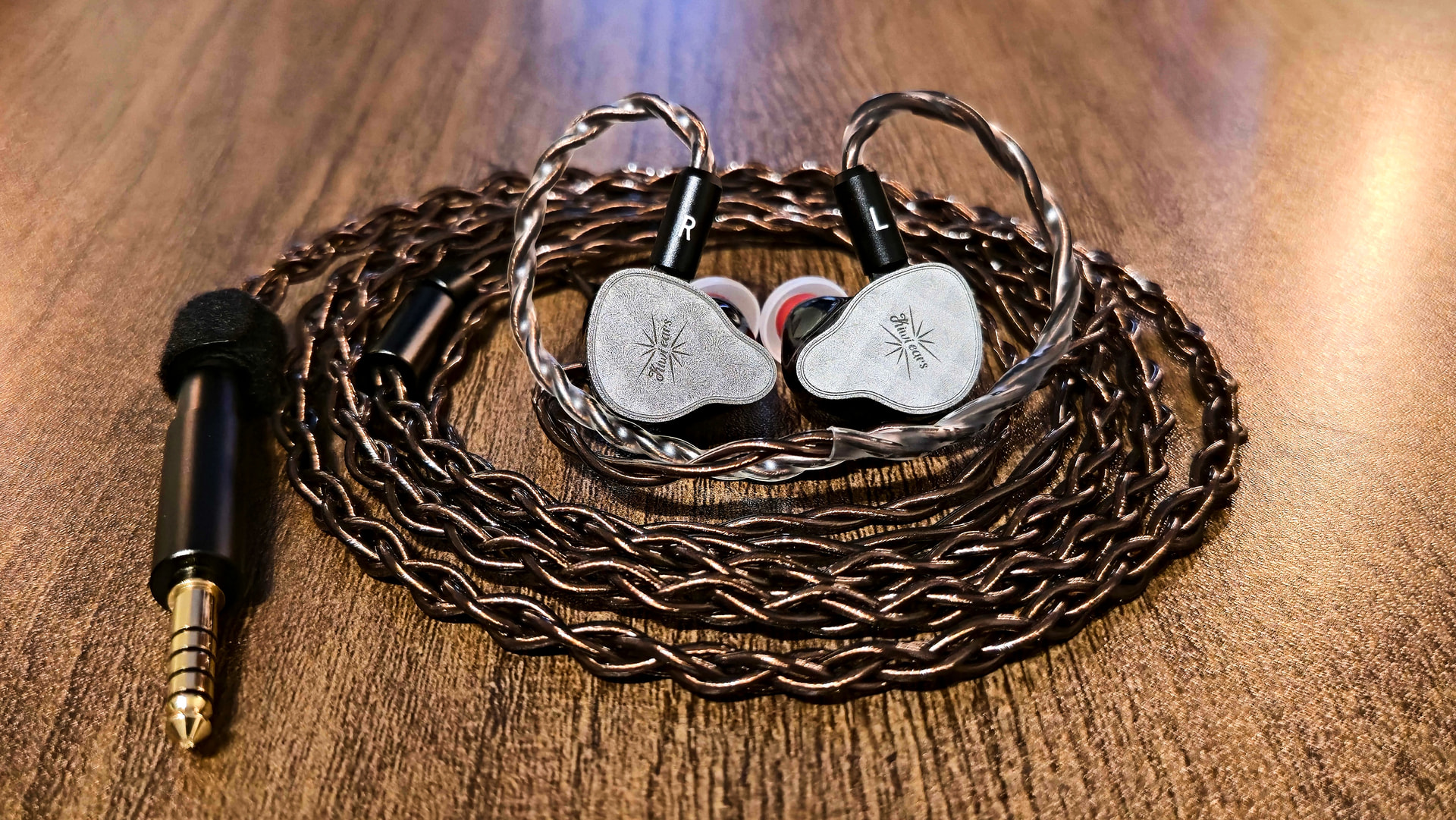
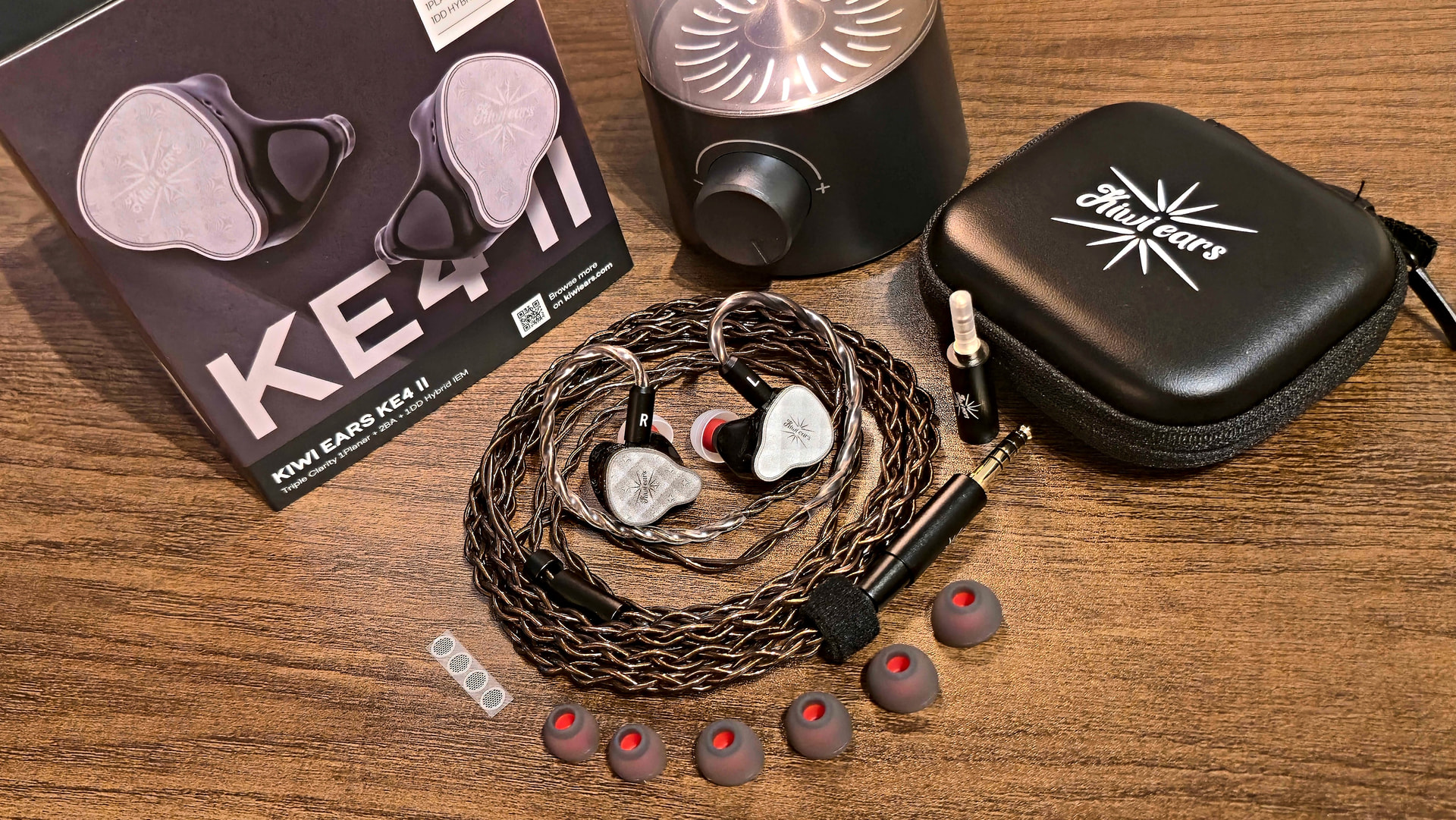
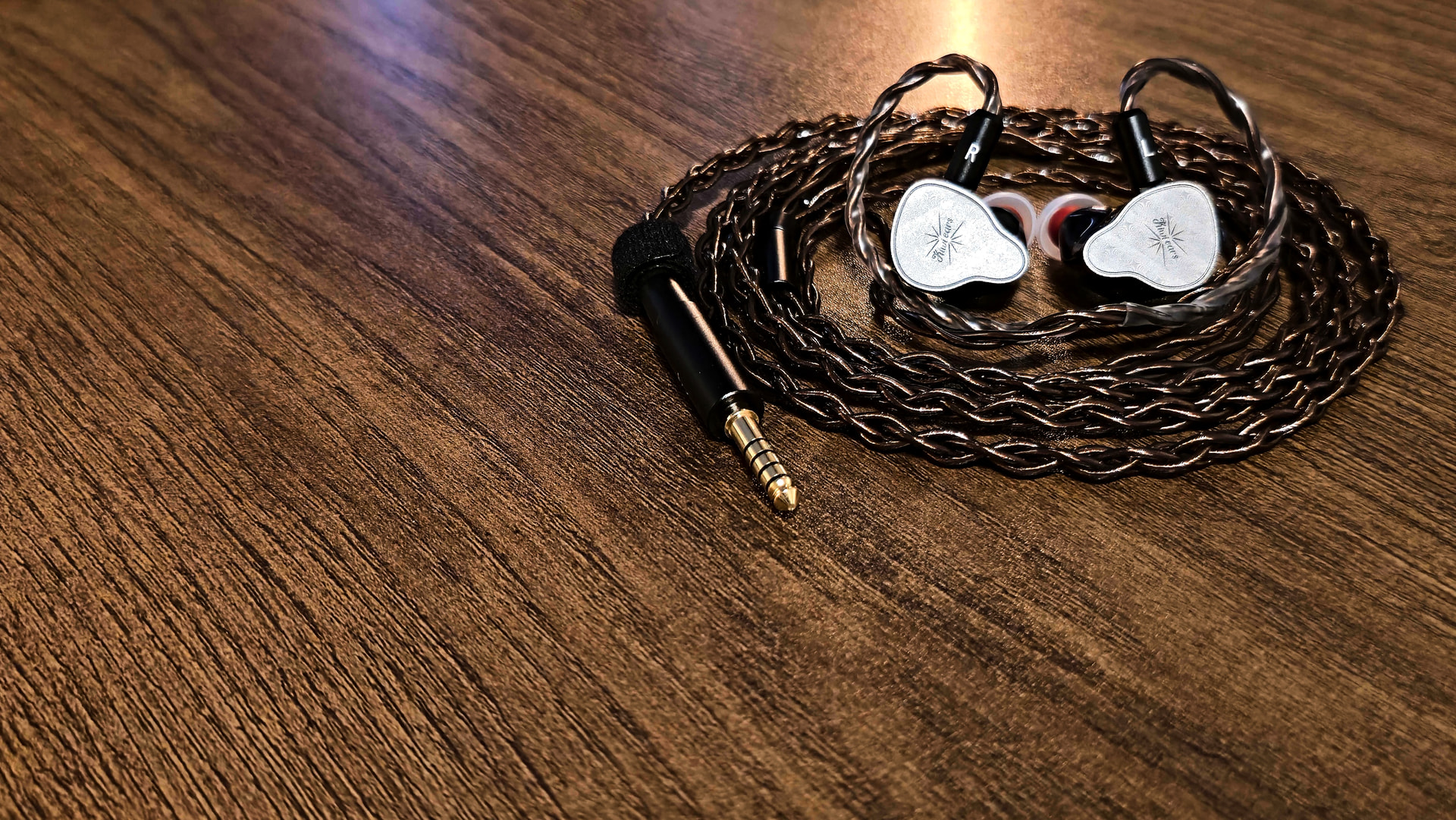
It came with a simpler matte grey faceplate. It is not made of metal. I do prefer faceplate of the original KE-4. This one look abit cheaper in comparison. But it is much more comfortable to wear. The longer nozzle extension and the non-protruding cleavage allows me to have a better fit and comfort.
It now came with a black leather like case with identical dimension to the original. But this time round, Kiwi Ears has kindly provided us with a swappable termination plug (3.5/4.4MM), instead of just having a fixed 3.5MM cable. The 4-core wiring looks prettier in person. It is soft and not so prone to memory. Inside, they have removed the KiwiEars Flex Silicone eartips with some generic black silicone ear-tips sizing from S to L. Aside from that, there is also a replacement filters just in case one of your filters got clogged up.
↓
→ CONCLUSION ←
I am genuinely happy with the improvement they have made with the KE4-2. Firstly, it is much more comfortable to wear. And finally, it came with a 4.4MM BAL swappable cable option. Sonically, it still follows the curve of JM-1 tuning. But, the bass presentation now sounds more cohesive and better textured. Whereas the treble part is much clearer with darker background. The original KE-4 often has this constant haziness about it which I don’t like. The vocal favours the lower half of the mid-range and the upper mid-range is more laidback in nature. And the overall technical performance sounds befitting of its price-point. It is not outstanding, but it is not underperformed. More importantly, it is quite an enjoyable set to listen despite its neutral style tuning.
↓
2026 KIWI EARS KE-4 MK2
PRICE : PERFORMANCE [$199.99] : ★★★★⯪ (9.0/10)
BUILD & PACKAGING [BASED ON PRICE]: ★★★★ (8.0/10)
COMFORT : ★★★★★ (10/10)
PERSONAL ENJOYMENT (BIASED) : ★★★⯪ (7.0/10)
OVERALL : ★★★★ ( 8.5/10)
1-2 ★ - Appalling! please avoid this
3-4 ★★ Subpar offering, there are better options out there!
5-6 ★★★ Decent with some caveats! Not a bad pick! (CONSIDER)
7-8 ★★★★ Not perfect but solid choice! This should be in your shortlist. A nice addition to your collection. (SHORTLIST) (RECOMMENDED)
9-10 ★★★★★ One the best in class! You should go right ahead & buy one! A must have! (BLIND WORTHY)
↓
PROS:
-
Bold sub-bass presence with punchy feel.
-
Clear, clean mid-range with adequate vocal dynamics.
-
Neutral, refined highs.
-
Solid detail & resolution for the price.
-
Proper technical chops.
-
Good balance of tone and tech.
-
Improved comfort and accessories.
-
Well priced.
↓
CONS:
-
Slightly lean and laid-back upper mid-range vocals.
-
Can sound a tad clinical on slower paced music.
-
Treble could use with more bite.
↓
Driver Configuration: 10.0MM Bio-Cellulose DD + 2 Custom BA + 1 Microplanar.
MSRP: $199.99
↓
DISCLAIMER
~ This unit is sent by Kiwi Ears for a review.
~ Assessment took after 3 days of running process.
~ Running on stock 4.4MM BAL & Spinfit CP100 (M)
↓
Thanks for reading! ╮(╯▽╰)╭