LETSHUOER SONATA
Vanish into the sound to uncovers the unheard…
1) Full In-Depth Review.
2) Comparison vs Letshuoer EJ07.
3) My Discord community’s & My brother’s takes.
✧ ════ •IN-DEPTH REVIEW• ════ ✧
「SOUND-SIGNATURE」
It delivers a mild V-shaped sound profile with a well-balanced bass and treble. Vocals take centre stage that leans toward the upper midrange for a better sense of clarity. While the tonal balance can slightly varies depending on your source and ear tip selection.
↓
「BASS /LOW-END」
► The bass profile is elevated way above neutral lines. However, the boosting is done more towards the sub-bass region rather than lifting the of whole bass-spectrum in a linear manner. Having its bass orientation leans towards the low bass, it sounds well integrated into the overall mix that feels neither overwhelming nor underwhelming. It has a good sense of clarity, speed, precision and control over its bassline. It maintains a well-balanced approach while keeping its naturalness in-checked, befitting the hallmark of a flagship model.
► The sub-bass though is not heavily lifted is perceptible. There is enough reserved power to create dominance in the low-end. It proves to have deep extension when trying to reach the lowest point the subline. Despite its fast and clean nature, it exerts enough pressure and sustain to realize its sub-bass components. There is a good sense of density and heftiness behind every element. When the rumbling elements kick in, you could hear it crawling swiftly from the darkest depth. There is a subtle oscillating vibration as it tries to reverberate gingerly against your eardrums. The boom effect is not excessive nor overemphasized. It resonates strong enough with adequate density, without overshadowing the upper frequencies. Bass-drops has a pulsing, rhythmic sense that can be heard and felt. Ghetto-bass has a decent springy quality when it bounces and rebound. At times, it can detect that intentional fuzziness or graininess when the deep bass elements get distorted.
► The mid/upper bass section glides slowly upon transitioning towards mid-range. It does bleed ever so slightly on the lower mid-range which are responsible for shaping up the overall balance and warmth of vocals and instruments. Despite not having a strong level of warmth and thickness, it lays it fundamental groundworks exceedingly well. It provides adequate physical mass and presence to ensure music elements sound more substantial. The attack remains tight, well-bodied with a transient that is considerably wider than its subline. As a result, percussive playback often come across having good dynamic drive with realistic tactile feel that makes its bassline a much more characterful.
► Kick-drums often leave me with a satisfying feel. The attack has this sensation of a soft yet deep punch that hits big, firm with immediate sharp, impact. Such playstyle adds a welcoming sense of rhythm and tempo to the music, keeping listeners feel lively and engaging.
► Drum-strike have good dimensions. In most cases, the slam often sound one-noted but not with the SONATA. You could hear the subtle movement of reflex and recoil of drum membrane as the stick bounces back. It gives the low-end strike these elastic dynamics rather than just static bonk and thud. However, as it strikes upper in the bass, it will lose some its attributes.
► Bass line guitars have a clear, distinct reproduction of sound. It seems to have good pitch-articulation allowing it to render each musical notes across the fretboard rather than hearing a monotonous “hum” and “drone”. It got just about enough sustained-tone and warmth to keep low harmonic sounds natural and purposeful.
► Before I forget, its bass performance can varies depending on volume loudness or amplification rate. At the softest volume or lower-gain mode, the overall bassline does come across sounding more polite. Once it passes a certain threshold, it will starts to open-up and becomes alive. While I said that, it doesn’t need to be extremely loud or having the needs to feed it with a powerful AMP to bring most out of it. Regardless, power do matters here which is worth noting.
Overall, the bass has always been about texture and dynamics. It is not the type of prestation that is filled with enveloping warmth presence and atmospheric feel. Though, the bass-shelf has been dialled in to have a tasteful amount of boost, at the end of the day, it is still no bass-head set. On that note, it serves its purpose as a good accompaniment which makes the SONATA a rather engaging listen.
↓
「MID-RANGE /VOCAL」
► The mid-range articulation can give quite the eye-opening experience. It is one of the very few earphones that I’ve tried that can depict the sense of the voice’s placement in a three-dimensional way. It allows the listeners to envision the sense of depth and layering to the stage. As a result, it renders vocal & instruments positioning extremely accurate. The vocal image can expand and contracts depending on the venue. If it is in a studio, the vocal will sound closer to you. If it is in grander stage, they will stand further back. On top of that, it is able the trace the subtle left and right movement of lead singers while trying to distinguish the backing singers hovering behind at the same time. I find it truly impressive.
► The mid-range resolution is nothing short of competent. The vocal clarity is great. The singer’s voice sounds precise and well-defined. Each word or note can be easily understood with no muddiness or distortion. It’s resolving power is effortless. It allows to expose the delicate texture, tone-shifts and overtones with great finesse. And it does it so naturally. It feels authentic rather than augmented. It performs like a high-end audio system should, offering an immersive listening experience.
► To my ears, it has a well-balanced tonality with a slight upper mid-range emphasis. On most cases, the voice come across sounding life-like with neither too much emphasis from the lower or upper harmonics. It possesses a natural warmth and note-weight that allows its mid-range elements to have solid fundamentals. One could expect a consistent, well densified sound across the range.
► MALE/LOW-PITCHED: Warmth characteristic is often sought after for bass and baritone ranges. Due to its upper mid-range biased, it tends to make the lower vocal registers sounds slightly thinner and leaner. By giving it a more focused tone, it can lack a certain richness and fullness that a more typical, lush vocal playstyle might exhibit. The truth is, that is how a real voice sounds like. It has none of that overly thick and dense quality that some of us may desire. Thankfully, from baritones to tenor, the thinning effect becomes significantly lessened. The vocal texturing is just next level. It can capture delicate nuance on vocal phrasing without fail. The raspy, gritty, breathy, airy quality to the voice has been masterfully layered in the highest quality possible. It didn’t occur to me with any sort of sharp-edge, harshness or pixelated graininess on vocal transient. On top of that, the dynamics and delivery just felt lively and authentic. No matter what range it is at, the micro-dynamics is beautifully depicted. The transition from a deep, resonating, low - range to a powerful, soaring voice is just sensational. They showcased a wider vocal range than its female-counterpart. It sounds commanding and conversational that invites you to sing along. As result, I enjoyed male vocal performance for more of the time, as the emotional connection feels more direct.
► FEMALE/HIGH-PITCHED: Generally speaking, female vocals will sound more to the fore unless the music is mastered otherwise. Be it contralto or soprano range, their vocal weight and body is consistently better than male voices. Highlighting vocal complexion (breath, husk, grit etc) sounds just as impressive. However, as I was shuffling my female vocal playlist. I find myself not enjoying it as much as I did with male vocals. Their female vocal approach sounds more minimalist. "Clarity and “Simplicity” are the two words that crossed my mind when trying to describe its nature. They tend to have a cleaner tone, focusing more on natural quality of the voice rather than elevating the effects or techniques. It is more about delivering a clear, direct message efficiently and effectively. It is less so about showing-off their vocal prowess. Meaning, the singer the does do not play around with its ornamentation (pitch-slide, runs, vibrato) to its fullest potential. It may feel more restrained and controlled as the voice lands higher in the range. With breathy/airy vocals, the soft trailing-end of whisper is more tamed down. The voice extension is not completely free from roll-off. It just doesn’t have the same level sustain nor does it bloom like its male-counterpart. On the bright, it handles shouty or screamy vocals exceedingly well. Hence, on that pursuit (precision & control), some parts of the emotional or raw connection may have been lost in the translation. To many, this will sound more correct but to my ears, being correct doesn’t necessarily means more musical. Despite my criticism, their performance is not what I would considered as lifeless or soulless. The reality is it is none of that sort. I am still able enjoy them as it is. It is just shy from being a female vocal specialist. If you’re looking for an intoxicating female vocal performance or what my friends would call a “female vocal poison”, then this is not it.
► However, if I were to nit-pick, the excessed energy and volume on the upper mid-range (2-4kHz) can cause upper register vocals to sound slightly higher-pitched than usual. If you’re sensitive to this region, be sure to do ear-tips or source rolling to mitigate this issue. If nothings work, you could consider tweaking it via equalizer by lowering its 2-4kHz region by 2-3DB. And that should solve this issue completely. Additionally, it isn’t particularly forgiving when it comes to sibilance. While it remains tolerable, the effect is still noticeably prominent to my ears. Again, with abit of synergy tweaks, it is mitigatable. Having said that, most of these issues are related to “ACG”, “J-pop/K-pop” music’s as they have the tendencies to emphasize on the upper frequencies and doesn’t always have the best of mastering. Which is also apart to be blamed. With other genres, it can neither be here nor there.
► The acoustic guitars will immediately grab your attention. Every pluck has a distinct, snappy bite followed by a well-defined overtone. The “squeak” on finger slide across the windings is clearly captured.
► Violin plays on the other hand goes for a more balanced approach. The resonating high notes have a smoother, sweet sheen while retaining the necessary bite-edge during aggressive bow strikes.
► Pianos is simply breath-taking to listen to. Every note-hit is highly tactile with exceptional dynamic-range and note-weight. You could hear the fine micro-nuances—the subtle mechanical tap when the hammer striking the strings as well the release of damper pedal by the pianist. It makes the instrument physically present in the system.
► Quite frankly, I am genuinely astonished with the way instrumental elements being rendered. More so than its overall vocal performance. This makes it’s a delightful set to listen to instrumental or orchestra tracks.
With that said. The SONATA may not be a vocal specialist through and through. But it will high likely impress many mid-range enthusiasts out there. The high-fidelity trait of it will put listeners off guard.
↓
「TREBLE / HIGHS」
► The treble falls more along the lines of bright neutral tuning. In listening experience, it does not feel all that bright. The warm hues coming from the lows do help to counter the top-end brilliance. Even with brighter pairings, it is still listenable. Most of the brightness do come from the lower part of the highs. Air-presence were given adequate bump that sparks a pleasing, delicate shimmers in the upper registers.
► The treble is not the most even with its peaks and troughs. It does response smoothly, but it is not buttery smooth. It avoids piercing or strident effect well. There is no excessive loudness or peakiness that could cause discomfort or pain to your eardrums at normal listening volumes. It managed to control those splashy cymbals or hi-hats without over dampening them. If there is any tonal flaw, it would be the sibilance part of it. It sounds less forgiving on tracks that emphasized on “S,” "SH,“T,” and “Z” vocal consonants which happens more frequently with female vocalist (Especially with “ACG” or “J-pop/K-pop” genres). In all fairness, it doesn’t hit your eardrums like a sharp, whistling jabs. With the right ear tips and a deep-fit, this issue can be reduced or resolved.
► It’s well-extended treble allows it to present fine details effortlessly. It reveals subtle, low-level high-end elements like the faint streamline of zinging, scrapping of guitar picks or the low-noise of recording microphone—without needing to crank the volume. Amazingly, it doesn’t feel like a force-fed detail. It doesn’t feel artificial with its clarity. Unlike some hyper-detailed gears which can rapidly causes listening fatigue (like the MystiCraft HEX or Elysian GAEA for example). On top of that, it doesn’t sound harsh or grainy. It is just smooth and clean. If you’re worried about “BA timbre” or metallic sheen. Such common artifact is not present here, at least to my ears. The high notes don’t have those unnatural thinness, dryness, plasticky, metallic timbre. Overall, they have good sense of note-weight and density.
► Hi-hats have a rather accurate sound reproduction. It sounds fast, snappy and crisp while retain the brassiness of its timbre. Even when hitting constantly, it doesn’t sound fuzzy or smeared. It can distinguish the subtle, rapid variations in strike patterns on a closed hi-hats well. It “chick” at the right amplitude. It doesn’t etch. There is no lead to treble fatigue.
► The attack and articulation of cymbals is one the most natural I’ve heard in an earphone. The leading-edge of note as the wood strikes the metal has a fine blend of smoothness and crispiness that sounds like an organic metallic texture. It can differentiate the rhythmic “ping” of the stick tip from the underlying “wash” of a continuous ringing of vibrating metal. It doesn’t blur these together into messy hiss. The explosive, instantaneous energy of cymbal crash has just right the compression to not sound abrasive. It generates cymbals complexity with wide spectrum of overtones. The shimmering “psssssh” sound has incredible flowy character with natural mass behind them. It doesn’t have any negative traits like sounding harsh or glassy like some overly analytical gears would exhibit. Because of that, I rather enjoy listening cymbal plays with it, which I can’t say the same with many other set I’ve encountered.
► Drum-snare have good dimensions. The “pops” and “cracks” when it snap has a clear, startling, gunshot-like behaviour. It doesn’t overshoot nor does it round off the impact. It slams with good physical force, with a nice tactile feel when the snare hits. All thanks to its good macro-dynamics.
► I am very satisfied with its electric guitar performance. It hits the goldilocks of sounding musical, natural yet resolving. The electric guitar pulls with effortless progression, bringing a dense, almost physical weight to the sound. Even at its most heavily driven, the guitar solo retains a smooth, creamy quality in the upper register, letting every note to flow seamlessly. Due to its resolution effect, I could pick up each individual doing their own part subsequently; the guitar overdrive solo, distorting and cranking the vacuum tube amplifier, guitarist that plays the harmonic bloom, while panning and anchoring them in the stereo mixing.
► Glockenspiel known as the mallet strike goes for a more precise and controlled playstyle. It still renders the tone in a crystalline with a bell-like dings. However, the harmonic overtones don’t give off that sense of limitless acoustic space as it fades away.
► When it comes to electronics or synthesizer component, it is not the most consistent with its playback. If it lands on the right spot, those crunchy, lo-fi, fragmented, bit-crushed or pixelated element does give away that distinct digital roughness which mimics of that video game like texture. To the contrary, some of the techno or cyberpunk or sci-fi sound effect can come across slightly darker, softer and more reserved.
► However, it is not all perfect. If you’re a loud volume listener or loved to listen to highly composed treble music. There is a potential hotness coming from the lower treble which can cause a slow burn fatigue. Especially, if you’re a treble sensitive person. Aside from that, I find it to be less forgiving on those poorly mastered or recorded tracks. It tends the highlight the negative nature of your music, but it does it in a way without distracting. It still lets you enjoy your music. With that out of my chest, all those mentioned flaws only happened on certain occasions which is around 10-15% of my test-tracks. Whilst those are inheriting flaws, I wouldn’t deem them to be a dealbreaker. Most of the shortcomings are mitigatable with different pairings (ear-tips, DAC/AMP or even cable if you’re a snake oil believer)
Throughout my assessments, the treble performance does alot more impressive things rather than showcasing its weakness. If I weren’t being hypocritical with my listening, I could just gloss these minors flaw easily. Because at the end of the day, it is still a top performer.
↓
✧ ════ • TECHNICAL PERFORMANCE & OTHERS ASPECT • ════ ✧
The STAGE recreation is without a doubt, one of its key strengths. It renders it in a such a way that acoustic space feels holographic. The sound-field can expand and contracts depending on the venue. On average, the stage extends approximately 2-3 inches beyond the ears horizontally, with believable out-of-head depth, placing lead vocals in near-field elements while separates backing singers in the far-field elements. Meanwhile, instruments will fill between gaps in three-dimensional way with distinct spatiality.
Its IMAGING capability is uncanny. The localization is so accurate and pin-point sharp that it can projects each individual instruments, vocals as well as panning effects at a specific coordinates and time frames across the soundstage. It gives off the psychoacoustic illusions as if you’re inside or looking at music in real-life.
The INSTRUMENT SEPARATION is just as potent. With the help of its stage-dimension, sharp imaging, darker background combined with well implemented crossovers handling each frequency-band, gives each element of sound to have their own “spatial boundary”. Even on a more challenging tracks, the delineation of sound is well maintained with good consistency.
DETAIL RETRIEVAL & RESOLUTION is tremendous on these. The macro-detail can be heard without straining your ears. While micro-detail can be traced effortlessly at safe listening volumes. It is extremely capable to retrieve non-musical detail/ artifacts; such as the singer’s breath, the finger slides on the guitar, twang on plucked instruments, note page being turned, the thud on piano pedalling, the reverberation effect of acoustics room/hall, the low noise on microphones and the list goes on. Every nuance sounds genuinely laid out without feeling forced or aggressive. It doesn’t give off that artificial clarity where most of the "fake detail” comes from the treble that is heavily boosted which eventually leads to long-term fatigue. Most system today can extract fine details well but not many have the same level of delicacy and finesse like the SONATA.
From a DYNAMIC standpoint, it can denote common marking from piano (soft) to forte (loud) with ease. But what makes its enjoyable is how it depicts its dynamics terms in actual replay; the gradual rise and fall on vocals, the sudden shift in playing volume on instruments or the ability the capture a broad range of emotion from soft, quiet passages to powerful, dramatic moments. It can be calm when it needs to. It can be engaging when it must. There hasn’t been a moment when the music felt lifeless or overly energetic. The pace, rhythm and timing (PRaT) is nigh excellent. It flows with the music well.
DRIVER? It uses dual custom dynamic-drivers arranged in an isobaric push-pull design handling the low-end. The mid-high frequencies are performed by 4 Knowles Balance Armartures. At ultra-highs, the quad Sonion EST drivers will part take. The 4-bore internal acoustic tube is then structured into 3-way crossovers, channelling a highly cohesive sound with almost zero timbral contrast or phase misalignment or disjointed decay. It is one the most unified sounding “Tribrid” setup I’ve ever experienced.
SYNERGY? Having to drive 10 high-quality drivers on each side does requires roughly 10-15% more power to drive at my normal listening volume. But that doesn’t mean that it is power hungry. It just requires decent amplifier to drive it at the bare minimum. Of course, it will scale with higher-end DAC/AMP. In fact, it will response quite differently on different sources. Hence, each listener will unlikely have a similar experience. The bottom line is, it is not that hard to drive but it will scale with greater DAC/AMP.
PRICE? Truthfully speaking, if I were to judge it from sonic performance alone, the SONATA should be hovering comfortably around $1500-1800 by today’s standard. However, if I were to factor its premium build, generous accessories and top-tier packaging all together, the $2300 price-tag does make more sense.
✧ ════ •BUILD/ PACKAGING/COMFORT• ════ ✧
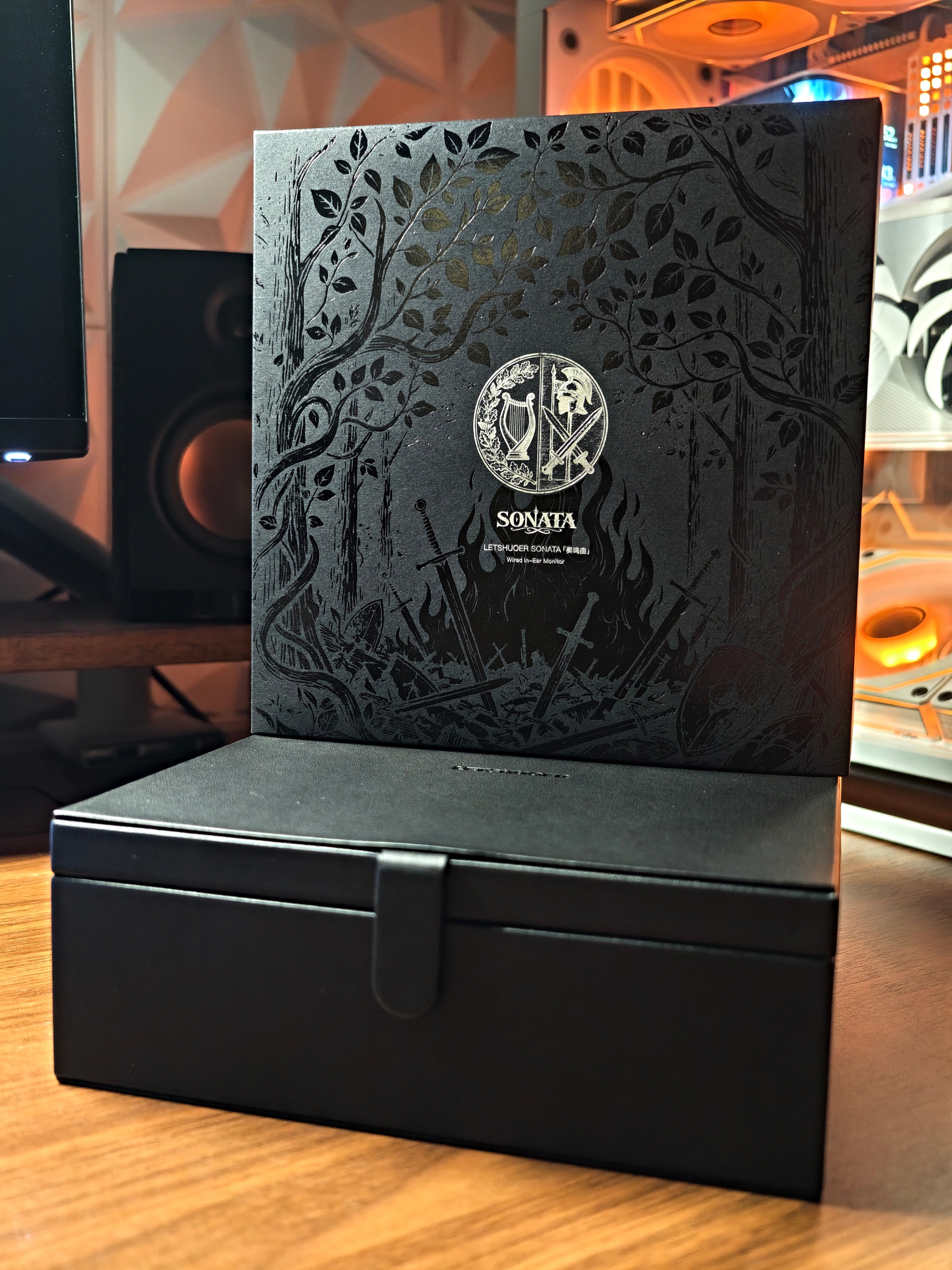
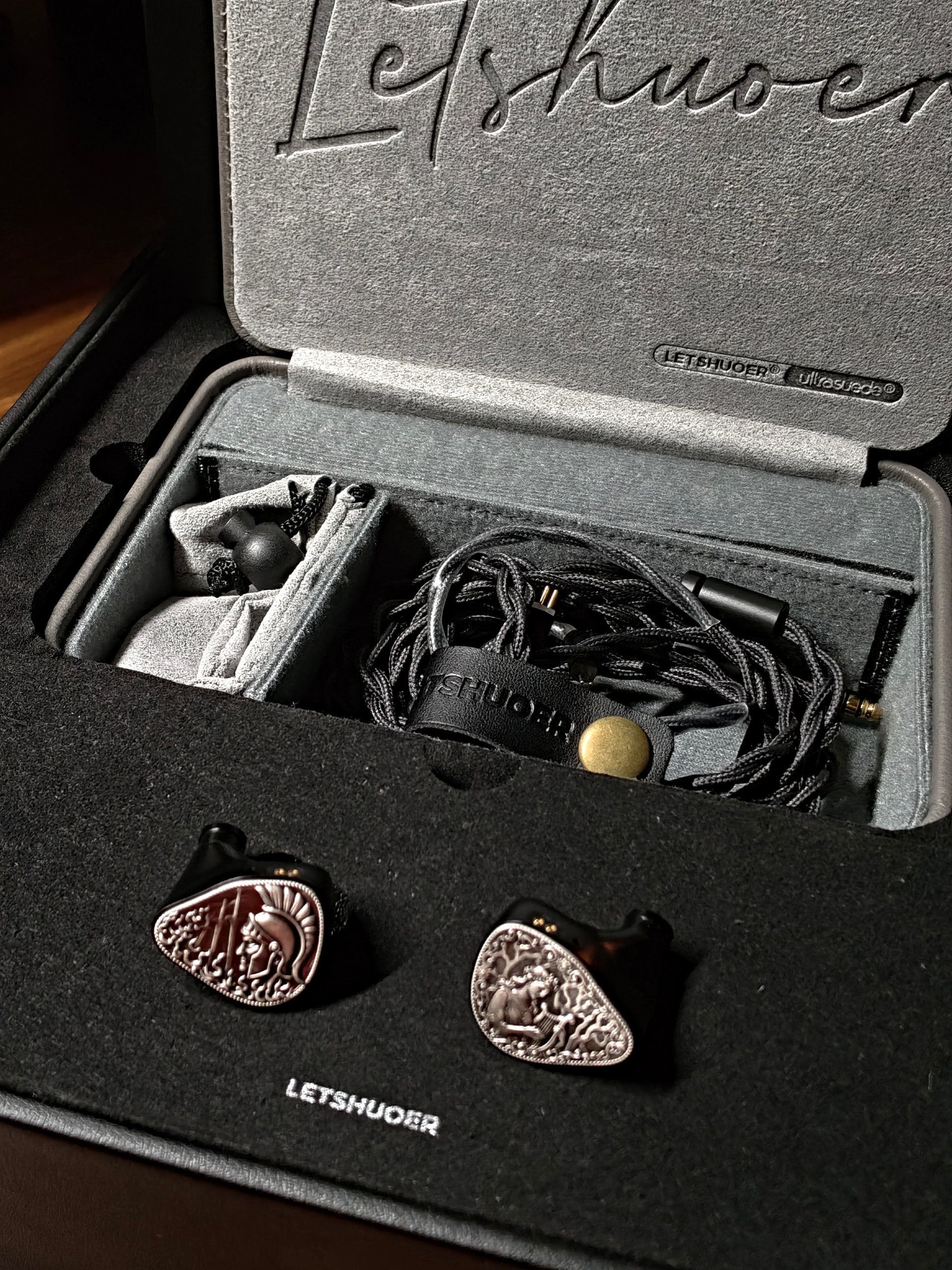
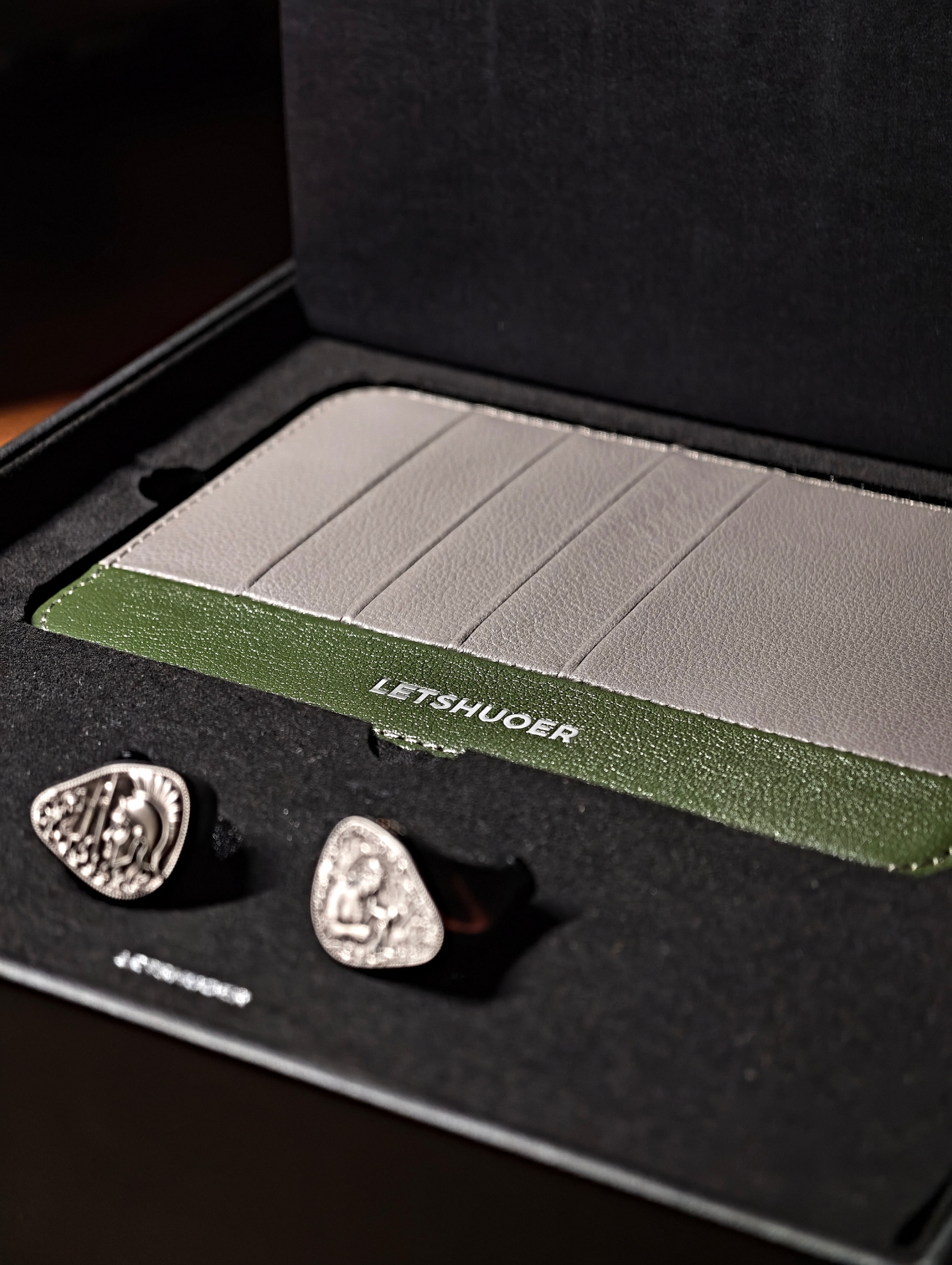
The unboxing experience is great. You’re greeted with a huge black leather box with a Letshuoer logo embedded on top. As you open it, you’ll spot two beautifully crafted earpiece rested in their own slot. Inside, there is a leather (grey & green colour) that is spacious enough for you to put both the earphone and cable neatly. Letshuoer has kindly provided us with a tiny pouch to protect your beloved earphones from knocking or scratching each other when they’re placed inside the case.
As for the stock ear-tips, there are three type of ear tips (Bass,Vocal & Balanced) sizing from S to L. In terms of sound-profile and comfort, they’re just alright. I prefer using Spinfits CP145/CP100 or Pentaconn Courier Alloy ear tips for the best fit and seal as well sonic performance.
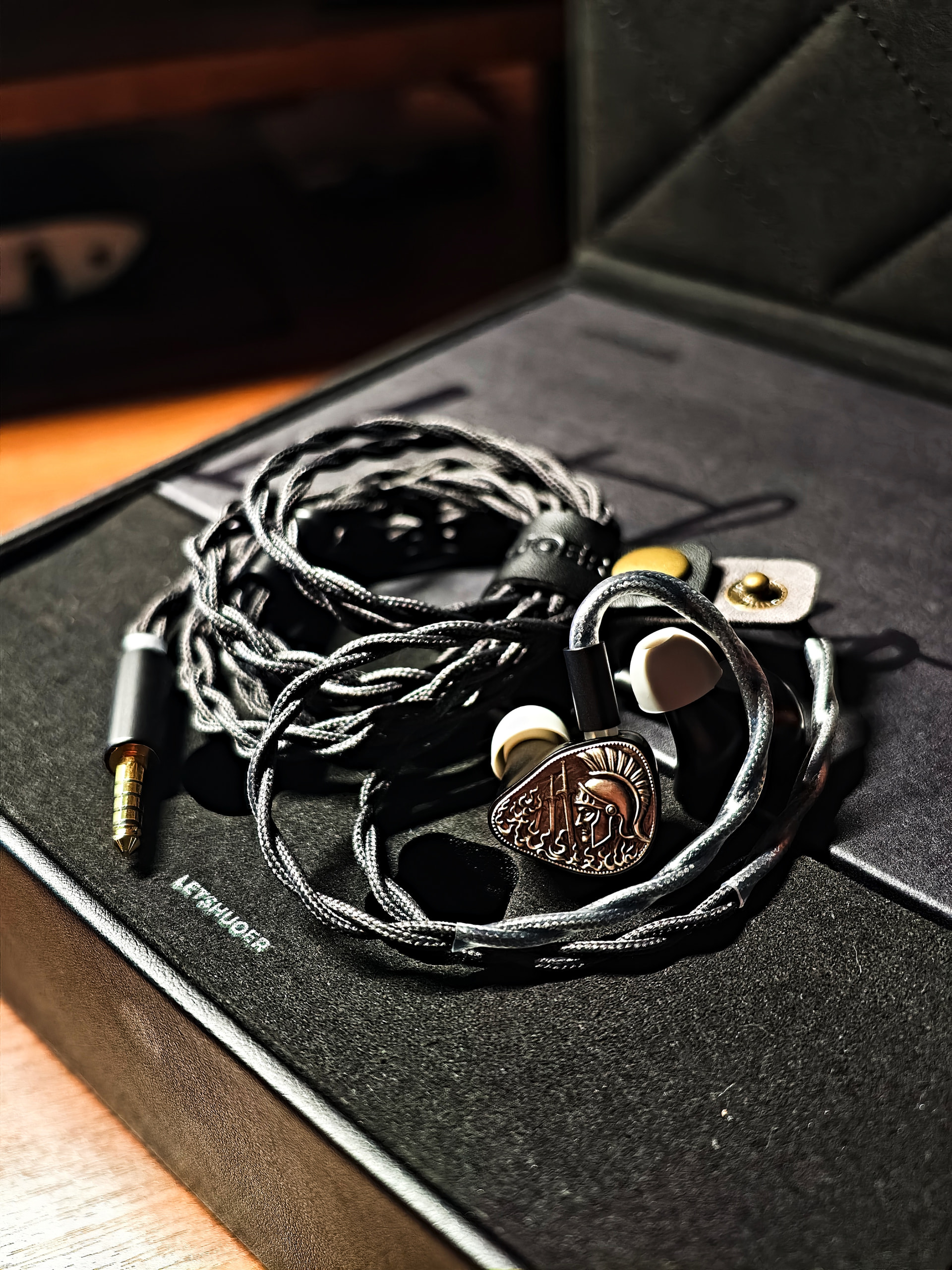
The stock cable could be better though. It is featured with 280-core cloth braided, silverplated-copper cable with a fixed 4.4MM BAL plug termination. In terms of sound quality, it is excellent. It provides a good signal with high fidelity transmission. However, it does not behave like a premium cable should. As you wrap and unwrap it for continuously, it will starts to show its kink. By nature, it is quite stiff and very prone to memory. Microphonic issue is given with most cloth braided cables. The stock cable is just a mismatched.
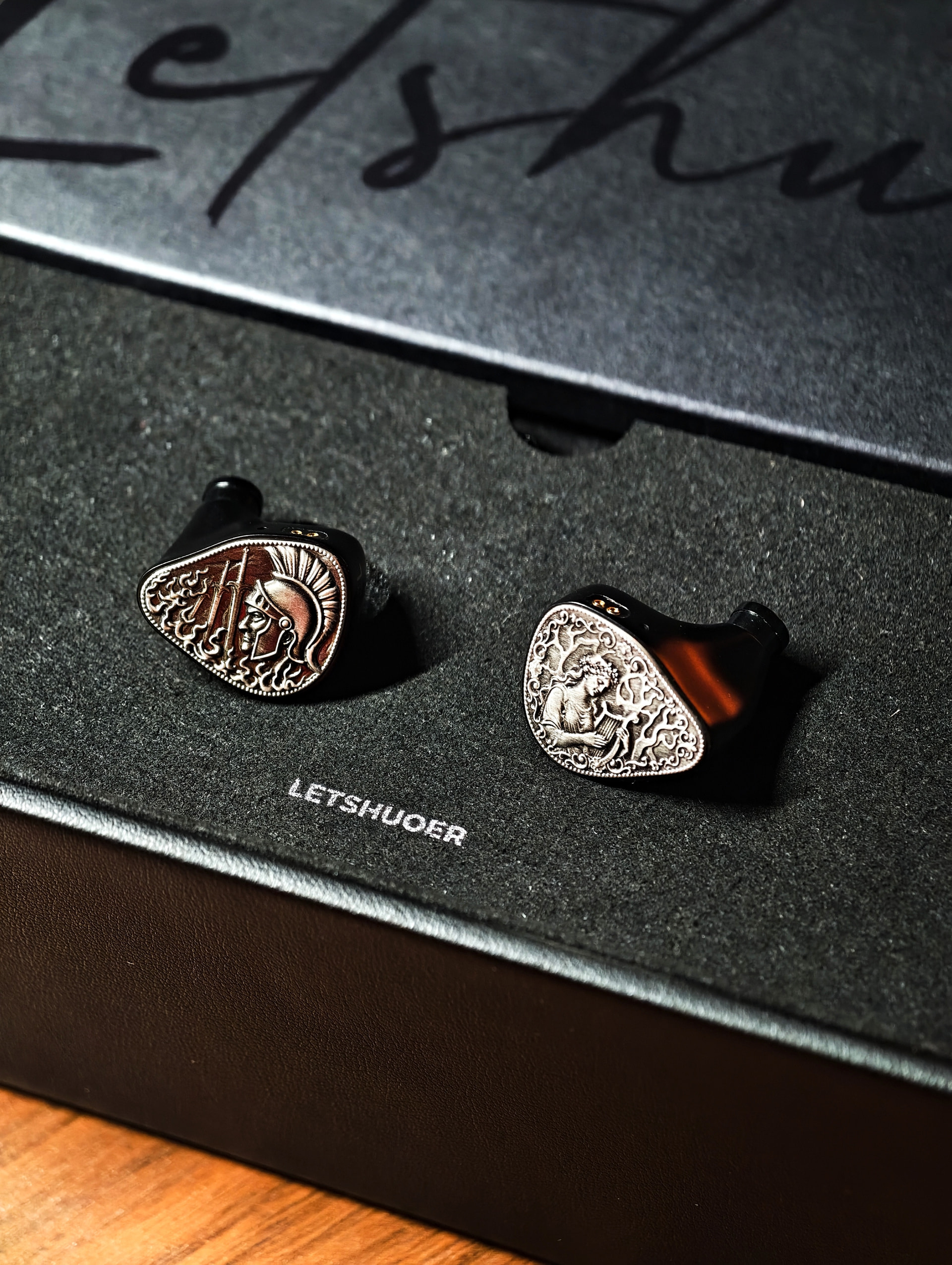
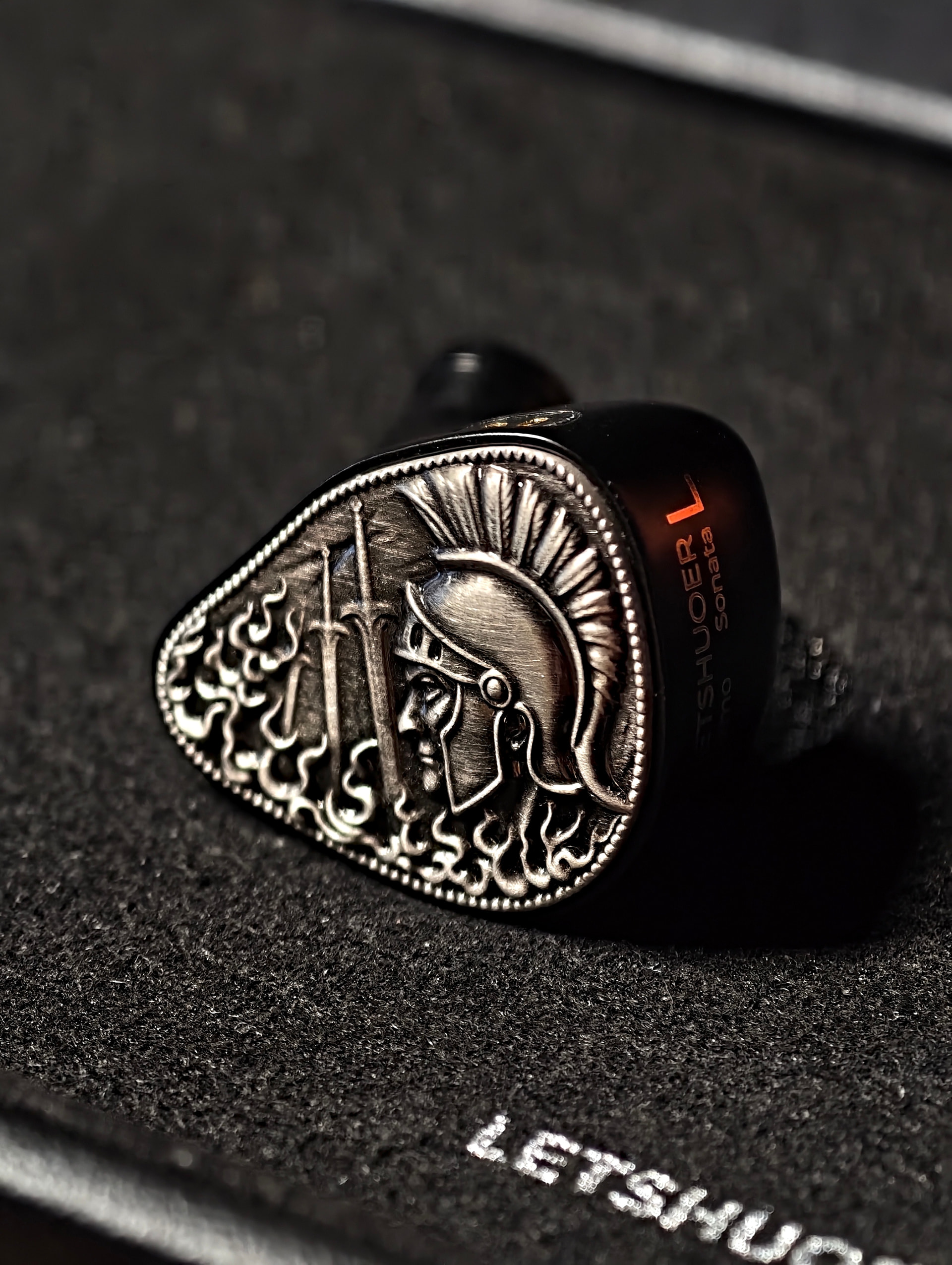
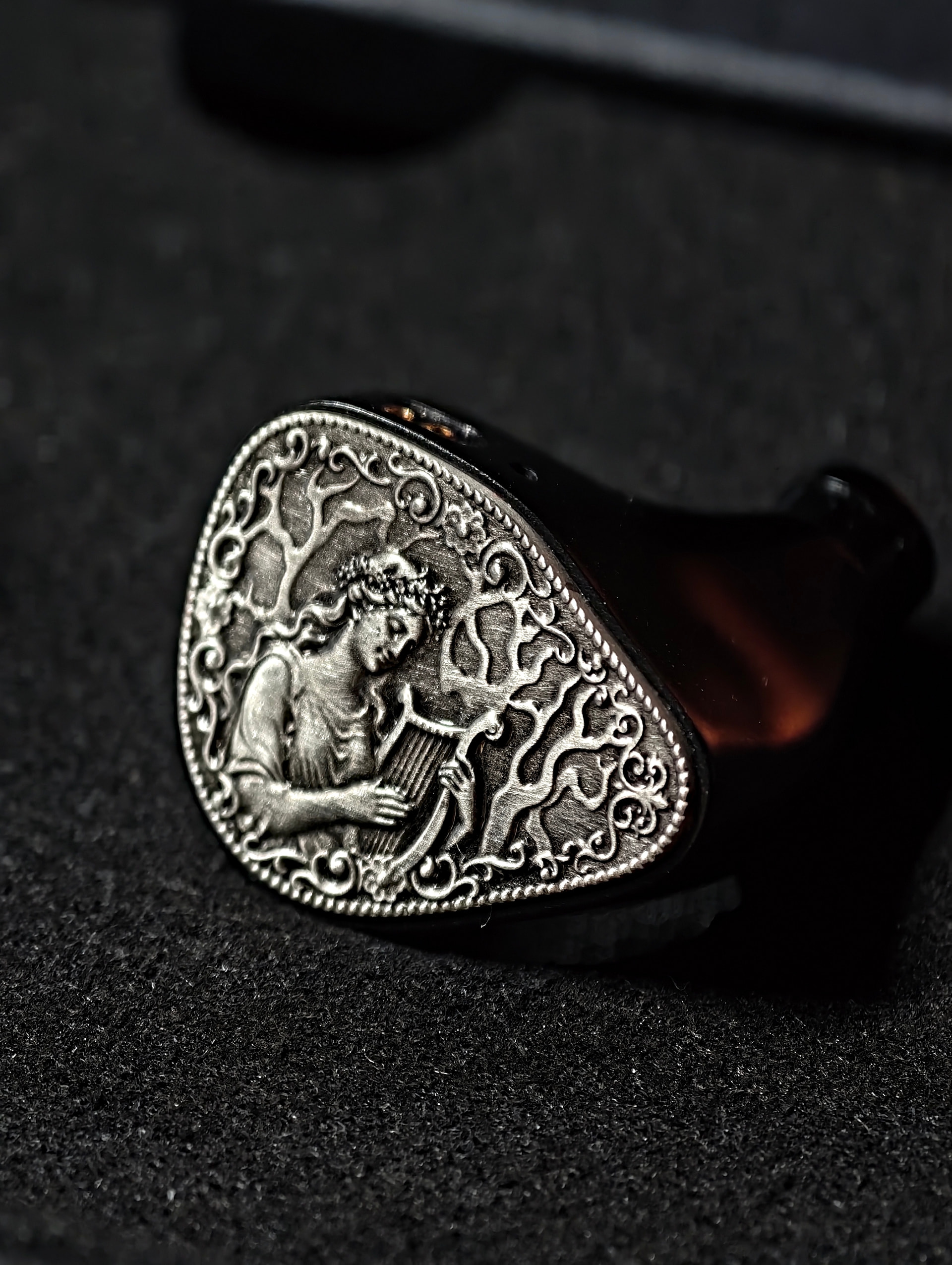
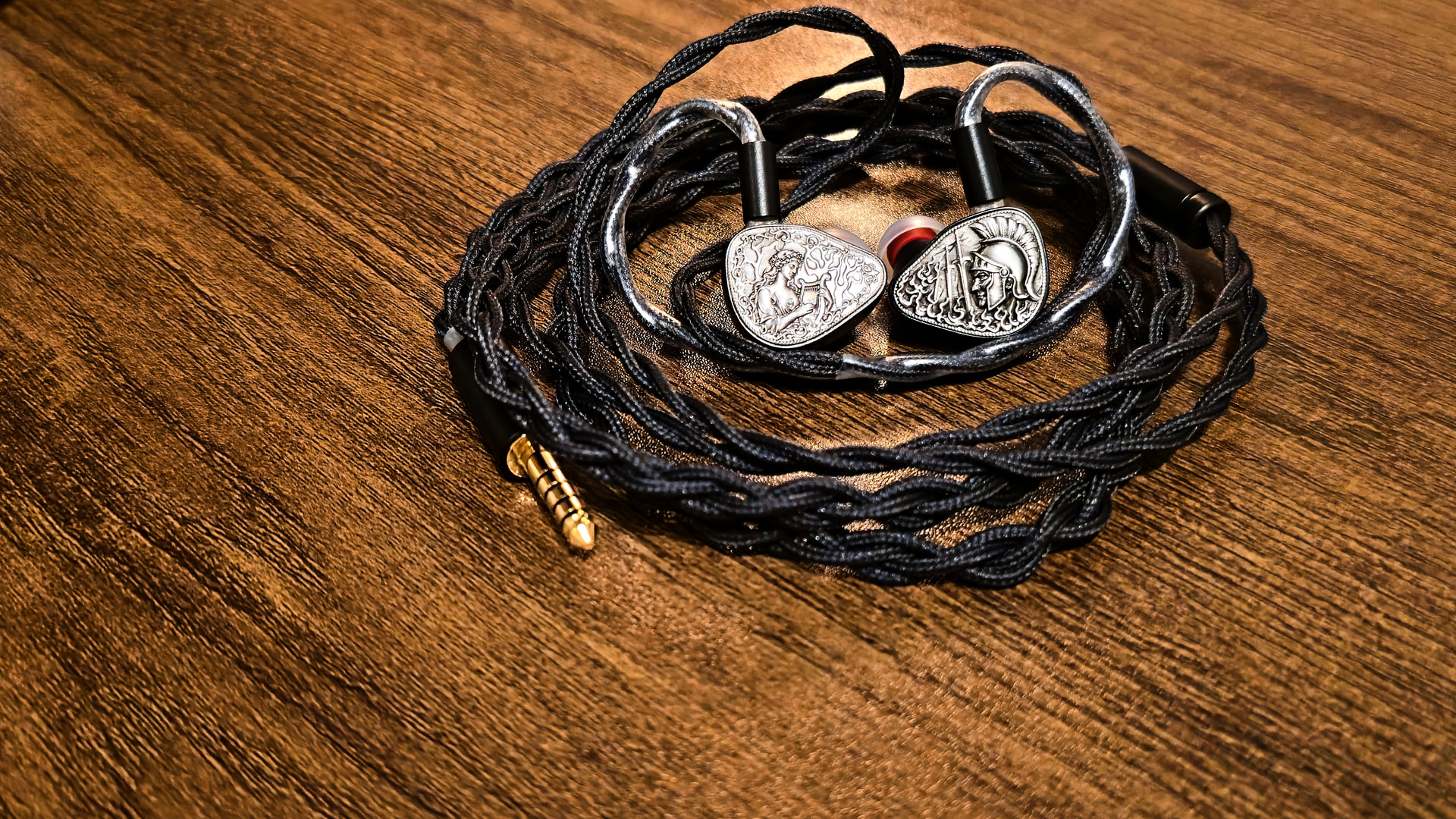
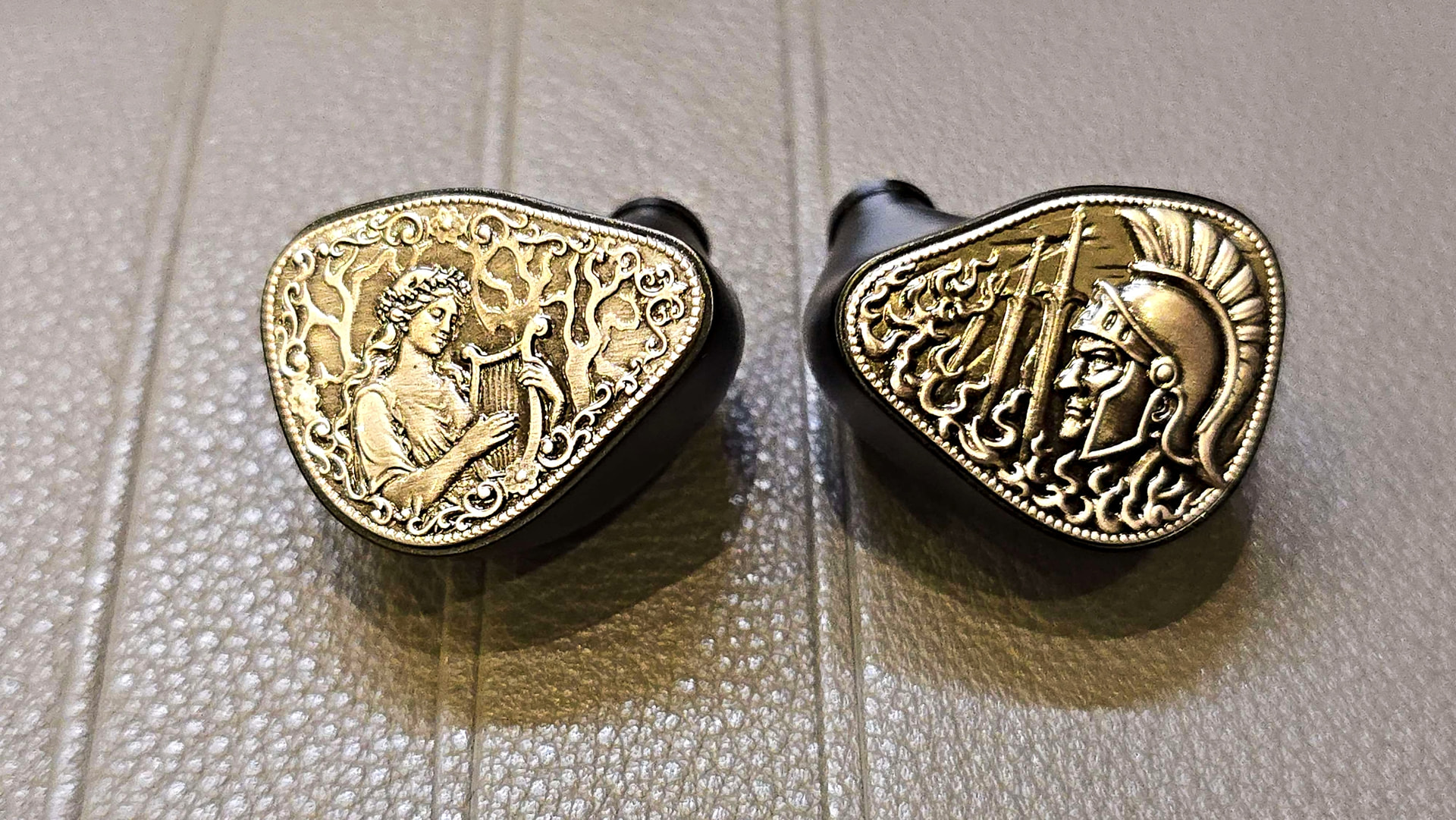
And finally the earpiece itself. Aesthetically, the faceplate reminds of a “Royal Selangor” pewter product. The vintage art design seems to carry a deeper symbolism. On the right-side, features a harp-playing woman (Aria) symbolizing love and artistry. While on the left side, the Romanic armoured warrior represents peace and journey. Combined, it becomes an interpretation of eternal theme of love and peace. In person, it is beautifully crafted. The earphone is of medium-sized fit with a titanium shell that is slightly on the heavier side. The ear tips used will be dictates the comfort level of your ears. The deeper it sits in your ears, the lighter it feels. Regardless, it is one of the more comfortable earpieces I’ve tried coming from TOTL sets. It is not too big, it is not weirdly shaped, nor it is too heavy to be worn.
↓
So how does it perform up against the legendary Letshuoer EJ07?
HEAD-TO-HEAD
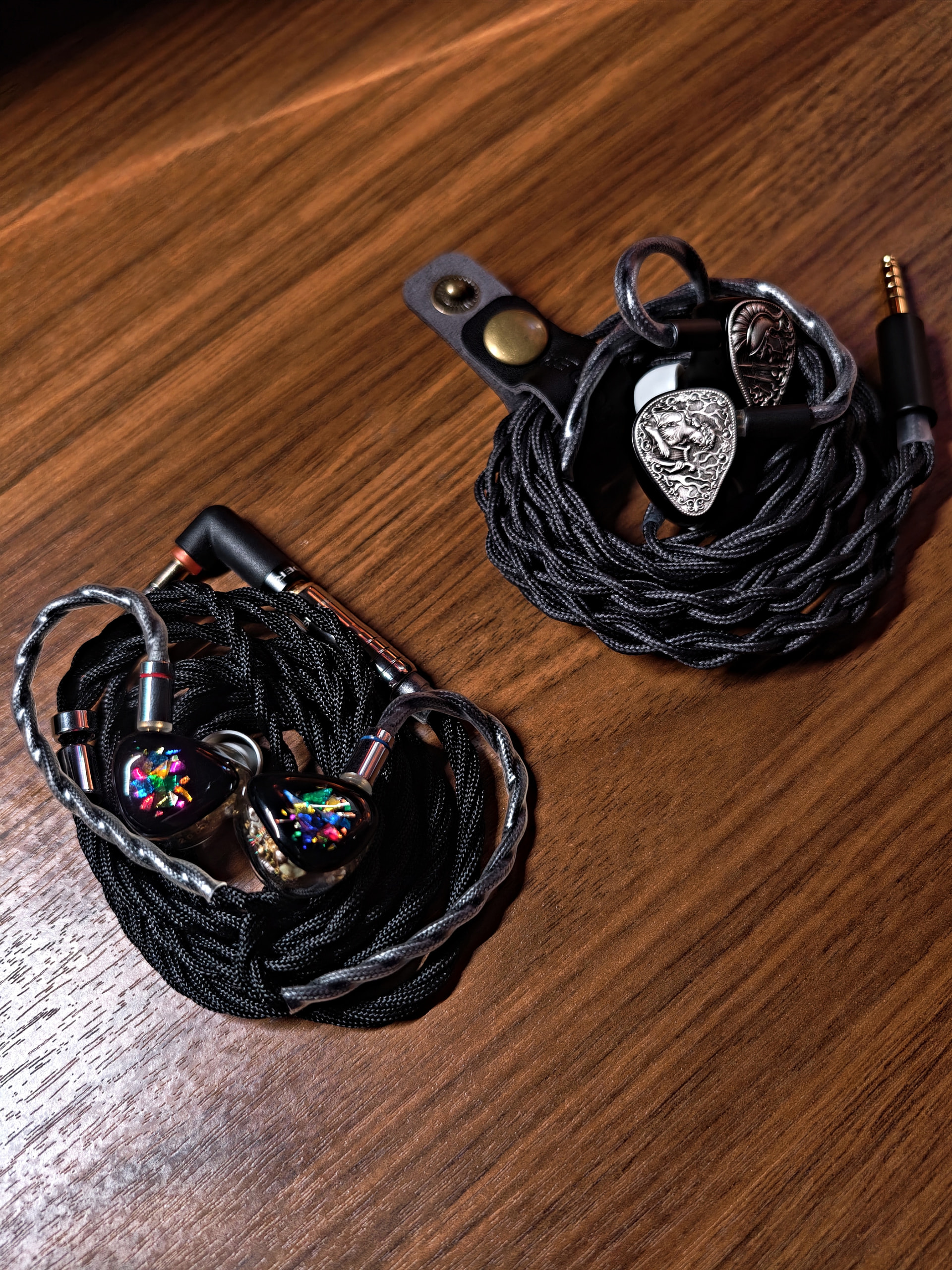
2020 LETSHUOER EJ07 (EJ) vs 2026 LETSHUOER SONATA (SONATA)
Both running on stock 4.4MM BAL cable and Letshuoer EJ07 stock silicon eartips.
https://www.head-fi.org/showcase/letshuoer-sonata.29381/review/44886/
↓
" The legendary EJ07 has this immersive and smooth signature that is not easy to be replicate. Which means the SONATA can never replace the EJ07 as some people might wish it to be. The SONATA is just a different beast all together. It is more technical; it sounds more engaging and, in many areas, it does sounds more natural. The EJ07 still has some special source going for it, especially with vocal centric tracks. The SONATA on the other hand, is the master of orchestras. Listening acoustic instrumentals or OST with it is just breath-takingly good. To my ears none of them is an all-round performer. They’re just skillful at what they’re good at. Which is why there is no perfect winner for this matchup other than price limiting factor."
=========================================================================================================
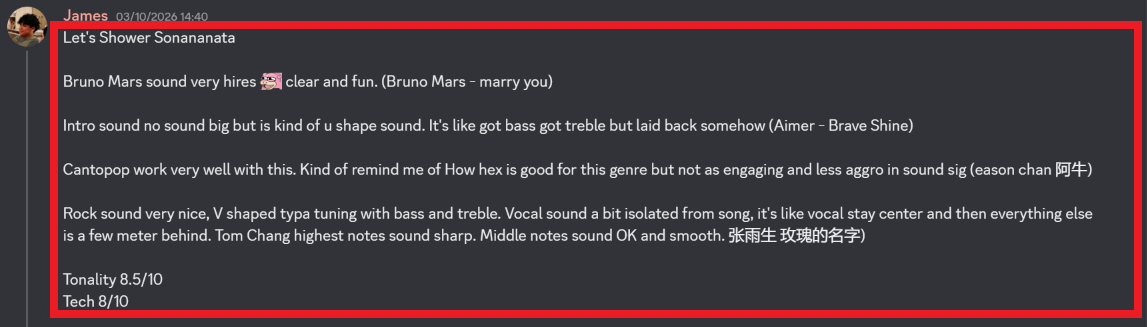
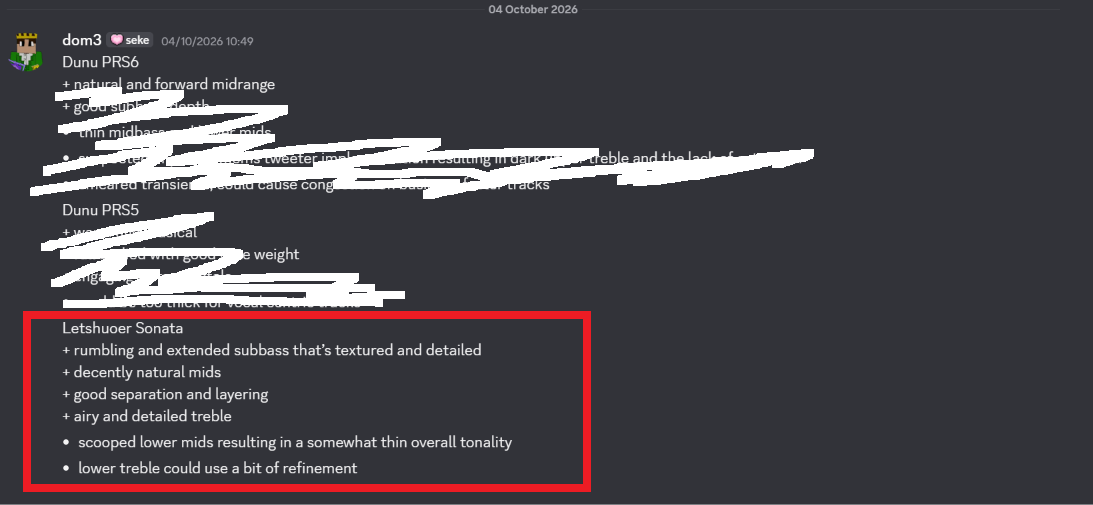
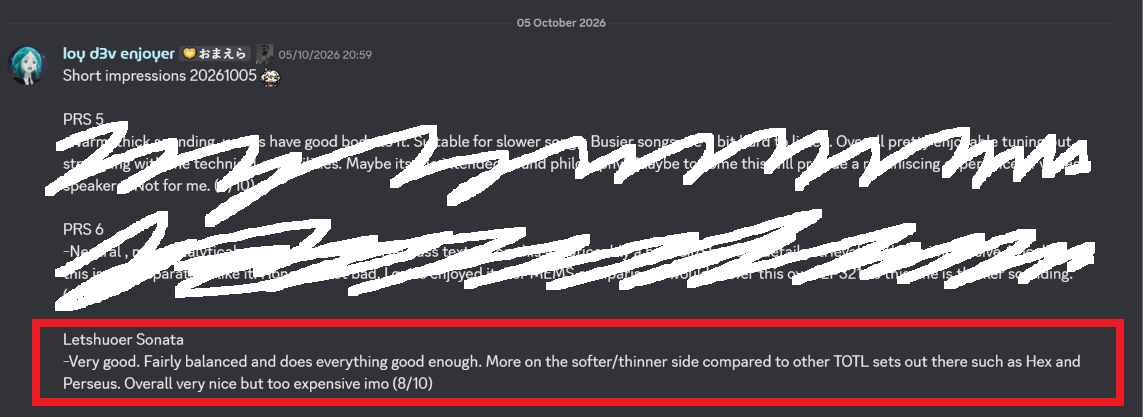
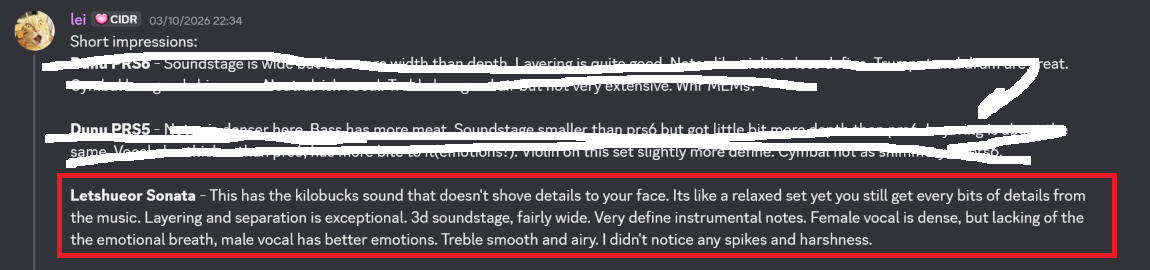
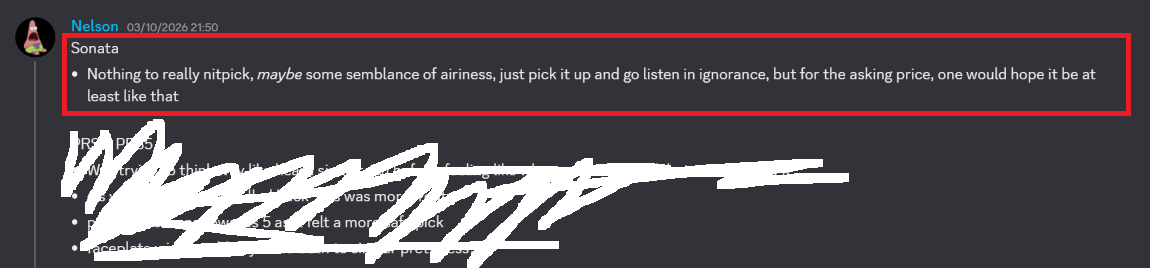
MY LOCAL DISCORD COMMUNITY TAKES
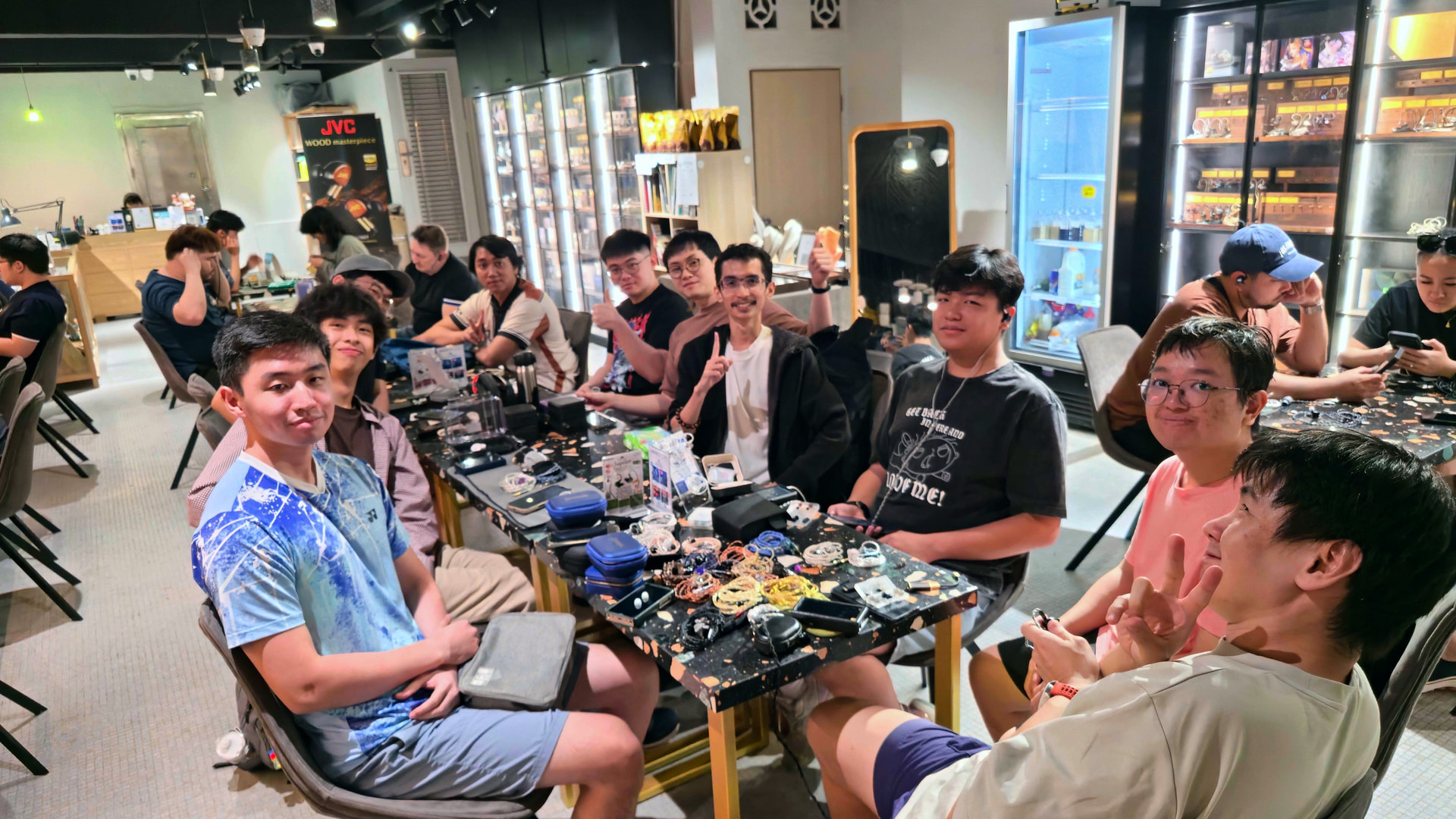
[STARPICKER AUDIO LIBRARY MEET-UP EVENT 2026.10.03]



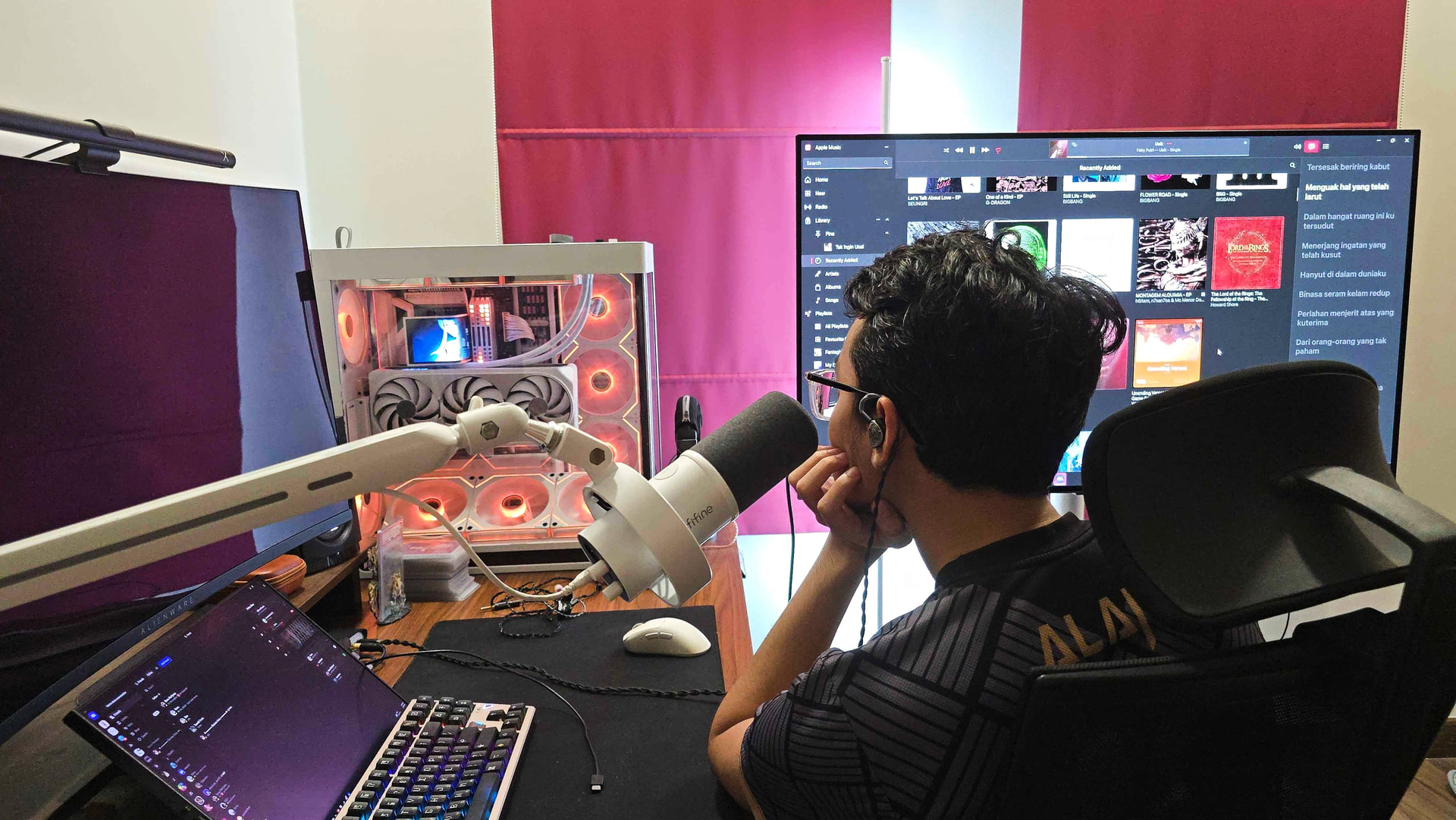
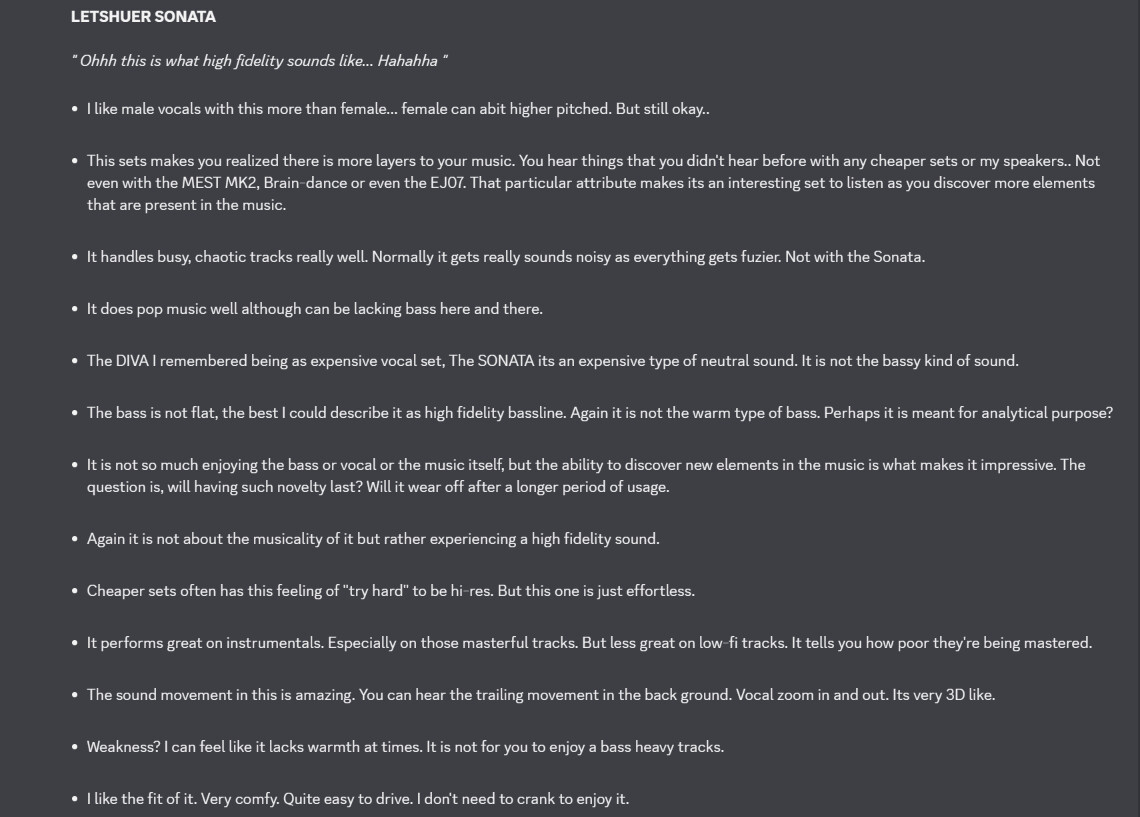
MY BROTHER’S LATE NIGHT IMPRESSIONS [2026.09.21]
=========================================================================================================
→ CONCLUSION ←
After letting it run continuously for around 5-7 days, assessing the Letshuoer SONATA was abit disorientating for me. With the SONATA, being my first kilo-bucks earphone, reviewing it was no easy task. I ended-up wasting my precious time shuffling from library to library, rediscovering new music elements. I thought, I knew my music well, but it turns out that I was wrong. There is something magical about the SONATA renders your imaging and spatial layering. I found myself constantly reassessing and refining my thoughts as I mapped out my evaluations. It is unlike any other earphones that I have reviewed. This is precisely what a true high-fidelity sound feels like when executed with good finesse. I have experienced a few TOTL earphones prior to this; QDC Anove VX, QDC Empress, Elysian Diva & Gaea, Nostalgia Audio Camelot & Durandal and recently the MystiCraft HEX & Myth to name a few. Most gear in this tier, they’re either sound lifeless or clinical, overly aggressive, or tuned with an unnatural, fake sense of detail. The SONATA may not be a “Specialist” set. Yet to my ears, it offers the most natural of the bunch without compromising its technical capabilities. More importantly, it is one the most comfortable to wear of the lot. It doesn’t require a high-end dedicated DAC/AMP to extract its utmost potential, but it will scale with it.
Of course, for $2300, this is not for your average joe. However, if you’re in the privileged position to afford top-tier gear, the SONATA deserves your attention. I believed, Letshuoer has clearly poured great effort and attention to detail into making the SONATA worthy of their flagship. It shows that; from the unboxing experience to the meticulous earpiece design, to the depth of its sonic performance. Everything is made with great care and passion. And I truly felt that. There’s no denying that $2,300 is a staggering sum money, yet within the pantheon of TOTL IEMs, it earns its price tag. In my humble experience, you simply cannot replicate this level of performance for a lot less. Well done, Letshuoer!
LETSHUOER SONATA
PRICE : PERFORMANCE [$2300] : ★★★★ (8.0/10)
BUILD & PACKAGING [BASED ON PRICE]: ★★★★★ (10/10)
COMFORT : ★★★★⯪ (9/10)
PERSONAL ENJOYMENT (BIASED) : ★★★★ (8.0/10)
OVERALL : ★★★★⯪ ( 8.75/10)
1-2 ★ - Appalling! please avoid this
3-4 ★★ Subpar offering, there are better options out there!
5-6 ★★★ Decent with some caveats! Not a bad pick! (CONSIDER)
7-8 ★★★★ Not perfect but solid choice! This should be in your shortlist. A nice addition to your collection. (SHORTLIST) (RECOMMENDED)
9-10 ★★★★★ One the best in class! You should go right ahead & buy one! A must have! (BLIND WORTHY)
PROS:~
- Solid bass texture and layering.
- High vocal transparency with expressive instrumental plays.
- Detailed highs without overbearing brightness.
- Authentic, high-resolution sound.
- Realistic staging with a rather dark background.
- Laser-sharp and pin-point imaging.
- Natural tone and timbre with minimal colouration.
- Good macro and micro-dynamics.
- Nigh excellent pace, rhythm and timing.
- One the most cohesive sounding tribrid I’ve heard.
- Premium unboxing experience & accessories.
- Good ergonomics.
- Great craftmanship with artistic design cues.
- Scale with greater DAC/AMP.
CONS:~
- Slight leanness lower tone male vocals.
- Female vocal extension is not as wide as it’s male counterpart.
- Potential upper mid-range/ lower treble hotness.
- Stage dimension is not the biggest I’ve experience.
- Less forgiving on poorly recorded tracks.
- Stock cable is prone to memory and microphonics.
- Not an all-round performer.
- Price-tag. Not everyone can afford this.
Driver Configuration: Dual Isobaric Dynamic-Driver + 4 Knowles +4 Sonion EST.
MSRP: $2300.00
Do take my words for what it’s worth. Afterall, I am just one man. ╮(╯▽╰)╭

Where to buy? (Unaffiliate)
SHOUTOUT TO LETSHUOER FOR MAKING THIS POSSIBLE!
Contact Me
Head-Fi : https://head-fi.org/members/destinoazell.564269/
Discord (Sea of Audiofools) : https://discord.gg/c8GJZ3PVaW