I have always been curious about shots like these. In the universe, things are always moving and changing. So how are they able to keep position and focus over such a long period of time? I guess the default answer is software, but there are so many variables that they can’t control. Hence the curiosity.
Yes, things are moving, and moving fast, but at the distance we’re viewing the vast majority of stuff, its velocity is simply not relevant. The light you’re seeing from the Orion Nebula has traveled for 1300-1400 light-years. This is quite close to us but thankfully far enough that any super nova in the region doesn’t take us out!
Light-years is not a measure of time. It’s a measure of distance. It’s how far light travels in a year! And Orion is quite close to us in the grand scheme of things.
Current technology can ‘see’ back in time about 13 billion years. The universe or universes is unimaginably large. So large our brains really can’t put it into perspecitve. This has fascinated me since I was a small boy watching the night sky from the dark location I grew up.
Here’s CGPT 5.1 synopsis:
They only seem still because of distance and perspective. Three key ideas:
- Huge distances shrink apparent motion
- A star might move tens of kilometers per second.
- But it’s so far away that, from our viewpoint, that motion only changes its position by a tiny angle in the sky.
- That tiny angle change per second is too small for our eyes to notice, so it looks fixed.
- Angular speed vs. actual speed
- What your eyes notice is angular speed (how many degrees across the sky something moves per second), not its true speed in km/s.
- A nearby airplane moves slowly in km/s but sweeps across a big angle in your field of view, so it looks fast.
- A distant star moves very fast in km/s but sweeps across a tiny angle, so it looks motionless.
- Short human timescales
- Many space motions are obvious only over hours, days, or years.
- Example: planets “wander” against the background stars, but you need to compare night-by-night photos to see it clearly.
- Stars do slowly shift (proper motion), but the changes are so small that it takes decades or centuries to notice without instruments.
So: space objects are moving very fast, but they’re so far away that their motion barely changes their position on our sky from moment to moment, making them appear still.
2 Likes
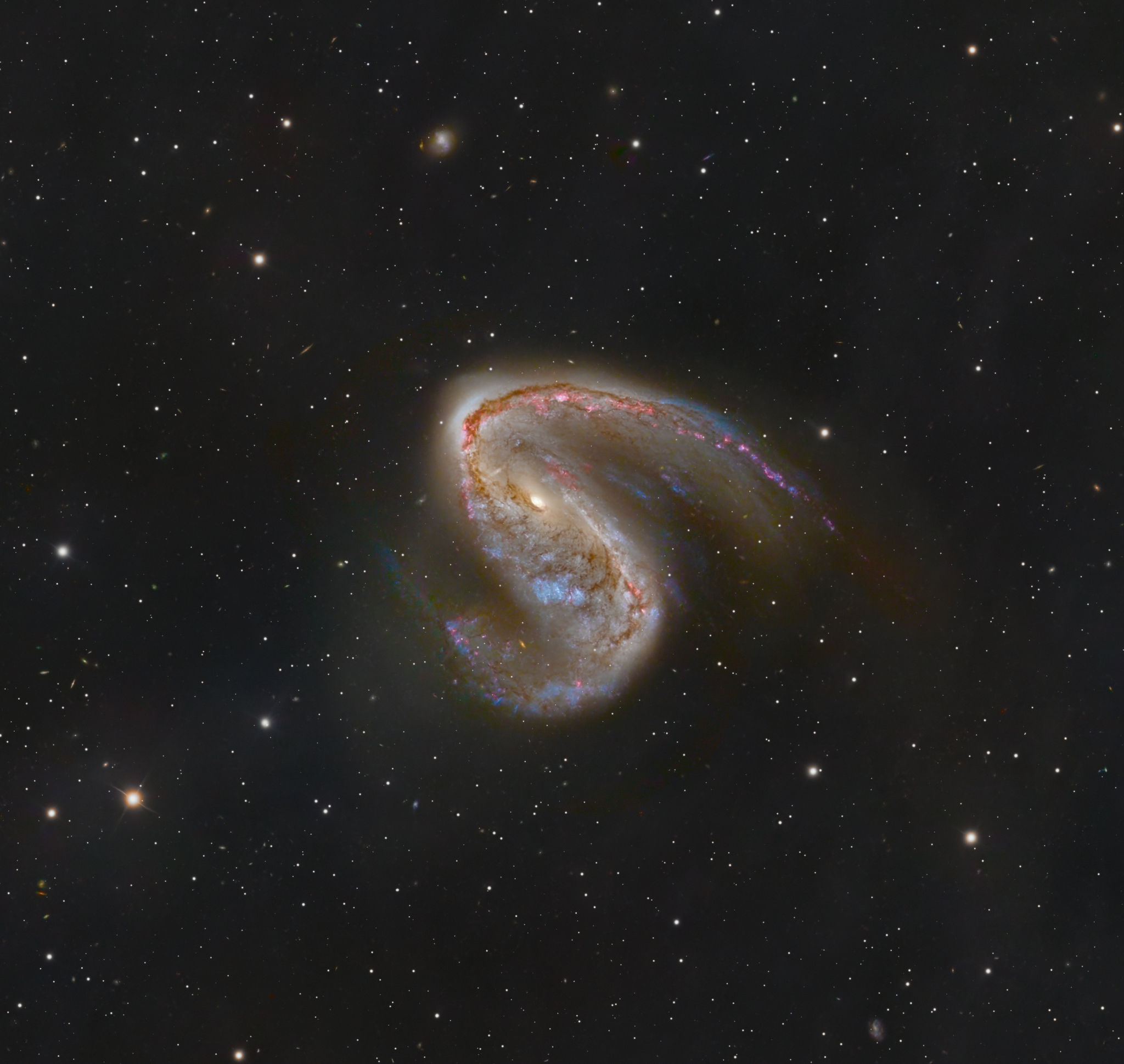
Image Credit & Copyright: Mike Selby
Explanation: Distorted galaxy NGC 2442 can be found in the southern constellation of the flying fish, (Piscis)Volans. Located about 50 million light-years away, the galaxy’s two spiral arms extending from a pronounced central bar give it a hook-shaped appearance in this deep and colorful image, with foreground stars scattered across the telescopic field of view. The image also reveals the distant galaxy’s obscuring dust lanes, young blue star clusters and reddish star forming regions surrounding a core of yellowish light from an older population of stars. But the star forming regions seem more concentrated along the drawn-out (upper right) spiral arm. The distorted structure is likely the result of an ancient close encounter with a smaller galaxy that lies off top left of the frame. This telescopic field of view spans over 200,000 light-years at the estimated distance of NGC 2442.
Editorial note:
-
1 light-year ≈ 5.88 × 10¹² miles
-
50,000,000 light-years × 5.88 × 10¹² miles/light-year
≈ 2.94 × 10²⁰ miles (about 294,000,000,000,000,000,000 miles).
4 Likes
Mind-bending stuff. Thanks, too, for the detailed explanation about how velocity in space appears to be static in photos!
It’s a fun sport now in the modern times where you remote control the imaging scope from the comfort of a heated space over wifi or internet. In the early 90s I used to trek out to our local deserts 2 hours away with over 200lbs. of gear to setup under dark skies and freeze my ass off all night and hope I got one good image on slide film.
Now I can schedule what I want to image for the optimal window. After the Sun is gone, of course, before or after the waning or waxing Moon and/or when the object is not directly overhead as the scope guiding mechanisms really struggle physically pointed straight up. Slight gravity tension is needed to ‘keep’ the gear backlash in check.
Absolutely minute changes in where the lens is pointing can easily completely be not where your object is…these days we image hundreds if not thousands of images over multiple viewing sessions and stack them to increase signal-noise ratio.
The process will throw out any images messed up by a slight gust of wind, or an aircraft blinking across the frame, or a bright satellite passing by like the ISS or trains of Starlink being deployed. Combing all the ‘good’ images to make the starting point of further processing. The open source tools are wild. It’s not hard to ‘remove’ temporarily’ all the stars so one can bring out the subtle details in a nebula or galaxy separately than ‘put back’ the stars so it more closely represents ‘reality’. 
To me it’s fascinating to attempt to image an object that can’t be seen in even the largest ground based telescope with the naked eye but can be captured with many hours of stacked 10 or 20 second exposures with a $500 scope.
Anyway, glad you guys enjoy the APOD images and info. Anyone can subscribe to this 30+ year old mailing list, for free.
2 Likes
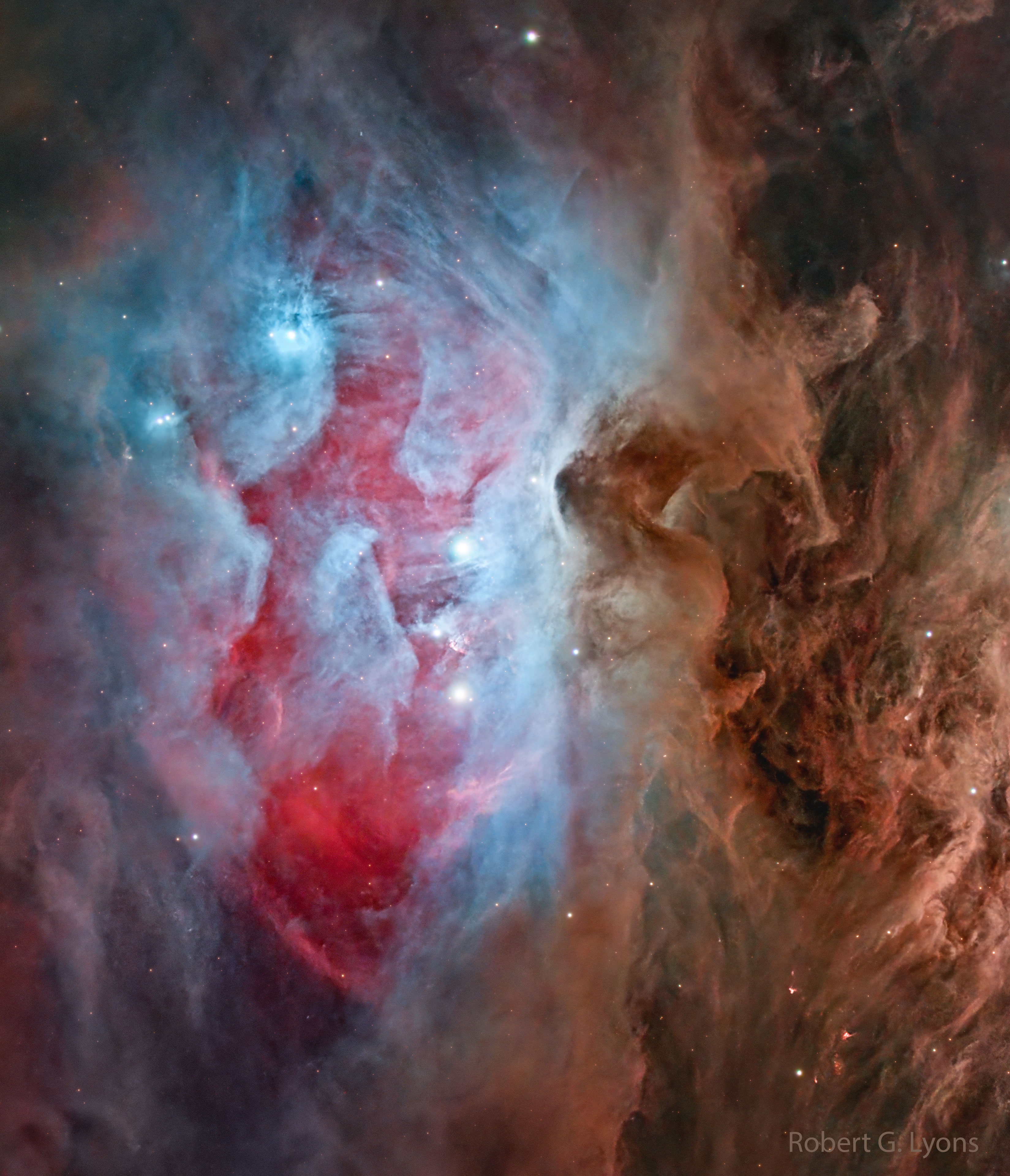
Image Credit & Copyright: Robert G. Lyons (Robservatory)
Explanation: What part of Orion is this? Just north of the famous Orion Nebula is a picturesque star forming region in Orion’s Sword that contains a lot of intricate dust – some of which appears blue because it reflects the light of bright embedded stars. The region’s popular name is the Running Man Nebula because, looked at from the right, part of the brown dust appears to be running legs. Cataloged as Sharpless 279, the reflection nebula is not only part of the constellation of Orion, but part of the greater Orion molecular cloud complex. Light from the Running Man’s bright stars, including 42 Orionis, the bright star closest to the featured image center, is slowly destroying and reshaping the surrounding dust, which will likely be completely gone in about 10 million years. The nebula spans about 15 light years and lies about 1,500 light years away.
You can add your email addresses to the distribution list here https://apodemail.org.
2 Likes
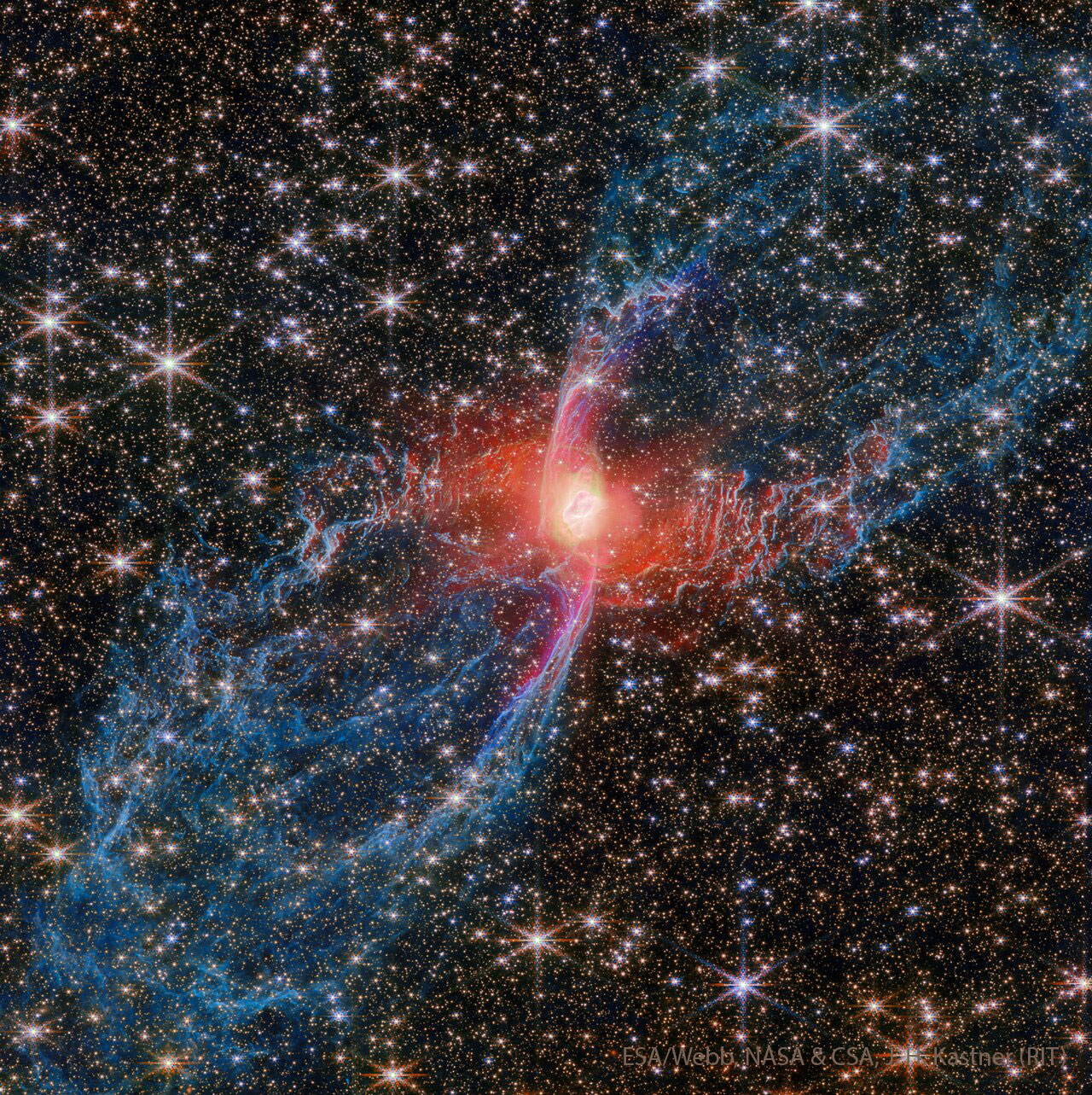
This is a new one for me. Special one.
Image Credit & Copyright: ESA/Webb, NASA & CSA, J. H. Kastner (RIT)
Explanation: Oh what a tangled web a planetary nebula can weave. The Red Spider Planetary Nebula shows the complex structure that can result when a normal star ejects its outer gases and becomes a white dwarf star. Officially tagged NGC 6537, this two-lobed symmetric planetary nebula houses one of the hottest white dwarfs ever observed, probably as part of a binary star system. Internal winds flowing out from the central stars, have been measured in excess of 1,000 kilometers per second. These winds expand the nebula, flow along the nebula’s walls, and cause waves of hot gas and dust to collide. Atoms caught in these colliding shocks radiate light shown in thefeatured false-color infrared picture by the James Webb Space Telescope. The Red Spider Nebula lies toward the constellation of the Archer (Sagittarius). Its distance is not well known but has been estimated by some to be about 4,000 light-years.
3 Likes
Nice. I recently found and watched and older IMAX presentation featuring the final repair mission on the Hubble. Great stuff. 
2 Likes
That deployment was a cluster. The primary mirror was ground wrong so the scope was unable to focus!!! They replaced the secondary (Schmidt-Cassegrain-esq design) to compensate.
I’m sure a fair chunk of the $10BN spent on Webb was to ensure no more f’ups. It’s way too far out to ‘service’ like Hubble.
Had to look it up:
Hubble orbits very close to Earth; Webb is far away at the Sun–Earth L2 point.
- Hubble distance from Earth: ~560 km
- Webb distance from Earth: ~1,500,000 km
Relative difference:
- Absolute difference: ≈ 1,499,440 km (about 1.5 million km farther away than Hubble)
- Factor: Webb is roughly 2,700 times farther from Earth than Hubble.
Lagrange point (L1-L5) : The Sun–Earth L2 point (often just “L2”) is a spot in space where the gravity of the Sun and Earth, plus the motion of an object, balance in a way that lets the object stay fixed relative to Earth and Sun.
1 Like
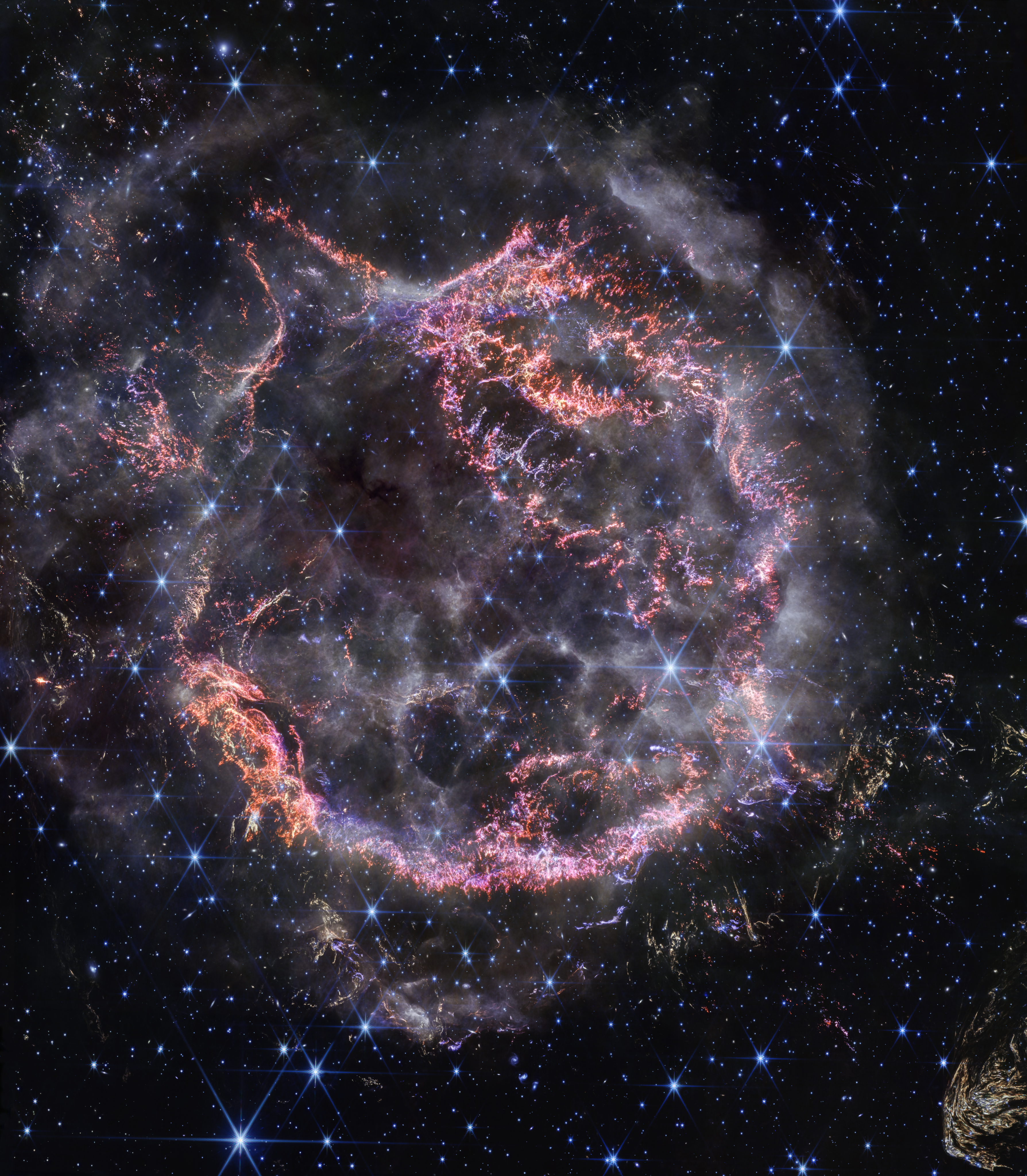
Another beauty!
Image Credit & Copyright: NASA, ESA, CSA, STScI; D. Milisavljevic (Purdue University), T. Temim (Princeton University), I. De Looze (University of Gent)
Explanation: Massive stars in our Milky Way Galaxy live spectacular lives. Collapsing from vast cosmic clouds, their nuclear furnaces ignite and create heavy elements in their cores. After only a few million years for the most massive stars, the enriched material is blasted back into interstellar space where star formation can begin anew. The expanding debris cloud known as Cassiopeia A is an example of this final phase of the stellar life cycle. Light from the supernova explosion that created this remnant would have been first seen in planet Earth’s sky about 350 years ago, although it took that light 11,000 years to reach us. This sharp NIRCam image from the James Webb Space Telescope shows the still-hot filaments and knots in the supernova remnant. The whitish, smoke-like outer shell of the expanding blast wave is about 20 light-years across. A series of light echoes from the massive star’s cataclysmic explosion are also identified in Webb’s detailed images of the surrounding interstellar medium.
3 Likes
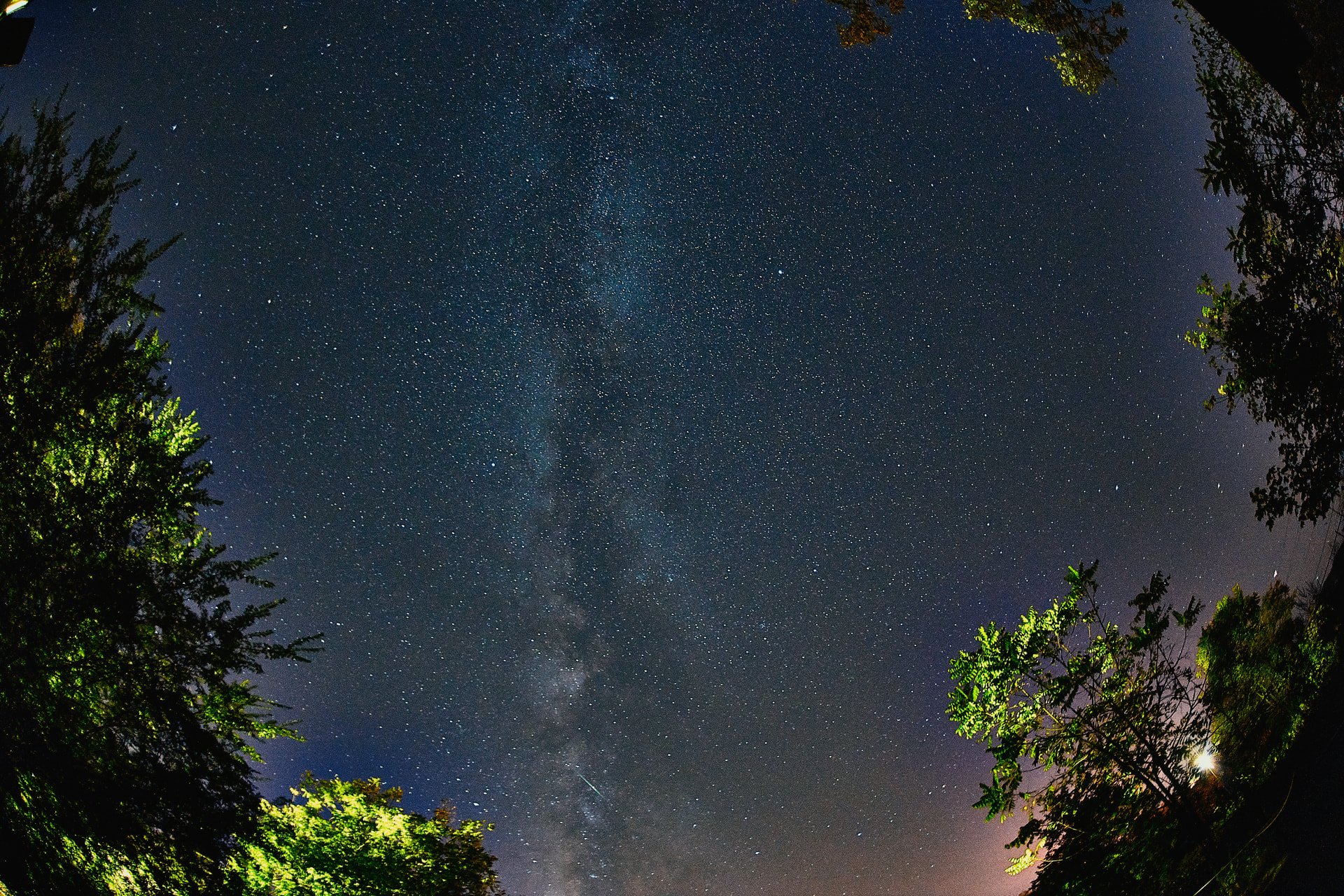
Absolutely, more the merrier.
1 Like
Not sure where this belongs but since I started the thread it’s as good a place as any.
Today I’m grateful for the DX340-AMP14 in my pocket and AO RA in my ears. Quite a long way since early '80s Sony Walkman cassette player and on-ear stock orange foam headphones, eh?
Astronomy has ‘trained’ me to think in the bigger picture my entire life. I’m super grateful for the advantages I’ve been given in this life but mostly the opportunity and freedom to make the path that best fit me. A great many don’t get to enjoy this human-right.
Be sure to go out, especially early morning and again at dusk to appreciate this place in space we all share.

3 Likes
And on that note, today’s APOD is spectacular. Not a place you’d want to make a living but cool to see from afar.
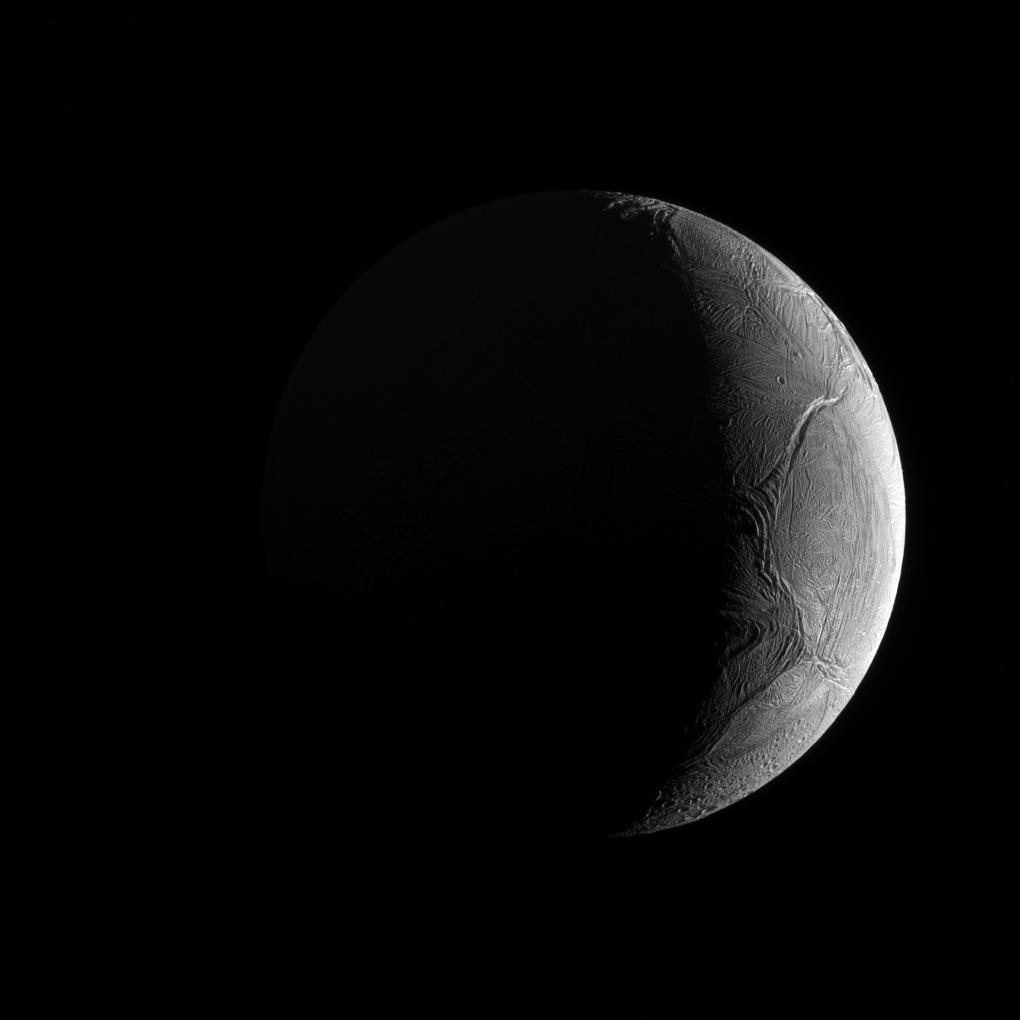
Image Credit & Copyright: Cassini Imaging Team, SSI, JPL, ESA, NASA
Explanation: Peering from the shadows, the Saturn-facing hemisphere of tantalizing inner moon Enceladus poses in this Cassini spacecraft image. North is up in the dramatic scene captured during November 2016 as Cassini’s camera was pointed in a nearly sunward direction about 130,000 kilometers from the moon’s bright crescent. In fact, the distant world reflects over 90 percent of the sunlight it receives, giving its surface about the same reflectivity as fresh snow. A mere 500 kilometers in diameter, Enceladus is a surprisingly active moon. Data and images collected during Cassini’s flybys have revealed water vapor and ice grains spewing from south polar geysers and evidence of an ocean of liquid water hidden beneath the moon’s icy crust.
4 Likes
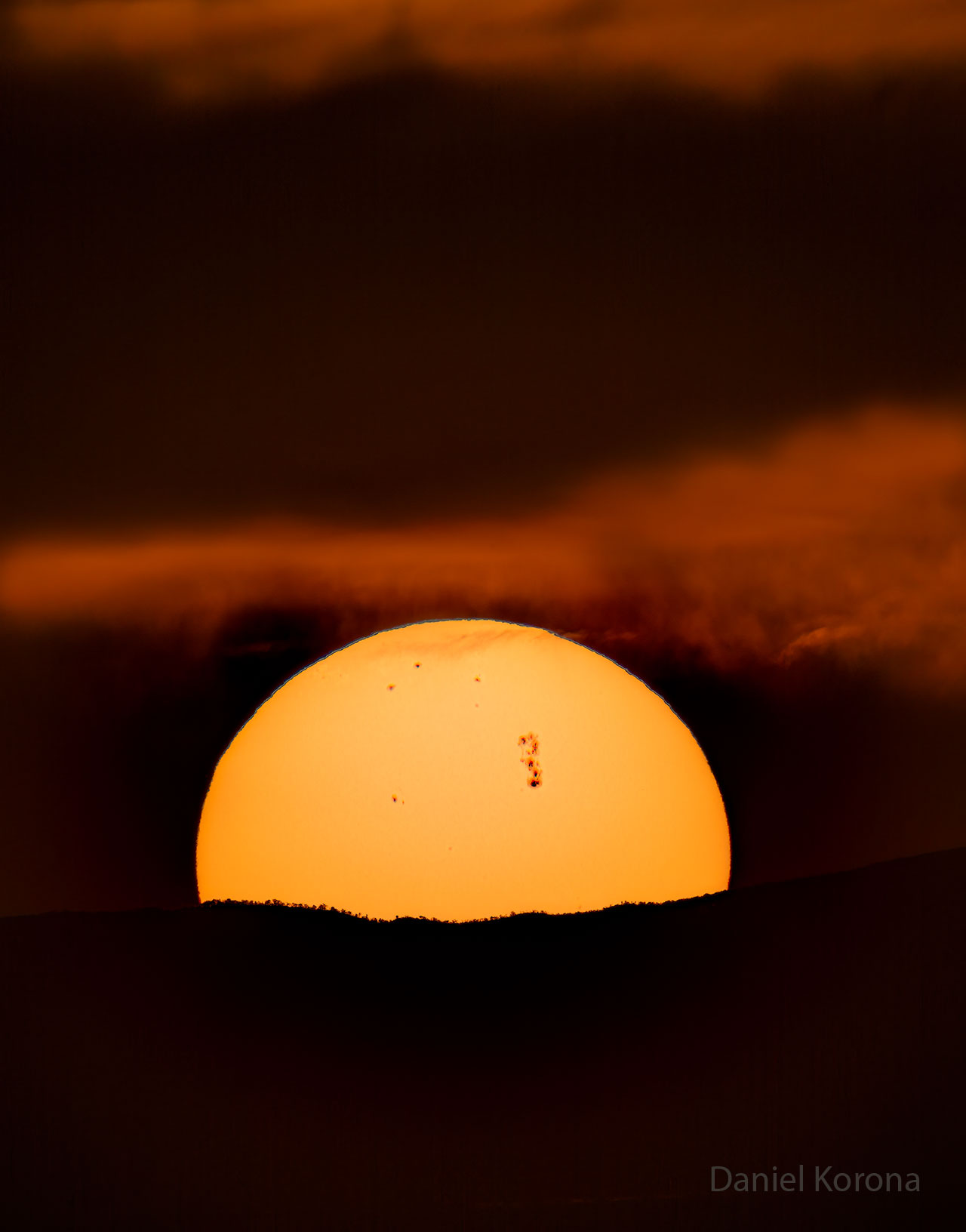
Image Credit & Copyright: Daniel Korona
Explanation: An unusually active sunspot region is now crossing the Sun. The region, labelled AR 4366, is much larger than the Earth and has produced several powerful solar flares over the past ten days. In the featured image, the region is marked by large and dark sunspots toward the upper right of the Sun’s disk. The image captured the Sun over a hill in Zacatecas, Mexico, 5 days ago. AR 4366 has become a candidate for the most active solar region in this entire 11-year solar cycle. Active solar regions are frequently associated with increased auroral activity on the Earth. Now reaching the edge, AR 4366 will begin facing away from the Earth during the coming week. It is not known, though, if the active region will survive long enough to reappear in about two weeks’ time, as the Sun rotates.
I could automate the postings of these APOD images but I’d miss the interaction with all of you.
Watch the Sun for 8 mins. Shot this a couple years ago. Seestar S50
1 Like
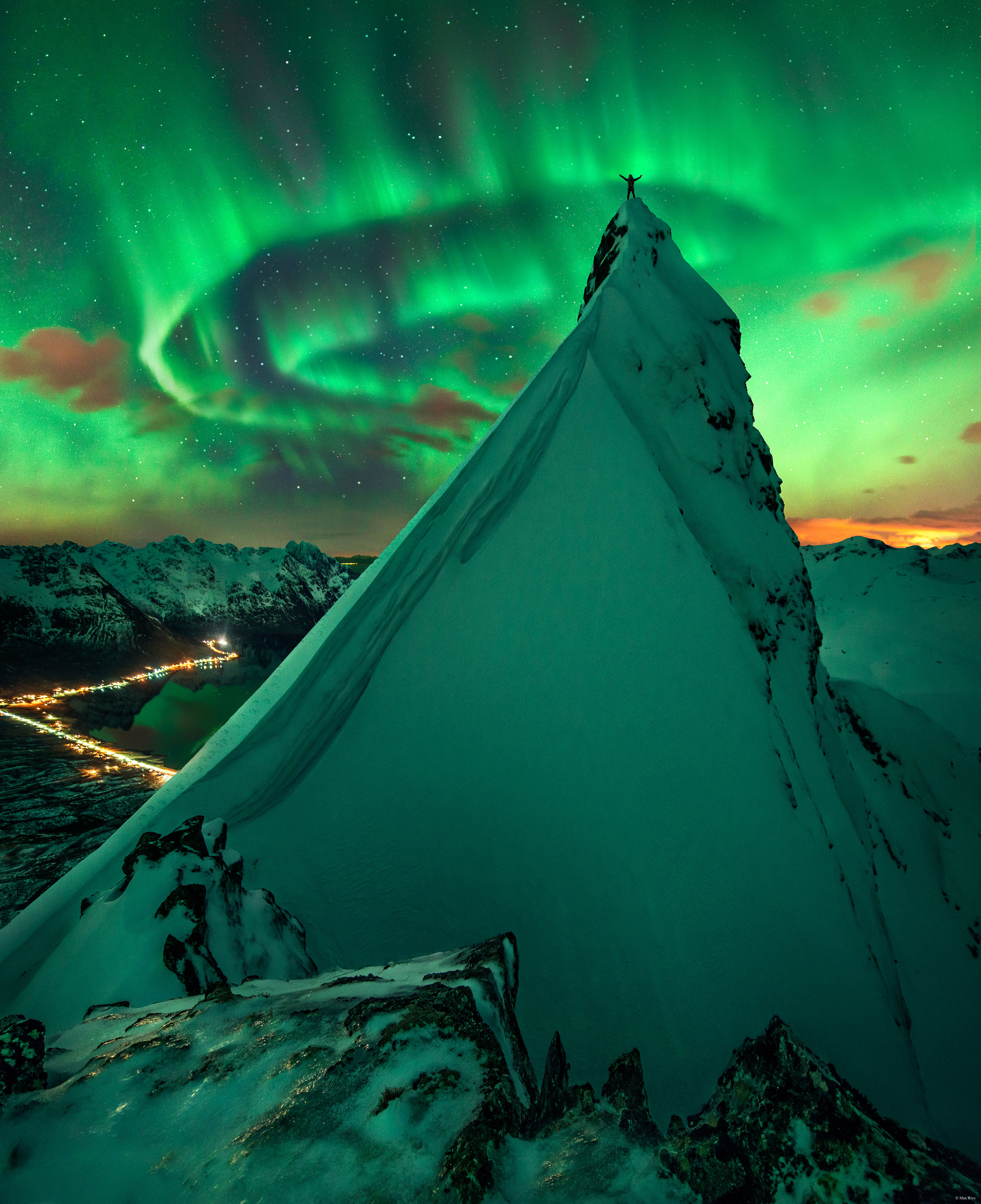
Image Credit & Copyright: Max Rive
Explanation: Raise your arms if you see an aurora. With those instructions, two nights went by with, well, clouds – mostly. On the third night of returning to same peaks, though, the sky not only cleared up but lit up with a spectacular auroral display. Arms went high in the air, patience and experience paid off, and the creative featured image was captured as a composite from three separate exposures. The setting is a summit of the Austnesfjorden(a fjord) close to the town of Svolvear on the Lofoten islands in northern Norway. The year was 2014. This year, our Sun is just passing solar maximum, the peak in its 11-year surface activity cycle. As expected, some spectacularauroras have recently resulted.
4 Likes
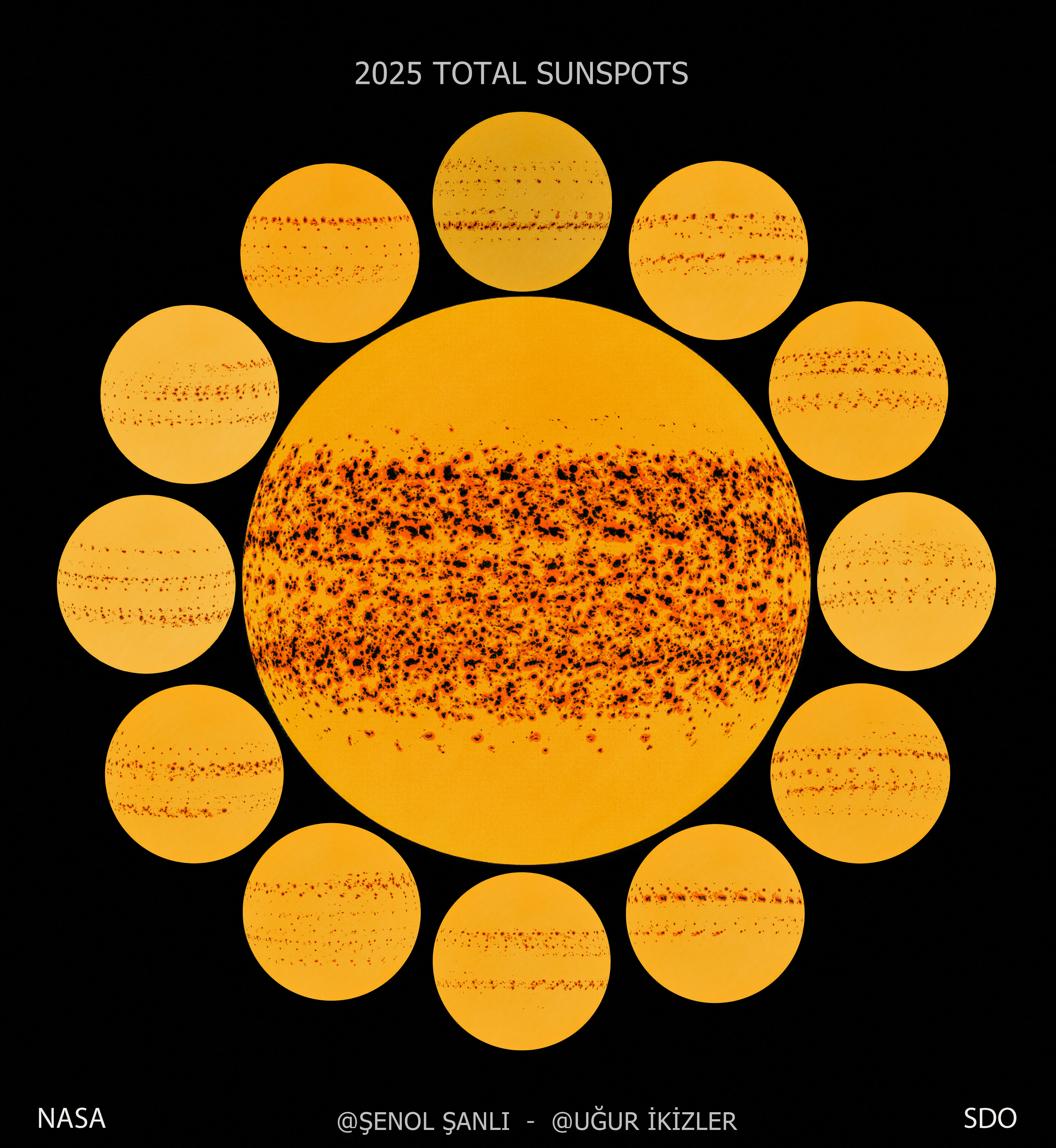
Image Credit & Copyright: Şenol Şanli & Uğur İkizler; Text: Cecilia Chirenti (NASA GSFC, UMCP, CRESST II)
Explanation: How many sunspots can you see? The central image shows the many sunspots that occurred in 2025, month by month around the circle, and all together in the grand central image. Each sunspot is magnetically cooled and so appears dark – and can last from days to months. Although the featured images originated from NASA’s Solar Dynamics Observatory, sunspots can be easily seen with a small telescope or binoculars equipped with a solar filter. Very large sunspot groups like recent AR 4366 can even be seen with eclipse glasses. Sunspots are still counted by eye, but the total number is not considered exact because they frequently change and break up. Last year, 2025, coincided with a solar maximum, the period of most intense magnetic activity during its 11-year solar cycle. Our Sun remains unpredictable in many ways, including when it ejects solar flares that will impact the Earth, and how active the next solar cycle will be.
1 Like
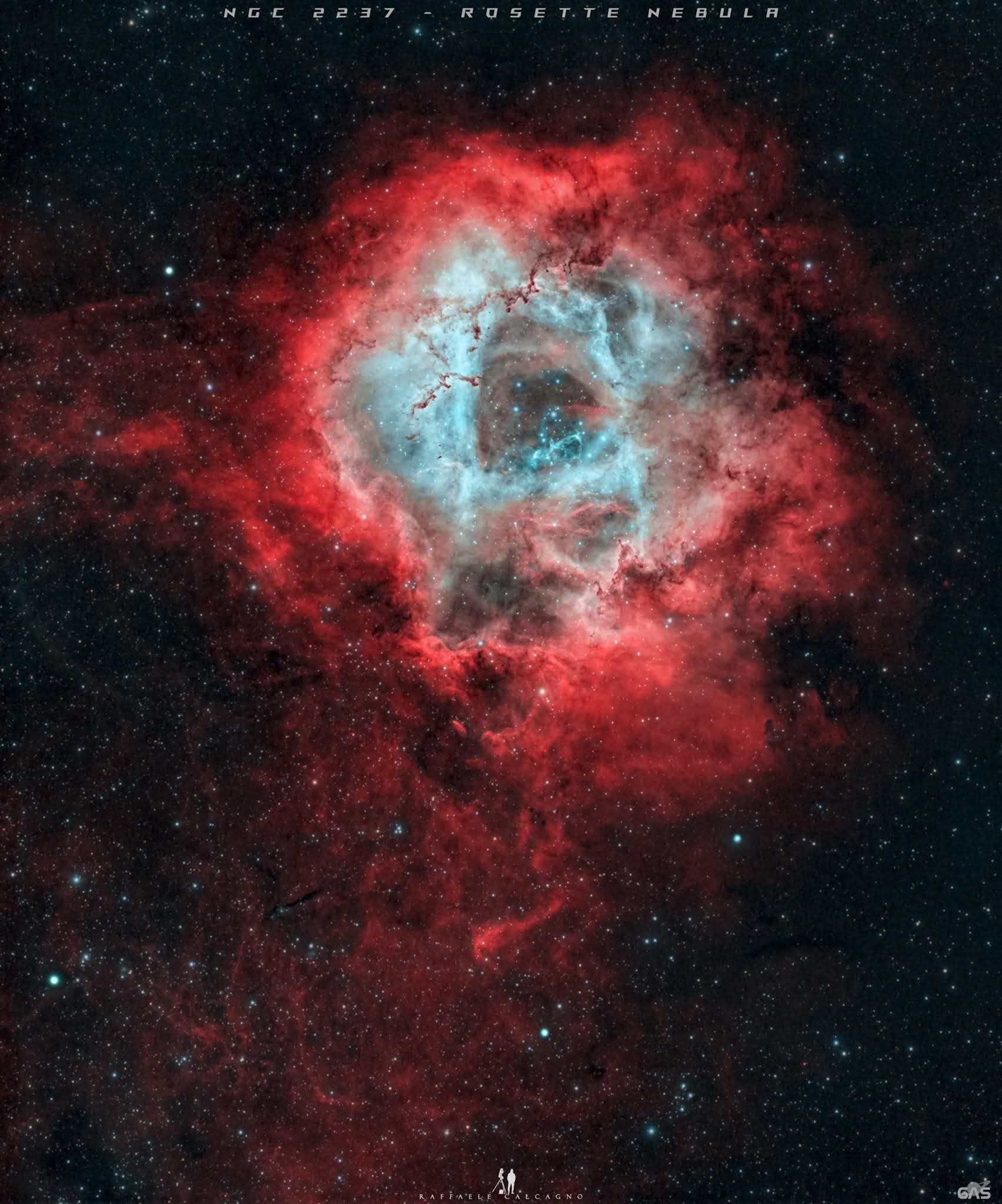
Image Credit & Copyright: Raffaele Calcagno Text: Keighley Rockcliffe (NASA GSFC, UMBC CSST, CRESST II)
Explanation: Roses are red, nebulas are too, and this Valentine’s gift is a stunning view! Pictured is a loving look at the Rosette Nebula (NGC 2237): a cosmic bloom of bright young stars sitting atop a stem of glowing hot gas. The rose’s blue-white speckles are among the most luminous stars in the galaxy, with some burning millions of times brighter than the Sun. Their stellar winds sculpt the famed rose shape by pushing gas and dust away from the center. Though only a few million years old, these massive stars are already nearing the end of their lives, while dimmer stars embedded in the nebula will burn for billions of years to come. The vibrant red hue comes fromhydrogen gas, ionized by the ultraviolet light from the young stars. The rose’s blue-white center is color-mapped to indicate the presence of similarly ionized oxygen. The Rosette Nebula reminds us of the beauty and transformation woven into the fabric of the universe.
2 Likes
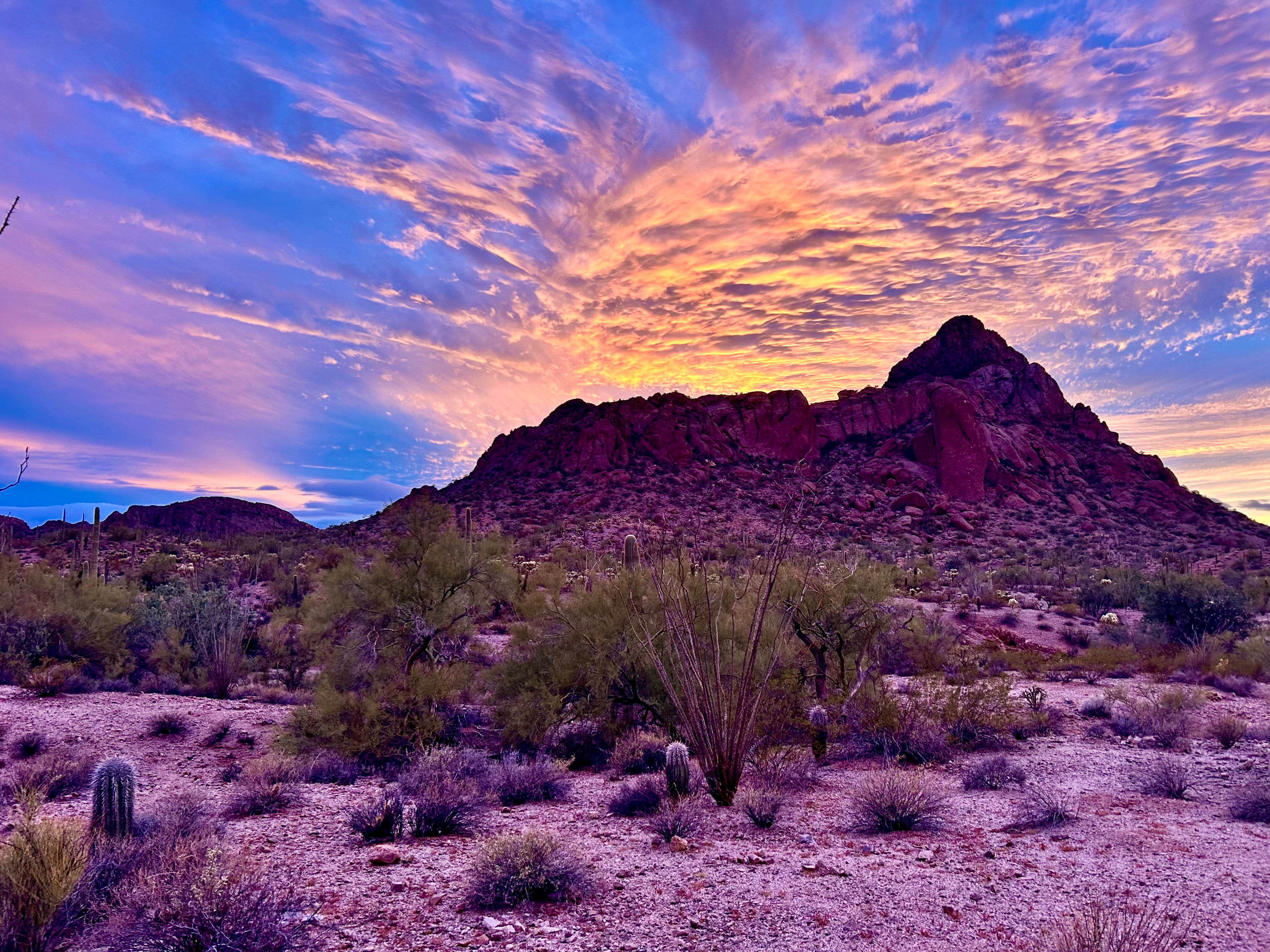





I like to think we’re all in ‘space’. I mean think about it. We’re on a rock orbiting a sun. Just because there’s an atmosphere doesn’t change that fact. We’re in space.
Crazy storm overnight with wind, rain and hail. We’re out in our van and it was quite the experience. This sunset proceeded the action last night.
5 Likes
Great shot and I share your perspective. Few of us actually think beyond globally. We got rocked pretty hard by a storm Friday. Bad wind, sideways rain and tornado watches. Spent the entire morning clearing the debris and more tree damage.
2 Likes